
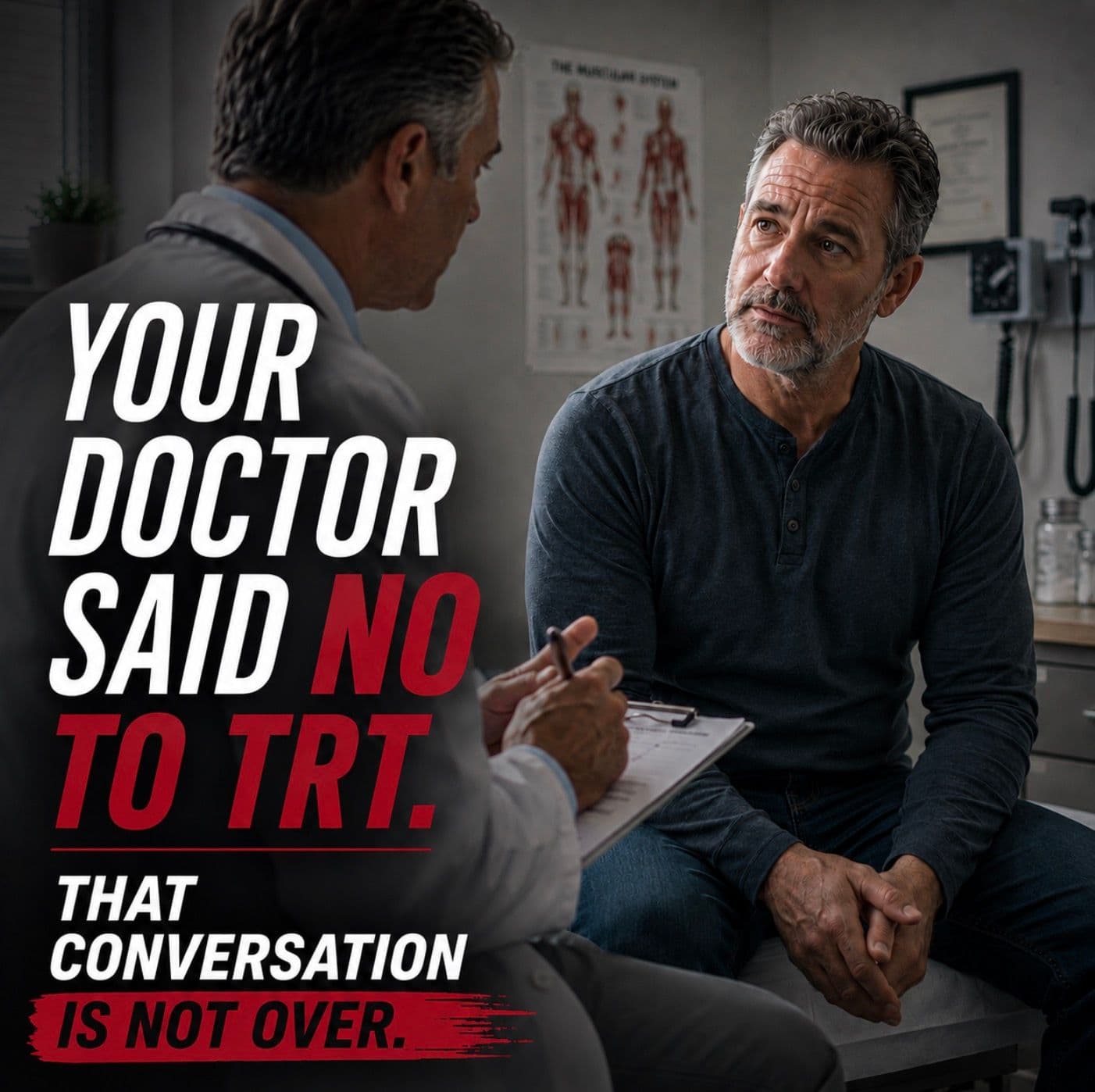
Your Doctor Said No to TRT. That Conversation Is Not Over.
Published on:
Updated on:
People are asking...
Age 62, athletic, nutrition freak (usa). Started TRT 15 months ago when testosterone at 298. Six months later it was 498 and I was doing great. Level ...
I'll share some conjecture here without knowing more. Taking everything at face value, I would say whatever medication you're taking might not be Testosterone Cypionate. When you take any Testosterone... See Full Answer
I'm a 36-year-old male, I've been on TRT for hypogonadism for about 10 years now. The TRT specialist/internist I was getting treatment with, emigrate...
We hear a story like yours all the time. GP’s have a lot of things they have to keep up on. New treatments for diabetes, new diagnostics for rheumatic conditions, new screening rules for breast cance... See Full Answer
How would you suggest that a person not living in the US would start on TRT? I’m trying to go through the regular doctors. However I am In the low-nor...
We would suggest talking to multiple doctors if one is unwilling to treat you for low-T symptoms. Often times when providers are resistant to this, it means they're not confident in providing care in ... See Full Answer
Have a question? Ask us.
At AlphaMD, we're here to help. Feel free to ask us any question you would like about TRT, medical weightloss, ED, or other topics related to men's health. Or take a moment to browse through our past questions.
You sat in that exam room, described months of fatigue, low drive, brain fog, and mood changes, and walked out without a prescription. That moment can feel like a dead end, but it rarely has to be.
When a Doctor Says No, It Is Worth Asking Why
A clinician declining to prescribe testosterone replacement therapy is not the same as a clinician telling you nothing is wrong. In most cases, the "no" reflects something more specific, whether it is incomplete information, a timing issue with labs, an unaddressed risk factor, or a legitimate clinical gray zone. Understanding the real reason behind the refusal is the single most useful thing you can do before your next appointment.
Too many men interpret that conversation as a final verdict. It is not. It is the beginning of a more informed dialogue.
The Real Reasons Behind the Refusal
Clinicians decline TRT for a range of reasons, and most of them are medically sound, even when they feel frustrating in the moment.
Ambiguous symptoms and incomplete evaluation. Fatigue, low libido, difficulty concentrating, and mood changes are real, but they are also shared by dozens of other conditions including thyroid dysfunction, vitamin deficiencies, depression, sleep disorders, and metabolic issues. A careful physician will want to rule out other causes before attributing everything to low testosterone.
Lab timing and single-point measurements. Testosterone levels fluctuate throughout the day and can be affected by illness, poor sleep, heavy exercise, or significant stress in the days before a draw. A single low reading, especially in the afternoon, may not accurately represent your baseline. Many physicians want to see at least two morning fasting measurements before drawing conclusions.
Comorbidities that raise the risk-benefit calculation. Cardiovascular disease, a history of stroke, certain blood disorders, uncontrolled hypertension, and significant obesity all factor into whether TRT is a safe choice right now, or whether other interventions should come first.
Elevated hematocrit history. Testosterone therapy can increase red blood cell production, which thickens the blood and raises the risk of clotting events. If you have a history of elevated hematocrit or clotting disorders, a clinician will need to weigh this carefully before proceeding.
Prostate-related concerns. Men with certain prostate conditions or elevated PSA readings are often counseled cautiously. The relationship between testosterone and prostate health has been studied extensively, and while the science has evolved considerably, many physicians still apply a conservative approach until more of the clinical picture is clear.
Sleep apnea. Untreated obstructive sleep apnea is both a common cause of low testosterone symptoms and a condition that TRT can potentially worsen. If your physician suspects sleep apnea, they may want that addressed before adding any hormone therapy.
Fertility preservation. Exogenous testosterone suppresses the body's own production of testosterone and significantly reduces sperm production. For men who have not completed their families, or who are actively trying to conceive, a physician is right to pause and explore alternatives or adjuncts.
Medication interactions. Certain medications, including some used for psychiatric conditions, blood pressure, or pain management, can affect hormone levels or interact with therapy in ways that require careful coordination.
Mental health considerations. Mood disorders, anxiety, or a history of significant psychological instability may prompt a physician to want those conditions stabilized before introducing hormonal changes, which can themselves affect mood and emotional regulation.
None of these reasons reflect a moral judgment about whether you deserve to feel better. They reflect a physician trying to do the math on risk and benefit with the information available at that moment.
What a More Complete Evaluation Actually Looks Like
If you left your appointment feeling like the evaluation was rushed or incomplete, that instinct may be worth trusting. A thorough workup for someone exploring testosterone optimization typically goes well beyond a single lab value.
A comprehensive assessment often includes a detailed symptom history, morning fasting bloodwork on more than one occasion, evaluation of other hormones involved in the hypothalamic-pituitary-gonadal axis, metabolic markers, thyroid function, a lipid panel, blood counts, PSA levels in appropriate candidates, and a review of all current medications and supplements. A sleep history is relevant. So is a detailed account of lifestyle factors including alcohol use, stress load, exercise patterns, and diet quality.
According to research published by the American Urological Association, a proper diagnosis of testosterone deficiency requires both clinical symptoms and confirmed low levels on appropriately timed testing. A single data point is rarely sufficient.
If your original evaluation did not include most of these elements, the "no" you received may simply reflect an incomplete picture, not a definitive answer.
How to Prepare for a Better Follow-Up Conversation
Going back to your doctor, or seeing a new one, is more productive when you arrive prepared. That preparation starts well before you walk in the door.
Track your symptoms systematically. Keep a simple daily or weekly log that captures energy levels, sleep quality, libido, mood, motivation, and cognitive clarity. Patterns matter more than single-day impressions, and a written record gives your clinician something objective to work with.
Address the modifiable variables. Sleep quality, body composition, alcohol consumption, physical activity, and chronic stress all meaningfully influence testosterone levels. A physician who sees that you have already worked on these factors is in a better position to evaluate whether a true hormonal deficit remains. This also demonstrates that you are approaching the process seriously.
Come with specific questions. Ask which criteria were not met during your last evaluation. Ask what additional testing or monitoring would need to happen before therapy could be reconsidered. Ask whether there are non-TRT approaches worth trying first. Ask what would need to change, in your labs or your health profile, for the risk-benefit calculation to shift.
This framing, collaborative rather than confrontational, tends to produce much better outcomes.
Shared Decision-Making: What It Means and Why It Matters
Modern evidence-based medicine has moved steadily toward a model called shared decision-making. This means that treatment decisions are not made by the physician alone or by the patient alone, but through a genuine exchange of information about goals, values, risks, and alternatives.
In the context of hormone therapy, shared decision-making means your clinician explains the evidence behind their recommendation, including the uncertainties, and you explain what matters most to you, including how significantly your symptoms are affecting your quality of life. Informed consent is part of this process. Before starting any therapy, you should understand the expected benefits, the potential risks, what monitoring will be required, and what signs would prompt a change in plan.
If a prior conversation felt one-directional, it may be worth seeking a clinician who practices this model more explicitly. A second opinion is not a betrayal of your primary care physician. It is a reasonable step in a complex clinical situation.
When TRT Is Not the First Step: Alternatives Worth Knowing
For some men, there are meaningful options to explore before, or instead of, TRT depending on the individual clinical picture.
Lifestyle intervention is not a cliche. Significant obesity and insulin resistance directly suppress testosterone production. Weight loss, resistance training, improved sleep, and reducing alcohol intake have all been shown to raise testosterone levels in men who are metabolically compromised. For some, this alone shifts the picture enough to either resolve symptoms or make therapy more appropriate and safer.
Sleep optimization is particularly underestimated. The majority of testosterone release happens during sleep, especially during deep slow-wave sleep. Untreated sleep apnea can substantially suppress levels. If a sleep study has not been done, it is a reasonable and often revealing next step.
Medication review can also be revealing. Some commonly prescribed drugs, including opioids, certain antidepressants, and some antihypertensives, can suppress testosterone production or impair sexual function. A medication review with your prescribing physician may identify adjustable factors.
For men who are concerned about fertility, HCG, or human chorionic gonadotropin, is one pathway worth discussing with a knowledgeable clinician. HCG stimulates the testes directly, supporting both testosterone production and sperm development, and is sometimes used as part of a fertility-preserving care plan. It is not appropriate for everyone, but for men who have not completed their families, it can be a meaningful option to explore.
Some individuals also ask about peptide-based therapies. Sermorelin, for example, is a growth hormone releasing hormone analogue that some clinicians use to support body composition, sleep quality, and recovery. While it does not directly address testosterone levels, it may be part of a broader optimization strategy for the right candidate.
It is also worth acknowledging that hormone optimization is not exclusive to men. Partners or individuals reading this who identify as women may be exploring Female TRT for similar quality-of-life concerns, including fatigue, low libido, and mood changes. The clinical considerations are different but the principle of individualized, medically supervised evaluation applies equally.
Who Should Be Especially Cautious, and Why Monitoring Matters
Certain individuals need a more careful approach regardless of how they came to explore testosterone optimization. Men with a personal or family history of blood clots, cardiovascular events, prostate cancer, polycythemia, or untreated severe sleep apnea fall into a category where closer scrutiny is medically appropriate, not arbitrary gatekeeping.
Monitoring is not optional in any responsible care plan. According to the Mayo Clinic's overview of testosterone therapy, regular follow-up including bloodwork to track hematocrit, PSA, and other relevant markers is an essential component of safe long-term management. Anyone offering hormone therapy without a clear monitoring protocol should be considered a red flag, including online or telehealth providers.
Online and telehealth care can be legitimate and convenient, but it must still be medically supervised. That means real licensed clinicians reviewing labs, asking follow-up questions, and adjusting plans based on how you respond over time. Supervision is not a formality. It is the structure that keeps optimization from becoming harm.
The Conversation Is Not Over
A doctor saying no is often the start of a better evaluation, not the end of the road. The most useful response is not frustration or defeat, and it is not bypassing the medical system entirely. It is arriving at the next conversation more prepared, more informed, and more specific about what you need.
If you feel your concerns were not fully heard or your evaluation was incomplete, pursuing a second opinion or working with a clinic that specializes in hormone health is a reasonable and responsible step. AlphaMD offers medically supervised evaluation and ongoing monitoring for men exploring testosterone optimization and related therapies, with the kind of individualized attention that a rushed primary care visit often cannot provide.
Your symptoms are worth taking seriously. The path to doing that safely starts with the right clinical partnership, not a shortcut around one.
Have a question? Ask us.
At AlphaMD, we're here to help. Feel free to ask us any question you would like about TRT, medical weightloss, ED, or other topics related to men's health. Or take a moment to browse through our past questions.
People are asking...
Age 62, athletic, nutrition freak (usa). Started TRT 15 months ago when testosterone at 298. Six months later it was 498 and I was doing great. Level ...
I'll share some conjecture here without knowing more. Taking everything at face value, I would say whatever medication you're taking might not be Testosterone Cypionate. When you take any Testosterone... See Full Answer
I'm a 36-year-old male, I've been on TRT for hypogonadism for about 10 years now. The TRT specialist/internist I was getting treatment with, emigrate...
We hear a story like yours all the time. GP’s have a lot of things they have to keep up on. New treatments for diabetes, new diagnostics for rheumatic conditions, new screening rules for breast cance... See Full Answer
How would you suggest that a person not living in the US would start on TRT? I’m trying to go through the regular doctors. However I am In the low-nor...
We would suggest talking to multiple doctors if one is unwilling to treat you for low-T symptoms. Often times when providers are resistant to this, it means they're not confident in providing care in ... See Full Answer
Get $30 off your first month’s order
Enter your email address now to receive $30 off your first month’s cost, other discounts, and additional information about TRT.
Legal Disclaimer
This website is a repository of publicly available information and is not intended to form a physician-patient relationship with any individual. The content of this website is for informational purposes only. The information presented on this website is not intended to take the place of your personal physician's advice and is not intended to diagnose, treat, cure, or prevent any disease. Discuss this information with your own physician or healthcare provider to determine what is right for you. All information is intended for your general knowledge only and is not a substitute for medical advice or treatment for specific medical conditions. The information contained herein is presented in summary form only and intended to provide broad consumer understanding and knowledge. The information should not be considered complete and should not be used in place of a visit, phone or telemedicine call, consultation or advice of your physician or other healthcare provider. Only a qualified physician in your state can determine if you qualify for and should undertake treatment.