
Fadogia Agrestis Is Everywhere Right Now - Here's What the Evidence Actually Says (And What It Doesn't)
Published on:
Updated on:
People are asking...
Why does institutional endocrinology insist on horribly outdated treatment protocols, when modern evidence says they're wrong? eg: I asked my nearly ...
If you don't mind, I will be a bit blunt here because this kind of thing is the reason we started our company, so I hope it doesn't come off as overly rude. Providers, even specialists, are people. ... See Full Answer
With T fluctuations being so drastic from any given hour, day, week, how can you really know if someone has a hormonal imbalance?...
That is why symptoms are king, and numbers should be used as a guide post for what treatment is appropriate and how responsive someone is. Your 500 and my 500 will feel completely different to each of... See Full Answer
Could you give me some advice? im 23, 5'10, 62kg (136.687Lbs) high protein high fat diet, very active sleep 9-10 hours a night, total testosterone 600...
It sounds like a lot of your symptoms could be addressed by TRT, though given your history of Gyno, you'd want to be careful and mention that to your provider so that they can have your doses spread o... See Full Answer
Have a question? Ask us.
At AlphaMD, we're here to help. Feel free to ask us any question you would like about TRT, medical weightloss, ED, or other topics related to men's health. Or take a moment to browse through our past questions.
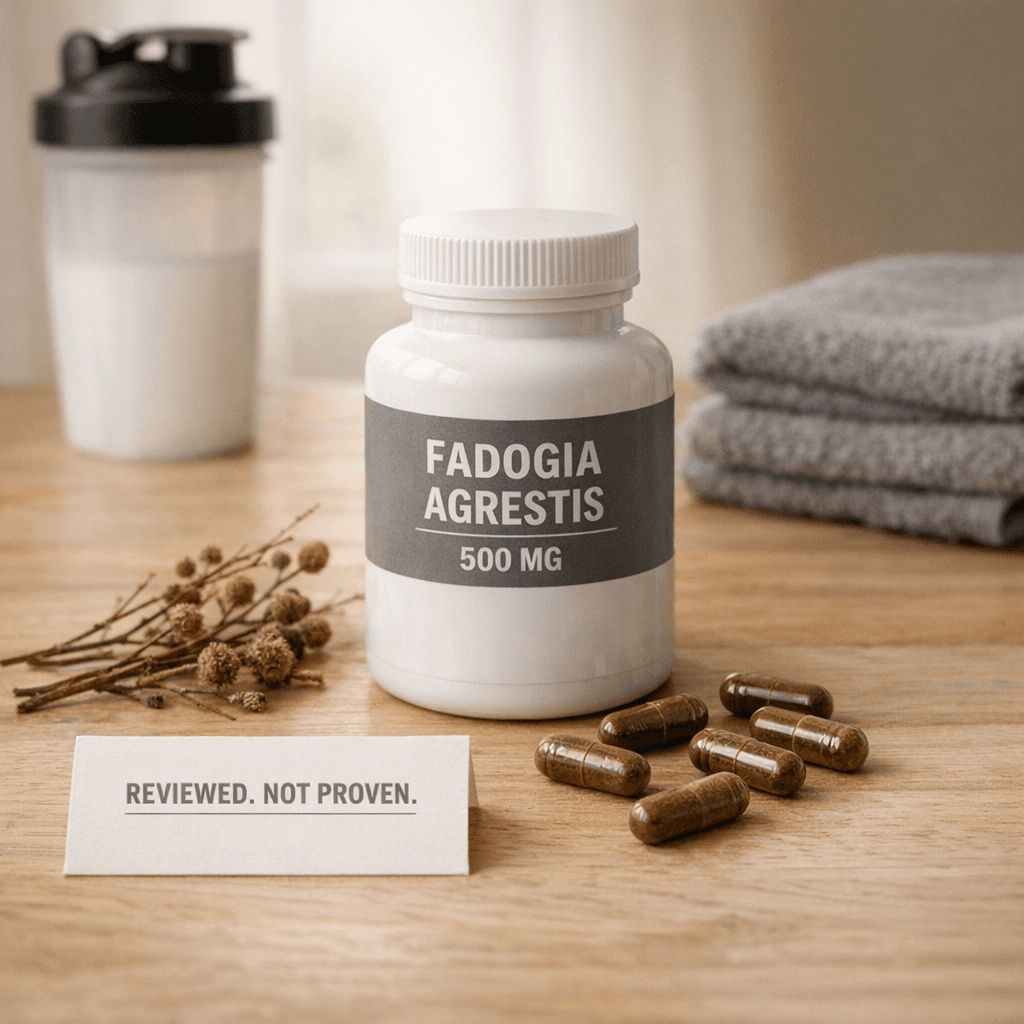
Every few years, a new supplement explodes across fitness culture and gets positioned as the natural answer to everything men want from a pill. Fadogia agrestis is that supplement right now, and understanding what the science actually says about it is more useful than any influencer recommendation ever will be.
How a West African Shrub Ended Up in Your Supplement Stack
Fadogia agrestis is a plant native to sub-Saharan Africa, particularly Nigeria, where it has a history of traditional use. The plant's stem extract has been used in folk medicine for various purposes, including as an aphrodisiac. That traditional background, combined with some early animal research suggesting effects on testosterone and sexual behavior, was enough to ignite serious interest in the supplement industry.
The surge in mainstream attention is largely traceable to high-profile podcast conversations and social media content from figures in the fitness, longevity, and biohacking communities. When influential voices with large audiences describe a compound as a "natural testosterone booster" to their millions of followers, supplement companies respond almost immediately. Fadogia moved from obscure herbal extract to standard offering in testosterone-support stacks within a remarkably short window of time.
Gym culture has always had an appetite for anything that promises to move the needle on testosterone, muscle, and performance without crossing into pharmaceutical territory. Fadogia fits that narrative cleanly on the surface. The reality underneath that narrative is considerably more complicated.
The Research That Actually Exists, and Its Very Real Limits
Here is what the scientific literature on fadogia agrestis genuinely includes: a small number of animal studies, most of them conducted in rodents, that explored effects on testosterone levels, sexual behavior, and certain biological markers. Some of those studies reported increases in testosterone in the animal subjects and observed changes in mating behavior that researchers attributed to that hormonal shift.
Those findings were enough to generate legitimate scientific interest. They are not, however, enough to draw conclusions about what fadogia does in humans.
This distinction matters enormously and gets glossed over almost universally in supplement marketing. Preclinical data, meaning studies done in animals or in cell cultures outside of a living body, serves an important purpose in research. It helps scientists identify whether something is worth investigating further. It does not tell you that a compound works in humans, at what amounts, with what safety profile, or through what mechanisms in a complex human physiology. The jump from "this raised testosterone in rats" to "take this capsule for higher T" is not a small interpretive leap. It is a leap across a significant scientific gap.
As of now, there is no substantial body of well-designed human clinical trials examining fadogia agrestis. That is not a minor footnote. It is the central fact that should anchor every conversation about this supplement.
What the Evidence Does Not Establish
Given the state of the research, several claims commonly attached to fadogia simply lack scientific backing in humans. There is no reliable clinical evidence that fadogia agrestis raises testosterone levels in men. There is no credible human data showing it improves fertility, enhances libido in a measurable and lasting way, contributes to muscle gain, or improves athletic or physical performance in any clinically meaningful sense.
This does not mean those effects are impossible or that research will never find something meaningful. It means that right now, the claims outrun the evidence by a wide margin. Men making purchasing and health decisions deserve to know that gap exists.
Mechanistic theories are part of how fadogia gets marketed, and they are worth understanding for what they are. Some researchers have proposed that certain compounds in the plant may influence luteinizing hormone, which plays a role in testosterone production, or interact with testicular tissue in ways that could theoretically support testosterone synthesis. These are hypotheses. A mechanism that sounds plausible in theory, or that has been observed in isolated animal tissue, does not automatically translate into meaningful effects when a human being takes an oral supplement and that extract has to survive digestion, enter circulation, and interact with a vastly more complex system. Mechanistic plausibility and real-world human outcomes are two very different things.
The Safety Question Nobody Is Answering Clearly
Beyond efficacy, safety is where the conversation around fadogia gets genuinely uncomfortable. Some of the same animal studies that reported hormonal effects also raised signals about potential toxicity, particularly at higher amounts, with concerns noted around certain organ systems. Those findings have not been thoroughly characterized in humans because there simply have not been the studies to do that characterization.
The absence of documented harm in humans is not the same as a clean safety record. It often just means nobody has looked carefully yet.
"Natural" is one of the most misleading words in the supplement industry. Many natural compounds are toxic. Many plants used in traditional medicine carry real risks, interact with medications, or cause harm at particular amounts or in particular populations. The traditional use of a plant in folk medicine does not constitute safety validation for a concentrated extract sold in a commercial supplement.
There are also serious quality control concerns that apply to fadogia and to the supplement industry broadly. Supplements in the United States are regulated as food products rather than drugs, which means manufacturers are not required to prove efficacy or safety before selling a product. Third-party testing exists, but it is voluntary. This creates real risks of contamination, mislabeling, incorrect amounts of active ingredients, or the presence of undisclosed substances. What is on the label is not always what is in the capsule.
Red Flags and What to Actually Look for in Supplement Marketing
Learning to evaluate supplement claims is a skill that protects your health and your money. Some markers of a trustworthy product and company include third-party testing certification from organizations like NSF International, Informed Sport, or USP, which verify that products contain what they claim and are free from common contaminants. Transparent labeling that shows exact ingredients without hiding behind proprietary blends is another positive signal. Companies that make measured, realistic claims and point to actual human research stand apart from those that rely on testimonials and before-and-after photos.
The red flags are equally recognizable once you know what to look for. Language like "clinically proven" attached to animal studies, vague references to "studies show" without citing actual research, celebrity or influencer endorsements as the primary selling point, and promises of dramatic results in short timeframes are all signs that marketing has outpaced science. If a company's primary argument for a product is that a famous podcaster mentioned it, that is not evidence.
When Symptoms Deserve More Than a Supplement
Many men who are drawn to fadogia are responding to something real: fatigue, reduced drive, difficulty building or maintaining muscle, low mood, or changes in sexual function. Those experiences are valid and worth taking seriously. The question is whether a supplement with no established human evidence is the right response to them.
Symptoms that might suggest low testosterone or another hormonal issue deserve proper evaluation, not a supplement stack. A clinician can order baseline lab work, take a thorough medical history, and help identify what is actually happening. Low testosterone can have underlying causes, ranging from sleep disorders to metabolic issues to medication side effects, that a supplement will not address and that a proper diagnosis will catch. Self-treating suspected low testosterone without that evaluation means potentially missing something important.
This is also the right context to address testosterone replacement therapy honestly. TRT is a legitimate medical therapy for men with diagnosed hypogonadism, the clinical condition of abnormally low testosterone confirmed through lab work and evaluation. It is not a lifestyle upgrade or a shortcut, and it is not appropriate for every man who wants higher testosterone. When it is appropriate, it should be managed by a clinician who understands the therapy, monitors the patient over time, and adjusts treatment based on ongoing lab work and symptoms. TRT without that framework is a different thing entirely from evidence-based medical care.
The Proven Foundations That Actually Move the Needle
While the supplement industry cycles through new molecules, the lifestyle factors with the strongest and most consistent evidence for supporting healthy testosterone levels remain the same ones they have always been. Consistent, quality sleep is foundational. Resistance training has well-documented effects on hormonal health. Nutrition that supports a healthy body composition matters. Chronic stress and elevated cortisol work against testosterone, making stress management genuinely relevant. Alcohol, particularly in heavier patterns of consumption, has measurable negative effects on testosterone. These are not exciting talking points for supplement companies, but they are where the evidence is.
Fadogia agrestis may eventually develop a human research record that clarifies what it does and does not do. Right now, that record does not exist. What does exist is a trending supplement with significant marketing momentum, preclinical signals that justify more investigation, and a safety picture that remains genuinely unclear in human populations.
For men navigating questions about testosterone, symptoms, and what options actually make sense for their health, the most valuable resource is a clinician who takes those questions seriously. AlphaMD is an online men's health clinic focused on TRT and testosterone-related care that helps men work through symptoms, lab results, and evidence-based treatment options with medical guidance rather than guesswork. When something is trending this hard with this little human evidence to back it up, getting real answers from real clinicians is worth more than the latest capsule.
Have a question? Ask us.
At AlphaMD, we're here to help. Feel free to ask us any question you would like about TRT, medical weightloss, ED, or other topics related to men's health. Or take a moment to browse through our past questions.
People are asking...
Why does institutional endocrinology insist on horribly outdated treatment protocols, when modern evidence says they're wrong? eg: I asked my nearly ...
If you don't mind, I will be a bit blunt here because this kind of thing is the reason we started our company, so I hope it doesn't come off as overly rude. Providers, even specialists, are people. ... See Full Answer
With T fluctuations being so drastic from any given hour, day, week, how can you really know if someone has a hormonal imbalance?...
That is why symptoms are king, and numbers should be used as a guide post for what treatment is appropriate and how responsive someone is. Your 500 and my 500 will feel completely different to each of... See Full Answer
Could you give me some advice? im 23, 5'10, 62kg (136.687Lbs) high protein high fat diet, very active sleep 9-10 hours a night, total testosterone 600...
It sounds like a lot of your symptoms could be addressed by TRT, though given your history of Gyno, you'd want to be careful and mention that to your provider so that they can have your doses spread o... See Full Answer
Get $30 off your first month’s order
Enter your email address now to receive $30 off your first month’s cost, other discounts, and additional information about TRT.
Legal Disclaimer
This website is a repository of publicly available information and is not intended to form a physician-patient relationship with any individual. The content of this website is for informational purposes only. The information presented on this website is not intended to take the place of your personal physician's advice and is not intended to diagnose, treat, cure, or prevent any disease. Discuss this information with your own physician or healthcare provider to determine what is right for you. All information is intended for your general knowledge only and is not a substitute for medical advice or treatment for specific medical conditions. The information contained herein is presented in summary form only and intended to provide broad consumer understanding and knowledge. The information should not be considered complete and should not be used in place of a visit, phone or telemedicine call, consultation or advice of your physician or other healthcare provider. Only a qualified physician in your state can determine if you qualify for and should undertake treatment.