
TRT Made You Stronger. So Why Does Your Gut Still Look Exactly the Same?
Published on:
Updated on:
People are asking...
Would a person that has low test and takes trt build more or less muscle than an average person that doesn’t take anything?...
They would generally build the same amount of muscle, assuming that "average person" was not also a low Testosterone individual. This is because the primary goal of TRT is to get you back to where you... See Full Answer
I see people post on various threads on steroids and how they age substantially in a few years. Does TRT have similar effects or is that more hardcore...
For traditional TRT, aka non-bodybuilding levels of Testosterone, this is generally considered almost the opposite. Testosterone in men helps to maintain metabolism & low Testosterone often leads to i... See Full Answer
So I've been on TRT for 6 months, my clinic doubled my dose when I was at 615 with normal E2 levels then 3 months later. I'm only at like 718 and my E...
You already paid for it, there is no harm in trying it. It’s true, gonadorelin is a poor substitute for hCG, and has little benefit for this purpose, though there may be some while you wait on your ne... See Full Answer
Have a question? Ask us.
At AlphaMD, we're here to help. Feel free to ask us any question you would like about TRT, medical weightloss, ED, or other topics related to men's health. Or take a moment to browse through our past questions.
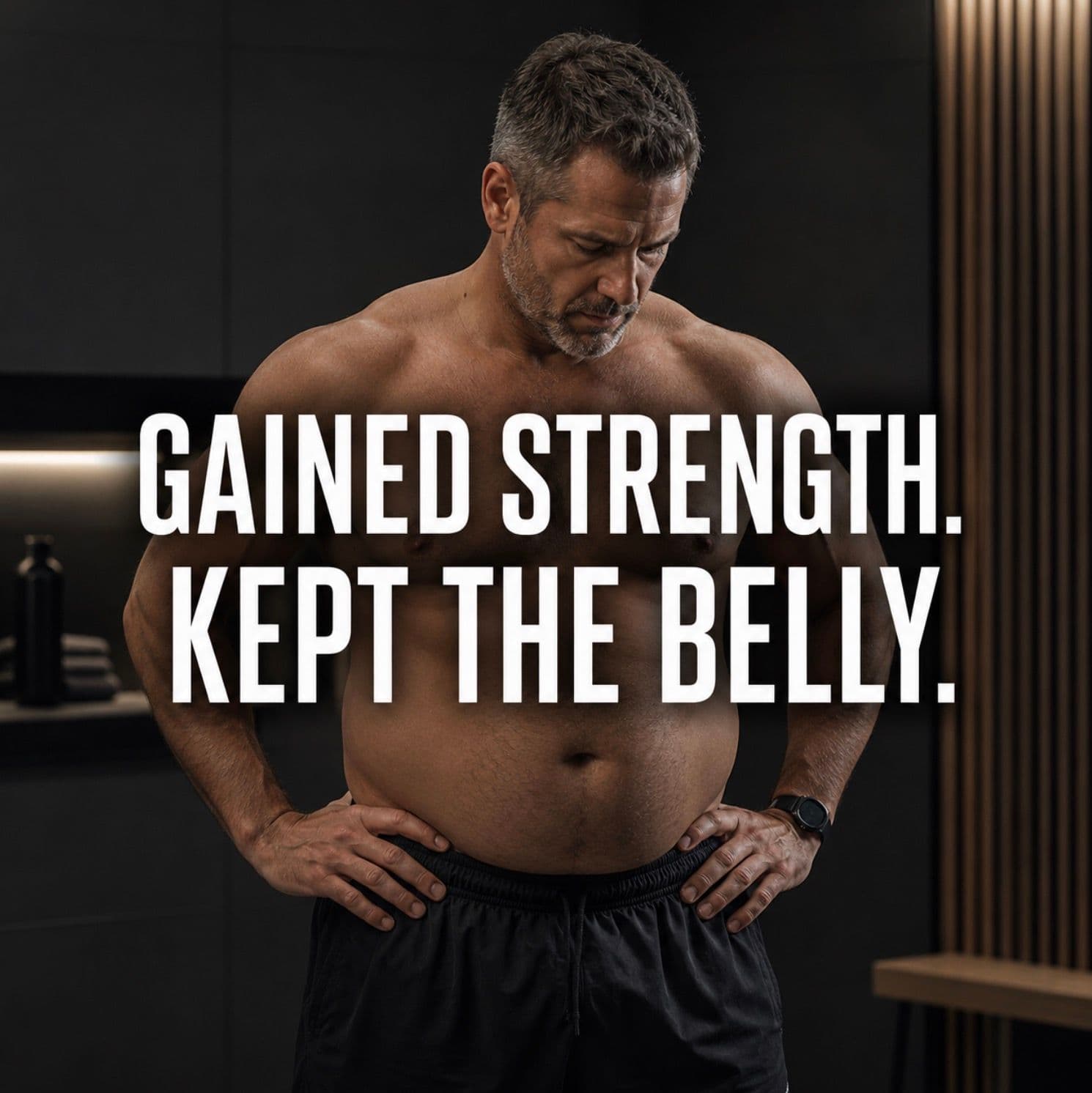
You are lifting more than you have in years, your recovery is faster, and your arms finally look like they belong to someone who works out. Yet you pull up your shirt and the midsection looks exactly the same as it did before you started testosterone replacement therapy.
This is one of the most common and frustrating experiences men have on TRT, and the explanation is more layered than most people expect.
Muscle Gain and Fat Loss Are Two Different Biological Events
TRT works primarily by restoring testosterone to a range that supports protein synthesis, bone density, and neuromuscular function. What that means in practice is that your muscles respond better to training. You recover faster between sessions, you can push harder, and you build lean tissue more efficiently than you could when your levels were suppressed.
Fat loss is a different mechanism entirely. Body fat decreases when you consistently burn more energy than you consume over time. Testosterone does play a role in metabolic function and can modestly improve insulin sensitivity, which helps with how your body partitions fuel. But it does not directly dissolve stored fat. The visual result is that men often gain meaningful muscle while their body fat percentage stays roughly the same, or even increases if appetite and eating habits shift alongside the changes in training.
The scale might barely move. The gut might look unchanged. But the composition underneath is shifting in ways that take months to express visually, especially around the abdomen.
That Belly Might Not Be Fat At All
Before assuming the issue is purely body fat, it is worth distinguishing between two very different things that can make a midsection look fuller: actual adipose tissue and functional distention.
Visceral fat sits deep in the abdominal cavity, around the organs, and tends to produce a firm, persistent roundness that does not change much from morning to evening. Subcutaneous fat sits just under the skin and feels softer. Both are real and both respond to the same general approach of energy balance over time.
Bloat is different. Bloat is a temporary swelling caused by gas, fluid shifts, digestive slowdown, or gut inflammation. If your abdomen looks noticeably different at the end of the day versus first thing in the morning, if it fluctuates after certain meals, if you feel gassy, uncomfortable, or constipated - that is more likely distention than fat accumulation. Recognizing which pattern applies to you changes the approach significantly.
Hormones, Water, and the Estradiol Variable
Testosterone in the body does not simply stay as testosterone. Through a process called aromatization, a portion of it converts to estradiol, a form of estrogen. Estradiol is not harmful and is actually essential for bone health, libido, cardiovascular function, and mood in men. But estradiol is also a hormone that influences fluid retention.
Some men on TRT are more sensitive to estradiol-related water retention than others. This can manifest as puffiness across the midsection, face, and hands, and it can mimic the appearance of fat gain even when actual adipose tissue has not increased. High sodium intake, refined carbohydrates, alcohol, and chronic stress all independently increase the tendency to retain fluid.
Sleep quality matters here too. Poor sleep elevates cortisol, the body's primary stress hormone, which promotes water retention and can increase cravings for calorie-dense foods the following day. Men with untreated sleep apnea, which is worth noting is more common than most people realize and can worsen with weight gain around the neck and upper body, often experience cortisol dysregulation that directly interferes with fat loss regardless of what they are doing in the gym.
If you are waking unrefreshed, snoring loudly, or your partner has noted that you stop breathing during sleep, that is worth raising with a clinician before assuming the problem is purely dietary.
The Behavioral Trap That Nobody Talks About
TRT improves energy and gym performance, which is the point. But that improvement can quietly create habits that work against fat loss.
Appetite often increases when training intensity goes up. The body is building muscle and wants fuel, and that is appropriate. The problem is that appetite signals are not always precise. Men often eat more than the increased training actually demands, particularly in the evenings after heavy sessions, and over weeks that surplus adds up.
There is also a subtler issue called NEAT, which stands for non-exercise activity thermogenesis. This is all the movement you do outside of formal training - walking, fidgeting, taking stairs, moving around during the day. Research consistently shows that NEAT is a major driver of total daily calorie expenditure, often more significant than gym sessions for most people. Men who lift intensely several times a week sometimes unconsciously reduce their daily movement outside the gym, sitting more, moving less, and effectively canceling out a portion of the metabolic benefit of their training.
Heavier training also sometimes shifts into a mental framework of "bulking," where eating more feels justified by the work being done. Without tracking at least loosely, it is easy to overconsume without realizing it.
Training Smarter, Not Just Harder
TRT gives you a genuine physiological advantage for building and maintaining lean tissue. The question is whether your training structure is set up to use that advantage for body composition rather than just strength numbers.
Resistance training remains essential and should be progressive - meaning you are gradually increasing demand on the muscles over time, not just repeating the same session indefinitely. But adding some form of conditioning work, whether that is brisk walking, cycling, rowing, or circuit-style training, meaningfully increases calorie expenditure and cardiovascular health in ways that lifting alone does not.
Step count is an underrated tool. Aiming for a consistent daily movement target, even a modest one, keeps NEAT elevated without requiring additional formal workouts. A daily walk is not glamorous but the evidence for its metabolic and psychological benefits is substantial.
On the nutrition side, prioritizing protein supports muscle retention during a fat-loss phase and reduces hunger. Dietary fiber from whole foods - vegetables, legumes, whole grains, fruit - slows digestion, feeds beneficial gut bacteria, and reduces the kind of GI distress that contributes to bloating. Meal timing matters less than most people think, but eating the bulk of your food earlier in the day and avoiding large meals right before bed can reduce nighttime digestive discomfort and improve sleep quality.
Why Your Gut Microbiome Might Be Working Against You
The gastrointestinal system is not a passive tube. It is a complex environment housing trillions of microorganisms that influence digestion, immune function, inflammation, and even mood. When the gut is disrupted, the midsection often shows it.
Chronic constipation causes physical distention. Low fiber intake limits the fermentation that supports beneficial bacteria and slows transit time. Ultra-processed foods high in emulsifiers and additives have been associated with disruption of the gut lining and increased inflammation. Alcohol, even in moderate amounts, is genuinely irritating to the gut lining and alters the microbiome composition in ways that worsen bloating and digestion.
Carbonated drinks add gas volume directly to the digestive system. For men who are already gassy or bloated, even sparkling water can visibly worsen the distended appearance.
Food intolerances are also worth considering. Lactose intolerance is extremely common and often goes unrecognized in adulthood. Foods high in FODMAPs, a category of fermentable carbohydrates found in onions, garlic, certain legumes, and some fruits, cause significant gas and bloating in people whose gut bacteria ferment them rapidly. If your bloating follows a clear dietary pattern, an elimination approach under guidance can help identify the trigger.
Practical Starting Points That Are Not Overwhelming
You do not need a detailed macro plan or a complete lifestyle overhaul to start seeing changes. A few consistent habits, applied without obsession, tend to move the needle more reliably than extreme short-term strategies.
A consistent sleep window, meaning you go to bed and wake at roughly the same times daily, supports cortisol regulation, appetite hormones, and gut motility. Reducing alcohol even partially has downstream benefits for water retention, gut health, sleep quality, and calorie balance simultaneously. Increasing whole-food fiber intake gradually, rather than all at once, allows the gut to adapt without triggering excess gas.
Hydration supports kidney function and helps the body excrete retained sodium. Stress management, whether through structured breathing, deliberate rest, time outdoors, or whatever actually works for you, reduces cortisol and its downstream effects on appetite and fluid retention.
Tracking steps or daily movement, without becoming fixated on it, helps most men realize just how sedentary their non-gym time actually is. Even modest increases in daily activity make a measurable difference over weeks.
When to Seek a Medical Evaluation
Most of what has been covered here reflects common, manageable contributors to a persistent midsection. But some symptoms warrant a conversation with a clinician rather than a lifestyle adjustment.
Persistent abdominal distention that does not change with meals, bowel habits, or time of day - especially if accompanied by pain - should be evaluated. Unexplained weight loss, blood in the stool, severe or worsening reflux, and new onset of significant digestive symptoms should not be self-managed. Similarly, symptoms consistent with sleep apnea, including gasping during sleep, morning headaches, and chronic daytime fatigue, deserve a formal evaluation because untreated sleep apnea has real cardiovascular consequences and meaningfully impairs the metabolic benefits of TRT.
None of these are reasons for alarm, but they are reasons to get a professional opinion rather than assuming the explanation is hormonal or dietary.
The Bigger Picture of What TRT Actually Does
Testosterone replacement therapy, when appropriately managed, is a legitimate and evidence-supported treatment for men with clinically low testosterone. It improves strength, supports lean mass, enhances mood and energy, and can improve metabolic markers over time. What it does not do is independently solve the gut - because the gut reflects fat, fluid, gut health, sleep, stress, and eating patterns that exist independently of hormone levels.
The men who see the most comprehensive improvements on TRT are typically those who treat hormone optimization as one component of a broader approach rather than the entire solution. Clinics like AlphaMD work with men not just to optimize hormone levels but to address the surrounding context - how they train, how they eat, how they sleep, and how to monitor the full picture over time. That kind of integrated approach is where the real long-term results come from.
Your testosterone may be dialed in. Your lifts may be climbing. The next layer is understanding everything else that the gut is responding to, and making those adjustments with the same intention you brought to starting TRT in the first place.
Have a question? Ask us.
At AlphaMD, we're here to help. Feel free to ask us any question you would like about TRT, medical weightloss, ED, or other topics related to men's health. Or take a moment to browse through our past questions.
People are asking...
Would a person that has low test and takes trt build more or less muscle than an average person that doesn’t take anything?...
They would generally build the same amount of muscle, assuming that "average person" was not also a low Testosterone individual. This is because the primary goal of TRT is to get you back to where you... See Full Answer
I see people post on various threads on steroids and how they age substantially in a few years. Does TRT have similar effects or is that more hardcore...
For traditional TRT, aka non-bodybuilding levels of Testosterone, this is generally considered almost the opposite. Testosterone in men helps to maintain metabolism & low Testosterone often leads to i... See Full Answer
So I've been on TRT for 6 months, my clinic doubled my dose when I was at 615 with normal E2 levels then 3 months later. I'm only at like 718 and my E...
You already paid for it, there is no harm in trying it. It’s true, gonadorelin is a poor substitute for hCG, and has little benefit for this purpose, though there may be some while you wait on your ne... See Full Answer
Get $30 off your first month’s order
Enter your email address now to receive $30 off your first month’s cost, other discounts, and additional information about TRT.
Legal Disclaimer
This website is a repository of publicly available information and is not intended to form a physician-patient relationship with any individual. The content of this website is for informational purposes only. The information presented on this website is not intended to take the place of your personal physician's advice and is not intended to diagnose, treat, cure, or prevent any disease. Discuss this information with your own physician or healthcare provider to determine what is right for you. All information is intended for your general knowledge only and is not a substitute for medical advice or treatment for specific medical conditions. The information contained herein is presented in summary form only and intended to provide broad consumer understanding and knowledge. The information should not be considered complete and should not be used in place of a visit, phone or telemedicine call, consultation or advice of your physician or other healthcare provider. Only a qualified physician in your state can determine if you qualify for and should undertake treatment.