
The Uncomfortable Truth: Everyone at Your Gym Is Enhanced
Published on:
Updated on:
People are asking...
Fitness question: Many men think about starting TRT with their natural T levels in the 200-400 range. How much improvement in the gym would such patie...
In general, men who have levels in those ranges & who are experiencing low Testosterone symptoms will already have difficulty putting on muscle mass, maintaining it, and keeping fat off due to those f... See Full Answer
Do you think people abusing (abusing may in most cases be a strong word) TRT for aesthetic purposes may hinder hypogonal men’s access to TRT?...
Yes. People are predictable and judgmental. Just like people assume all people with chronic pain and need narcotics are just addicts, people using AAS for aesthetic purposes have made society as a who... See Full Answer
You mentioned TRT is proven to be good for blood pressure , but why does it feel like my heart beat is much much stronger on TRT? Especially when lyin...
Testosterone therapy has been proven to do a few things, it reduces afterload (systemic vascular resistance), stimulates repolarization of cardiac myocytes by stimulating the ultra-rapid potassium cha... See Full Answer
Have a question? Ask us.
At AlphaMD, we're here to help. Feel free to ask us any question you would like about TRT, medical weightloss, ED, or other topics related to men's health. Or take a moment to browse through our past questions.
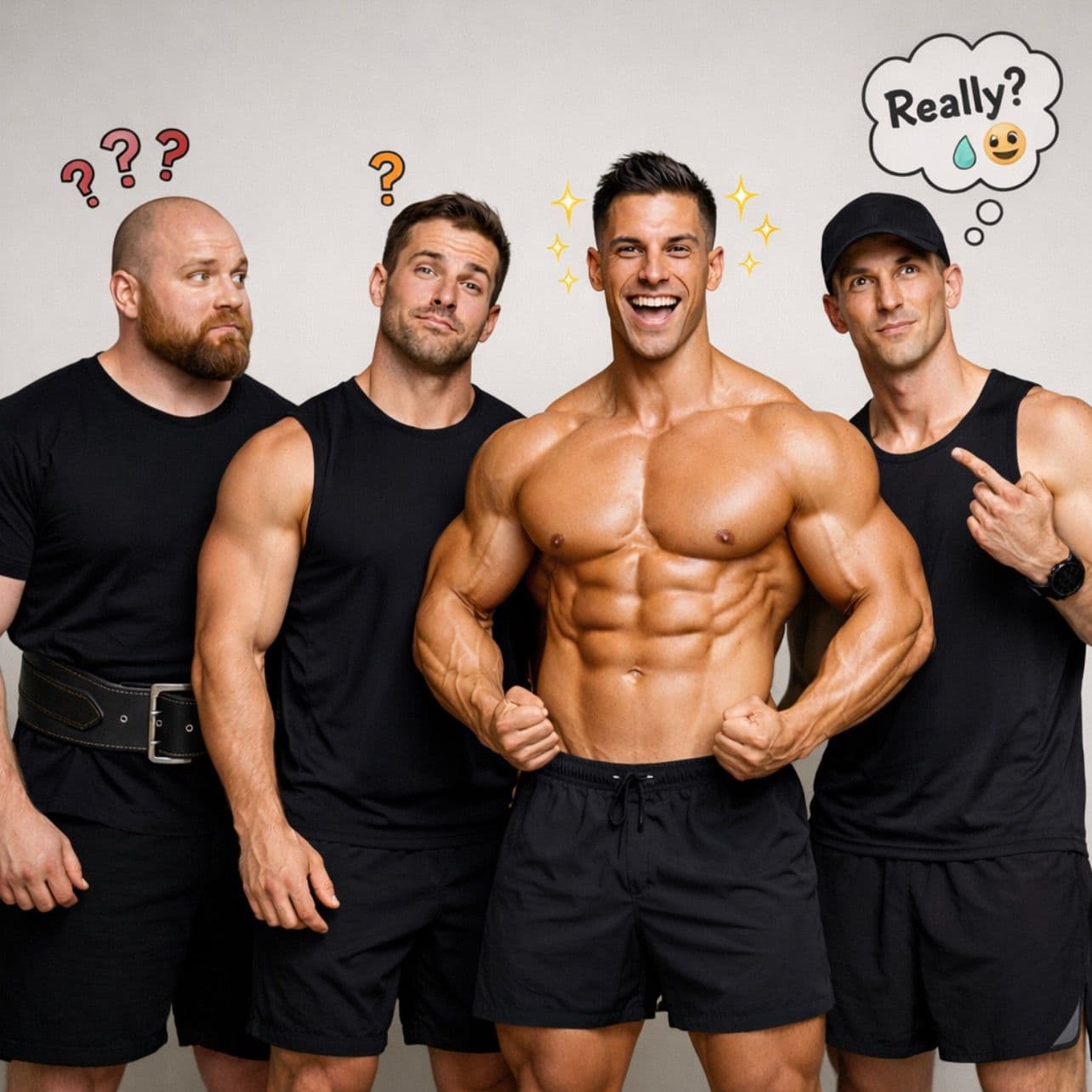
That guy who went from dad bod to shredded in six months? He's enhanced. The fitness influencer you follow who maintains 8% body fat year-round while claiming it's all chicken and broccoli? Enhanced. The truth nobody wants to say out loud is that performance enhancement has become so widespread in modern gym culture that natural lifters are increasingly the exception, not the rule.
This isn't about judgment or moral superiority. It's about understanding the reality of what you're comparing yourself to when you scroll through Instagram or glance around your local gym. The gap between what's achievable naturally and what's being presented as the baseline standard has never been wider, and that disconnect is quietly damaging the expectations, body image, and mental health of millions of people trying to improve themselves.
The Silent Steroid Arms Race In Your Locker Room
Performance enhancement didn't start in your neighborhood LA Fitness. Bodybuilders have been open about steroid use since the Golden Age, and elite athletes have chased every competitive edge for decades. But something fundamental shifted in the last ten years.
Social media turned everyone into a personal brand. Your physique became your portfolio. Suddenly, looking exceptional wasn't just for competitive bodybuilders or professional athletes. It became part of career advancement, dating success, and social status. The incentive structure changed, and the drugs followed the incentives.
What was once confined to hardcore bodybuilding gyms has filtered into CrossFit boxes, boutique fitness studios, and suburban weight rooms. The difference is that nobody talks about it. The guy doing Romanian deadlifts next to you isn't going to mention that his transformation was assisted by more than creatine and determination. The fitness coach selling online programs isn't going to disclose what's really behind those results.
This silence creates a devastating comparison trap. You're working hard, eating right, sleeping enough, and seeing modest progress. Meanwhile, someone else appears to be getting dramatically better results in half the time. The natural assumption is that you're doing something wrong, that your genetics are inferior, or that you simply don't have what it takes. The more likely explanation? You're comparing an unassisted effort to a chemically enhanced one.
What Enhanced Actually Means
When most people hear "steroids," they picture massive bodybuilders injecting mysterious substances in gym bathrooms. The reality is far more nuanced and widespread.
Anabolic steroids are synthetic versions of testosterone that dramatically accelerate muscle growth, fat loss, and recovery. They allow users to train harder, more frequently, and see results that would be physiologically impossible naturally. But steroids are just one category in a much broader spectrum of enhancement.
Peptides, growth hormone, selective androgen receptor modulators, and designer compounds occupy a gray zone between traditional steroids and legal supplements. Many of these substances aren't technically illegal to possess, exist in regulatory limbo, and get sold through semi-legitimate channels that give users a false sense of safety.
Then there's testosterone replacement therapy, which sits at the intersection of legitimate medicine and performance enhancement. This is where the conversation gets complicated, because unlike black-market steroids, TRT involves actual hormones prescribed by actual doctors for actual medical conditions.
The line between therapy and enhancement isn't always clear-cut, particularly in a culture where optimization has become indistinguishable from treatment. A 35-year-old man with genuinely low testosterone and associated symptoms like fatigue, low libido, and difficulty building muscle has a legitimate medical need. Supervised hormone replacement can be life-changing for someone with a diagnosed deficiency.
But the explosion of men's health clinics and online TRT services has made testosterone more accessible than ever, and not everyone seeking treatment has a clear medical indication. Some men with testosterone levels in the normal range pursue therapy because they want the performance and physique benefits, not because they have a genuine deficiency.
The Physique Distortion Effect
Understanding what's achievable naturally versus what requires chemical assistance is crucial for setting realistic goals and protecting your mental health.
A natural lifter, training consistently with good programming and nutrition, can expect to build somewhere in the neighborhood of 20 to 40 pounds of lean muscle mass over their lifting career. That's spread across years, not months. Progress slows dramatically after the first year or two. Maintaining visible abs while holding significant muscle mass is extremely difficult without pharmaceutical help.
Enhanced lifters can exceed these natural limits substantially. They can build muscle faster, recover between workouts more quickly, and maintain lower body fat percentages year-round. They can also achieve that combination of size, leanness, and vascularity that's become the standard aesthetic in fitness media.
When enhanced physiques become normalized as the expected outcome of hard work, everyone else feels inadequate. You're six months into your training program, you've gained ten pounds and your lifts are improving, but you don't look anything like the transformation photos you see online. The problem isn't your effort or your program. The problem is that you're measuring yourself against a chemically altered standard.
This distortion affects women too, though the conversation around female enhancement is even more hidden. Female physique competitors, fitness models, and influencers increasingly use performance enhancing drugs, but the silence around it is nearly absolute. Young women compare themselves to enhanced physiques while being told it's all about meal prep and glute workouts.
Underground vs. Medical: A Critical Distinction
Not all enhancement is created equal, and this is where the conversation requires nuance.
Buying steroids from an underground lab, following dosing protocols found on bodybuilding forums, and never getting blood work is categorically different from working with a qualified physician who orders comprehensive labs, evaluates your health history, monitors you regularly, and prescribes hormones when medically appropriate.
The risks of unsupervised enhancement are real and significant. Cardiovascular strain, including changes to cholesterol levels and increased risk of heart issues, is well-documented. Fertility can be severely compromised, sometimes permanently. Mood changes, increased aggression, and anxiety occur in some users. Long-term health consequences remain uncertain, particularly for newer compounds with limited research.
Then there are the practical dangers. Underground labs aren't regulated. You don't actually know what you're injecting, what the dose is, or whether it's contaminated. The information on forums is often wrong, incomplete, or context-specific to individuals with different health profiles.
Contrast this with legitimate medical care. A man experiencing genuine symptoms of low testosterone sees a qualified clinician, gets comprehensive bloodwork, discusses his symptoms and health history, and if appropriate, begins monitored therapy. His doses are pharmaceutical grade, his protocol is individualized, and his health markers are tracked over time. He's not guessing. He's not taking advice from strangers on the internet. He's receiving medical care.
This distinction matters enormously, but it gets lost in the binary thinking that dominates the enhancement conversation. Either all hormone use is dangerous and wrong, or it's all fine and everyone should do it. Neither extreme is accurate.
Making Sense Of Modern Men's Health
The rise of telemedicine has transformed access to men's health services, including testosterone replacement therapy. Services designed specifically for men's hormonal health have made it easier to get evaluated, order labs, and speak with providers without the barrier of traditional in-person appointments.
Platforms like AlphaMD represent this new model of access. Through the platform, licensed providers handle comprehensive evaluation, proper lab work, and ongoing medical oversight for men dealing with legitimate hormone concerns. The emphasis is on distinguishing between unrealistic expectations driven by gym culture and actual medical needs that warrant treatment.
These services aren't about helping recreational gym-goers chase enhanced physiques. They're about making medically appropriate care accessible for men with diagnosed deficiencies or legitimate symptoms affecting their quality of life. The difference is medical necessity, proper evaluation, and professional monitoring versus self-experimentation and cosmetic motivation.
For someone wondering whether their fatigue, low motivation, or difficulty recovering from workouts might be related to hormonal health, speaking with a qualified provider and getting comprehensive labs is the responsible first step. It separates gym mythology from medical reality.
Recalibrating Your Expectations
Understanding the prevalence of enhancement in gym culture isn't about making excuses for your progress or deciding that natural training isn't worthwhile. It's about setting honest baselines.
Your progress as a natural lifter is valuable, meaningful, and worth celebrating, even if it doesn't match what you see on social media. Building strength, improving your health markers, and developing consistent training habits matters far more than looking like someone who's chemically enhanced.
The guy you're comparing yourself to might be enhanced. The transformation timeline you're trying to match might be unrealistic. The physique you've set as your goal might not be achievable without pharmaceutical help. That doesn't make you weak or your efforts pointless. It makes you honest about the reality of what you're working with.
This awareness also helps you make more informed decisions about your own health. If you're experiencing genuine symptoms that might indicate hormone issues, you can pursue proper medical evaluation instead of either ignoring the problem or self-medicating with underground compounds. If you're simply frustrated that you don't look like enhanced athletes, you can adjust your expectations and goals accordingly.
Gym culture's uncomfortable truth is that enhancement has become normalized while remaining hidden. The physiques you see, the timelines presented, and the standards that feel baseline are often chemically assisted. Recognizing that reality doesn't diminish your training. It clarifies it. You can pursue genuine health, realistic progress, and informed decisions about men's health without chasing pharmaceutical physiques or believing that everyone else is doing it naturally.
The choice isn't between naive naturalism and reckless drug use. It's between informed awareness and damaging comparison. Understanding what's really happening in your gym, what's achievable without enhancement, and when medical intervention might actually be appropriate puts you in control of your own health journey instead of being controlled by distorted standards. That awareness, more than any compound or protocol, is what actually empowers better decisions.
Have a question? Ask us.
At AlphaMD, we're here to help. Feel free to ask us any question you would like about TRT, medical weightloss, ED, or other topics related to men's health. Or take a moment to browse through our past questions.
People are asking...
Fitness question: Many men think about starting TRT with their natural T levels in the 200-400 range. How much improvement in the gym would such patie...
In general, men who have levels in those ranges & who are experiencing low Testosterone symptoms will already have difficulty putting on muscle mass, maintaining it, and keeping fat off due to those f... See Full Answer
Do you think people abusing (abusing may in most cases be a strong word) TRT for aesthetic purposes may hinder hypogonal men’s access to TRT?...
Yes. People are predictable and judgmental. Just like people assume all people with chronic pain and need narcotics are just addicts, people using AAS for aesthetic purposes have made society as a who... See Full Answer
You mentioned TRT is proven to be good for blood pressure , but why does it feel like my heart beat is much much stronger on TRT? Especially when lyin...
Testosterone therapy has been proven to do a few things, it reduces afterload (systemic vascular resistance), stimulates repolarization of cardiac myocytes by stimulating the ultra-rapid potassium cha... See Full Answer
Get $30 off your first month’s order
Enter your email address now to receive $30 off your first month’s cost, other discounts, and additional information about TRT.
Legal Disclaimer
This website is a repository of publicly available information and is not intended to form a physician-patient relationship with any individual. The content of this website is for informational purposes only. The information presented on this website is not intended to take the place of your personal physician's advice and is not intended to diagnose, treat, cure, or prevent any disease. Discuss this information with your own physician or healthcare provider to determine what is right for you. All information is intended for your general knowledge only and is not a substitute for medical advice or treatment for specific medical conditions. The information contained herein is presented in summary form only and intended to provide broad consumer understanding and knowledge. The information should not be considered complete and should not be used in place of a visit, phone or telemedicine call, consultation or advice of your physician or other healthcare provider. Only a qualified physician in your state can determine if you qualify for and should undertake treatment.