
Why Adding NAD+ Made My TRT Finally Work: The Missing Metabolic Link
Published on:
Updated on:
People are asking...
What you are doing is awesome guys! I would highly appreciate your input on my case. I have been working out in the gym/calisthenics/swimming/jogging...
To answer your questions in order: Varicocele is one of the only truly reversible causes of hypogonadism. It is a fairly minor procedure, so if you can get it taken care of now, there is a possibility... See Full Answer
Recently had a massive drop in quality of life over the last 10 months, after being fit all my life and a natural bodybuilder for the last 8 years. ...
So there is this strange rumor that somehow developed that hCG can “kickstart” normal testicular function. I’m not sure where it started other than it used to help restore function in men who suppres... See Full Answer
38 with hormonal issues and it's attendant symptoms and effect since adolescence. Completely bald by 23, finger nails and pubic hair takes a very long...
Fatigue, confidence, libido, motivation, and erectile function are all things that improve on TRT. Head hair & likely nail growth speed is typically not improved with TRT. Body hair for most men tends... See Full Answer
Have a question? Ask us.
At AlphaMD, we're here to help. Feel free to ask us any question you would like about TRT, medical weightloss, ED, or other topics related to men's health. Or take a moment to browse through our past questions.
I spent six months on testosterone replacement therapy with perfect lab numbers and a prescription that should have changed everything. Instead, I was still dragging myself through workouts, fighting afternoon brain fog, and wondering why my body composition looked more like someone who occasionally visited the gym rather than someone with optimized testosterone levels.
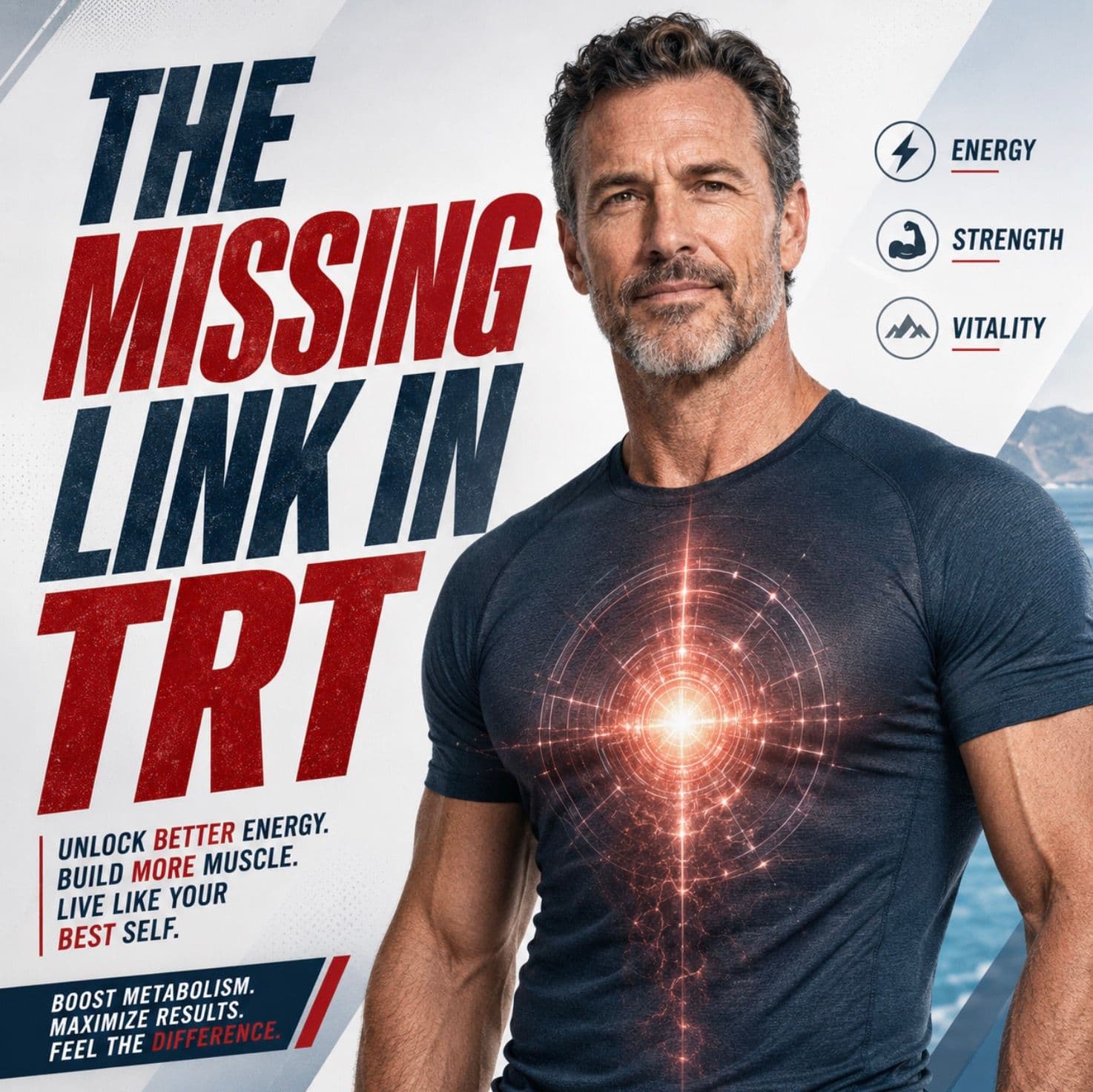
The answer, it turned out, wasn't in my hormone panel. It was hiding in my cells, in the fundamental machinery that turns testosterone's signals into actual energy, muscle, and vitality. That missing piece was NAD+, a molecule most guys have never heard of but that might explain why their TRT feels like a car with a full tank of gas and a failing engine.
The TRT Promise vs. The TRT Reality
Testosterone replacement therapy has become increasingly common as men seek solutions for low energy, declining muscle mass, stubborn body fat, reduced libido, and the general sense that their body isn't responding the way it used to. The pitch is compelling: restore your testosterone to healthy levels, and you'll feel like yourself again, or perhaps better than you ever have.
For many men, TRT delivers. Energy returns, workouts become productive again, mental clarity improves, and body composition shifts in the right direction. But for a significant number of guys, the experience is more complicated. Labs come back showing testosterone in the optimal range, yet the subjective experience falls short. Energy improves slightly but never reaches that promised vitality. The gym feels less like torture, but gains remain frustratingly modest. Brain fog lifts occasionally but returns by mid-afternoon.
This disconnect between blood work and how you actually feel is where many men get stuck. Doctors might adjust dosing or frequency, add other medications to manage side effects, or simply tell patients their expectations were too high. But what if the issue isn't the testosterone itself, but rather your body's ability to use it effectively?
When Your Metabolism Puts the Brakes on Testosterone
Testosterone doesn't work in isolation. It's a signal, an instruction to your cells to build muscle, burn fat, produce energy, and maintain countless other functions. But signals are only as good as the machinery receiving them. If your cells are metabolically compromised, if the fundamental processes that create energy and drive cellular function are impaired, then even optimal testosterone levels might produce suboptimal results.
This is where NAD+ enters the picture. Nicotinamide adenine dinucleotide, mercifully shortened to NAD+, is a coenzyme found in every cell of your body. It plays a critical role in the most fundamental process keeping you alive: turning the food you eat into usable cellular energy. Without adequate NAD+, your mitochondria, the power plants inside your cells, simply can't function efficiently.
Think of it this way: testosterone is telling your muscles to grow, your metabolism to rev up, and your body to operate at a higher level. But if your cellular power plants are operating at half capacity, those instructions can't be fully executed. You might be sending all the right signals, but the infrastructure to respond is compromised.
The Cellular Energy Crisis Nobody Talks About
NAD+ levels naturally decline with age. By middle age, many men have significantly lower NAD+ than they did in their twenties. This decline contributes to many of the same issues that drive men toward TRT in the first place: fatigue, reduced exercise capacity, cognitive decline, and metabolic dysfunction.
When NAD+ is depleted, several critical processes suffer. Your mitochondria can't produce ATP, the energy currency of cells, as efficiently. Cellular repair mechanisms slow down. Your body's ability to manage oxidative stress and inflammation diminishes. Systems that regulate metabolism, including insulin sensitivity, can become dysregulated.
For a man on TRT, this creates a particularly frustrating situation. The testosterone is there. The signal is strong. But the cellular machinery needed to translate that signal into tangible results is underpowered. You're trying to run high-performance software on hardware that can barely keep up.
This explains why some men see their total and free testosterone climb into optimal ranges but still struggle with many low-T symptoms. The hormone is present, but the metabolic foundation needed to express its benefits fully simply isn't there. It's not that TRT isn't working, it's that TRT alone isn't enough when cellular metabolism is compromised.
The Fatigue That Testosterone Can't Touch
One of the most common complaints from men who aren't fully responding to TRT is persistent fatigue. Not the crushing exhaustion of severely low testosterone, but a more subtle, pervasive tiredness. They have more energy than before TRT, but not enough. They can make it through the day, but every afternoon feels like pushing through mud. They can work out, but recovery takes longer than it should, and motivation wavers.
This type of fatigue often has metabolic roots. When your cells can't produce energy efficiently, no amount of testosterone can fully compensate. You might have the hormonal signal to feel energized and motivated, but without the cellular machinery to back it up, that signal falls flat.
Supporting NAD+ levels targets this issue at its source. By improving mitochondrial function and cellular energy production, you're not just masking fatigue or pushing through it, you're addressing the fundamental reason your cells aren't producing adequate energy. This is why many men report that adding NAD+ support to their TRT protocol creates a noticeably different subjective experience, even though their testosterone levels don't change.
The same principle applies to brain fog. Cognitive function is incredibly energy-intensive. Your brain consumes a disproportionate amount of your body's energy budget, and when cellular energy production is impaired, mental clarity often suffers. Men on TRT sometimes report improvements in focus and mental sharpness, but if NAD+ is depleted, those benefits may be muted. Supporting cellular metabolism can help create the energetic foundation for the cognitive benefits of testosterone to fully express themselves.
Where Body Composition Meets Cellular Function
Another frustrating scenario for men on TRT is seeing some improvement in body composition but hitting a stubborn plateau. Muscle gains are modest. Body fat, particularly around the midsection, remains resistant despite reasonable diet and training. The scale moves a bit, but the mirror tells a less impressive story.
Testosterone should promote muscle protein synthesis, increase metabolic rate, and favor fat loss over muscle loss during caloric deficits. But these processes all require substantial cellular energy. Building new muscle tissue is metabolically expensive. Maintaining a higher metabolic rate demands efficient energy production. Mobilizing and oxidizing stored fat requires well-functioning mitochondria.
When NAD+ is low and mitochondrial function is impaired, your body simply can't execute these processes as effectively. You're sending the hormonal signal to build and burn, but your cells lack the metabolic capacity to respond fully. This creates a ceiling on what TRT alone can accomplish for body composition.
Additionally, metabolic health factors like insulin sensitivity intersect significantly with both testosterone function and NAD+ status. Poor metabolic health can blunt testosterone's effects, and impaired NAD+ dependent pathways can contribute to metabolic dysfunction. This creates a web of interconnected issues where addressing only hormones leaves significant problems unsolved.
Exercise, Recovery, and the Mitochondrial Connection
For men using TRT partly to improve their training and physical performance, the mitochondrial connection is particularly relevant. Exercise itself is a powerful signal for adaptation, and testosterone amplifies that signal. But the actual work of adaptation, building new muscle, strengthening existing tissue, improving cardiovascular capacity, requires enormous amounts of cellular energy and robust recovery processes.
NAD+ is central to both. During exercise, your mitochondria ramp up energy production to fuel muscle contractions and support cardiovascular function. After exercise, NAD+ dependent processes are critical for repairing damage, managing inflammation, and building new tissue. When NAD+ levels are adequate, your body can respond more effectively to both the testosterone signal and the exercise stimulus.
Many men find that supporting NAD+ alongside TRT changes their training experience. Workouts feel more productive. Recovery between sessions improves. Motivation to train, which often flags when you're metabolically depleted, becomes more consistent. These aren't direct effects of testosterone, they're the result of creating a metabolic environment where testosterone's anabolic and performance-enhancing effects can fully manifest.
Beyond the Prescription: Building a Metabolic Foundation
NAD+ is not a magic bullet. Neither is testosterone, despite what aggressive marketing might suggest. Both are components of a larger picture of male health and vitality that includes sleep quality, nutrition, physical activity, stress management, and metabolic health.
This broader perspective is often missing from TRT conversations. Men are prescribed testosterone, maybe given some basic advice about diet and exercise, and sent on their way. If results are disappointing, dosing is adjusted or additional medications are added. The possibility that the problem lies not in the hormone itself but in the metabolic context in which it's operating often goes unexplored.
Supporting NAD+ levels, whether through supplementation with precursors, lifestyle modifications that preserve NAD+ (like regular exercise and avoiding excessive alcohol), or other interventions, represents a different approach. Instead of simply increasing the hormonal signal, you're improving your body's capacity to respond to that signal. You're building metabolic infrastructure.
This distinction matters because it shifts the focus from hormone optimization as an isolated intervention to hormone optimization as part of a comprehensive approach to metabolic and cellular health. TRT becomes more effective not because you're using more testosterone, but because your body is better equipped to use the testosterone you have.
The Synergy That Changes Everything
What makes the combination of TRT and NAD+ support compelling is the synergy. Testosterone provides anabolic signals, promotes protein synthesis, influences fat metabolism, and affects countless other processes. NAD+ ensures your cells have the energy and metabolic capacity to execute those processes effectively.
When both are optimized, men often report a qualitatively different experience than with TRT alone. Energy isn't just improved, it's sustained throughout the day. Body composition doesn't just shift slightly, it responds more like you'd expect from someone with healthy testosterone. Mental clarity isn't occasional, it's consistent. Training produces results that match the effort invested.
This is the missing metabolic link, the piece that helps explain why some men thrive on TRT while others struggle despite similar protocols and blood work. It's not just about the hormone. It's about the entire metabolic environment in which that hormone operates.
For men exploring TRT or already using it with less-than-satisfying results, considering metabolic support, particularly around cellular energy and NAD+, might be the difference between marginal improvement and genuine transformation. This doesn't mean chasing every supplement trend or abandoning medical guidance. It means working with clinicians who understand that hormones and metabolism are deeply interconnected and that optimizing one without addressing the other often leaves significant results on the table.
Platforms like AlphaMD represent a shift in how men access TRT, making it easier to connect with providers who move beyond simply writing prescriptions toward a more comprehensive view that includes metabolic health, patient education, and personalized protocols. When providers consider the bigger picture, asking not just whether testosterone levels are optimal but whether the metabolic foundation exists for those levels to translate into tangible benefits, outcomes improve.
The goal isn't just to have good numbers on lab work. It's to feel the way those numbers should make you feel: energized, mentally sharp, physically capable, and confident in your body's ability to respond to your efforts. For many men, achieving that requires addressing both the hormonal signal and the metabolic machinery that turns that signal into real, lived experience. TRT provides the signal. NAD+ helps provide the machinery. Together, they create the conditions for the results you were hoping for when you started this journey in the first place.
Have a question? Ask us.
At AlphaMD, we're here to help. Feel free to ask us any question you would like about TRT, medical weightloss, ED, or other topics related to men's health. Or take a moment to browse through our past questions.
People are asking...
What you are doing is awesome guys! I would highly appreciate your input on my case. I have been working out in the gym/calisthenics/swimming/jogging...
To answer your questions in order: Varicocele is one of the only truly reversible causes of hypogonadism. It is a fairly minor procedure, so if you can get it taken care of now, there is a possibility... See Full Answer
Recently had a massive drop in quality of life over the last 10 months, after being fit all my life and a natural bodybuilder for the last 8 years. ...
So there is this strange rumor that somehow developed that hCG can “kickstart” normal testicular function. I’m not sure where it started other than it used to help restore function in men who suppres... See Full Answer
38 with hormonal issues and it's attendant symptoms and effect since adolescence. Completely bald by 23, finger nails and pubic hair takes a very long...
Fatigue, confidence, libido, motivation, and erectile function are all things that improve on TRT. Head hair & likely nail growth speed is typically not improved with TRT. Body hair for most men tends... See Full Answer
Get $30 off your first month’s order
Enter your email address now to receive $30 off your first month’s cost, other discounts, and additional information about TRT.
Legal Disclaimer
This website is a repository of publicly available information and is not intended to form a physician-patient relationship with any individual. The content of this website is for informational purposes only. The information presented on this website is not intended to take the place of your personal physician's advice and is not intended to diagnose, treat, cure, or prevent any disease. Discuss this information with your own physician or healthcare provider to determine what is right for you. All information is intended for your general knowledge only and is not a substitute for medical advice or treatment for specific medical conditions. The information contained herein is presented in summary form only and intended to provide broad consumer understanding and knowledge. The information should not be considered complete and should not be used in place of a visit, phone or telemedicine call, consultation or advice of your physician or other healthcare provider. Only a qualified physician in your state can determine if you qualify for and should undertake treatment.