
The Men Who Feel Worst on TRT All Have One Thing in Common - And It's Not Their Dose
Published on:
Updated on:
People are asking...
I’m not sure how honest you’ll be since you identified your clinic but how common is it for these fee for service clinics to approve someone just for ...
would say it is something that happens with some of our competitors. We get many men who transfer to us only for the provider overseeing their care to take them off of excess medication that, to be pe... See Full Answer
What are the most common side effects and symptoms you see in patients, that may eventually lead them to stop?...
The primary reasons men stop TRT, which providers on the platform rarely see (less than 5%), are desire to maximize chances of fertility, weight gain (TRT increases hunger because of anabolism), and w... See Full Answer
Why do TRT clinics just throw 200mg out to start...
They really shouldn't, but because many take the approach of uniform care over individual planning, they pick a dose that will *certainly* give results which is good for marketing, even if it will alm... See Full Answer
Have a question? Ask us.
At AlphaMD, we're here to help. Feel free to ask us any question you would like about TRT, medical weightloss, ED, or other topics related to men's health. Or take a moment to browse through our past questions.
Some men start testosterone replacement therapy and feel like a different person within weeks. Others do everything they are told, watch their labs improve, and still feel exhausted, foggy, anxious, or flat. If you are in that second group, the frustrating truth is that the problem almost certainly has nothing to do with your dose.
The Pattern That Keeps Showing Up
Talk to enough men who are struggling on TRT, and a clear pattern emerges. They are not all on the wrong protocol. They do not all have the same lab values, the same provider, or even the same symptoms. What they share is something more fundamental: they are trying to solve a whole-body problem with a single-variable solution.
Testosterone therapy corrects one specific deficiency. It does not fix poor sleep, chronic stress, undiagnosed sleep apnea, metabolic dysfunction, thyroid issues, iron deficiency, alcohol-related fatigue, overtraining, under-eating, depression, or relationship strain. When any of those are present and unaddressed, no amount of optimization on the testosterone side is going to make you feel well. The men who struggle most are usually the ones who have not built the consistent systems around their therapy, including structured follow-up, labs interpreted in full context, honest symptom tracking, and meaningful lifestyle alignment.
That single thread runs through nearly every case where TRT underdelivers.
Why Inconsistency Quietly Undermines Everything
One of the most overlooked contributors to feeling off on TRT is an inconsistent routine. Testosterone levels do not stay perfectly stable between injections or applications. When the timing of doses drifts, when topical applications are skipped or applied inconsistently, or when someone switches protocols without understanding the adjustment period, the result is fluctuating levels that can drive mood swings, fatigue, and irritability.
Many men report that they feel worse without being able to explain why. When a clinician digs into the history, the answer is often that their routine has quietly become erratic. They injected three days late last week, missed an application two days in a row the week before, and are now wondering why they feel terrible. The therapy itself is not failing them. The system around it is.
Consistency is not glamorous, but it is one of the most powerful variables within your control.
Estradiol Anxiety and the Overcorrection Trap
Estrogen gets a bad reputation in some TRT communities, and that has led to a significant number of men feeling worse because of unnecessary or excessive use of aromatase inhibitors. Estradiol is not the enemy. It plays an important role in bone density, cardiovascular health, mood, libido, and cognitive function in men.
When estradiol is driven too low, men often experience joint pain, low libido, emotional flatness, brain fog, and worsened mood. These are the same symptoms that low testosterone produces. If someone is on TRT, feels awful, and assumes estradiol is the culprit, they may push their clinician toward suppressing it further, which makes things worse rather than better.
This cycle is common and genuinely harmful. Lab values for estradiol need to be interpreted in context, not compared against arbitrary community targets or driven toward a number someone read in a forum post. How you feel matters. Whether you have genuine signs of excess or deficiency matters. A single number on a lab report does not tell the whole story.
Labs Are a Map, Not the Destination
One of the most useful shifts in thinking for men on TRT is to stop treating lab results as the goal and start treating them as one tool among many for understanding how your body is responding.
A complete and meaningful lab picture for someone on TRT goes well beyond total testosterone. Free testosterone reflects the hormone that is actually bioavailable to your tissues, and it can be low even when total testosterone looks fine, often because sex hormone-binding globulin is elevated. SHBG varies significantly between individuals and affects how your body uses testosterone. Estradiol, as discussed, requires thoughtful interpretation. A complete blood count that includes hematocrit is important because TRT can raise red blood cell concentration, and elevated hematocrit carries cardiovascular risk if left unmonitored. Lipids, liver markers, and thyroid function are all worth tracking, particularly when symptoms persist despite seemingly adequate testosterone levels.
Thyroid dysfunction and iron deficiency, for example, both cause fatigue, brain fog, and mood changes that closely mimic low testosterone. A man who has both of these issues and starts TRT may see his testosterone numbers improve while continuing to feel exhausted, because the actual drivers of his symptoms were never identified or addressed.
This is exactly why symptom context matters as much as the numbers themselves. Labs without clinical context are just data.
Sleep Apnea: The Most Commonly Missed Piece
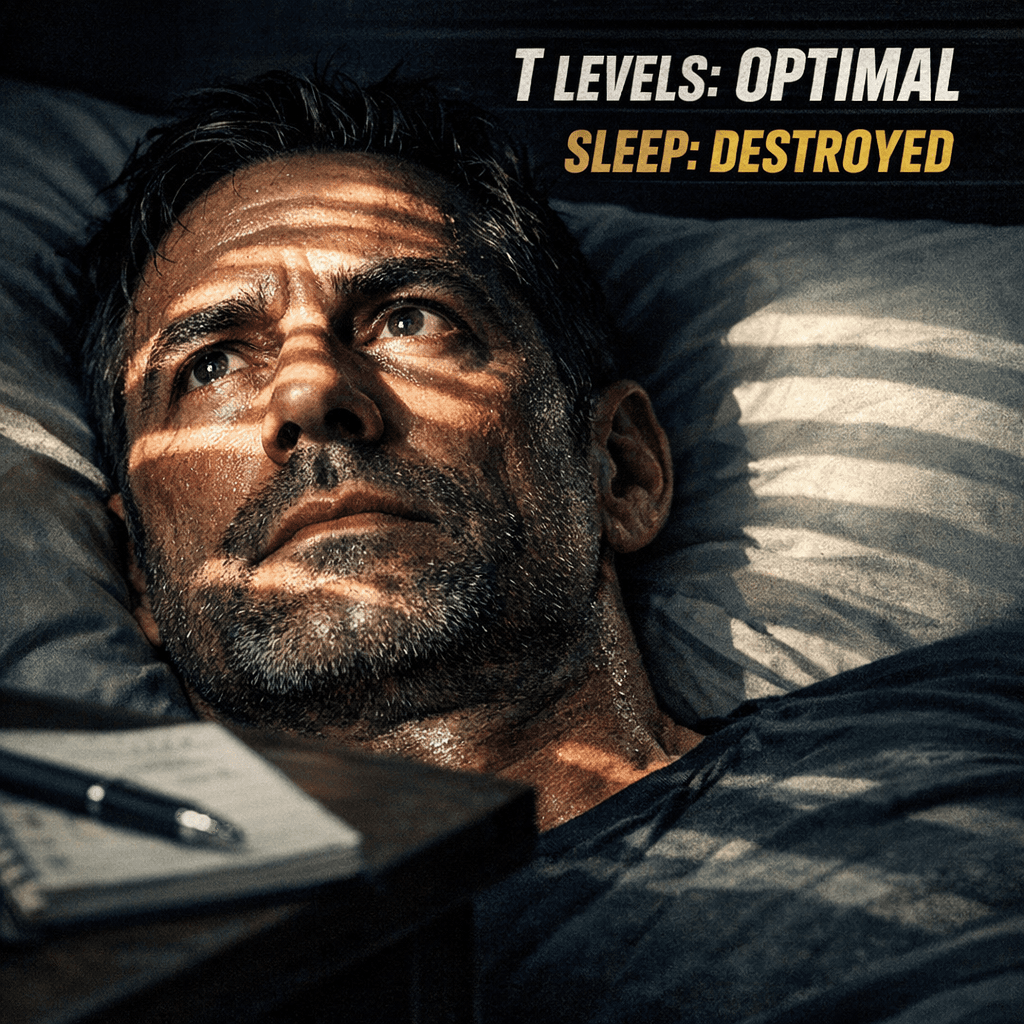
If there is one condition that consistently goes undiagnosed in men pursuing TRT, it is obstructive sleep apnea. The symptoms overlap almost completely: fatigue, low energy, poor concentration, low libido, mood disturbances, and yes, lower testosterone levels. Sleep apnea can both cause and worsen low testosterone, and TRT can in some cases exacerbate it.
A man who has undiagnosed sleep apnea and starts TRT may feel a brief improvement followed by a plateau or a return of symptoms. He may assume his dose is wrong. What he actually needs is a sleep study and, if indicated, treatment for the apnea itself.
This is not a rare edge case. Sleep apnea is extremely common in the demographic most likely to be prescribed TRT, and screening for it before and during therapy is something worth raising with a clinician if it has not already been discussed.
The Weight of What Testosterone Cannot Fix
Testosterone does not treat depression. It does not resolve grief, heal a struggling relationship, reduce occupational burnout, or undo the physiological damage of years of chronic stress. Yet many men arrive at TRT carrying all of those things and expecting the therapy to lift the entire weight.
This is not a criticism. The symptoms of depression and the symptoms of low testosterone overlap significantly, and it is reasonable to wonder whether one is driving the other. In some men, correcting testosterone deficiency does improve mood meaningfully. But in many others, depression or anxiety is its own independent condition that requires its own treatment.
The psychological dimension of TRT also includes the nocebo effect, where negative expectations about side effects or outcomes can produce real symptoms. Men who spend significant time in online communities reading about adverse experiences can develop heightened vigilance about every physical sensation, amplifying perceived symptoms even when their labs and clinical picture look reasonable. This is not a character flaw. It is a well-documented phenomenon, and it is worth acknowledging honestly.
Chasing perfect feelings is its own trap. Some days you will feel great. Some days you will not. TRT does not change the fundamental nature of being a human being in a demanding world.
The Lifestyle Variables That Move the Needle More Than Most Men Expect
Alcohol consumption, even at moderate levels, affects sleep architecture, suppresses testosterone, raises estrogen, and impairs recovery. Men who drink regularly and feel suboptimal on TRT often see noticeable improvement when they reduce intake, independent of any change to their protocol.
Nutrition and training load are similarly underestimated. Chronic under-eating, particularly inadequate protein, blunts the anabolic effects of testosterone therapy. Overtraining without adequate recovery creates persistent inflammation and elevated cortisol, both of which work against the goals of TRT. Resistance training, when balanced appropriately, amplifies the benefits of the therapy in ways that no protocol adjustment can replicate.
Stress and sleep quality are not separate issues from hormone health. They are central to it. Chronically elevated cortisol suppresses testosterone production and alters how tissues respond to hormones. Improving sleep hygiene, reducing physiological stress, and addressing mental health are not supplemental afterthoughts. They are load-bearing parts of the whole structure.
Building the System Around the Therapy
Practical improvements for men who feel off on TRT rarely require dramatic protocol changes. More often, they come from building better systems. Consistent dosing schedules, honest and detailed symptom journaling that tracks sleep, energy, mood, libido, and recovery over time, structured follow-up with a clinician who reviews labs in full context rather than in isolation, screening for conditions like sleep apnea that may have been missed, a candid conversation about alcohol, training habits, nutrition, mental health, and any other medications or supplements that might be interacting with the therapy. These are the conversations that change outcomes.
It is also worth reviewing any other medications or supplements currently being taken with a qualified clinician. Certain medications affect hormone metabolism, thyroid function, or mood in ways that are not always immediately obvious, and something as seemingly minor as a supplement taken for one purpose can have downstream hormonal effects.
TRT is a prescription medical therapy with real physiological effects and real potential side effects. It should be managed by a qualified clinician with appropriate monitoring, not adjusted based on online forums or how someone else feels on a similar protocol. If you experience urgent or concerning symptoms at any point during therapy, contact your healthcare provider.
When the Variable That Changes Everything Is Not Testosterone
The men who feel best on TRT are rarely the ones with the highest levels or the most aggressive protocols. They tend to be the ones who treated TRT as one part of a broader, structured approach to their health, who kept consistent routines, stayed honest about their lifestyle, worked with a clinician who monitored more than just a single hormone marker, and gave themselves realistic timelines.
If you are looking for a clinician-guided option that takes that kind of whole-person approach, AlphaMD makes that kind of care accessible online, connecting you with licensed providers who focus on thoughtful monitoring, individualized treatment, and ongoing support that helps men actually feel better over time, not just improve a number on a lab report. The goal was never a better number. It was a better life.
Have a question? Ask us.
At AlphaMD, we're here to help. Feel free to ask us any question you would like about TRT, medical weightloss, ED, or other topics related to men's health. Or take a moment to browse through our past questions.
People are asking...
I’m not sure how honest you’ll be since you identified your clinic but how common is it for these fee for service clinics to approve someone just for ...
would say it is something that happens with some of our competitors. We get many men who transfer to us only for the provider overseeing their care to take them off of excess medication that, to be pe... See Full Answer
What are the most common side effects and symptoms you see in patients, that may eventually lead them to stop?...
The primary reasons men stop TRT, which providers on the platform rarely see (less than 5%), are desire to maximize chances of fertility, weight gain (TRT increases hunger because of anabolism), and w... See Full Answer
Why do TRT clinics just throw 200mg out to start...
They really shouldn't, but because many take the approach of uniform care over individual planning, they pick a dose that will *certainly* give results which is good for marketing, even if it will alm... See Full Answer
Get $30 off your first month’s order
Enter your email address now to receive $30 off your first month’s cost, other discounts, and additional information about TRT.
Legal Disclaimer
This website is a repository of publicly available information and is not intended to form a physician-patient relationship with any individual. The content of this website is for informational purposes only. The information presented on this website is not intended to take the place of your personal physician's advice and is not intended to diagnose, treat, cure, or prevent any disease. Discuss this information with your own physician or healthcare provider to determine what is right for you. All information is intended for your general knowledge only and is not a substitute for medical advice or treatment for specific medical conditions. The information contained herein is presented in summary form only and intended to provide broad consumer understanding and knowledge. The information should not be considered complete and should not be used in place of a visit, phone or telemedicine call, consultation or advice of your physician or other healthcare provider. Only a qualified physician in your state can determine if you qualify for and should undertake treatment.