
Tesamorelin Is the Peptide That Gets Overlooked Because It Actually Has FDA Approval. Here's Why That Matters.
Published on:
Updated on:
People are asking...
Do you offer peptides and if so can you talk a little bit about which ones you offer and the possible benefits?...
Yes — providers on the AlphaMD platform can prescribe certain peptides, though the selection is more tightly focused than a full on peptide provider. This is because prescribing is limited to peptides... See Full Answer
Can you explain why a peptide or secretagoge is better than the real thing - actual HGH? Is it just a price or availability thing?...
The benefits of a secretagoge over HGH is price, availability, and fewer side effects. Also legality. Actual HGH is one of the most regulated medicines in the US, where off-label prescribing of HGH fo... See Full Answer
What are the best peptides to pair with TRT for getting lean?...
In terms of current official pharmacy offerings, providers often recommend Sermorelin as a good boost. Anecdotally, Ipamorelin / CJC with or without dac is often described as a solid peptide for fitne... See Full Answer
Have a question? Ask us.
At AlphaMD, we're here to help. Feel free to ask us any question you would like about TRT, medical weightloss, ED, or other topics related to men's health. Or take a moment to browse through our past questions.
Most peptides floating around men's health forums exist in a regulatory gray zone, compounded, unverified, and used entirely off-label. Tesamorelin is different, and that difference is worth understanding before you write it off as just another injectable trend.
What Tesamorelin Actually Is
Tesamorelin is a synthetic analog of growth hormone-releasing hormone, commonly abbreviated as GHRH. Your hypothalamus naturally produces GHRH to signal the pituitary gland to release growth hormone. Tesamorelin mimics that signal. It does not directly introduce growth hormone into your system. Instead, it works upstream, nudging your own pituitary to produce and release growth hormone in a more physiologically natural pattern.
This mechanism matters. Rather than flooding the body with exogenous growth hormone, tesamorelin works with the body's existing feedback loops. That distinction has implications for both efficacy and safety, which is part of why it attracted serious clinical attention in the first place.
The FDA Approval No One Talks About
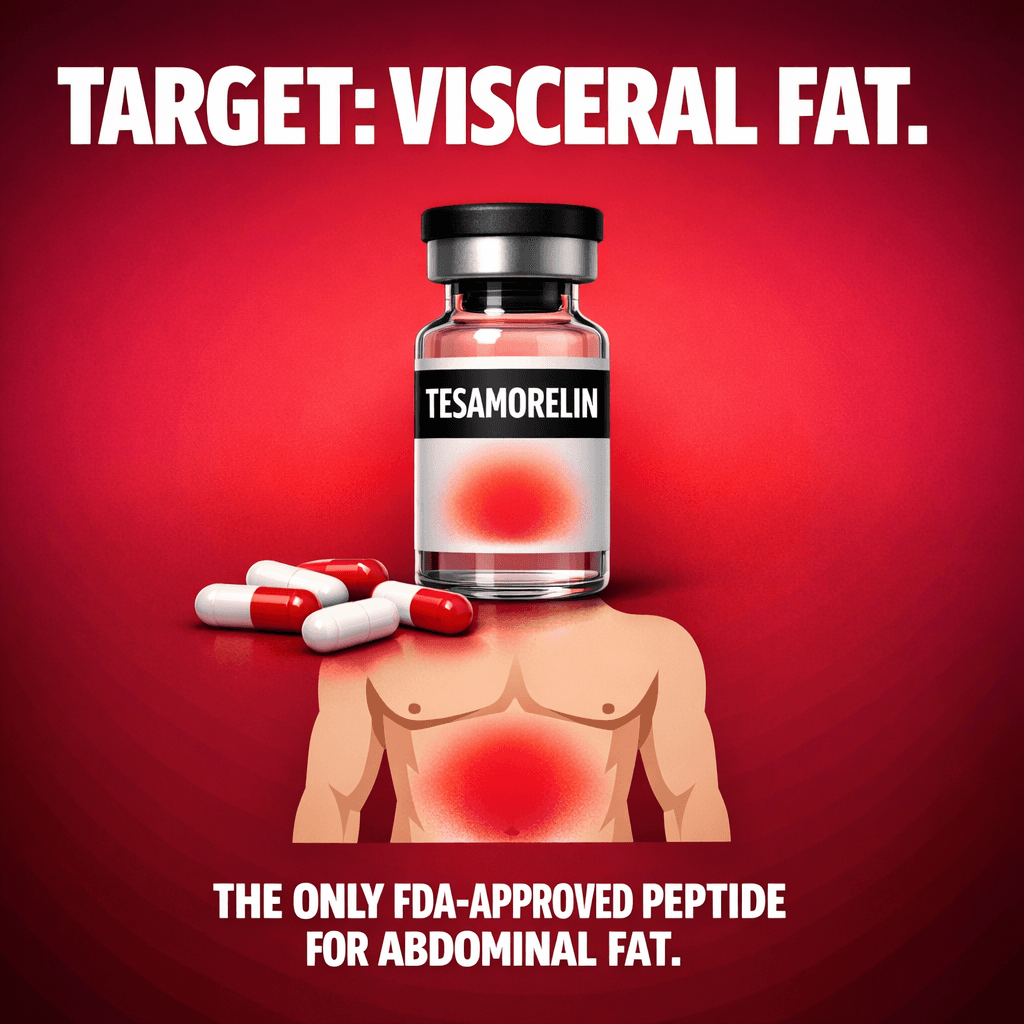
Tesamorelin was approved by the U.S. Food and Drug Administration in 2010 under the brand name Egrifta. Its approved indication is the reduction of excess visceral abdominal fat in adults with HIV-associated lipodystrophy, a condition where antiretroviral therapy disrupts fat distribution, leading to abnormal accumulation of deep abdominal fat.
That approval is not a footnote. It means tesamorelin went through phase II and phase III clinical trials. It was evaluated for safety and efficacy in controlled human studies. A regulatory agency reviewed the data and determined that the benefits outweighed the risks for a specific population. That is a bar that the overwhelming majority of peptides being discussed in men's health spaces have never cleared.
Most compounds in the peptide optimization world, including BPC-157, TB-500, and even some formulations of Sermorelin, are used entirely off-label or exist as compounded preparations without an FDA-approved drug application backing them. That does not automatically make them dangerous or ineffective, but it does mean the evidentiary standard is fundamentally different.
FDA Approval vs. Compounded and Off-Label Use: Understanding the Distinction
This is an area where a lot of confusion lives, and clearing it up helps you make more informed decisions.
FDA approval means a specific drug, at a specific dose, produced by a specific manufacturer, has been reviewed and cleared for a specific use. When a clinician prescribes tesamorelin for HIV-associated lipodystrophy, they are operating within an established regulatory framework backed by published clinical data.
Off-label use is different. When a physician prescribes an FDA-approved drug for a condition it was not specifically approved for, that is off-label prescribing. It is legal, common, and sometimes evidence-based, but the prescriber is exercising clinical judgment outside the boundaries of the original approval. Many peptides and hormones used in men's health and body composition work fall into this category.
Compounded peptides sit in a third category. Compounding pharmacies can prepare medications not commercially available or when a specific formulation is needed for a patient, but compounded drugs do not go through the same FDA review process as manufactured drugs. Quality, potency, and sterility can vary between compounding pharmacies, which is a real consideration when evaluating risk.
For tesamorelin specifically, understanding this distinction matters because the drug does have an approved form. That does not eliminate the questions around off-label application, but it does mean the molecule itself has a documented safety and efficacy record that most peptides lack. According to research published in peer-reviewed literature, including studies referenced in PubMed's collection on growth hormone-releasing hormone analogs, the clinical data on tesamorelin is more robust than nearly any other GHRH analog currently discussed in optimization circles.
What the Research Suggests About Body Composition
The clinical data on tesamorelin, primarily from HIV lipodystrophy trials, showed meaningful reductions in visceral adipose tissue. Visceral fat is the metabolically active fat that accumulates deep in the abdominal cavity, surrounding organs. It is associated with increased cardiovascular risk, insulin resistance, and inflammatory markers. It is also notoriously difficult to reduce through diet and exercise alone in certain populations.
Beyond the visceral fat findings, some research has explored secondary outcomes including changes in metabolic markers, lipid profiles, and patient-reported quality of life. These are not the primary approved indications, but they reflect a broader pattern of metabolic influence consistent with growth hormone's role in metabolism.
In men's health discussions, the interest in tesamorelin often extends beyond HIV populations. Men dealing with age-related growth hormone decline, abdominal fat accumulation, or metabolic sluggishness that hasn't responded well to lifestyle changes alone may find the clinical data worth exploring with a physician. The important caveat is that extrapolating from an HIV lipodystrophy population to a broader group of otherwise healthy men requires careful clinical judgment and should not be assumed.
Realistic Limitations Worth Acknowledging
Tesamorelin is not a shortcut. The clinical trials demonstrated reductions in visceral fat over extended treatment periods, and those effects were not permanent after treatment stopped. Fat returned toward baseline levels when the drug was discontinued in many subjects.
That is not a reason to dismiss it, but it is a reason to approach it with realistic expectations. It works while it is being used, and the degree of benefit varies between individuals. Growth hormone axis function, baseline metabolic health, diet, activity levels, and other hormonal factors all influence outcomes.
There is also a cost consideration. As a branded pharmaceutical with a narrow FDA-approved indication, tesamorelin can be expensive, and insurance coverage outside of the HIV indication is unlikely. Compounded versions have been discussed as a lower-cost alternative, but those come with the caveats around compounding quality discussed earlier.
Safety Profile and Who Should Be Cautious
Common side effects associated with tesamorelin in clinical trials include injection site reactions, fluid retention, joint discomfort, and in some cases elevated blood glucose. The glucose effect is worth noting because growth hormone has well-documented impacts on insulin sensitivity. Individuals with diabetes or prediabetes require additional monitoring and possibly more conservative clinical evaluation before any growth hormone-axis treatment is considered.
Tesamorelin is generally not appropriate for individuals with active malignancy, as growth hormone stimulation has theoretical implications for cancer progression. Pregnancy is a contraindication. Individuals with hypothalamic or pituitary disorders that affect baseline growth hormone production may not respond as expected.
Oversight from a qualified clinician is not optional with tesamorelin. It is a prescription medication that requires injection, and the downstream hormonal effects warrant monitoring of relevant biomarkers over time. Self-administering any peptide without clinical guidance is a meaningful risk, regardless of the molecule's safety profile in controlled settings.
Who Might Have a Genuine Conversation Worth Having
Men who may have a productive clinical conversation about tesamorelin tend to share certain characteristics. They are dealing with persistent visceral abdominal fat that has not responded adequately to diet and exercise. They have had baseline hormonal and metabolic labs done. They do not have active contraindications. And they are working with a clinician who can evaluate the full picture, not just prescribe based on a patient request.
Men who are primarily interested in muscle gain or general performance enhancement should understand that tesamorelin is not approved or strongly evidenced for those applications. The data supports visceral fat reduction in specific populations. Anything beyond that involves extrapolation and clinical judgment, not regulatory backing.
Men with diabetes, active cancer, or significant cardiovascular disease should approach this with particular caution and rigorous clinical review before any consideration.
How Tesamorelin Fits Into the Broader Men's Health Conversation
For men already engaged in hormone optimization, tesamorelin often enters the conversation alongside other treatments. Testosterone replacement therapy remains the most widely discussed and most evidenced intervention in men's hormonal health, addressing low testosterone and its downstream effects on energy, body composition, libido, and mood. Some men on TRT find that body composition improvements plateau, and their clinicians may explore whether growth hormone axis support is appropriate as a complementary consideration.
Human chorionic gonadotropin is often discussed alongside TRT for men who want to preserve testicular function and endogenous hormone production during treatment. It operates on an entirely different axis than tesamorelin but is part of the same broader conversation about supporting the body's hormonal systems rather than simply replacing them.
Sermorelin, another GHRH analog, is frequently compared to tesamorelin. Sermorelin is older, has a shorter active half-life, and while it was once FDA-approved, that approval was withdrawn for commercial rather than safety reasons. Sermorelin is now used primarily as a compounded preparation. Some clinicians prefer it for its longer track record in off-label use. Others consider tesamorelin's more recent and intact clinical data set an advantage.
None of these options exist in isolation. They interact with each other, with lifestyle factors, and with individual physiology in ways that make personalized clinical evaluation essential.
Why the FDA Approval Label Actually Moves the Needle
In a space crowded with peptides backed by rodent studies, anecdotal forum posts, and marketing dressed up as science, FDA approval represents something genuinely different. It means real human clinical trials. It means an independent regulatory body reviewed the methodology, the data, and the risk profile. It means there is a pharmacovigilance framework tracking adverse events post-approval.
That does not make tesamorelin automatically right for every man interested in body composition. Clinical context always matters. But it does mean the conversation with your clinician can start from a more solid evidentiary foundation than most peptide discussions allow.
For men researching hormone optimization options and trying to separate signal from noise, tesamorelin's regulatory history is one of the clearest signals available in the peptide space. It earned its approval through data, and that trail of data is accessible through sources like the FDA's drug label for Egrifta, not just manufacturer claims or practitioner testimonials.
If you are a man navigating these conversations and looking for clinician-guided support that takes your health goals seriously, platforms like AlphaMD offer telehealth access to physicians experienced in men's health and hormone optimization, including the kind of informed conversations that weigh evidence, individual health history, and realistic expectations together. That kind of oversight is not just a formality with treatments like tesamorelin. It is the whole point.
Have a question? Ask us.
At AlphaMD, we're here to help. Feel free to ask us any question you would like about TRT, medical weightloss, ED, or other topics related to men's health. Or take a moment to browse through our past questions.
People are asking...
Do you offer peptides and if so can you talk a little bit about which ones you offer and the possible benefits?...
Yes — providers on the AlphaMD platform can prescribe certain peptides, though the selection is more tightly focused than a full on peptide provider. This is because prescribing is limited to peptides... See Full Answer
Can you explain why a peptide or secretagoge is better than the real thing - actual HGH? Is it just a price or availability thing?...
The benefits of a secretagoge over HGH is price, availability, and fewer side effects. Also legality. Actual HGH is one of the most regulated medicines in the US, where off-label prescribing of HGH fo... See Full Answer
What are the best peptides to pair with TRT for getting lean?...
In terms of current official pharmacy offerings, providers often recommend Sermorelin as a good boost. Anecdotally, Ipamorelin / CJC with or without dac is often described as a solid peptide for fitne... See Full Answer
Get $30 off your first month’s order
Enter your email address now to receive $30 off your first month’s cost, other discounts, and additional information about TRT.
Legal Disclaimer
This website is a repository of publicly available information and is not intended to form a physician-patient relationship with any individual. The content of this website is for informational purposes only. The information presented on this website is not intended to take the place of your personal physician's advice and is not intended to diagnose, treat, cure, or prevent any disease. Discuss this information with your own physician or healthcare provider to determine what is right for you. All information is intended for your general knowledge only and is not a substitute for medical advice or treatment for specific medical conditions. The information contained herein is presented in summary form only and intended to provide broad consumer understanding and knowledge. The information should not be considered complete and should not be used in place of a visit, phone or telemedicine call, consultation or advice of your physician or other healthcare provider. Only a qualified physician in your state can determine if you qualify for and should undertake treatment.