
Low Testosterone and Your Health: Risks, Symptoms, and What to Do Next
Published on:
Updated on:
People are asking...
With T fluctuations being so drastic from any given hour, day, week, how can you really know if someone has a hormonal imbalance?...
That is why symptoms are king, and numbers should be used as a guide post for what treatment is appropriate and how responsive someone is. Your 500 and my 500 will feel completely different to each of... See Full Answer
Have been zeroing on some health issues and I recently got a Testosterone test of 301 ng/dl. As a very healthy male ( train 6x a week, track every cal...
Based on your symptoms, a licensed provider would likely consider you a candidate for TRT. A provider would want to talk with you to dive a bit deeper into them, but at a glance, yes.Men who are very ... See Full Answer
44 year old male, 6’2” 218lbs 16% body fat, very active in terms of weightlifting and working out in general. Took a finger prick test from Everlywell...
If those feelings have been ongoing for 6 to a few years but weren't there before and you have no other health issues, those are symptoms many men with low T describe, and a provider can help confirm ... See Full Answer
Have a question? Ask us.
At AlphaMD, we're here to help. Feel free to ask us any question you would like about TRT, medical weightloss, ED, or other topics related to men's health. Or take a moment to browse through our past questions.
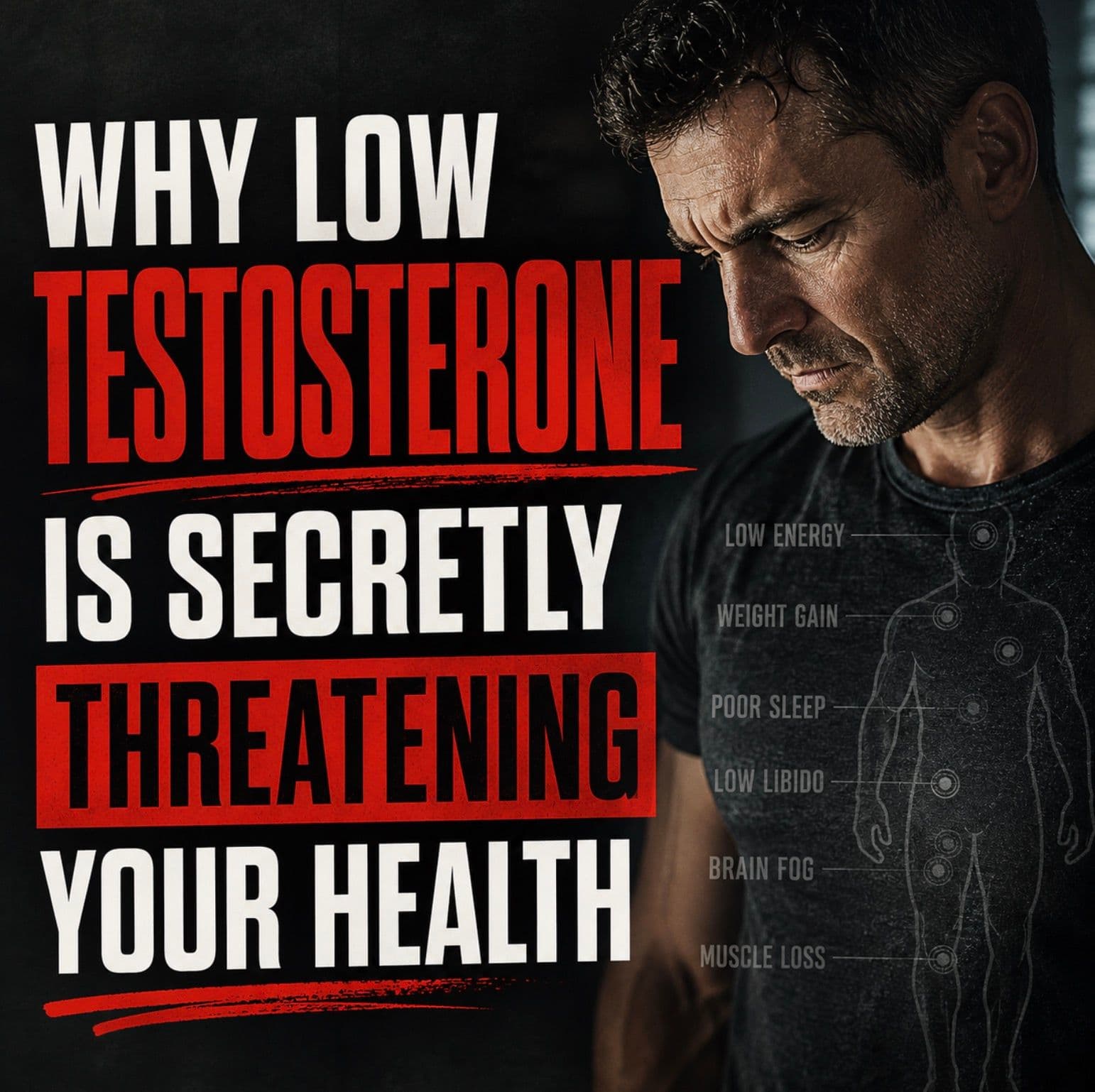
Low testosterone can affect far more than sex drive. Learn how persistently low testosterone may influence energy, muscle, body fat, bone density, fertility, metabolic health, and cardiovascular risk—and when testing may be appropriate.
Low testosterone can affect sexual function, fertility, energy, muscle mass, body composition, bone density, red blood cell production, and overall quality of life. It is also associated with obesity, type 2 diabetes, and cardiovascular disease, although low testosterone does not necessarily cause each of these conditions.
A diagnosis cannot be made from symptoms or a single lab result alone. Most clinical guidelines recommend confirming low testosterone with symptoms, a medical evaluation, and repeatedly low morning testosterone measurements.
What Is Low Testosterone?
Low testosterone, medically known as testosterone deficiency or male hypogonadism, occurs when the body does not produce enough testosterone to support normal physical, sexual, and reproductive function.
Testosterone helps regulate:
- Sexual desire and erectile function
- Sperm production and fertility
- Muscle mass and strength
- Fat distribution
- Bone density
- Red blood cell production
- Mood, motivation, and energy
Testosterone levels naturally change throughout the day and are generally highest in the morning. They may also temporarily fall because of poor sleep, severe calorie restriction, acute illness, certain medications, or significant physical stress.
That is why a single low result does not automatically mean a man has testosterone deficiency.
The Endocrine Society’s clinical guideline recommends diagnosing hypogonadism only when a man has symptoms consistent with testosterone deficiency and testosterone concentrations that are unequivocally and consistently low.
What Level Is Considered Low Testosterone?
The American Urological Association uses a total testosterone level below 300 ng/dL as a reasonable diagnostic cutoff. However, the number must be considered alongside symptoms, repeat testing, laboratory reference ranges, and the patient’s overall health.
Some men experience symptoms with results near the lower end of a laboratory’s range. Other men may have a low result without noticeable symptoms.
A complete evaluation may include:
- Two total testosterone tests performed on separate mornings
- Free testosterone testing when appropriate
- Luteinizing hormone, or LH
- Follicle-stimulating hormone, or FSH
- Prolactin when pituitary dysfunction is suspected
- A complete blood count
- Thyroid, metabolic, or additional hormone testing when indicated
- A review of medications, sleep, weight, fertility goals, and medical history
Testing LH and FSH can help a provider determine whether the problem may originate in the testicles or in the hypothalamus and pituitary gland.
What Are the Most Common Symptoms of Low Testosterone?
The symptoms of low testosterone can develop gradually and may be mistaken for stress, poor sleep, depression, or normal aging.
Common symptoms include:
- Reduced sex drive
- Fewer spontaneous or morning erections
- Erectile difficulties
- Persistent fatigue
- Reduced motivation
- Difficulty building or maintaining muscle
- Increased body fat
- Reduced exercise performance or recovery
- Irritability or low mood
- Difficulty concentrating
- Reduced facial or body hair
- Fertility problems
- Decreased bone density
- Unexplained anemia
No single symptom proves that testosterone is low. Fatigue, erectile dysfunction, weight gain, and depressed mood can have many possible causes, so appropriate testing and medical evaluation are essential.
How Can Low Testosterone Affect Your Health?
1. Reduced Libido and Sexual Function
A decline in sexual desire is one of the symptoms most closely associated with testosterone deficiency. Men may notice less interest in sex, fewer sexual thoughts, fewer morning erections, or reduced responsiveness to sexual stimulation.
Low testosterone can also contribute to erectile difficulties, but it is rarely the only possible cause. Erections depend on healthy blood flow, nerve function, psychological health, medication use, and several other hormones.
Conditions such as cardiovascular disease, diabetes, anxiety, medication side effects, and sleep disorders can also cause erectile dysfunction. A complete evaluation should look beyond testosterone alone.
For men who have confirmed testosterone deficiency, treatment may improve sexual desire and some aspects of sexual function. The response varies, particularly when erectile dysfunction has multiple causes.
2. Fertility Problems
Testosterone produced inside the testicles is essential for normal sperm development. Certain testicular or pituitary conditions that reduce testosterone may also reduce sperm production and make conception more difficult.
However, men who want children need to understand an important distinction: taking external testosterone can suppress the hormonal signals responsible for sperm production.
Standard testosterone replacement therapy is therefore generally not recommended for men actively trying to conceive. The Endocrine Society advises against starting testosterone therapy in men planning fertility in the near term.
Men concerned about both low testosterone and fertility should discuss reproductive testing and fertility-preserving treatment strategies with a qualified provider before beginning therapy.
3. Loss of Muscle and Changes in Body Composition
Testosterone supports muscle protein synthesis, lean body mass, and physical strength. When testosterone remains low, some men experience:
- Reduced muscle mass
- Difficulty gaining strength
- Slower exercise recovery
- Increased body fat
- More fat around the waist
The relationship between testosterone and body fat works in both directions. Low testosterone may contribute to unfavorable body-composition changes, while obesity can suppress testosterone production.
This means TRT should not be presented as a stand-alone weight-loss treatment. Nutrition, resistance training, sleep, activity level, medications, and metabolic health remain essential.
For appropriately diagnosed men, testosterone treatment may increase lean mass and reduce fat mass modestly. Results still depend heavily on diet, exercise, treatment adherence, and the underlying cause of the deficiency.
4. Reduced Bone Density
Testosterone and the estrogen produced from testosterone both contribute to male bone health. Persistently low levels can lead to reduced bone mineral density and may increase the likelihood of osteopenia or osteoporosis.
Bone loss usually develops silently. A man may not know his bone density has declined until testing identifies the problem or a fracture occurs.
Risk may be especially important for men with:
- Long-standing or severe hypogonadism
- A previous low-impact fracture
- Long-term corticosteroid use
- Very low body weight
- Heavy alcohol use
- Other osteoporosis risk factors
Testosterone therapy can improve bone density in some men with confirmed hypogonadism, but it should not be assumed to prevent every fracture. Men at increased risk may require bone-density testing and additional osteoporosis treatment.
5. Fatigue and Unexplained Anemia
Testosterone helps stimulate red blood cell production. Persistently low testosterone can sometimes contribute to mild or unexplained anemia, which may worsen fatigue, reduced exercise tolerance, and weakness.
Clinical trials have found that testosterone therapy can increase hemoglobin and correct anemia in some older men with low testosterone. However, fatigue alone is highly nonspecific.
Poor sleep, sleep apnea, thyroid disease, nutritional deficiencies, depression, medication effects, cardiovascular disease, and many other conditions can produce similar symptoms.
Because testosterone treatment can also raise hematocrit too far, providers generally monitor blood counts before and during treatment. Excessive red blood cell production may require a dosage adjustment or further evaluation.
6. Mood, Motivation, and Cognitive Symptoms
Men with low testosterone may report:
- Irritability
- Low mood
- Reduced motivation
- Difficulty concentrating
- A diminished sense of well-being
- Less enjoyment of normal activities
These symptoms are real, but they are not unique to hormonal deficiency. Low testosterone can coexist with depression, anxiety, chronic stress, poor sleep, substance use, relationship difficulties, or other medical conditions.
TRT is not an antidepressant and should not replace appropriate mental-health care. Some men with confirmed hypogonadism report improved mood or well-being after treatment, while others notice little change.
New, severe, or persistent depression should always be evaluated directly rather than attributed automatically to testosterone.
7. Metabolic Health
Low testosterone is frequently associated with:
- Obesity
- Insulin resistance
- Type 2 diabetes
- Increased waist circumference
- Metabolic syndrome
- Abnormal cholesterol levels
These relationships are complex and often bidirectional. Poor metabolic health can reduce testosterone, and low testosterone may make maintaining muscle and favorable body composition more difficult.
This does not mean that testosterone therapy cures diabetes or metabolic syndrome. The Endocrine Society specifically recommends against using testosterone solely to improve blood-sugar control in men with type 2 diabetes.
For men with obesity or metabolic disease, an effective plan may involve weight management, resistance training, improved sleep, treatment of sleep apnea, diabetes management, medication review, and evaluation for testosterone deficiency when symptoms are present.
8. Cardiovascular Health
Low testosterone is associated with cardiovascular risk factors and is considered a cardiovascular risk marker by the American Urological Association. However, an association does not prove that low testosterone directly causes heart attacks or strokes.
It also does not prove that raising testosterone will prevent cardiovascular disease.
The large TRAVERSE cardiovascular safety trial studied middle-aged and older men who had symptoms of hypogonadism, repeatedly low testosterone, and existing cardiovascular disease or cardiovascular risk factors. Testosterone therapy was not associated with a higher rate of major cardiovascular events than placebo during the trial.
Based partly on these results, the FDA updated testosterone product labeling in 2025 and removed boxed-warning language concerning an increased risk of adverse cardiovascular outcomes.
The FDA also required warnings that testosterone products can increase blood pressure. This makes blood-pressure monitoring an important part of ongoing treatment.
The most accurate conclusion is that properly prescribed testosterone has not been shown to increase major cardiovascular events in the population studied by TRAVERSE, but TRT should not be marketed as a treatment that prevents heart disease.
What Causes Low Testosterone?
Low testosterone can have many possible causes, including:
- Testicular injury, infection, or disease
- Pituitary or hypothalamic conditions
- Genetic disorders
- Obesity
- Poorly controlled diabetes
- Severe or untreated sleep apnea
- Chronic illness
- Opioids and certain other medications
- Anabolic steroid use or withdrawal
- Chemotherapy or radiation
- Excessive alcohol use
- Severe calorie restriction or overtraining
- Normal age-related hormonal changes
Determining the cause matters. In some cases, correcting an underlying issue may improve testosterone without long-term replacement therapy. In other cases, the body may no longer be able to produce adequate testosterone on its own.
Can Low Testosterone Be Improved Naturally?
Testosterone may improve naturally when low levels are related to a reversible factor.
Depending on the individual, helpful steps may include:
- Losing excess body fat
- Treating sleep apnea
- Getting sufficient, consistent sleep
- Eating enough calories, protein, and dietary fat
- Performing regular resistance training
- Reducing excessive alcohol consumption
- Reviewing medications with a healthcare provider
- Treating uncontrolled diabetes or other chronic conditions
- Avoiding anabolic steroids and unregulated hormone products
Lifestyle changes cannot repair every pituitary or testicular condition. Men with persistent symptoms should not assume that supplements, “testosterone boosters,” or more exercise will correct a medical hormone deficiency.
When Should You Get Tested for Low Testosterone?
Testing may be appropriate when a man has persistent symptoms such as reduced libido, fewer morning erections, unexplained loss of muscle, fertility problems, low bone density, or otherwise unexplained anemia.
Testing should generally be performed in the morning on two separate days. Results obtained during an acute illness, after significant sleep deprivation, or during severe calorie restriction may not reflect a man’s usual hormonal status.
Routine testosterone screening is not recommended for every man without symptoms. The purpose of testing is to connect relevant symptoms with accurate biochemical evidence and determine whether another condition may be responsible.
How Is Confirmed Low Testosterone Treated?
Treatment depends on the cause, severity of symptoms, laboratory results, medical history, and fertility goals.
A provider may recommend:
- Addressing an underlying illness or medication
- Weight loss and metabolic-health treatment
- Treatment of sleep apnea
- Fertility-focused hormonal treatment
- Monitoring without immediate medication
- Testosterone replacement therapy
For men with symptoms and consistently low testosterone who are appropriate candidates, testosterone replacement therapy may help restore testosterone to a physiologic range and improve certain symptoms.
Treatment is individualized. A higher dose is not automatically better, and treatment should focus on symptom response, appropriate testosterone levels, and safe monitoring.
What Should Be Monitored During TRT?
Ongoing medical supervision is an essential part of testosterone treatment.
Monitoring may include:
- Testosterone levels
- Hemoglobin and hematocrit
- Blood pressure
- Symptom improvement
- Medication side effects
- Prostate health and PSA when appropriate
- Sleep-apnea symptoms
- Fertility goals
- Other laboratory markers based on medical history
Patients should tell their provider about significant increases in blood pressure, severe headaches, shortness of breath, leg swelling, worsening urinary symptoms, or other new health concerns.
Frequently Asked Questions
Is low testosterone dangerous?
Low testosterone is not usually an immediate emergency, but persistent, medically confirmed testosterone deficiency may affect sexual health, fertility, muscle, bone density, red blood cell production, and quality of life. It may also occur alongside metabolic or cardiovascular disease that requires attention.
Does low testosterone cause belly fat?
Low testosterone may contribute to reduced lean mass and increased body fat, including abdominal fat. However, excess body fat can also lower testosterone. Diet, activity, sleep, medications, and metabolic health must also be considered.
Can low testosterone cause erectile dysfunction?
Low testosterone can contribute to erectile dysfunction, especially when accompanied by reduced libido and fewer morning erections. Blood-flow problems, diabetes, medication effects, anxiety, and cardiovascular disease are also common causes.
Can low testosterone cause depression?
Low testosterone may be associated with low mood, irritability, and reduced motivation, but these symptoms do not prove a hormone deficiency. Depression should be evaluated and treated directly, even when testosterone is also being investigated.
Can TRT prevent a heart attack?
Current evidence does not show that TRT prevents heart attacks. The TRAVERSE trial found no increased rate of major cardiovascular events compared with placebo in the population studied, but that is not the same as proving cardiovascular protection.
Is one low testosterone test enough?
Usually not. Clinical guidelines generally recommend confirming the result with another morning testosterone measurement and evaluating whether relevant symptoms are present.
Does testosterone therapy affect fertility?
Yes. External testosterone can substantially reduce sperm production and may cause temporary infertility. Men who want to conceive should discuss fertility-preserving options before starting treatment.
The Bottom Line
Low testosterone can affect much more than libido. Persistently low levels may influence sexual function, fertility, muscle, body composition, bone density, red blood cell production, mood, and overall quality of life.
At the same time, symptoms such as fatigue, weight gain, erectile dysfunction, and low mood can have many causes. The goal is not simply to raise a laboratory number. It is to determine whether a genuine testosterone deficiency is present, identify why it is occurring, and select the safest treatment for the individual.
AlphaMD connects patients with independent, licensed healthcare providers who can evaluate symptoms, review laboratory results, discuss fertility and health goals, and determine whether treatment is appropriate.
Have a question? Ask us.
At AlphaMD, we're here to help. Feel free to ask us any question you would like about TRT, medical weightloss, ED, or other topics related to men's health. Or take a moment to browse through our past questions.
People are asking...
With T fluctuations being so drastic from any given hour, day, week, how can you really know if someone has a hormonal imbalance?...
That is why symptoms are king, and numbers should be used as a guide post for what treatment is appropriate and how responsive someone is. Your 500 and my 500 will feel completely different to each of... See Full Answer
Have been zeroing on some health issues and I recently got a Testosterone test of 301 ng/dl. As a very healthy male ( train 6x a week, track every cal...
Based on your symptoms, a licensed provider would likely consider you a candidate for TRT. A provider would want to talk with you to dive a bit deeper into them, but at a glance, yes.Men who are very ... See Full Answer
44 year old male, 6’2” 218lbs 16% body fat, very active in terms of weightlifting and working out in general. Took a finger prick test from Everlywell...
If those feelings have been ongoing for 6 to a few years but weren't there before and you have no other health issues, those are symptoms many men with low T describe, and a provider can help confirm ... See Full Answer
Get $30 off your first month’s order
Enter your email address now to receive $30 off your first month’s cost, other discounts, and additional information about TRT.
Legal Disclaimer
This website is a repository of publicly available information and is not intended to form a physician-patient relationship with any individual. The content of this website is for informational purposes only. The information presented on this website is not intended to take the place of your personal physician's advice and is not intended to diagnose, treat, cure, or prevent any disease. Discuss this information with your own physician or healthcare provider to determine what is right for you. All information is intended for your general knowledge only and is not a substitute for medical advice or treatment for specific medical conditions. The information contained herein is presented in summary form only and intended to provide broad consumer understanding and knowledge. The information should not be considered complete and should not be used in place of a visit, phone or telemedicine call, consultation or advice of your physician or other healthcare provider. Only a qualified physician in your state can determine if you qualify for and should undertake treatment.