
The TRT Satisfaction Data No One Publishes: What 85 Percent of Men Actually Report at 12 Months
Published on:
Updated on:
People are asking...
Do you have any theories as to why some people experience a honeymoon phase for a few weeks then lose the benefits of TRT?...
The most common reason for this in men tends to be a need for a simple dose adjustment. There's a general 8 week uptake period where injected levels increase week over week & then natural production ... See Full Answer
36 M - 4 weeks into treatment. 60MG test cyp injection Tuesdays and Fridays. Started w T level around 280 - all typical symptoms. Low energy, moodines...
Check out this timeline we share with patients: - The Start, Weeks 1-4 - Many notice effects from the first few injections. During this time, more benefits will become apparent as the half-lives ... See Full Answer
Any idea why I would be constantly buzzed/wired on a low dose of 80/wk every day subq? What percentage of your guys are subq vs IM?...
I can't say. While TRT often resolves fatigue, it is not known to make someone feel "wired". Some men have reported this phenomenon, but it seems to occur primarily when first starting TRT and resolve... See Full Answer
Have a question? Ask us.
At AlphaMD, we're here to help. Feel free to ask us any question you would like about TRT, medical weightloss, ED, or other topics related to men's health. Or take a moment to browse through our past questions.
Most men starting hormone therapy have heard a version of the same promise: you will feel like yourself again. What the brochures rarely explain is how complicated "feeling like yourself again" actually is to measure, track, or guarantee at twelve months.
The 85 Percent Figure and What It Actually Means
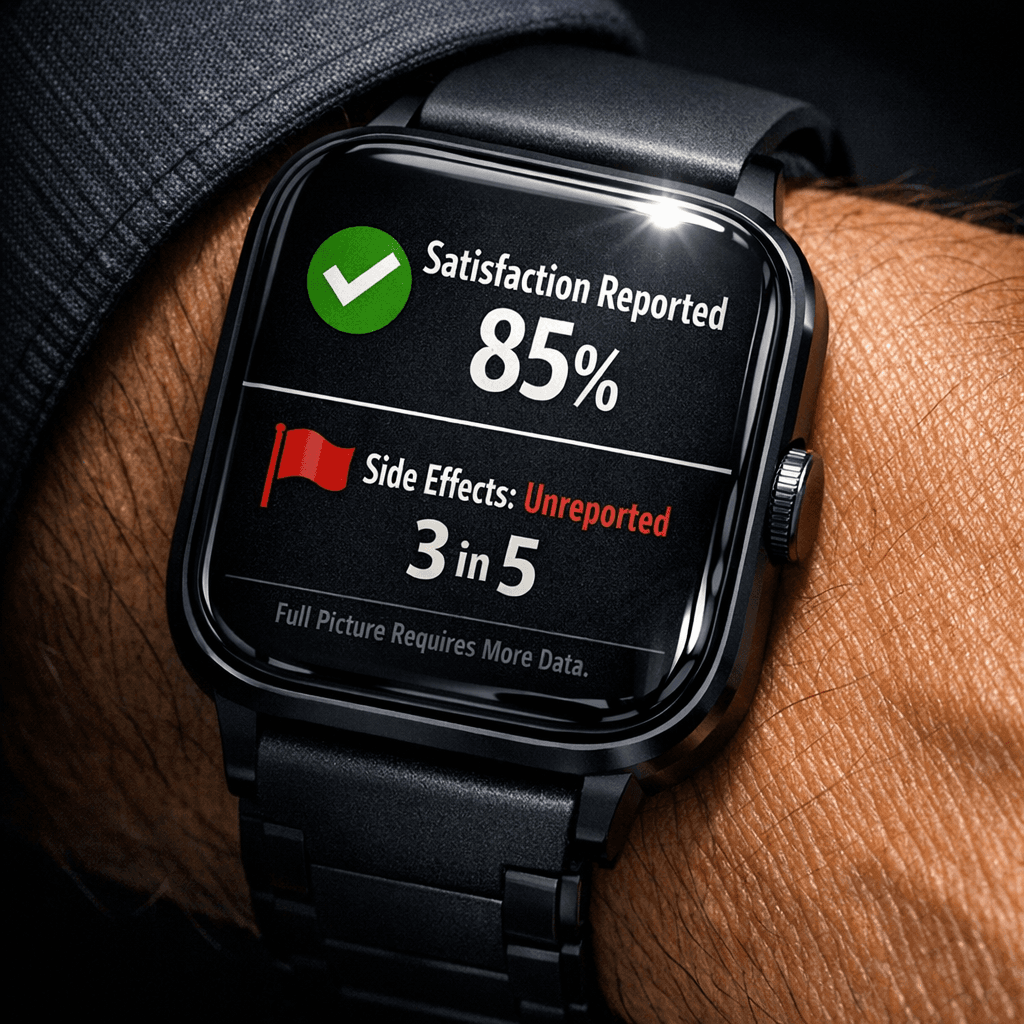
Testosterone replacement therapy is frequently cited with a compelling-sounding satisfaction rate - somewhere around 85 percent of men reporting they are satisfied at the one-year mark. That number circulates in patient forums, clinic marketing, and casual medical conversations. It is worth asking where it comes from and what it is actually measuring.
Satisfaction in clinical research is not a single, standardized outcome. Different studies use different questionnaires, different populations, different definitions of "satisfied," and different follow-up windows. A man who says he is satisfied in a survey might still be managing side effects, questioning whether the benefits justify the cost, or quietly thinking about discontinuing. Aggregate satisfaction figures tend to obscure as much as they reveal.
That said, the general direction of the data is real. Research published through the National Institutes of Health consistently shows that men with clinically confirmed low testosterone who receive appropriate therapy report meaningful improvements in quality of life, energy, mood, and sexual function. The question is not whether benefits exist - it is whether a given patient will experience them, sustain them, and find the overall experience worthwhile at twelve months.
What Satisfaction at 12 Months Actually Encompasses
Twelve months is a meaningful milestone because it captures more than the initial response. Early months often bring a noticeable "honeymoon" effect - energy improves, libido returns, mood lifts. By the one-year mark, the picture is more honest.
Real satisfaction at twelve months tends to involve several overlapping factors. Symptom relief is the most obvious: did fatigue improve, did libido return, did body composition shift in a meaningful way? But satisfaction also involves the experience of getting there - the frequency of monitoring appointments, the administration method, the cost relative to perceived benefit, and how well managed side effects were when they appeared.
Men who entered therapy with realistic expectations and stayed engaged with regular labs and provider check-ins tend to report higher satisfaction. Men who expected a dramatic transformation within weeks, or who received minimal follow-up after their initial prescription, are disproportionately represented among the dissatisfied. That gap between expectation and experience is one of the most underreported drivers of TRT outcomes.
Why Some Men Are Not Satisfied - and Why Clinics Rarely Talk About It
The reasons men discontinue or report dissatisfaction are instructive. Inadequate monitoring is near the top of that list. When providers do not track key lab values over time and adjust therapy accordingly, symptoms can return, side effects can worsen unnoticed, and men feel like they are managing the process alone.
Fertility concerns are another significant factor. Exogenous testosterone can suppress the body's own production of hormones that support sperm production, and men who were not counseled on this before starting therapy sometimes feel blindsided when the topic becomes relevant. Some clinics incorporate human chorionic gonadotropin into protocols to help preserve testicular function, which can address some of those concerns - but only if the conversation happens upfront.
Administration hassle is more common than it might seem. Weekly injections, daily gels, or other delivery methods each carry their own friction. A man who travels frequently may find certain protocols difficult to maintain. One who shares a household with children may have safety concerns around topical formulations. These are not clinical failures, but they erode day-to-day satisfaction in ways that rarely show up in published data.
Side effects - including changes in red blood cell counts, skin changes, mood fluctuations, and others - are real and occur in a meaningful minority of men. Most are manageable with appropriate monitoring and dose adjustments. But when they are not caught early, they become sources of dissatisfaction that color the entire experience.
Why Many Clinics Do Not Publish Their Own Satisfaction Data
Here is the uncomfortable reality: most clinics that prescribe testosterone therapy do not publish their own outcome data. Aggregating and analyzing patient outcomes over time requires infrastructure, oversight, and a willingness to report results that may not be flattering. It is easier to cite a general industry figure than to track and disclose your own discontinuation rates.
This creates an information asymmetry that patients can partially address by asking better questions before they start. Rather than asking "what is your success rate," consider asking: How often will I have lab work done in the first year? What specific values do you monitor and why? How do you handle dose adjustments when symptoms are not resolving? What is your protocol if I want to discontinue? Do you track patient outcomes over time?
These questions reveal whether a clinic is operating with a systems-based, monitoring-driven approach or simply writing prescriptions and hoping for the best. The American Urological Association emphasizes that appropriate testosterone deficiency management requires thorough evaluation and follow-up, not a one-time prescription. A provider who cannot clearly answer questions about monitoring cadence is a provider worth being cautious about.
Who Is and Is Not a Strong Candidate
Satisfaction data only means something if the right population is being treated. Men who are most likely to benefit from TRT are those with confirmed low testosterone based on appropriate lab testing, who also have symptoms consistent with deficiency - fatigue, low libido, mood changes, reduced muscle mass, cognitive fog - that are not adequately explained by other conditions.
Men with untreated sleep apnea, certain cardiovascular conditions, active prostate concerns, or who are trying to conceive in the near term require careful evaluation before any treatment decision is made. These are not automatic disqualifiers in every case, but they require a more nuanced conversation with a qualified provider.
Men who come to therapy primarily seeking athletic performance enhancement, or whose testosterone levels are within normal reference ranges, tend to be poorer candidates and are more likely to be dissatisfied - because the therapy was not designed for their actual situation.
Age and overall health context matter considerably. Younger men, in particular, benefit from understanding how therapy may interact with long-term hormonal function. The decision should be made with a full picture of baseline health, not just a single lab result.
Safety, Risk, and the Importance of Honest Context
Testosterone therapy is not without risk, and any provider or resource that suggests otherwise is not serving patients well. That said, the risks associated with appropriately dosed, properly monitored therapy in well-selected patients are generally manageable and well-characterized in the literature.
Cardiovascular health is one area that receives significant research attention. Current evidence suggests that in men with true testosterone deficiency, therapy may have a neutral or even modestly beneficial cardiovascular effect - but this is population-dependent and the research continues to evolve. It is not a blanket guarantee of safety, and cardiovascular history should always be part of the intake evaluation.
Red blood cell production can increase with therapy, which matters for some men more than others. Prostate-specific antigen levels are typically monitored. Mood and sleep patterns can shift. These are not reasons to avoid therapy if it is clinically appropriate - they are reasons to stay engaged with monitoring throughout the process.
The goal is not to alarm men out of a therapy that may genuinely improve their quality of life. The goal is to enter that therapy with accurate expectations and a provider relationship structured around safety.
Reading Satisfaction Data Like a Patient Who Has Done the Work
When you see a headline claiming that 85 percent of men are satisfied with TRT at twelve months, the most useful response is curiosity rather than either excitement or skepticism. Ask what population that figure comes from. Ask how satisfaction was defined. Ask what happened to the men who were not satisfied - did they discontinue, adjust their protocol, or simply learn to manage differently?
The honest version of TRT satisfaction data is more nuanced than any single number can capture. Many men do experience meaningful, sustained improvements in energy, sexual function, mood, and overall wellbeing at one year. Those outcomes are real and well-supported. But they are not universal, they are not guaranteed by the therapy alone, and they depend heavily on how the therapy is delivered and monitored.
For men who want to approach this decision carefully, AlphaMD offers evidence-based evaluation, ongoing lab monitoring, and provider access designed to support informed decisions rather than just fast prescriptions. The satisfaction that holds up at twelve months tends to be built in the first conversation - not just the first dose.
Have a question? Ask us.
At AlphaMD, we're here to help. Feel free to ask us any question you would like about TRT, medical weightloss, ED, or other topics related to men's health. Or take a moment to browse through our past questions.
People are asking...
Do you have any theories as to why some people experience a honeymoon phase for a few weeks then lose the benefits of TRT?...
The most common reason for this in men tends to be a need for a simple dose adjustment. There's a general 8 week uptake period where injected levels increase week over week & then natural production ... See Full Answer
36 M - 4 weeks into treatment. 60MG test cyp injection Tuesdays and Fridays. Started w T level around 280 - all typical symptoms. Low energy, moodines...
Check out this timeline we share with patients: - The Start, Weeks 1-4 - Many notice effects from the first few injections. During this time, more benefits will become apparent as the half-lives ... See Full Answer
Any idea why I would be constantly buzzed/wired on a low dose of 80/wk every day subq? What percentage of your guys are subq vs IM?...
I can't say. While TRT often resolves fatigue, it is not known to make someone feel "wired". Some men have reported this phenomenon, but it seems to occur primarily when first starting TRT and resolve... See Full Answer
Get $30 off your first month’s order
Enter your email address now to receive $30 off your first month’s cost, other discounts, and additional information about TRT.
Legal Disclaimer
This website is a repository of publicly available information and is not intended to form a physician-patient relationship with any individual. The content of this website is for informational purposes only. The information presented on this website is not intended to take the place of your personal physician's advice and is not intended to diagnose, treat, cure, or prevent any disease. Discuss this information with your own physician or healthcare provider to determine what is right for you. All information is intended for your general knowledge only and is not a substitute for medical advice or treatment for specific medical conditions. The information contained herein is presented in summary form only and intended to provide broad consumer understanding and knowledge. The information should not be considered complete and should not be used in place of a visit, phone or telemedicine call, consultation or advice of your physician or other healthcare provider. Only a qualified physician in your state can determine if you qualify for and should undertake treatment.