
The Sensitivity Problem Nobody Warned You About
Published on:
Updated on:
People are asking...
What are the earliest signs that you might need to use an AI? What’s the lowest effective dose of arimadex/anastrazole?...
Sensitive nipples is the number one easy to spot symptom for a man. There's other things like noticing you cry when watching movies that you typically wouldn't feel emotions over, but that's a lot mor... See Full Answer
Is breast sensitivity a pretty good sign you should add AI or should you always wait and check blood work and only add if you are too high? (Asking si...
If your current TRT provider has suggested to wait until reviewing bloodwork, following their directions is the right call. For patients on the AlphaMD platform who have had nipple sensitivity, that's... See Full Answer
Have any of your guys who needed to be on an AI but didn’t prefer them, have any success with something like DIM or CDG?...
Yes to needing an AI & not wanting one. In those cases, the provider overseeing your care may increase injection frequency, make sure you're doing subq injections, and finally look at a lower dose eve... See Full Answer
Have a question? Ask us.
At AlphaMD, we're here to help. Feel free to ask us any question you would like about TRT, medical weightloss, ED, or other topics related to men's health. Or take a moment to browse through our past questions.
You know that feeling when you're suddenly aware of every little thing, like your body's volume got turned up overnight? Or maybe it's the opposite: everything feels muted, distant, like you're watching your own life through thick glass.
Most guys don't expect hormones to mess with their sensitivity, but that's exactly what happens when testosterone and related hormones start shifting. And when we say "sensitivity," we're not just talking about getting teary at commercials (though that can happen too). We're talking about physical sensations, emotional reactions, how your body responds to touch, and even how quickly you go from zero to pissed off on a random Tuesday.
This is the sensitivity problem nobody warns you about, and it catches men off guard more often than almost any other aspect of hormonal health.
When Your Body Starts Sending Different Signals
Sensitivity changes show up in ways most guys never connect to their hormones at first. You might notice your chest feels tender when you put on a seatbelt. Your skin might feel different, more reactive to temperature or fabric. Some men report that areas that used to feel one way during sex suddenly feel completely different, either more intense or strangely numb.
These aren't random quirks. They're your body responding to the hormonal environment it's operating in.
Testosterone doesn't work alone. It interacts with estrogen, DHT, and a whole cascade of other signals that affect how your nervous system processes sensation. When those levels shift, either because they're declining naturally or because you're making changes through treatment, your sensory experience can shift right along with them.
The physical stuff is often easier to notice than the emotional changes, but they're deeply connected. A guy who suddenly feels more physically sensitive might also find himself more reactive to stress, criticism, or conflict. Another man might feel like his emotional range has narrowed, like he's operating with fewer colors on the palette.
The Mood Swings Nobody Talks About
Let's address the elephant in the room: yes, hormones affect your mood, and no, that doesn't make you less of a man.
When testosterone is low or out of balance with other hormones, many men describe feeling flat. Not sad exactly, just... less. Less motivated, less interested, less resilient when small things go wrong. You might find yourself snapping at people over minor annoyances, or feeling irritated for no clear reason.
Some guys describe it as having a shorter fuse. Others say they just stopped caring about things that used to matter. Both experiences point to the same underlying issue: hormones play a significant role in emotional regulation, and when they're off, your mood stability can take a hit.
The tricky part is that these changes often happen gradually. You don't wake up one day feeling completely different. Instead, over months or years, you slowly become a slightly more irritable, slightly more withdrawn, slightly less patient version of yourself. By the time you notice, your partner or close friends have probably been seeing it for a while.
And because men aren't typically encouraged to talk about emotional sensitivity or mood changes, a lot of guys just push through, assuming this is what getting older feels like. Sometimes it is. But sometimes it's your hormones telling you something needs attention.
What Hormones Have To Do With All This
Testosterone gets most of the attention in men's health conversations, and for good reason. It influences energy, muscle mass, bone density, libido, and yes, mood and sensitivity. When levels drop below what your body needs to function optimally, the effects ripple outward into nearly every aspect of your daily experience.
But testosterone doesn't operate in isolation. As testosterone levels change, whether naturally or through treatment, your body converts some of it into estrogen through a process called aromatization. Estrogen in men is completely normal and necessary, but the balance matters. Too much or too little estrogen relative to testosterone can trigger its own set of sensitivity issues.
Some men with higher estrogen levels relative to testosterone notice increased emotional reactivity, water retention, and yes, nipple or chest tenderness. Others might experience the opposite: when estrogen is too low, they feel emotionally flat, joint discomfort, and reduced sexual function.
The point isn't to fear these conversions or try to eliminate estrogen (you need it). The point is to understand that hormonal health is about balance, not just raw testosterone numbers. And that balance directly affects how sensitive you feel, both physically and emotionally.
From Numb To On Edge, And Back Again
One of the most disorienting aspects of hormonal changes is that sensitivity doesn't move in just one direction. You might start out feeling numb and disconnected, then overcorrect and feel hyperaware of everything for a while.
This is especially common when men start testosterone replacement therapy or adjust their treatment protocol. The goal is to restore healthy hormone levels, but the transition period can feel bumpy. Some guys report feeling more alive, more engaged, more present in their bodies. That's often exactly what they were hoping for.
But along with that renewed sense of vitality can come a temporary increase in emotional intensity. Things that wouldn't have fazed you before might suddenly feel more significant. You might feel more protective, more competitive, or more reactive. For some men, libido comes roaring back before their emotional regulation fully stabilizes, which can feel overwhelming.
Other men experience the opposite pattern. They might feel emotionally steadier and calmer on treatment, but notice their physical sensitivity has changed. Sexual response might feel different. Skin might feel more or less reactive. The body is recalibrating, and that process takes time.
None of this means treatment isn't working or that something is going wrong. It means your body is adjusting to a new hormonal environment, and adjustment isn't always linear. This is why working with experienced clinicians who understand these patterns is so important. They can help distinguish between normal adjustment periods and situations that need protocol changes.
The Sexual Sensitivity Shift
Let's be direct: hormonal changes can significantly affect how sex feels, how easily you get aroused, and how your body responds during intimacy.
When testosterone is low, many men notice their libido drops off. But it's not always just about wanting sex less. Sometimes it's about feeling less sensation, taking longer to respond, or finding that the whole experience feels muted compared to how it used to be.
When hormone levels improve, whether naturally or through treatment, sexual sensitivity often returns. But it doesn't always return exactly the way you remember it. Some men find they're more sensitive than before, which can be a double-edged sword. Greater sensation is usually welcome, but it can also mean adjusting to different timing or intensity.
Other men find their response pattern changes in unexpected ways. Arousal might come on faster or slower. The recovery time between sexual activity might shift. These changes aren't problems to solve, they're adaptations to understand and work with.
The mental side matters just as much as the physical. Confidence, stress levels, and relationship dynamics all affect sexual experience, and all of those can shift when your hormonal health changes. A guy who's been struggling with low energy and motivation suddenly feels like himself again, and that psychological shift can be just as significant as the physical changes.
Talking To Your Partner Before It Boils Over
Changing sensitivity, whether emotional, physical, or sexual, doesn't just affect you. It affects your relationship.
If you've been more irritable, withdrawn, or unpredictable lately, your partner has noticed. If your interest in intimacy has dropped off or suddenly changed character, that's affecting both of you. And if you're going through treatment that's shifting how you feel and respond, keeping that to yourself creates confusion and distance.
The conversation doesn't have to be complicated. You don't need to explain every detail of your hormones or treatment. What matters is being honest about what you're experiencing and acknowledging that it's affecting the relationship.
Something simple works: "I've been dealing with some hormonal stuff that's been making me more on edge. I'm working on it, but I wanted you to know that when I've been short with you, it's not about you."
Or: "I'm going through some changes with my health that are affecting how I feel physically and emotionally. I'm figuring it out with my doctor, but I wanted to keep you in the loop because I know it's affecting us."
Most partners respond with relief when you open up about this stuff. They've been noticing the changes, and now they have context instead of wondering if they did something wrong or if you're losing interest.
If your sexual sensitivity or response has changed, talking about it before frustration builds is crucial. Your partner isn't a mind reader, and small shifts in how you respond can create anxiety or confusion on their end if you don't address it.
The Masculinity Trap
A lot of men hesitate to address sensitivity changes because they worry it means something is wrong with their masculinity. If you're feeling more emotional, more physically sensitive, or more reactive, does that make you less of a man?
No. Full stop.
Masculinity isn't about being numb, unaffected, or impervious to your environment. It's not about ignoring your body's signals or toughing out symptoms that have real solutions.
Your hormones affect how you feel and function. That's biology, not a character flaw. Addressing hormonal health isn't admitting weakness, it's taking responsibility for your wellbeing so you can show up as your best self in all the areas of your life that actually matter.
The men who thrive long-term are the ones who pay attention to these signals, who ask questions, who work with knowledgeable providers to optimize their health. The guys who suffer are the ones who ignore obvious symptoms for years because they think acknowledging them somehow diminishes their manhood.
You're not supposed to just endure preventable problems. You're supposed to address them.
Tracking Changes Instead Of Guessing
One of the smartest things you can do when navigating sensitivity changes is to actually track what you're experiencing instead of relying on memory or general impressions.
You don't need a complicated system. A simple note on your phone once a week covering mood, energy, sleep quality, libido, and any physical symptoms gives you real data to work with. When you meet with your healthcare provider, you'll have specific information instead of vague feelings.
This becomes especially important if you're starting or adjusting treatment. You'll want to know if changes you're experiencing are new, worsening, or actually improving even if they don't feel that way in the moment.
Sensitivity to stress is a good example. You might feel like you're more on edge after starting treatment, but if you look back at your notes, you might realize you were just as irritable before, you were just too low energy to act on it. Now you have more energy, and your emotional responses are more visible.
Or you might notice a pattern where certain symptoms improve quickly while others take longer. That information helps you and your provider make informed decisions about whether your protocol is working or needs adjustment.
The goal isn't to obsess over every fluctuation. It's to develop body awareness and give yourself useful feedback instead of just reacting to whatever you felt most recently.
When Sensitivity Becomes Useful Feedback
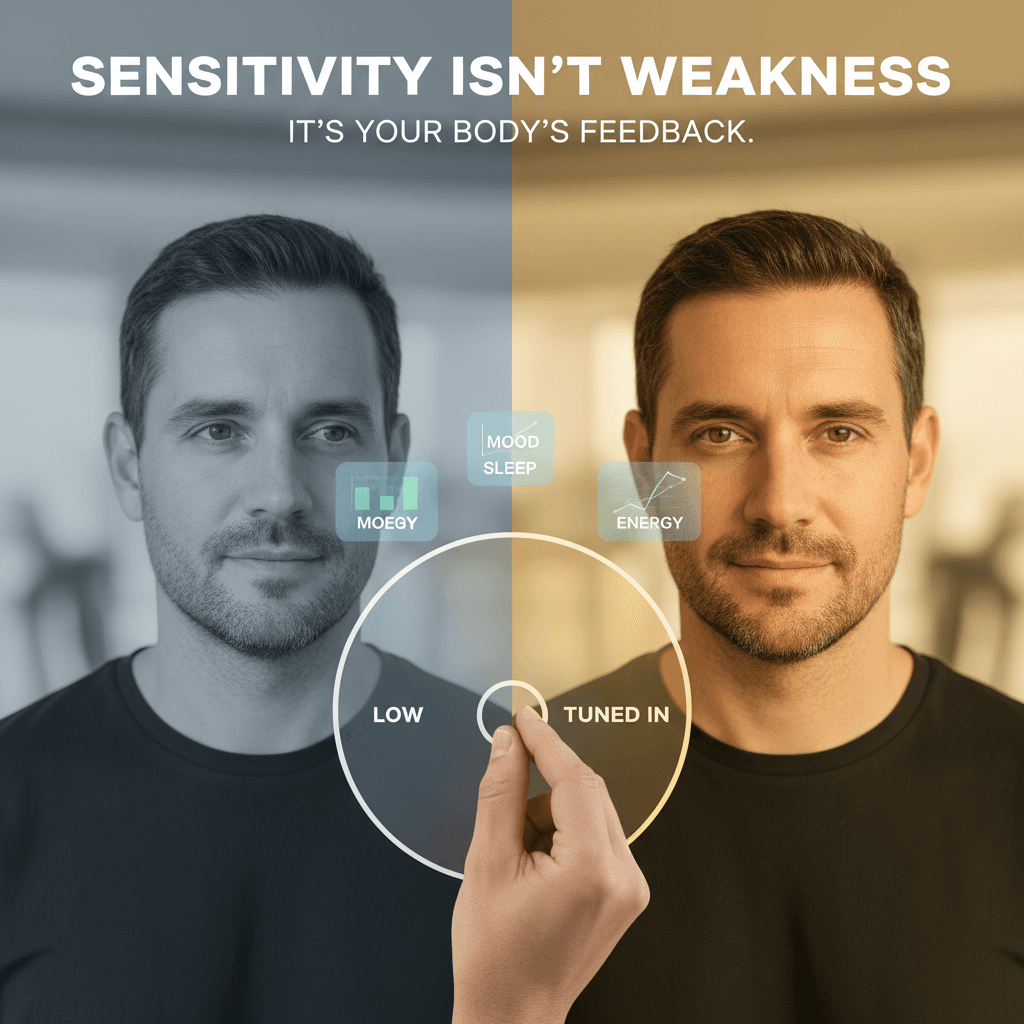
Instead of viewing sensitivity changes as a problem, try thinking of them as information.
Your body is always communicating. When you're more irritable than usual, that might be telling you that your hormones need attention, or that your stress management needs work, or that you're not sleeping enough. When physical sensitivity increases or decreases, that's your nervous system and endocrine system adjusting to their current environment.
Men who learn to read these signals instead of ignoring them make better decisions about their health. They notice when something is off before it becomes a crisis. They can tell their healthcare provider specific, useful information instead of just saying "I don't feel great."
This doesn't mean becoming hypervigilant or anxious about every sensation. It means developing a healthy, curious relationship with your body's feedback system.
Some sensitivity changes resolve on their own as your body adjusts. Others point to protocol adjustments that can make a significant difference in your quality of life. You can't tell the difference if you're not paying attention.
Getting The Right Support
Navigating sensitivity changes, especially in the context of hormonal health and treatment, isn't something you should do alone or with generic advice from internet forums.
You need a healthcare provider who understands men's hormonal health specifically, who won't dismiss your symptoms or tell you that this is just what aging looks like. You need someone who takes the time to understand your complete picture, not just order labs and call it done.
This matters because sensitivity changes can have multiple causes, and the right response depends on what's actually happening in your body. A good provider will help you understand which symptoms are related to your hormones, which might be related to other health factors, and how to address all of it systematically.
They'll also help you set realistic expectations. Some changes happen quickly. Others take months. Some sensitivity shifts are temporary parts of adjustment. Others might indicate the need for protocol modifications.
Providers on the AlphaMD platform bring exactly this kind of thoughtful, education-first perspective to men's hormonal health. Their focus is on helping men understand what's happening in their bodies, why it matters, and what options make sense for their specific situation and long-term health goals. That means looking at the complete picture, not just treating numbers on a lab report.
You're Not Broken, You're Adjusting
The sensitivity problem nobody warned you about isn't a flaw or a failure. It's a normal part of how hormones affect your physical and emotional experience.
Whether you're dealing with symptoms from hormonal decline or adjusting to treatment, understanding that sensitivity changes are common, explainable, and manageable makes all the difference. You're not losing your edge or becoming overly emotional or somehow less capable. You're experiencing the natural effects of your endocrine system recalibrating.
With the right information, qualified support, and willingness to pay attention to what your body is telling you, these changes become manageable parts of your health journey rather than mysterious problems that undermine your confidence.
The men who do best with this stuff are the ones who normalize it, talk about it with their partners and providers, and make decisions based on information rather than assumptions. That's not complicated, but it does require letting go of the idea that you're supposed to just tough everything out in silence.
Your sensitivity, in all its forms, is feedback. Use it well.
Have a question? Ask us.
At AlphaMD, we're here to help. Feel free to ask us any question you would like about TRT, medical weightloss, ED, or other topics related to men's health. Or take a moment to browse through our past questions.
People are asking...
What are the earliest signs that you might need to use an AI? What’s the lowest effective dose of arimadex/anastrazole?...
Sensitive nipples is the number one easy to spot symptom for a man. There's other things like noticing you cry when watching movies that you typically wouldn't feel emotions over, but that's a lot mor... See Full Answer
Is breast sensitivity a pretty good sign you should add AI or should you always wait and check blood work and only add if you are too high? (Asking si...
If your current TRT provider has suggested to wait until reviewing bloodwork, following their directions is the right call. For patients on the AlphaMD platform who have had nipple sensitivity, that's... See Full Answer
Have any of your guys who needed to be on an AI but didn’t prefer them, have any success with something like DIM or CDG?...
Yes to needing an AI & not wanting one. In those cases, the provider overseeing your care may increase injection frequency, make sure you're doing subq injections, and finally look at a lower dose eve... See Full Answer
Get $30 off your first month’s order
Enter your email address now to receive $30 off your first month’s cost, other discounts, and additional information about TRT.
Legal Disclaimer
This website is a repository of publicly available information and is not intended to form a physician-patient relationship with any individual. The content of this website is for informational purposes only. The information presented on this website is not intended to take the place of your personal physician's advice and is not intended to diagnose, treat, cure, or prevent any disease. Discuss this information with your own physician or healthcare provider to determine what is right for you. All information is intended for your general knowledge only and is not a substitute for medical advice or treatment for specific medical conditions. The information contained herein is presented in summary form only and intended to provide broad consumer understanding and knowledge. The information should not be considered complete and should not be used in place of a visit, phone or telemedicine call, consultation or advice of your physician or other healthcare provider. Only a qualified physician in your state can determine if you qualify for and should undertake treatment.