
The Party Recovery Stack: How to Recover After Drinking Without Wrecking Your Health Goals
Published on:
Updated on:
People are asking...
How bad is blacking out from booze… chronically. I haven’t found much in the way of research on this. There are studies on chronic alcoholism and the ...
I’m not sure they have any studies on frequent drinking to the point of blacking out. That would be nearly impossible to do ethically, and I don’t know how you would get a double blinded study in this... See Full Answer
Do you need a large barrel needle to reconstitute peptides, or would poking drawing and adding BAC water to the peptide vial over and over be ok?...
Either should be just fine, though doing it multiple times still needs you to follow sterile procedures each time. Use plenty of needle swaps & alcohol pads before each and every time, would be the be... See Full Answer
What do you recommend for someone that experiences low T as a result of endurance activities? Specifically, I was training for my first marathon last...
One of the providers may hop on and expand on this, but in my personal opinion: Working in resistance training to ensure muscle mass retention unless you really do need to cut overall weight can help.... See Full Answer
Have a question? Ask us.
At AlphaMD, we're here to help. Feel free to ask us any question you would like about TRT, medical weightloss, ED, or other topics related to men's health. Or take a moment to browse through our past questions.
You’ve dialed in your TRT protocol. You train. You track your protein. You care about sleep, energy, libido, body composition, and performance.
But you’re also not trying to live like a monk.
You still want to have drinks with friends, enjoy a bourbon on Friday night, go to a wedding, or survive a long client dinner without feeling like your health goals got thrown off a cliff.
That is where the Party Recovery Stack comes in.
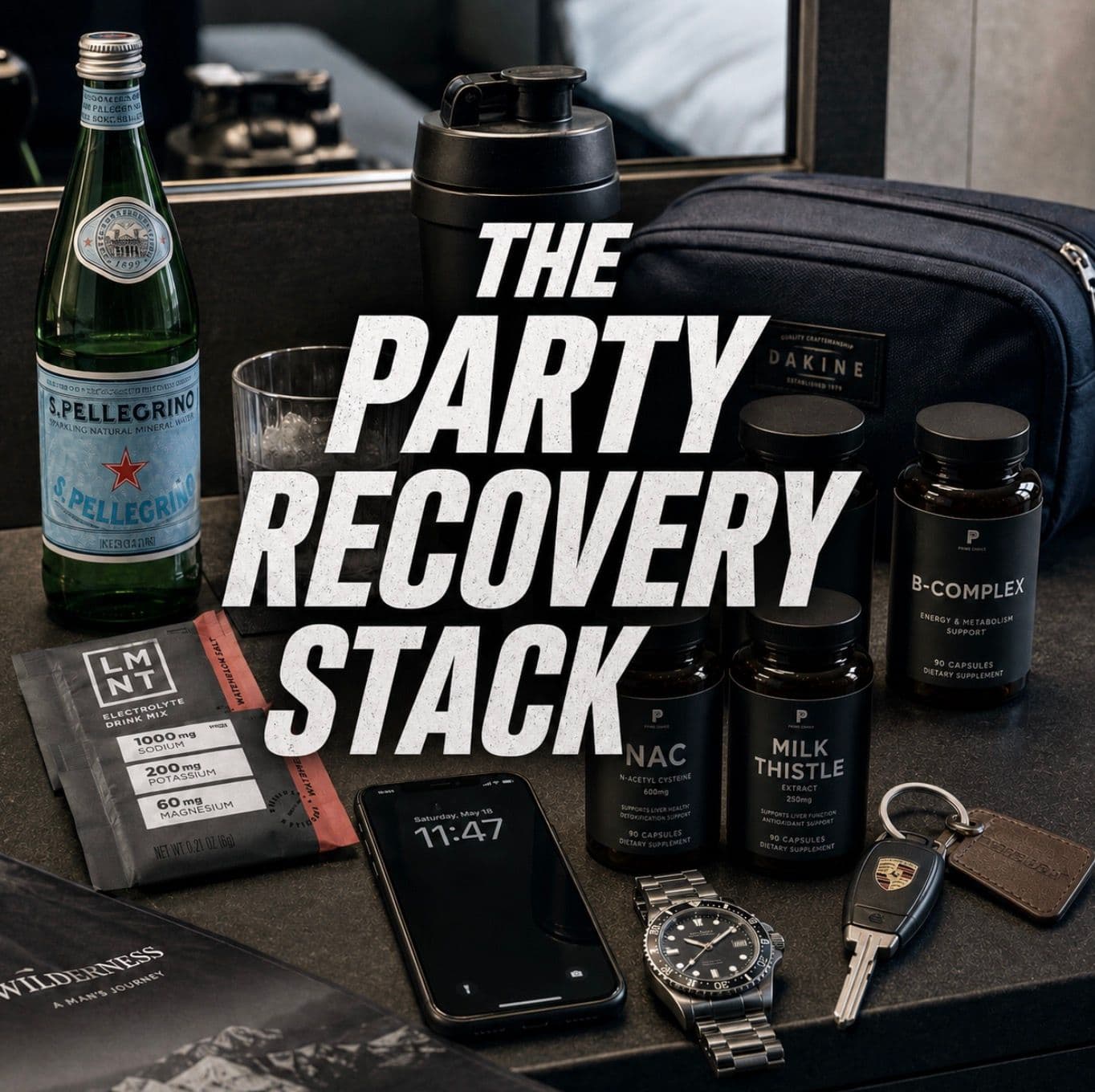
The Party Recovery Stack is a practical recovery plan for men who want to support hydration, liver function, sleep, and next-day energy after occasional drinking. It usually includes electrolytes, B-complex vitamins, NAC, milk thistle, protein, water, and a consistent TRT protocol if prescribed. It is not a hangover cure, and it does not make heavy drinking safe. The goal is harm reduction and faster recovery after moderate, occasional alcohol use.
This is not about pretending alcohol is healthy. It is not.
It is about building a smarter recovery system for the real world.
What Is the Party Recovery Stack?
The Party Recovery Stack is a simple framework for supporting your body before, during, and after a night of drinking.
The core stack focuses on five areas:
- Hydration and electrolytes
- Nutrient support, especially B vitamins
- Antioxidant and liver-support supplements
- Protein, sleep, and movement
- Staying consistent with your prescribed TRT plan
The mistake most men make is thinking recovery is only about “drinking more water.” Water matters, but alcohol affects more than hydration. It can disrupt sleep, increase urination, irritate the stomach, contribute to inflammation, and leave you feeling flat the next day.
That is why a recovery stack needs to address the whole system, not just the headache.
Does TRT Change How Alcohol Affects You?
TRT can help men with clinically low testosterone improve energy, mood, libido, muscle maintenance, and overall quality of life when properly prescribed and monitored. But TRT does not make alcohol harmless.
Alcohol can still affect:
- Sleep quality
- Hydration
- Liver metabolism
- Blood pressure
- Appetite and food choices
- Training recovery
- Mood and next-day motivation
If you are on testosterone replacement therapy, the goal is not to “out-supplement” bad habits. The goal is to protect the progress you are already making.
That means drinking occasionally, drinking intentionally, and recovering like a man who actually cares how he feels the next day.
The Core Party Recovery Stack
1. Electrolytes: The Foundation
Alcohol can increase urination, which may contribute to fluid loss. That is one reason the next morning can feel like dry mouth, headache, weakness, fatigue, and brain fog.
Plain water helps, but water plus electrolytes usually makes more sense.
The most important electrolytes to pay attention to are:
- Sodium
- Potassium
- Magnesium
A quality electrolyte mix can be useful before bed and again the next morning. Look for one that is not loaded with sugar, especially if you are watching body composition or trying to stay lower carb.
This is also one of the easiest parts of the stack to execute. Keep electrolyte packets in your kitchen, travel bag, or nightstand. Do not wait until you feel terrible to use them.
2. B-Complex: Energy and Alcohol Metabolism Support
B vitamins are involved in energy metabolism, nervous system function, and cellular health. Thiamin, also known as vitamin B1, plays a role in helping the body convert food into energy.
Alcohol use, especially heavy or frequent use, can interfere with nutrient status. That does not mean one night out “destroys” your B vitamins, but it does mean B-vitamin support can be a reasonable part of a recovery plan.
A B-complex may be useful the morning after drinking, especially if your diet was poor, your sleep was short, or you skipped real food during the night.
This is not magic. It is basic nutritional support.
3. NAC: Antioxidant Support, Not a Hangover Cure
NAC, short for N-acetyl cysteine, is a precursor to glutathione, one of the body’s major antioxidant systems.
Because alcohol metabolism creates oxidative stress, NAC is often used as part of a recovery strategy. Some men take it before drinking, the morning after, or as part of a broader wellness stack.
But here is the important part: NAC is not a proven hangover cure.
Human research on NAC for hangover symptoms is mixed. It may support antioxidant pathways, but it should not be treated like a shield against alcohol damage or a license to drink more.
A better way to think about NAC:
NAC may support your body’s antioxidant system, but it does not cancel out alcohol.
That distinction matters.
If you take medications, have asthma, have liver or kidney disease, or are unsure whether NAC is appropriate for you, talk with a clinician before using it.
4. Milk Thistle: Daily Liver Support, Not Damage Control
Milk thistle contains silymarin, a plant compound studied for antioxidant and anti-inflammatory effects in the liver.
It is one of the most common supplements men think of when they hear “liver support.” That does not mean it reverses alcohol damage or makes drinking safe.
The research on milk thistle for liver conditions is mixed and limited. It may be reasonable for some men as part of a daily supplement routine, but it should not be positioned as a cure, a detox shortcut, or a way to undo heavy drinking.
Think of milk thistle as possible support, not emergency repair.
If you have elevated liver enzymes, liver disease, a history of heavy alcohol use, or take prescription medications, ask your provider before adding it.
5. Protein: The Part Most Guys Ignore
Most drinking nights are not just drinking nights.
They usually involve:
- Skipping a real meal
- Eating low-quality food late
- Going to bed under-recovered
- Waking up inflamed, dehydrated, and underfed
Protein helps anchor the night.
Before drinking, eat a real meal with protein. Steak, eggs, chicken, fish, Greek yogurt, or a protein shake is better than showing up on an empty stomach and hoping tequila behaves.
The next morning, do the same thing. Get protein in early. Do not try to recover on coffee, Advil, and regret.
If you are already trying to build muscle, lose fat, or improve body composition on TRT, protein is not optional. It is the base layer.
6. Sleep: The Recovery Multiplier
Alcohol can make you feel sleepy, but that does not mean it improves sleep.
Many men fall asleep quickly after drinking but wake up at 3 a.m., sleep hot, feel restless, or get low-quality sleep. That is one reason the next day can feel worse than expected even if you “slept” for seven hours.
Your recovery stack should include a sleep strategy:
- Stop drinking earlier when possible
- Hydrate before bed
- Use electrolytes
- Keep the room cool
- Avoid turning the night into a food binge
- Get morning sunlight the next day
- Take a walk instead of staying horizontal all morning
Supplements can help around the edges, but sleep is still the multiplier.
The Before, During, and After Protocol
Here is the practical version.
Before Drinking
What to do: Eat a protein-heavy meal, drink water, and take electrolytes.
Why it helps: This supports hydration, helps you avoid drinking on an empty stomach, and gives your body a better base before alcohol enters the picture.
During Drinking
What to do: Alternate alcohol with water or sparkling water.
Why it helps: This helps pace your intake, supports hydration, and can reduce the odds of waking up feeling completely depleted.
While Choosing Drinks
What to do: Favor simple mixers like soda water, lime, fresh citrus, or unsweetened sparkling water.
Why it helps: This reduces sugar load, unnecessary calories, and the blood sugar swings that can make the next day feel worse.
Before Bed
What to do: Use electrolytes and water. Consider light protein if needed.
Why it helps: This supports overnight hydration and gives your body basic recovery inputs before sleep.
Morning After
What to do: Use electrolytes, take B-complex if appropriate, eat protein, get sunlight, and take a walk.
Why it helps: This supports energy, hydration, circulation, and getting back to your normal routine instead of losing the entire day.
Next Training Day
What to do: Train based on readiness, not ego.
Why it helps: If sleep was poor and recovery is low, forcing a brutal workout can dig the hole deeper. Move, sweat lightly, or train hard only if your body is actually ready.
The real win is not one heroic supplement dose. It is having a repeatable system.
The Simple Party Recovery Stack
Here is a clean version most men can understand.
Before Drinking
- Protein-heavy meal
- Water
- Electrolytes
- Optional NAC if appropriate for you
During Drinking
- Keep drinks simple
- Avoid sugary mixers
- Alternate alcohol with water or sparkling water
- Do not turn every event into a contest
Before Bed
- Water
- Electrolytes
- Optional light protein
- Do not skip your normal prescribed medications unless your clinician told you to
Morning After
- Electrolytes
- B-complex
- Protein
- Sunlight
- Walk
- Normal TRT protocol as prescribed
Should You Change Your TRT Dose Around Drinking?
No.
Do not change your TRT dose before or after drinking unless your prescribing clinician specifically tells you to.
Your TRT protocol should be consistent. Randomly changing your dose because you had drinks can create more problems than it solves.
If you are regularly drinking enough that you feel the need to adjust your hormones around alcohol, the issue is not your TRT dose. The issue is the drinking pattern.
If you are unsure whether your protocol is dialed in, that is a provider conversation. AlphaMD patients can ask questions about their TRT plan, labs, side effects, and recovery strategy directly with their care team.
What This Stack Will Not Do
The Party Recovery Stack is not a loophole.
It will not:
- Prevent intoxication
- Make binge drinking safe
- Protect you from alcohol-related liver disease
- Eliminate all hangover symptoms
- Replace sleep
- Fix poor nutrition
- Make up for drinking heavily several nights per week
- Replace medical care if something is wrong
If you are getting drunk multiple times per week, no supplement stack is going to save your recovery, your hormones, your sleep, or your health goals.
That does not mean you need to become sober to care about your health. But it does mean you need to be honest about dose and frequency.
When to Talk to a Provider
Talk to a clinician before using a recovery supplement stack if you have:
- Elevated liver enzymes
- Known liver disease
- Kidney disease
- High blood pressure
- Sleep apnea
- A history of alcohol use disorder
- Heart disease
- High hematocrit or red blood cell issues on TRT
- Prescription medications that may interact with supplements
- Unexplained fatigue, nausea, abdominal pain, or yellowing of the skin or eyes
This matters even more if you are on TRT, because proper monitoring is part of responsible hormone optimization.
If your labs are off, your sleep is terrible, or your blood pressure is climbing, the answer is not more supplements. The answer is better medical oversight.
The Better Way to Think About Alcohol and Optimization
The all-or-nothing approach to health burns a lot of men out.
One camp says, “Never drink again.”
The other says, “Just live your life and don’t worry about it.”
Neither answer works for everyone.
A better approach is:
- Drink less often
- Drink more intentionally
- Avoid sugar-heavy drinks
- Hydrate aggressively
- Protect sleep
- Keep protein high
- Stay consistent with TRT
- Use supplements carefully and realistically
- Get labs monitored
That is the difference between pretending alcohol has no downside and building a lifestyle that can actually hold up.
Party Recovery Stack FAQ
Can you drink alcohol on TRT?
Yes, many men on TRT can drink occasionally, but alcohol still affects sleep, hydration, liver metabolism, blood pressure, appetite, and recovery. TRT does not make alcohol harmless. If you drink, keep it moderate and stay consistent with your prescribed TRT protocol.
What is the best recovery stack after drinking?
A practical recovery stack after drinking includes water, electrolytes, protein, sleep, B vitamins, and possibly NAC or milk thistle if appropriate for you. Supplements may support recovery, but they do not cure a hangover or make heavy drinking safe.
Should I take NAC before or after drinking?
Some people take NAC before drinking or the next morning for antioxidant support, but human evidence for hangover prevention is mixed. NAC should be treated as optional support, not a proven hangover cure. Ask a clinician if you take medications or have liver, kidney, or respiratory conditions.
Does milk thistle help after drinking?
Milk thistle is commonly used for liver support, but evidence for treating liver disease or preventing alcohol-related harm is limited and mixed. It should not be used as a way to reverse alcohol damage or justify heavy drinking.
Do electrolytes help with hangovers?
Electrolytes may help support hydration after drinking, especially because alcohol can increase urination and fluid loss. They are not a cure, but they can be a useful part of a recovery plan.
What should I eat before drinking?
Eat a protein-heavy meal before drinking. Good options include steak, chicken, fish, eggs, Greek yogurt, or a protein shake. Drinking on an empty stomach usually makes the night harder to control and the next day harder to recover from.
Should I change my TRT dose if I am drinking?
No. Do not change your TRT dose around alcohol unless your prescribing clinician tells you to. TRT should be taken consistently according to your prescribed protocol.
Is the Party Recovery Stack safe for everyone?
No supplement stack is right for everyone. Men with liver disease, kidney disease, high blood pressure, sleep apnea, heart disease, high hematocrit, medication interactions, or a history of alcohol use disorder should talk with a provider before using supplements or drinking alcohol.
Bottom Line
The Party Recovery Stack is not about making alcohol healthy.
It is about reducing the damage from occasional drinking, supporting recovery, and getting back to your normal routine faster.
If you are on TRT, the goal is not to become fragile, restricted, or afraid to enjoy your life. The goal is to build a body and routine resilient enough to handle real-world stress without falling apart.
Use the stack wisely. Keep drinking occasional. Prioritize protein, hydration, sleep, and consistency.
And if your recovery keeps getting worse, your labs are off, or alcohol is starting to interfere with your health goals, talk to a provider.
Optimization is not about living like a monk.
It is about making better decisions before, during, and after the moments that test your discipline.
Have a question? Ask us.
At AlphaMD, we're here to help. Feel free to ask us any question you would like about TRT, medical weightloss, ED, or other topics related to men's health. Or take a moment to browse through our past questions.
People are asking...
How bad is blacking out from booze… chronically. I haven’t found much in the way of research on this. There are studies on chronic alcoholism and the ...
I’m not sure they have any studies on frequent drinking to the point of blacking out. That would be nearly impossible to do ethically, and I don’t know how you would get a double blinded study in this... See Full Answer
Do you need a large barrel needle to reconstitute peptides, or would poking drawing and adding BAC water to the peptide vial over and over be ok?...
Either should be just fine, though doing it multiple times still needs you to follow sterile procedures each time. Use plenty of needle swaps & alcohol pads before each and every time, would be the be... See Full Answer
What do you recommend for someone that experiences low T as a result of endurance activities? Specifically, I was training for my first marathon last...
One of the providers may hop on and expand on this, but in my personal opinion: Working in resistance training to ensure muscle mass retention unless you really do need to cut overall weight can help.... See Full Answer
Get $30 off your first month’s order
Enter your email address now to receive $30 off your first month’s cost, other discounts, and additional information about TRT.
Legal Disclaimer
This website is a repository of publicly available information and is not intended to form a physician-patient relationship with any individual. The content of this website is for informational purposes only. The information presented on this website is not intended to take the place of your personal physician's advice and is not intended to diagnose, treat, cure, or prevent any disease. Discuss this information with your own physician or healthcare provider to determine what is right for you. All information is intended for your general knowledge only and is not a substitute for medical advice or treatment for specific medical conditions. The information contained herein is presented in summary form only and intended to provide broad consumer understanding and knowledge. The information should not be considered complete and should not be used in place of a visit, phone or telemedicine call, consultation or advice of your physician or other healthcare provider. Only a qualified physician in your state can determine if you qualify for and should undertake treatment.