
The TRT 30-60-90 Day Checkpoint: What Should Be Improving, What’s Normal, and When to Adjust
Published on:
Updated on:
People are asking...
36 M - 4 weeks into treatment. 60MG test cyp injection Tuesdays and Fridays. Started w T level around 280 - all typical symptoms. Low energy, moodines...
Check out this timeline we share with patients: - The Start, Weeks 1-4 - Many notice effects from the first few injections. During this time, more benefits will become apparent as the half-lives ... See Full Answer
I have a total test of 300 and free t of 10. I’m 30 years old and started TRT through a local clinic 3 weeks ago. I live a healthy and active lifestyl...
60mg/wk is a bit lower than average (standard starting dose is 100-120mg/wk). The average conversion rate for most men is ~6-7 ng/dL of total T for every 1mg of exogenous testosterone. If you are aver... See Full Answer
I've been reading a lot about trt. I’m about to turn 36, had a general testosterone blood test done within the last year that came back normal. Iv swi...
If you've been having low Testosterone symptoms enough to research it, the likelihood is that you're probably a candidate. Do you remember what your Testosterone came back as? "Normal ranges" for Test... See Full Answer
Have a question? Ask us.
At AlphaMD, we're here to help. Feel free to ask us any question you would like about TRT, medical weightloss, ED, or other topics related to men's health. Or take a moment to browse through our past questions.
TRT does not usually fail because men wait too long to evaluate it.
It fails because they evaluate it too soon.
One good week feels like proof the protocol is perfect. One flat week feels like something is wrong. A few strong days of libido create expectations that every day should feel like that. Then the early surge fades, real life kicks back in, and suddenly the same question shows up:
“Is this working, or do I need to adjust?”
That is exactly why the first 90 days matter.
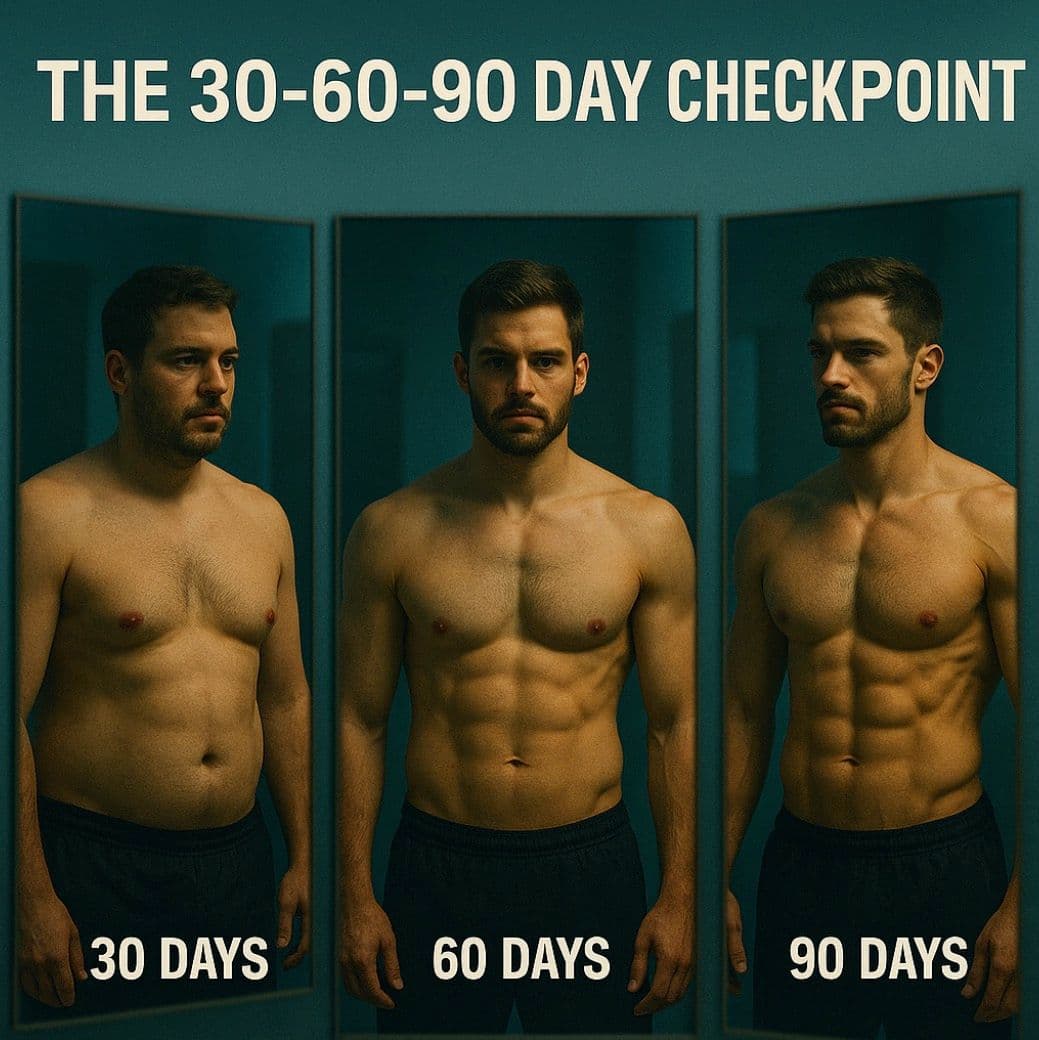
The first month is not the final verdict. It is the signal phase. Month two is where consistency starts to matter. By month three, you should have enough symptom feedback and lab data to make a smarter decision with your provider.
The better way to judge TRT is not by chasing the best day you had on therapy. It is by comparing your new baseline to where you started.
Here is the simple version:
At 30 days, you may notice better energy, mood, sleep, libido, or motivation, but the effects may still be inconsistent.
At 60 days, improvements should start becoming more stable. Workouts, recovery, libido, and mental clarity may feel more predictable.
At 90 days, you should be able to compare yourself against your baseline and decide whether your TRT protocol is working, needs more time, or needs adjustment based on symptoms and labs.
The mistake most men make is judging TRT by the honeymoon phase instead of building a stable protocol.
TRT 30-60-90 Day Timeline: What Should Improve and When?
30-Day Checkpoint
What may be improving:
Energy, mood, motivation, libido, sleep quality, and overall drive may begin to improve, but the changes can still feel inconsistent.
What may still be normal:
It is normal to have good days and average days. Libido may come and go. You may not see major body composition changes yet. Workouts may feel slightly better, but not dramatically different.
When to talk to your provider:
Contact your provider if you develop severe acne, anxiety, nipple sensitivity, significant mood swings, major sleep problems, or if you feel noticeably worse after starting TRT.
60-Day Checkpoint
What may be improving:
Energy may feel more consistent. Workouts may feel better. Recovery may improve. Libido, focus, motivation, and mood may become more predictable.
What may still be normal:
Some symptoms may improve faster than others. You may still be waiting on major physical changes. You may feel better overall but not fully optimized yet.
When to talk to your provider:
Talk to your provider if you feel no improvement at all, if side effects are interfering with your life, if your sleep has worsened, or if you feel great after injections but crash before the next dose.
90-Day Checkpoint
What may be improving:
By 90 days, you should have a clearer sense of whether TRT is working. Energy, libido, mood, mental clarity, recovery, training performance, and body composition may all be noticeably better than when you started.
What may still be normal:
You may not feel perfect. You may still need lifestyle improvements around sleep, nutrition, training, alcohol, hydration, and stress. Some men need more time before everything feels fully dialed in.
When to talk to your provider:
This is the point where symptoms and labs should be reviewed together. Talk to your provider if your symptoms have not improved, if benefits have faded, if side effects are showing up, or if your labs suggest the protocol needs adjustment.
What Should Be Improving After 30 Days on TRT?
At the 30-day mark, you are still early.
Your testosterone levels may have started moving in the right direction, but your body still needs time to respond. Think of it like restarting a system that has been running on low power for years. The signal may be there, but every downstream effect does not instantly change.
By week four, many men begin noticing early improvements in energy, mood, libido, sleep, and motivation.
Energy
You may not feel superhuman, but the afternoon crash may be less brutal. Getting through the day may feel easier. You may notice you are less dependent on caffeine or less likely to feel completely wiped out by midafternoon.
This does not mean every day will feel great. Early energy improvements can be inconsistent.
Mood
Some men begin to feel less irritable, less flat, or more emotionally steady. You may feel more willing to handle tasks you previously avoided.
This is often subtle at first. You may not wake up feeling dramatically different, but you may notice that daily stress feels a little less heavy.
Libido
Sex drive may start to return, but it can be inconsistent. A few strong days followed by a quiet stretch does not automatically mean something is wrong.
Libido is affected by testosterone, but it is also affected by sleep, stress, alcohol, relationship dynamics, medication, blood flow, and overall health. Do not judge your entire protocol based on one good or bad week.
Sleep Quality
Some men feel more rested even before their sleep schedule dramatically changes. Others may not see sleep improvements right away.
If sleep gets worse after starting TRT, especially if you begin snoring more, waking up gasping, or feeling less rested, that is worth discussing with your provider.
Motivation
This is one of the changes men often notice early.
You may feel more interested in training, work, sex, family, or life in general. The things you knew you should do may feel less impossible to start.
This does not mean TRT creates discipline out of nowhere. It means the gap between knowing what to do and actually doing it may start to narrow.
What Is Normal at 30 Days?
It is completely normal if:
You feel better some days and average on others.
Libido is inconsistent.
You do not see physical changes yet.
Your workouts feel slightly better but not dramatically different.
You are wondering whether the dose is working.
Your mood improves before your body composition changes.
Your energy improves before your libido fully returns.
The first month is not the final verdict. It is a signal check.
At 30 days, the main question is not, “Am I fully optimized?”
The better question is:
“Am I seeing any early signs that my body is responding?”
If the answer is yes, that is useful information. If the answer is no, it may still be too early to make a major change unless you are dealing with clear side effects or worsening symptoms.
What Is Not Normal at 30 Days?
Contact your provider if you develop:
Severe acne that appeared suddenly
Anxiety or mood swings worse than before TRT
Nipple sensitivity, swelling, or signs of gynecomastia
Major sleep disruption
Feeling significantly worse overall
Shortness of breath, chest pain, or concerning cardiovascular symptoms
The goal is not to panic over every symptom. The goal is to catch problems early before you spend months on a protocol that clearly is not right for you.
What Should Be Improving After 60 Days on TRT?
Month two is where TRT gets more real.
The early excitement has usually worn off. Now you are looking for consistency. You are not just asking, “Did I have one good day?” You are asking, “Is my baseline getting better?”
By 60 days, many men notice improvements in daily energy, training drive, recovery, strength, libido, mental clarity, and body composition.
Daily Energy
The good days should start becoming more common.
You may still get tired, especially if you are sleeping poorly, stressed, eating badly, or drinking too much. But your baseline should feel better than it did before therapy.
Instead of constantly forcing yourself through the day, you may feel like your normal operating level has moved up.
Training Drive
You may feel more willing to lift, walk, train, or push harder.
This is not just about building muscle. For many men, low testosterone shows up as a lack of initiative. You know you should train, but you cannot seem to get yourself moving.
By 60 days, that resistance may start to drop.
Recovery
Soreness may not linger as long. You may bounce back faster from workouts. You may feel like your body can handle training again.
This is one of the most practical benefits men notice. The workout itself may not suddenly become easy, but the recovery cost may feel lower.
Strength and Performance
You may not be adding massive weight to every lift, but you may notice more reps, better endurance, or better workout quality.
TRT does not replace training. If you are not lifting, eating enough protein, and sleeping well, you should not expect major changes in strength or body composition.
But if you are doing the work, month two is often when you start feeling more capable.
Mental Clarity
Brain fog may start lifting. You may feel more decisive, focused, and present.
For some men, this is one of the biggest quality-of-life improvements. They are not necessarily euphoric. They simply feel less scattered and less mentally drained.
Body Composition
If you are training and eating reasonably well, you may begin noticing fuller muscles, a tighter waist, or better definition even if the scale is not moving much.
This matters because the scale can be misleading.
You may gain some lean mass, hold more muscle glycogen, improve training output, and lose fat at the same time. Your weight may not drop dramatically, but your clothes may fit better.
When Should You Consider Adjusting at 60 Days?
You should talk to your provider about a possible adjustment if:
You feel absolutely no improvement in energy, mood, libido, or focus.
Side effects are interfering with your life.
You feel emotionally unstable, anxious, or unusually irritable.
You are having sleep problems that started after TRT.
You feel great right after injections but crash before the next one.
You have symptoms that may suggest estrogen imbalance, such as water retention, emotional swings, nipple sensitivity, or erectile issues despite higher testosterone.
At 60 days, the answer is not always “increase the dose.”
Sometimes the issue is injection frequency, estrogen balance, sleep, hydration, hematocrit, medication timing, or unrealistic expectations.
More testosterone is not always better.
Better-managed testosterone is better.
What Should Be Improving After 90 Days on TRT?
The 90-day mark is the first real checkpoint.
By three months, you should have enough time on therapy to compare your current baseline against where you started. You should also be getting follow-up labs or reviewing recent labs with your provider, depending on your protocol.
At 90 days, many men should see meaningful improvement in energy, libido, mood, recovery, mental sharpness, and body composition.
Energy
Your baseline energy should be better than it was before TRT. You may still get tired, but you should not feel chronically drained for no reason.
If your energy is still exactly where it was before treatment, that is worth evaluating.
Libido and Sexual Function
Sex drive should feel more stable and natural. Morning erections may return. Erectile performance may improve, though erections are affected by more than testosterone alone.
Blood pressure, cardiovascular health, stress, sleep, alcohol, medications, and relationship factors all matter.
TRT may help, but it is not the only variable.
Mood and Confidence
You may feel more even, less reactive, and more like yourself.
This is not about feeling aggressive or hyped up. Well-managed TRT should not make you feel out of control. It should help restore a more stable baseline.
Many men describe this as feeling less passive, less foggy, and more capable.
Body Composition
If you are training and eating well, visible changes may be noticeable. This may include better muscle fullness, more definition, or less fat around the waist.
Again, TRT does not override lifestyle.
If you are eating poorly, barely moving, sleeping badly, and drinking heavily, your body composition results will be limited. TRT creates a better hormonal environment, but you still have to use it.
Recovery
You may recover faster from workouts and physical stress.
This does not mean you can train recklessly or ignore sleep. It means your body may respond better when you give it the right stimulus and recovery.
Mental Sharpness
Focus, drive, and task completion may feel easier.
You may find yourself taking action on things you had been avoiding. Workouts, work tasks, family responsibilities, and basic daily structure may feel more manageable.
That is often one of the clearest signs TRT is helping.
What If You Still Feel Nothing After 90 Days?
If you are 90 days into TRT and genuinely feel no different, that deserves a real evaluation.
Possible reasons include:
Dose is too low
Testosterone level is not reaching the right range
Injection frequency is causing peaks and crashes
Estradiol is too high or too low
Hematocrit is elevated
Sleep apnea or poor sleep is still untreated
Nutrition, alcohol, stress, or inactivity is blunting results
Low testosterone was not the only issue causing your symptoms
This is why labs matter. Symptoms tell part of the story. Bloodwork tells another part. The right decision usually requires both.
When Should You Adjust Your TRT Protocol?
You may need to adjust your TRT protocol if one of these patterns shows up.
1. Nothing Has Improved
If your energy, libido, mood, mental clarity, and recovery are all unchanged after 90 days, your protocol needs to be reviewed.
That does not automatically mean TRT failed. It means you need labs, symptom review, and a provider-guided adjustment.
The wrong move is to start guessing on your own.
The right move is to look at the full picture.
2. Side Effects Are Bigger Than the Benefits
If acne, anxiety, poor sleep, hair shedding, nipple sensitivity, water retention, or emotional instability are dominating your experience, something may be off.
The fix may be dose, frequency, estrogen management, lifestyle, or a different treatment approach.
Do not ignore side effects just because your testosterone number looks better.
The goal is not to win a lab test. The goal is to feel and function better.
3. You Felt Great, Then Crashed
Some men feel excellent early, then worse around weeks 6–10.
This can happen when hormones are shifting, estradiol rises, hematocrit increases, sleep worsens, or the early honeymoon effect fades.
The answer is not guessing.
The answer is labs and a calm review of the full picture.
A crash does not always mean TRT stopped working. It may mean your body has moved past the early response phase and now the protocol needs to be fine-tuned.
4. You Feel Good After Injection, Then Bad Before the Next One
If you feel strong for two days after your shot and then flat by day five or six, your injection frequency may need to be discussed.
Many men feel better with smaller, more frequent injections, but this should be handled with your provider instead of freelancing your protocol.
Peaks and crashes can make TRT feel inconsistent even when the overall dose is reasonable.
When Should You Not Adjust Yet?
You probably should not change your TRT protocol just because:
You feel better but not perfect.
One symptom improved but another has not.
You had one bad week.
Your gym progress is slower than expected.
Someone online said your dose is too low.
You are trying to recreate the first-week “honeymoon” feeling.
You expected TRT to fix poor sleep, high stress, bad nutrition, and no exercise by itself.
TRT can be powerful, but it is not magic.
It works best when the protocol, labs, sleep, training, nutrition, and expectations are all aligned.
What Labs Matter at the 90-Day TRT Checkpoint?
Your provider may recommend different labs based on your history, symptoms, and treatment plan, but common follow-up markers include:
Total testosterone
Free testosterone
Estradiol
CBC, including hematocrit and hemoglobin
PSA when appropriate
Lipids
Liver markers
Metabolic markers when needed
The key is not just whether your testosterone number went up.
The key is whether your numbers, symptoms, and side effects make sense together.
A man with “good” total testosterone can still feel bad if free testosterone, estradiol, hematocrit, sleep, or injection timing is off.
That is why the 90-day checkpoint matters. It gives your provider enough time and information to make a smarter decision.
What Does Optimized TRT Actually Feel Like?
Optimized TRT does not mean feeling hyped up, aggressive, or wired.
It usually feels more like:
Stable energy
Better mood
Healthy libido
Stronger workouts
Better recovery
Clearer thinking
More confidence
Less afternoon crashing
More consistency from week to week
The goal is not to feel like a different person.
The goal is to feel like yourself again.
The Most Common TRT Timeline Mistake
The most common mistake men make is treating every week like a final exam.
They feel good for three days and think the protocol is perfect.
Then they feel flat for two days and think TRT failed.
Then they read a forum post and wonder if they need to double their dose, add another medication, or change everything.
That is how men end up overcorrecting.
The first 90 days are supposed to be observed, tracked, and reviewed. You are looking for patterns, not reacting to every single day.
Ask better questions:
Is my baseline better than it was before TRT?
Are my good days becoming more common?
Are my symptoms improving overall?
Do I feel more stable week to week?
Are my labs moving in the right direction?
Are side effects manageable or becoming a problem?
Those questions are more useful than asking whether you feel perfect.
How to Track Your First 90 Days on TRT
You do not need to obsess over every detail, but you should track enough to have a real conversation with your provider.
A simple weekly check-in can help.
Track these areas:
Energy
Libido
Mood
Sleep
Workout performance
Recovery
Focus
Side effects
Weight or waist changes
Injection timing and how you feel afterward
You do not need a complicated spreadsheet. A simple weekly note on your phone is enough.
The goal is to avoid vague feedback like:
“I don’t know, I think I feel better, but maybe not.”
Instead, you want to be able to say:
“My energy is better, libido is still inconsistent, workouts improved, but I crash two days before my next injection.”
That kind of feedback helps your provider make better decisions.
Frequently Asked Questions
How long does it take TRT to start working?
Some men notice early changes within a few weeks, especially in energy, mood, libido, and motivation. However, the full evaluation usually takes closer to 8–12 weeks.
The first 30 days are early. The 90-day mark is usually a better checkpoint for judging whether your protocol is working.
Should I adjust my TRT dose after 30 days?
Usually not unless side effects are significant or you feel clearly worse.
At 30 days, your body is still adapting. Some improvements may be inconsistent. Changing too quickly can make it harder to know what is actually working.
Always discuss changes with your provider instead of adjusting your dose on your own.
What should I feel after 60 days on TRT?
By 60 days, many men notice more consistent energy, better workouts, improved recovery, stronger libido, better mood, and sharper focus.
You may not feel fully optimized yet, but your baseline should often be moving in the right direction.
What should happen at the 90-day TRT checkpoint?
At 90 days, you should review your symptoms, side effects, and labs with your provider.
This is the point where you can make a more informed decision about whether your protocol is working, needs more time, or needs adjustment.
What if TRT worked at first but then stopped?
A drop-off after early improvement can happen. It may be related to hormone fluctuations, estradiol changes, hematocrit, injection timing, sleep, stress, or the early honeymoon phase fading.
The answer is not to guess. The answer is to review symptoms and labs with your provider.
Does TRT always improve libido?
TRT may improve libido in men whose low sex drive is related to low testosterone. However, libido is affected by many things, including stress, sleep, alcohol, medication, relationship factors, blood flow, and mental health.
If testosterone improves but libido does not, the issue may require a broader evaluation.
Why do I feel good after my injection and then crash?
This may be related to peaks and troughs in testosterone levels. Some men feel better with adjusted injection frequency, but this should be discussed with your provider.
Do not change your injection schedule without medical guidance.
What if my testosterone number is higher but I still feel bad?
That can happen.
Total testosterone is only one part of the picture. Free testosterone, estradiol, hematocrit, sleep, stress, nutrition, alcohol, medications, and other health issues can all affect how you feel.
The goal is not just a higher number. The goal is better function, better symptoms, and a protocol your body tolerates well.
The Bottom Line: Judge TRT by the Timeline, Not the Hype
The first 90 days of TRT are not about chasing a perfect feeling.
They are about establishing your baseline, watching your symptoms, checking your labs, and learning how your body responds.
At 30 days, look for early signals.
At 60 days, look for consistency.
At 90 days, compare your current state to where you started and review your labs with your provider.
If you are improving, stay patient.
If you are not improving, do not guess.
Get evaluated.
The best TRT protocols are not built by constantly tweaking based on emotion. They are built by combining symptoms, labs, and smart medical guidance.
Through AlphaMD, testosterone therapy is built around realistic expectations, proper monitoring, and protocols your provider individualizes to you. Because TRT is not about chasing numbers. It is about getting you back to feeling, performing, and living like yourself again.
Have a question? Ask us.
At AlphaMD, we're here to help. Feel free to ask us any question you would like about TRT, medical weightloss, ED, or other topics related to men's health. Or take a moment to browse through our past questions.
People are asking...
36 M - 4 weeks into treatment. 60MG test cyp injection Tuesdays and Fridays. Started w T level around 280 - all typical symptoms. Low energy, moodines...
Check out this timeline we share with patients: - The Start, Weeks 1-4 - Many notice effects from the first few injections. During this time, more benefits will become apparent as the half-lives ... See Full Answer
I have a total test of 300 and free t of 10. I’m 30 years old and started TRT through a local clinic 3 weeks ago. I live a healthy and active lifestyl...
60mg/wk is a bit lower than average (standard starting dose is 100-120mg/wk). The average conversion rate for most men is ~6-7 ng/dL of total T for every 1mg of exogenous testosterone. If you are aver... See Full Answer
I've been reading a lot about trt. I’m about to turn 36, had a general testosterone blood test done within the last year that came back normal. Iv swi...
If you've been having low Testosterone symptoms enough to research it, the likelihood is that you're probably a candidate. Do you remember what your Testosterone came back as? "Normal ranges" for Test... See Full Answer
Get $30 off your first month’s order
Enter your email address now to receive $30 off your first month’s cost, other discounts, and additional information about TRT.
Legal Disclaimer
This website is a repository of publicly available information and is not intended to form a physician-patient relationship with any individual. The content of this website is for informational purposes only. The information presented on this website is not intended to take the place of your personal physician's advice and is not intended to diagnose, treat, cure, or prevent any disease. Discuss this information with your own physician or healthcare provider to determine what is right for you. All information is intended for your general knowledge only and is not a substitute for medical advice or treatment for specific medical conditions. The information contained herein is presented in summary form only and intended to provide broad consumer understanding and knowledge. The information should not be considered complete and should not be used in place of a visit, phone or telemedicine call, consultation or advice of your physician or other healthcare provider. Only a qualified physician in your state can determine if you qualify for and should undertake treatment.