
The Mineral Deficiency Tanking Your Testosterone
Published on:
Updated on:
People are asking...
How normal is it for someone on TRT or even a blasting steroid cycle to have low hematocrite and smaller red blood cells? My last tests showed it whil...
Testosterone increases red blood cell production. Increased red blood cell production requires more iron, so iron stores can get exhausted if your red blood cell production increases. If your iron sto... See Full Answer
35 M, Just got tested last week. My levels were 136 total test and 3.6 Free test. Doc who isn’t a specialist obviously wanted me to jump on a T script...
While providers on the AlphaMD platform have seen some somewhat "miracle" situations with men who have more than doubled their baseline Testosterone on their own, these are almost always with men who ... See Full Answer
What you are doing is awesome guys! I would highly appreciate your input on my case. I have been working out in the gym/calisthenics/swimming/jogging...
To answer your questions in order: Varicocele is one of the only truly reversible causes of hypogonadism. It is a fairly minor procedure, so if you can get it taken care of now, there is a possibility... See Full Answer
Have a question? Ask us.
At AlphaMD, we're here to help. Feel free to ask us any question you would like about TRT, medical weightloss, ED, or other topics related to men's health. Or take a moment to browse through our past questions.
If your energy is dragging, your workouts feel flat, and your sex drive has quietly vanished, the culprit might not be aging or stress alone. It could be a single mineral deficiency silently sabotaging your testosterone production.
Most men never think about micronutrients when their performance starts to slip. They assume it's just part of getting older, or that they need pharmaceutical intervention. But the truth is more nuanced. Your body needs specific raw materials to manufacture hormones, and when one critical building block goes missing, everything downstream suffers. Testosterone production, sperm quality, libido, recovery from training, even your mood and mental clarity, all depend on an intricate biochemical assembly line that requires the right nutrients at the right time.
One mineral stands out as particularly essential, yet chronically undersupplied in modern life: zinc. This trace element plays a direct, non-negotiable role in the synthesis of testosterone and the regulation of male reproductive function. Without adequate zinc, your testes simply cannot produce testosterone efficiently, no matter how well you sleep or how hard you train.
The Zinc-Testosterone Connection
Zinc is involved in more than a hundred enzymatic reactions in the human body, but its role in male hormonal health is especially pronounced. The mineral is highly concentrated in the testes and prostate, and it serves as a cofactor for enzymes responsible for converting cholesterol into the steroid hormones your body needs. When zinc levels drop, testosterone synthesis slows down.
Research has repeatedly shown that men with low zinc status tend to have lower circulating testosterone. The relationship works in both directions: zinc deficiency suppresses testosterone production, and ensuring adequate zinc intake supports healthy androgen levels. This is not about megadosing or chasing supraphysiological hormone levels. It's about giving your body what it needs to function normally.
Beyond testosterone, zinc is critical for sperm production and motility. Men who are deficient often experience reduced sperm counts and poorer semen quality. If you're concerned about fertility or simply want to optimize reproductive health, zinc status is one of the first things worth evaluating.
Why Modern Life Drains Your Zinc Reserves
Even if you eat reasonably well, several factors conspire to deplete your zinc levels. The standard Western diet is notoriously low in bioavailable zinc. Processed foods, refined grains, and plant-heavy diets that lack animal products tend to provide insufficient amounts. Plant sources of zinc, like legumes and whole grains, also contain phytates, compounds that bind to zinc and reduce absorption in the gut.
Alcohol is another major zinc thief. Regular drinking increases urinary zinc excretion and impairs absorption, creating a double drain on your reserves. If you're someone who enjoys a few drinks most nights, you may be quietly eroding your hormonal foundation.
Intense physical training also increases zinc losses. Sweat contains zinc, and heavy exercise ramps up metabolic demand for the mineral. Athletes and men who train hard consistently are at higher risk of deficiency, especially if their diets don't compensate for these losses. The irony is brutal: you train to build strength and vitality, but without adequate zinc, your testosterone and recovery both suffer.
Chronic stress compounds the problem. Stress hormones like cortisol interfere with zinc metabolism and increase excretion. When you're under prolonged pressure at work, in relationships, or from poor sleep, your body burns through zinc faster than usual. The same stress that already undermines testosterone now makes it even harder for your body to produce it.
Poor digestion and gut health can also impair zinc absorption. Conditions like leaky gut, inflammatory bowel disease, or even chronic use of certain medications reduce your ability to extract zinc from food. You might be eating enough on paper, but if your gut isn't absorbing it, your tissues remain deficient.
What It Feels Like When You're Running Low
Zinc deficiency doesn't announce itself with a single dramatic symptom. Instead, it creates a constellation of subtle, overlapping problems that slowly degrade your quality of life. You might notice your energy levels aren't what they used to be. Workouts that once felt manageable now leave you exhausted. Recovery takes longer. Your sex drive dims, and when you do feel interested, performance might not match your intent.
Mood shifts are common. Men with low zinc often report feeling more irritable, anxious, or mentally foggy. Motivation wanes. The drive to tackle challenges, pursue goals, or engage socially can quietly evaporate. These aren't just psychological quirks. They reflect real biochemical changes happening in your brain and endocrine system.
Physically, you might notice your skin acting up, wounds healing more slowly, or your immune system struggling to keep up with minor infections. Zinc is essential for immune function, and deficiency leaves you more vulnerable to illness. Hair thinning and brittle nails are also possible, though less specific.
The insidious part is that these symptoms overlap with a dozen other issues, from chronic stress to sleep deprivation to actual clinical hypogonadism. You can't diagnose a zinc deficiency by symptoms alone, but if several of these patterns sound familiar, it's worth investigating.
Food, Lifestyle, and the Foundation of Hormonal Health
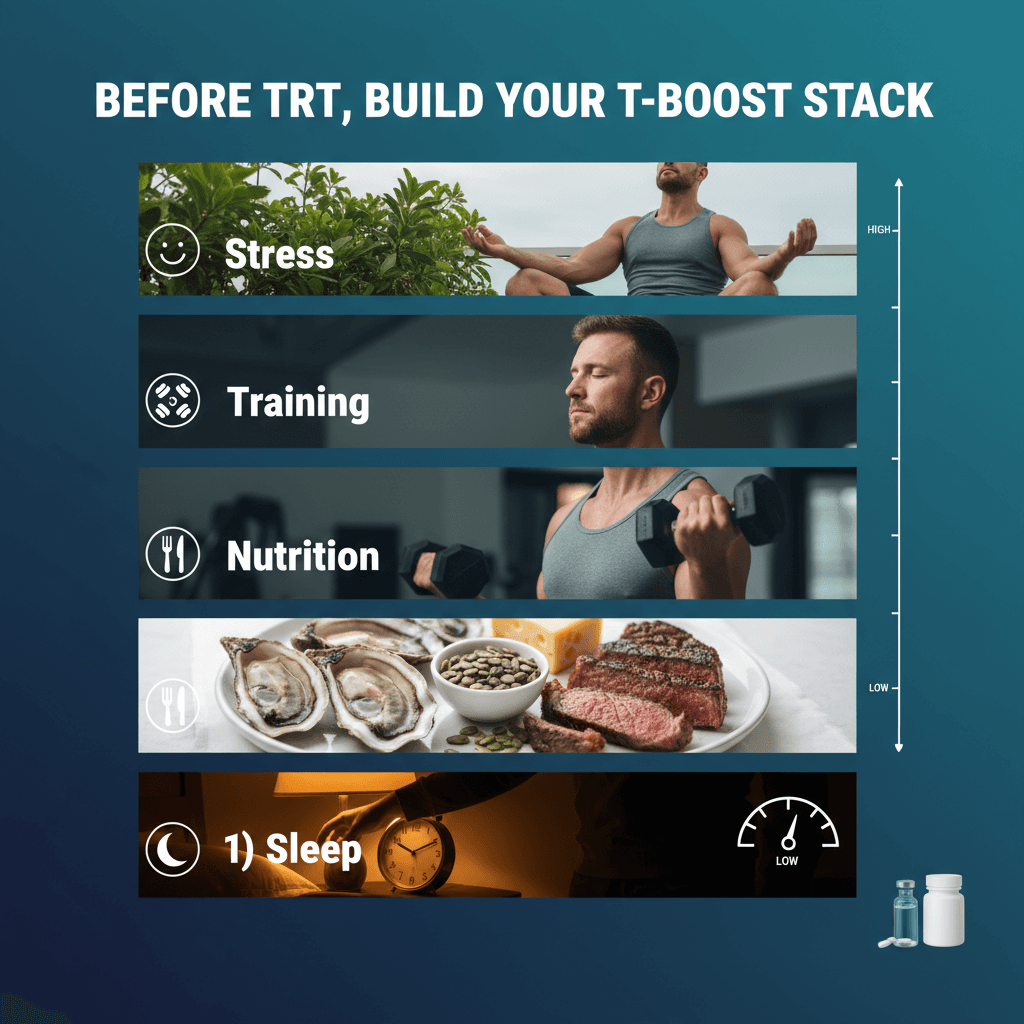
Before jumping to the conclusion that you need testosterone replacement therapy, it's worth examining whether your diet and lifestyle are actually supporting your hormonal system. Many men are unknowingly undermining their testosterone through basic nutritional gaps, chronic sleep loss, excessive alcohol, and unmanaged stress.
Zinc-rich foods include oysters, which are by far the most concentrated source, as well as red meat, shellfish, poultry, pumpkin seeds, and dairy products. If your diet leans heavily on processed carbs, vegetarian proteins without careful planning, or fast food, you're likely not getting enough. Animal products provide the most bioavailable forms of zinc, meaning your body can actually absorb and use them efficiently.
Supplementation can help, but it's not a free pass. Zinc competes with other minerals like copper and iron for absorption, so indiscriminate supplementation can create new imbalances. Quality matters, and more is not always better. If you suspect deficiency, working with a healthcare provider to assess your status and guide supplementation is the smarter move.
Sleep is another non-negotiable. Testosterone production peaks during deep sleep, and chronic sleep deprivation tanks your levels regardless of your zinc status. If you're only getting five or six hours a night, or your sleep quality is poor, no amount of dietary optimization will fully compensate.
Alcohol moderation or elimination is also key. You don't need to become a teetotaler, but regular heavy drinking directly sabotages testosterone production and accelerates zinc loss. Cutting back can yield noticeable improvements in energy, mood, and libido within weeks.
Stress management deserves equal attention. Chronic high cortisol suppresses testosterone and drains micronutrient reserves. Whether it's through exercise, meditation, time in nature, or simply setting better boundaries, reducing chronic stress has profound hormonal benefits.
When to Seek Professional Evaluation
Lifestyle and nutrition changes can make a real difference, but they're not a cure-all. Some men have genuinely low testosterone due to primary or secondary hypogonadism, conditions where the testes or pituitary gland aren't functioning properly. In these cases, optimizing zinc and sleep won't be enough.
That's why professional evaluation is essential if you're experiencing persistent symptoms. A qualified clinician can order comprehensive hormone panels, assess your overall health, and help distinguish between lifestyle-related issues and true clinical deficiency. Blood tests can reveal not just testosterone levels, but also markers like luteinizing hormone, follicle-stimulating hormone, estradiol, and SHBG, which provide a fuller picture of what's going on.
Zinc status itself can be tested, though serum zinc levels aren't always perfectly reflective of tissue stores. A knowledgeable provider will consider your symptoms, diet, lifestyle, and lab results together to form a complete assessment.
If testing reveals genuinely low testosterone that doesn't respond to lifestyle changes, medically supervised testosterone replacement therapy may be appropriate. TRT can be life-changing for men with true hypogonadism, restoring energy, libido, mood, muscle mass, and overall vitality. But it's a serious medical intervention with risks and benefits that need to be carefully managed.
The key is not to guess. Self-diagnosing based on symptoms or internet research is a recipe for wasted time and potentially harmful decisions. Get proper testing and work with professionals who understand male hormonal health.
Bridging the Gap Between Lifestyle and Medical Intervention
The modern approach to men's health recognizes that optimizing testosterone isn't an either-or proposition. It's not lifestyle changes versus medical treatment. Often, the best outcomes come from addressing both simultaneously. You fix the nutritional gaps, improve sleep and stress management, and if needed, you add medical support.
This is where specialized men's health services come into play. Platforms like AlphaMD offer online access to clinicians who focus specifically on testosterone, sexual health, and performance optimization. Through telehealth consultations, you can discuss your symptoms, review lab work, and explore whether your issues stem from correctable lifestyle factors, nutrient deficiencies, or a genuine need for TRT.
AlphaMD's model allows men to get professional evaluation and ongoing care without the hassle of navigating traditional healthcare systems that often dismiss male hormonal concerns. Whether you need guidance on optimizing your diet and supplementation, or you're a candidate for medically supervised testosterone therapy, having access to knowledgeable providers makes all the difference.
The advantage of working with providers who specialize in men's health is that they understand the nuances. They won't dismiss your symptoms as just aging, but they also won't immediately push medication if lifestyle changes could help. They'll take the time to evaluate your individual situation, consider your goals, and develop a plan that makes sense for you.
Putting the Pieces Together
Testosterone doesn't exist in a vacuum. It's the product of a complex system that requires the right building blocks, adequate rest, manageable stress, and overall metabolic health. When one key nutrient like zinc goes missing, the entire system suffers. Your energy drops, your sex drive fades, your workouts plateau, and your mood sinks.
The good news is that many men can reclaim significant ground by addressing these fundamentals. Eating zinc-rich whole foods, cutting back on alcohol, prioritizing sleep, managing stress, and staying physically active create the foundation for healthy testosterone production. For some, these changes alone are enough to restore vitality and performance.
For others, especially those with clinically low testosterone or underlying medical conditions, lifestyle optimization sets the stage, but medical intervention provides the missing piece. The goal isn't to avoid treatment when it's needed. It's to make informed decisions based on real data and professional guidance.
If you've been struggling with fatigue, low libido, poor recovery, or a general sense that something's off, don't assume it's inevitable or untreatable. Consider the possibility that a simple mineral deficiency could be dragging your testosterone and overall performance down. Get your levels checked, evaluate your diet and lifestyle honestly, and consult with professionals who understand male hormonal health. Whether the answer is better nutrition, smarter supplementation, or medically supervised TRT, taking action starts with understanding what's actually happening in your body.
Have a question? Ask us.
At AlphaMD, we're here to help. Feel free to ask us any question you would like about TRT, medical weightloss, ED, or other topics related to men's health. Or take a moment to browse through our past questions.
People are asking...
How normal is it for someone on TRT or even a blasting steroid cycle to have low hematocrite and smaller red blood cells? My last tests showed it whil...
Testosterone increases red blood cell production. Increased red blood cell production requires more iron, so iron stores can get exhausted if your red blood cell production increases. If your iron sto... See Full Answer
35 M, Just got tested last week. My levels were 136 total test and 3.6 Free test. Doc who isn’t a specialist obviously wanted me to jump on a T script...
While providers on the AlphaMD platform have seen some somewhat "miracle" situations with men who have more than doubled their baseline Testosterone on their own, these are almost always with men who ... See Full Answer
What you are doing is awesome guys! I would highly appreciate your input on my case. I have been working out in the gym/calisthenics/swimming/jogging...
To answer your questions in order: Varicocele is one of the only truly reversible causes of hypogonadism. It is a fairly minor procedure, so if you can get it taken care of now, there is a possibility... See Full Answer
Get $30 off your first month’s order
Enter your email address now to receive $30 off your first month’s cost, other discounts, and additional information about TRT.
Legal Disclaimer
This website is a repository of publicly available information and is not intended to form a physician-patient relationship with any individual. The content of this website is for informational purposes only. The information presented on this website is not intended to take the place of your personal physician's advice and is not intended to diagnose, treat, cure, or prevent any disease. Discuss this information with your own physician or healthcare provider to determine what is right for you. All information is intended for your general knowledge only and is not a substitute for medical advice or treatment for specific medical conditions. The information contained herein is presented in summary form only and intended to provide broad consumer understanding and knowledge. The information should not be considered complete and should not be used in place of a visit, phone or telemedicine call, consultation or advice of your physician or other healthcare provider. Only a qualified physician in your state can determine if you qualify for and should undertake treatment.