
The Hidden Testosterone Drain: How Chronic Gut Inflammation Is Suppressing Your Hormone Panel
Published on:
Updated on:
People are asking...
I'm 37. I went to a clinic with my complaints and a hormonal test was done: Fsh 2.69mIU/mL Lh 7.28mIU/mL Prolactin 3.95ng/mL Testosterone 18.0nmol...
Your doctors didn’t lie in saying your labs don’t show anything abnormal. But they won’t always because what is “normal” is based on population averages, not what is normal for you. There is a new di... See Full Answer
Age 62, athletic, nutrition freak (usa). Started TRT 15 months ago when testosterone at 298. Six months later it was 498 and I was doing great. Level ...
I'll share some conjecture here without knowing more. Taking everything at face value, I would say whatever medication you're taking might not be Testosterone Cypionate. When you take any Testosterone... See Full Answer
What you are doing is awesome guys! I would highly appreciate your input on my case. I have been working out in the gym/calisthenics/swimming/jogging...
To answer your questions in order: Varicocele is one of the only truly reversible causes of hypogonadism. It is a fairly minor procedure, so if you can get it taken care of now, there is a possibility... See Full Answer
Have a question? Ask us.
At AlphaMD, we're here to help. Feel free to ask us any question you would like about TRT, medical weightloss, ED, or other topics related to men's health. Or take a moment to browse through our past questions.
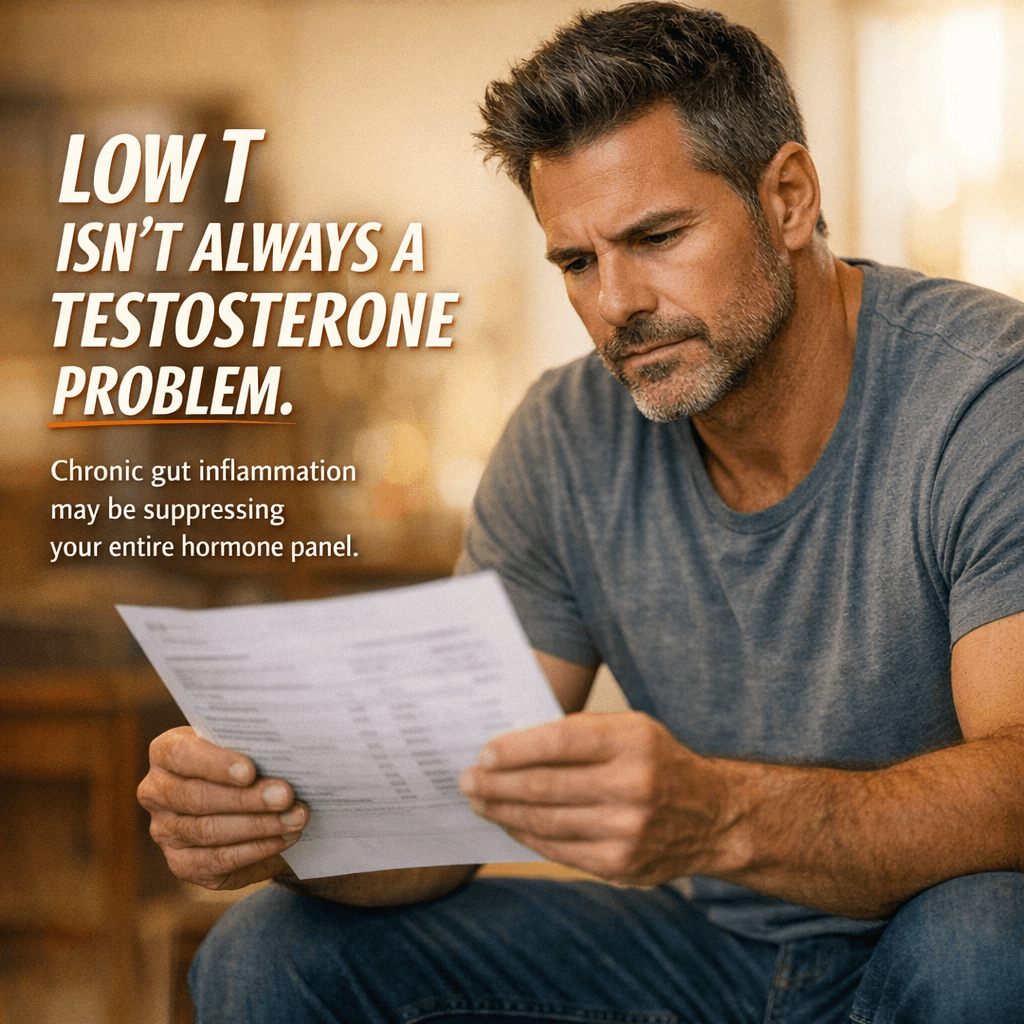
Your hormone panel came back "off" and your doctor can't fully explain it. Before assuming the problem starts in your testes or your brain, it may be worth looking much further south - at your gut.
The Gut-Hormone Connection Most Men Never Hear About
The relationship between digestive health and male hormones is one of the most underappreciated areas in men's medicine. Most conversations about low testosterone focus on age, weight, sleep, or stress in isolation. Rarely does anyone ask what's happening inside the gastrointestinal tract - and that oversight can leave men chasing symptoms without ever addressing a core driver.
Chronic gut inflammation is not the same as having an upset stomach. It's a low-grade, persistent state of immune activation within the gut lining that can send ripple effects throughout the entire body, including the hormonal systems that regulate energy, mood, libido, and muscle mass. In many men, this process is silent for years.
How Inflammation Disrupts the Brain-Testes Conversation
Testosterone production is controlled by a precise signaling chain called the hypothalamic-pituitary-gonadal (HPG) axis. The hypothalamus sends a signal to the pituitary gland, which then signals the testes to produce testosterone. This system is exquisitely sensitive to disruption.
When chronic inflammation is present, the body releases proteins called inflammatory cytokines - molecules like interleukin-6 and tumor necrosis factor-alpha. These cytokines can directly interfere with HPG axis signaling at multiple points. They can blunt the hypothalamus's output, reduce the pituitary's sensitivity to those signals, and impair the testes' ability to respond even when the upstream signals are intact. The result is a hormone panel that looks suppressed across the board, sometimes with low testosterone, sometimes with low LH and FSH as well, without an obvious structural cause. Research published through the National Institutes of Health has documented the suppressive effects of systemic inflammation on gonadotropin signaling, reinforcing that this is a real and measurable phenomenon.
Cortisol, Chronic Stress, and the Hormonal Trade-Off
Gut inflammation doesn't stay local. It activates the body's stress response systems, triggering a sustained elevation in cortisol, the primary stress hormone. Cortisol and testosterone operate in a kind of biological opposition - when one is chronically elevated, the other tends to fall.
High cortisol suppresses gonadal function directly. It signals the body that conditions are not favorable for reproduction or anabolic activity, and the HPG axis responds accordingly by dialing back output. Men dealing with chronic gut issues often report feeling wired and exhausted at the same time, a pattern that fits this cortisol-driven hormonal suppression well.
Insulin Resistance and Metabolic Inflammation
Gut-driven inflammation doesn't stop at the hormonal axis. It also contributes to insulin resistance, a metabolic state in which cells become less responsive to insulin's signals. Insulin resistance and the low-grade metabolic inflammation that accompanies it are strongly associated with reduced androgen signaling.
Visceral fat, which accumulates more readily in states of insulin resistance, is metabolically active. It produces its own inflammatory signals and contains high levels of aromatase, an enzyme that converts testosterone into estrogen. This creates a self-reinforcing cycle: gut inflammation promotes insulin resistance, insulin resistance promotes fat gain, and fat gain further disrupts androgen balance.
Leaky Gut, Endotoxins, and Whole-Body Inflammation
The gut lining is designed to act as a selective barrier - allowing nutrients in while keeping bacteria and their byproducts out. When this barrier becomes compromised, a condition commonly referred to as "leaky gut" and more formally as intestinal hyperpermeability, bacterial fragments called endotoxins can pass into the bloodstream.
The most studied of these is lipopolysaccharide (LPS), a component of certain bacterial cell walls. Even low levels of circulating LPS can trigger a significant immune response and sustain systemic inflammation. Some research suggests that LPS exposure can directly impair Leydig cell function - the cells in the testes responsible for producing testosterone. This represents a direct line from gut barrier dysfunction to hormonal suppression, and it's a mechanism that often goes completely unexamined in standard hormone evaluations.
Your Microbiome, Estrogen Metabolism, and Androgen Balance
The trillions of bacteria that inhabit your gut do far more than assist with digestion. A subset of gut bacteria collectively called the "estrobolome" plays a role in metabolizing estrogens and influencing how they are excreted or recirculated. When the microbiome is disrupted - a state known as dysbiosis - this process can be altered in ways that shift the testosterone-to-estrogen ratio unfavorably.
Gut bacteria also appear to influence sex hormone-binding globulin (SHBG), the protein that binds testosterone in the blood and affects how much is biologically active. Shifts in the microbiome can contribute to changes in SHBG levels, which further complicates how a hormone panel reads even when production itself hasn't changed dramatically.
Nutrient Deficiencies That Quietly Starve Hormone Production
Hormone production is not just a signaling problem - it's a manufacturing problem. Testosterone synthesis requires raw materials, and chronic gut inflammation can impair the absorption of several nutrients critical to that process.
Zinc is essential for testosterone synthesis and pituitary function. Magnesium plays a role in free testosterone availability. Vitamin D, which functions more like a hormone than a traditional vitamin, is tied directly to gonadal function. Healthy dietary fats are the backbone of steroid hormone production, including testosterone. A gut that is inflamed and malabsorbing nutrients is a gut that may be quietly starving the hormonal system of what it needs to function.
Sleep Disruption, Fatigue, and the Downstream Spiral
Chronic gut inflammation often disrupts sleep - whether through discomfort, nighttime gut motility issues, or the broader neurological effects of systemic inflammation. This matters enormously for hormonal health because the majority of daily testosterone production occurs during sleep, particularly during deep sleep stages.
Poor sleep elevates cortisol, reduces growth hormone output, and impairs recovery from physical training. Men who are sleeping poorly tend to have reduced motivation and capacity to train with intensity - and resistance training is one of the most reliable natural stimulants of anabolic hormone production. The gut inflammation, over time, chips away at the very behaviors and recovery processes that would otherwise protect hormone levels.
Symptoms That Overlap - and Why That Matters
One of the reasons the gut-hormone connection is so often missed is that the symptoms overlap almost completely. Low energy, reduced libido, mood changes, difficulty building or maintaining muscle, increased body fat, and brain fog are classic signs of suboptimal testosterone. They are also classic signs of chronic inflammation, gut dysfunction, and micronutrient deficiency.
This overlap is clinically important. It means that a man with these symptoms may be prescribed hormonal treatment without anyone investigating whether an underlying inflammatory process is driving the panel in the first place. Symptoms alone cannot tell you the root cause - they can only signal that something needs closer attention. Responsible evaluation means looking at the full picture, not just the hormone numbers in isolation.
What Clinicians May Evaluate
A thorough workup for a man with a suppressed or suboptimal hormone panel - especially one where the cause isn't obvious - may go beyond a standard testosterone and LH measurement. Clinicians with a functional or integrative approach may assess inflammatory markers to gauge systemic immune activation, along with metabolic markers to evaluate insulin sensitivity and metabolic health. Thyroid screening is often relevant as well, since thyroid dysfunction can closely mimic and overlap with low androgen symptoms. A full male hormone panel should include not just total testosterone but free testosterone, LH, FSH, SHBG, estradiol, and prolactin at minimum.
In cases where gut dysfunction is suspected, clinicians may also evaluate for conditions such as inflammatory bowel disease (IBD), celiac disease, or small intestinal bacterial overgrowth (SIBO), any of which can drive chronic systemic inflammation and nutritional compromise. According to the Cleveland Clinic, intestinal permeability and gut barrier disruption are gaining increasing recognition as contributors to systemic health issues beyond the digestive tract.
Practical Steps to Reduce Gut Inflammation and Support Hormonal Health
Before considering any hormonal intervention, and certainly alongside one, there are meaningful lifestyle steps that can reduce gut inflammation and create a more favorable environment for hormone production.
Diet quality is foundational. A pattern built around whole foods, diverse vegetables, legumes, quality proteins, and healthy fats tends to reduce inflammatory load and support microbiome diversity. Fiber variety, in particular, feeds beneficial gut bacteria and supports estrogen clearance. Ultra-processed foods, refined sugars, and industrial seed oils consistently trend in the wrong direction.
Alcohol is worth moderating seriously. Alcohol directly damages the gut lining, disrupts the microbiome, impairs liver function relevant to hormone metabolism, and suppresses testicular function independently of any other factor.
Sleep is non-negotiable. Prioritizing consistent, adequate sleep is one of the highest-leverage actions a man can take for both gut repair and hormone production. Stress management - whether through structured relaxation practices, reducing unnecessary stressors, or cognitive approaches - matters equally, given the cortisol-testosterone dynamic discussed earlier.
Resistance training remains one of the most powerful tools available. It improves insulin sensitivity, reduces visceral fat, drives anabolic signaling, and supports gut motility. It should be a consistent part of any recovery plan.
Medications deserve a conversation with a clinician. Certain common medications, including some antibiotics, proton pump inhibitors, and anti-inflammatory drugs, can alter gut flora and barrier function when used chronically. A review of current medications with a knowledgeable provider is a reasonable step for any man dealing with persistent gut issues.
Finally, if symptoms of gut dysfunction are significant - including chronic diarrhea, bloating, unintentional weight loss, or symptoms that have not responded to lifestyle changes - formal evaluation for IBD, celiac disease, or other gastrointestinal conditions is appropriate and can be genuinely life-changing.
When Hormone Therapy Enters the Picture
For some men, addressing gut inflammation and optimizing lifestyle will produce meaningful improvements in their hormone panel and their symptoms. For others, the hormonal suppression has become entrenched enough, or the underlying deficit significant enough, that direct hormonal support becomes appropriate.
Testosterone replacement therapy can be an appropriate and effective intervention for men with clinically low testosterone and relevant symptoms. But it's worth understanding that TRT does not resolve the underlying inflammatory process. A man who begins testosterone therapy without addressing gut inflammation is building on a compromised foundation. The therapy may improve his numbers and symptoms, but the systemic inflammation will continue to affect his metabolic health, cardiovascular risk, mood, and long-term response to treatment.
Addressing the gut is not an alternative to hormone therapy when therapy is warranted - it's a component of comprehensive care that should be running in parallel. The goal is not just a better lab result, but a body that is actually functioning better from the inside out.
Putting It Together
A suppressed hormone panel is rarely a simple story. When gut inflammation is chronic and unaddressed, it can quietly interfere with the brain-testes signaling axis, elevate cortisol, drive insulin resistance, compromise the gut barrier, disrupt the microbiome, impair nutrient absorption, and erode sleep quality - all of which push testosterone in the wrong direction. The symptoms it produces are nearly identical to those of primary hormonal deficiency, making it easy to treat the downstream effect while ignoring the upstream cause.
For men who are serious about understanding what's actually driving their hormone panel, working with clinicians who take this broader view makes a real difference. AlphaMD approaches men's hormone health with the kind of educated, thorough evaluation that looks beyond the surface numbers - because getting to the real answer is how you get to real results.
Have a question? Ask us.
At AlphaMD, we're here to help. Feel free to ask us any question you would like about TRT, medical weightloss, ED, or other topics related to men's health. Or take a moment to browse through our past questions.
People are asking...
I'm 37. I went to a clinic with my complaints and a hormonal test was done: Fsh 2.69mIU/mL Lh 7.28mIU/mL Prolactin 3.95ng/mL Testosterone 18.0nmol...
Your doctors didn’t lie in saying your labs don’t show anything abnormal. But they won’t always because what is “normal” is based on population averages, not what is normal for you. There is a new di... See Full Answer
Age 62, athletic, nutrition freak (usa). Started TRT 15 months ago when testosterone at 298. Six months later it was 498 and I was doing great. Level ...
I'll share some conjecture here without knowing more. Taking everything at face value, I would say whatever medication you're taking might not be Testosterone Cypionate. When you take any Testosterone... See Full Answer
What you are doing is awesome guys! I would highly appreciate your input on my case. I have been working out in the gym/calisthenics/swimming/jogging...
To answer your questions in order: Varicocele is one of the only truly reversible causes of hypogonadism. It is a fairly minor procedure, so if you can get it taken care of now, there is a possibility... See Full Answer
Get $30 off your first month’s order
Enter your email address now to receive $30 off your first month’s cost, other discounts, and additional information about TRT.
Legal Disclaimer
This website is a repository of publicly available information and is not intended to form a physician-patient relationship with any individual. The content of this website is for informational purposes only. The information presented on this website is not intended to take the place of your personal physician's advice and is not intended to diagnose, treat, cure, or prevent any disease. Discuss this information with your own physician or healthcare provider to determine what is right for you. All information is intended for your general knowledge only and is not a substitute for medical advice or treatment for specific medical conditions. The information contained herein is presented in summary form only and intended to provide broad consumer understanding and knowledge. The information should not be considered complete and should not be used in place of a visit, phone or telemedicine call, consultation or advice of your physician or other healthcare provider. Only a qualified physician in your state can determine if you qualify for and should undertake treatment.