
The Blood Pressure Supplement Stack That Every Man on TRT Should Know About
Published on:
Updated on:
People are asking...
I’m having a hard time controlling my blood pressure. Since starting T my diet is clean and I’m in better shape. Is there anything you recommend?...
Most men do not have problems with blood pressure while on TRT, though in a few cases, they can. Overall, it has been proven with evidence that testosterone is cardioprotective, and actually lowers ... See Full Answer
BP, on some TRT patients it increases on others it decreases. What are your findings with patients on that matter ?...
What providers on the AlphaMD platform have observed seems to correlate with the general consensus on the matter that TRT lowers BP in nearly all men who were previously hypogonadal and had related p... See Full Answer
I started trt 6 months ago and I’ve noticed my blood pressure has gone up. Should I be concerned? 120 mgs a week split into 3 shots. I started with 11...
It would be likely not connected to TRT. There is little connection between increased Testosterone and raising your blood pressure, especially at that dosage. You should keep an eye on it. When BP bec... See Full Answer
Have a question? Ask us.
At AlphaMD, we're here to help. Feel free to ask us any question you would like about TRT, medical weightloss, ED, or other topics related to men's health. Or take a moment to browse through our past questions.
Your blood pressure was fine before TRT, and now your doctor is raising an eyebrow at your readings. You are not alone, and the story is more complicated than testosterone simply being the villain.
Men on testosterone replacement therapy occupy a unique physiological space. Hormonal optimization changes how the body handles fluid, red blood cells, oxygen delivery, and vascular tone. Some of those changes are the whole point of treatment. Others require active management. Blood pressure is one of the areas where that management matters most, and a thoughtful supplement approach, built on a solid lifestyle foundation, can be a meaningful part of the picture.
Before getting into what to take, it helps to understand what is actually happening.
Why Blood Pressure Can Shift After Starting TRT
Testosterone does not raise blood pressure automatically or universally. Many men on well-managed TRT maintain perfectly healthy cardiovascular readings for years. That said, several mechanisms can push numbers upward in some individuals, and knowing which one applies to you changes how you respond.
Fluid retention is often the first culprit people notice. Testosterone influences aldosterone signaling and sodium reabsorption in the kidneys, which can cause the body to hold on to more water, especially in the early weeks of therapy. This increases blood volume, and more volume means more pressure against arterial walls.
Rising hematocrit is another key mechanism. TRT stimulates erythropoiesis, the production of red blood cells, which is part of why many men feel more energetic on therapy. But as blood becomes more viscous, the heart works harder to push it through the vasculature. Unmanaged hematocrit elevation is one of the more clinically significant cardiovascular considerations in TRT, which is why monitoring labs are not optional.
Sleep apnea interactions deserve serious attention. Testosterone can worsen sleep-disordered breathing in men who are already predisposed to it, and untreated sleep apnea is one of the most consistent drivers of elevated blood pressure, particularly in the morning hours. If your readings spike overnight or first thing in the morning, this connection is worth discussing with your provider.
Sympatetic nervous system tone also plays a role. Androgens can increase sympathetic drive, raising resting heart rate and vascular resistance in some men. Lifestyle amplifiers, including stress, alcohol, poor sleep, high sodium intake, and carrying excess body fat, stack on top of any hormonal contribution and often tip the balance.
The takeaway is that TRT may be a contributing factor in some cases, a neutral factor in others, and occasionally even protective depending on how it improves body composition and metabolic health. Monitoring, not assumption, is the right approach.
The Foundation That Makes Any Stack Actually Work
Supplements do not override a high-sodium diet, chronic sleep deprivation, or a sedentary lifestyle. They work in concert with those variables, not instead of them. Getting the basics right is not just good general advice, it is the mechanism by which many supplements produce their effects.
Sodium awareness matters more than most men realize. The goal is not obsessive restriction, but it is worth knowing that many men eating a typical Western diet are consuming far more sodium than their cardiovascular system benefits from. Reading labels and cooking more at home creates meaningful leverage without requiring you to eat bland food forever.
Hydration is frequently overlooked. Mild chronic dehydration raises blood viscosity and activates compensatory vasoconstriction. Drinking adequate water throughout the day, not just when thirsty, supports healthy blood volume dynamics.
The resistance training and cardiovascular balance equation matters specifically for men on TRT. Lifting is excellent for body composition and hormonal optimization, but consistent aerobic activity, walking, cycling, zone-two cardio, produces direct adaptations in arterial compliance and resting heart rate that resistance training alone does not fully replicate. Both belong in the program.
Sleep quality is a cardiovascular variable, full stop. Seven to nine hours in a dark, cool room with consistent timing lowers sympathetic tone, supports healthy cortisol rhythm, and gives the cardiovascular system its nightly recovery window. If sleep apnea is even a remote possibility, getting evaluated is not optional.
Alcohol moderation is worth naming plainly. Regular alcohol consumption raises blood pressure, disrupts sleep architecture, increases hematocrit modestly, and competes with testosterone metabolism. Moderating or eliminating it often produces visible improvements in cardiovascular readings within weeks.
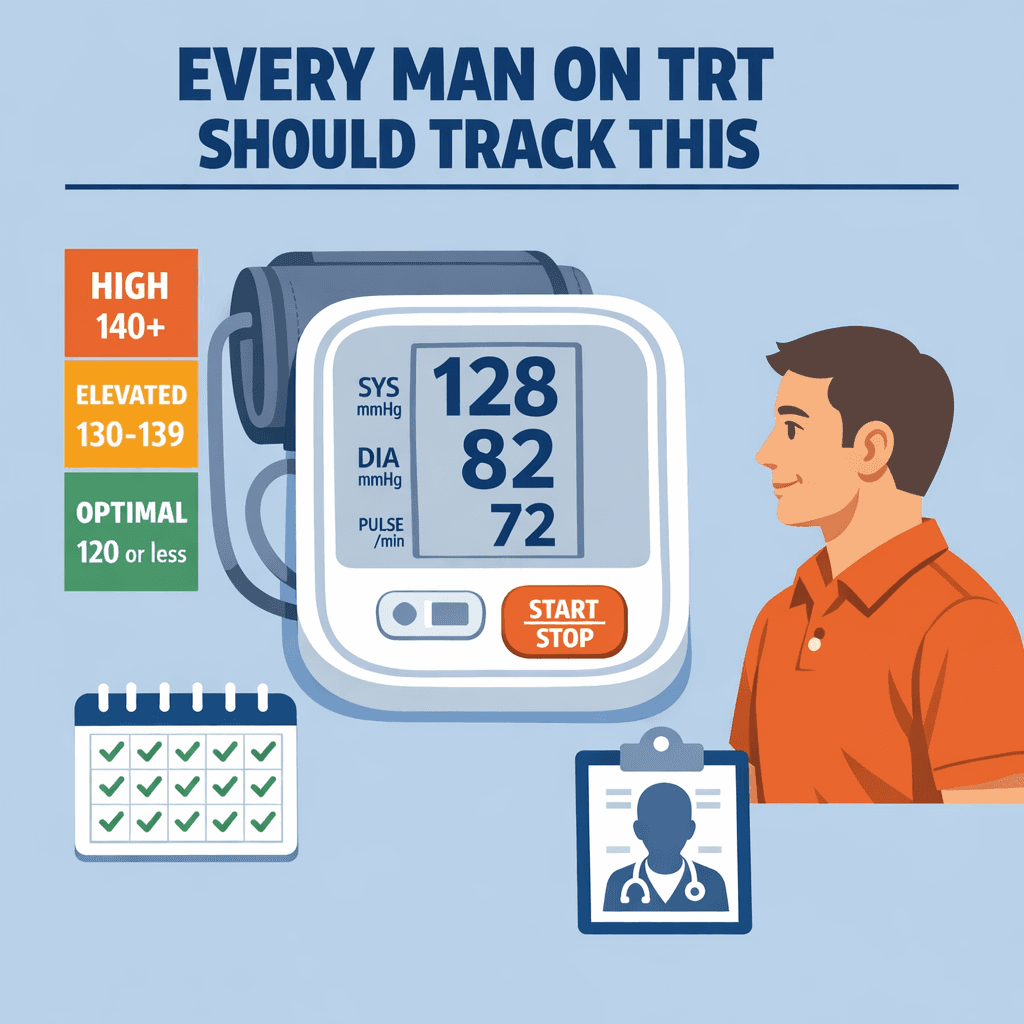
Home blood pressure monitoring is underused and undervalued. A quality upper-arm cuff, used consistently at the same time of day, under the same conditions, provides far more useful data than a single reading in a medical office. Patterns over time tell the real story.
Magnesium and Potassium: The Electrolyte Pair That Vascular Tissue Depends On
Magnesium is involved in hundreds of enzymatic reactions, and its relationship with vascular smooth muscle tone is well-established in the research literature. When magnesium is insufficient, smooth muscle cells tend toward greater contractility, which contributes to elevated peripheral resistance. Many men are not severely deficient, but chronically low-normal magnesium status is common, particularly in men who sweat heavily through exercise, drink alcohol regularly, or eat heavily processed diets.
For men on TRT, magnesium is especially relevant because it also plays a role in sleep quality, cortisol regulation, and insulin sensitivity, three variables that directly intersect with cardiovascular health.
Food-first approaches through leafy greens, pumpkin seeds, dark chocolate, legumes, and whole grains make a real difference. Supplemental magnesium in a well-absorbed form can be appropriate for men who struggle to hit adequate intake through diet. Common cautions include loose stools at higher intakes and potential interactions with certain medications, so coordinate with your provider.
Potassium works alongside magnesium by counterbalancing sodium's effects on blood pressure through its influence on renal sodium excretion and vascular tone. Fruits, vegetables, legumes, and potatoes are the most practical sources. Potassium supplementation warrants caution for men with kidney dysfunction or those on medications affecting potassium levels, and this is a category where talking to a clinician before supplementing independently is genuinely important.
Omega-3 Fatty Acids and the Endothelium
The endothelium, the single-cell lining of blood vessels, does not just passively carry blood. It actively regulates vascular tone, inflammation, and clotting. Endothelial dysfunction is considered one of the earliest stages of cardiovascular disease, and it is measurably improved by adequate long-chain omega-3 intake.
EPA and DHA, found in fatty fish and quality fish oil or algae-based supplements, reduce triglyceride levels, modestly lower resting blood pressure, and support anti-inflammatory signaling within vessel walls. For men on TRT who are also managing elevated hematocrit, the mild effects of omega-3s on blood viscosity and platelet aggregation are an added reason they show up in many clinician-recommended stacks.
Practical considerations include choosing a product with third-party testing for oxidation and heavy metals, storing it properly to prevent rancidity, and noting that very high intakes can affect bleeding time, which matters if you are also taking blood thinners or have a surgical procedure planned.
Nitric Oxide Pathways: Beetroot, L-Citrulline, and Vascular Tone
Nitric oxide is one of the body's primary vasodilatory signals. When endothelial cells produce adequate nitric oxide, blood vessels relax and blood flows more freely. When production is impaired, resistance goes up.
Dietary nitrates, found abundantly in beetroot, leafy greens, and certain vegetables, are converted through a bacterial pathway in the mouth and gut into nitric oxide, providing a substrate-level way to support vasodilation. Beetroot juice and beetroot powder have been studied in the context of exercise performance and blood pressure support, with generally modest but consistent findings.
L-citrulline, an amino acid found in watermelon and available as a supplement, supports nitric oxide production through a slightly different biochemical pathway. It is converted to L-arginine more efficiently than direct arginine supplementation, making it a popular choice in sports nutrition stacks that also happen to carry cardiovascular relevance.
For men on TRT who are physically active and interested in performance alongside cardiovascular support, these compounds can serve dual purposes. They are generally well-tolerated, though interactions with erectile dysfunction medications that also affect nitric oxide signaling deserve attention and a conversation with a prescribing clinician.
CoQ10 and Mitochondrial Support
Coenzyme Q10 is involved in cellular energy production and also functions as an antioxidant within the cardiovascular system. There is a modest body of research suggesting CoQ10 may offer blood pressure and endothelial support, particularly in men with existing cardiovascular concerns or those whose mitochondrial function may be suboptimal.
For men on statin medications, CoQ10 becomes especially relevant, since statins deplete endogenous CoQ10 production as a side effect of their mechanism. Some men on TRT are also managing cholesterol with statins, making this overlap clinically meaningful.
The research on CoQ10 and blood pressure is promising but not definitive. It belongs in a thoughtful stack as a supportive element, not a primary intervention. It is well-tolerated by most people and has a favorable safety profile, though it can interact with blood thinners at higher intakes.
Sleep, Stress, and the Indirect Cardiovascular Argument for Adaptogens
Chronic psychological stress activates the hypothalamic-pituitary-adrenal axis and the sympathetic nervous system in ways that sustain elevated cortisol, faster resting heart rate, and higher vascular resistance over time. For men on TRT who are optimizing hormones but ignoring stress management, the cardiovascular benefits of therapy can be partially offset by this chronic activation.
Certain plant-based adaptogens, ashwagandha being the most studied, have shown some ability to reduce perceived stress, lower cortisol modestly, and improve sleep quality in controlled trials. The connection to blood pressure is indirect but logical. Better sleep and lower sympathetic tone create conditions in which the rest of the stack works more effectively.
Claims about adaptogens should be held with appropriate caution. They are stress and sleep support tools, not antihypertensives. But in the context of a holistic program, their indirect contributions are worth acknowledging, particularly for men who identify chronic stress or poor sleep as significant factors in their cardiovascular picture.
Fiber, Gut Health, and the Cardiometabolic Connection
The connection between gut microbiome diversity and cardiovascular health has become one of the more active areas of research in the last decade. Soluble fiber, found in oats, psyllium husk, legumes, apples, and flaxseed, feeds beneficial gut bacteria and supports the production of short-chain fatty acids that influence inflammation, insulin sensitivity, and even blood pressure regulation through gut-derived signaling.
Psyllium husk in particular has a well-supported track record for modestly lowering blood pressure and improving lipid profiles, making it one of the more underrated entries in a cardiovascular-focused supplement discussion. It is inexpensive, widely available, and easy to incorporate into a daily routine.
For men on TRT whose diet is protein-heavy and potentially lower in plant diversity, adding a reliable soluble fiber source addresses a gap that affects both gut health and cardiometabolic function simultaneously.
Building a Stack That Fits Your Situation
The supplement categories covered here do not all apply equally to every man on TRT. Someone whose primary concern is fluid retention and electrolyte balance will prioritize differently than someone managing stress-driven hypertension or a man whose hematocrit runs high. The most effective approach is individualized, built around an honest assessment of which mechanisms are most relevant to your specific physiology, lifestyle, and lab findings.
None of these supplements replace medical management of blood pressure, and for men who are already on antihypertensive medications or blood thinners, independent supplementation without clinician review carries real risks through interactions and duplicated effects. Kidney function, sleep apnea status, and existing cardiovascular conditions all shape which options are appropriate and at what point in the program.
TRT is a powerful tool for men's health when it is managed well. The blood pressure piece of that management is not something to ignore or outsource entirely to a single prescription. It responds to the cumulative effect of intelligent lifestyle choices, targeted nutritional support, consistent monitoring, and an ongoing relationship with a provider who understands the full hormonal picture.
If you are looking for that kind of clinician-guided approach to TRT and broader men's health optimization, through AlphaMD you can connect with licensed providers whose programs are designed to help men get the most out of hormone therapy while actively managing the variables, including cardiovascular health, that determine long-term outcomes. The best version of TRT is one that fits your life and your body, not just a hormone level on a lab report.
Have a question? Ask us.
At AlphaMD, we're here to help. Feel free to ask us any question you would like about TRT, medical weightloss, ED, or other topics related to men's health. Or take a moment to browse through our past questions.
People are asking...
I’m having a hard time controlling my blood pressure. Since starting T my diet is clean and I’m in better shape. Is there anything you recommend?...
Most men do not have problems with blood pressure while on TRT, though in a few cases, they can. Overall, it has been proven with evidence that testosterone is cardioprotective, and actually lowers ... See Full Answer
BP, on some TRT patients it increases on others it decreases. What are your findings with patients on that matter ?...
What providers on the AlphaMD platform have observed seems to correlate with the general consensus on the matter that TRT lowers BP in nearly all men who were previously hypogonadal and had related p... See Full Answer
I started trt 6 months ago and I’ve noticed my blood pressure has gone up. Should I be concerned? 120 mgs a week split into 3 shots. I started with 11...
It would be likely not connected to TRT. There is little connection between increased Testosterone and raising your blood pressure, especially at that dosage. You should keep an eye on it. When BP bec... See Full Answer
Get $30 off your first month’s order
Enter your email address now to receive $30 off your first month’s cost, other discounts, and additional information about TRT.
Legal Disclaimer
This website is a repository of publicly available information and is not intended to form a physician-patient relationship with any individual. The content of this website is for informational purposes only. The information presented on this website is not intended to take the place of your personal physician's advice and is not intended to diagnose, treat, cure, or prevent any disease. Discuss this information with your own physician or healthcare provider to determine what is right for you. All information is intended for your general knowledge only and is not a substitute for medical advice or treatment for specific medical conditions. The information contained herein is presented in summary form only and intended to provide broad consumer understanding and knowledge. The information should not be considered complete and should not be used in place of a visit, phone or telemedicine call, consultation or advice of your physician or other healthcare provider. Only a qualified physician in your state can determine if you qualify for and should undertake treatment.