
The Anxiety That Disappeared: TRT's Unexpected Mental Health Effect
Published on:
Updated on:
People are asking...
I’ve been struggling with a lot of depression and anxiety for 10 years on various medications. Believing that my hormones could have been unbalanced ...
Anxiety and depression are known symptoms of hypogonadism. However, they are rarely the only symptoms. While it’s true your level of 377 is on the lower end of the “normal” range, in the absence of ot... See Full Answer
Do you think that most mental health issues are contra indications for starting TRT? Such as depression and bipolar for example? Or have you seen peop...
Many patients who joined the AlphaMD platform with slight anxiety or depression have started TRT and found that those mental health issues improved or went away for them. It is likely that it wasn't t... See Full Answer
I felt great on aas. Physically and mentally. I never felt bad or lacked ambition anyway, but it made me more confident. Broke plateaus in the gym. Ma...
Great explanation. You felt better when your T was higher, it was good for your life, though the AAS were potentially illegal or bad for your organs. It was good that you swapped providers to someone ... See Full Answer
Have a question? Ask us.
At AlphaMD, we're here to help. Feel free to ask us any question you would like about TRT, medical weightloss, ED, or other topics related to men's health. Or take a moment to browse through our past questions.
You've tried deep breathing, meditation apps, even cutting caffeine, but the edgy, restless tension just won't let up. What if the root of your anxiety isn't all in your head, but partly in your hormones?
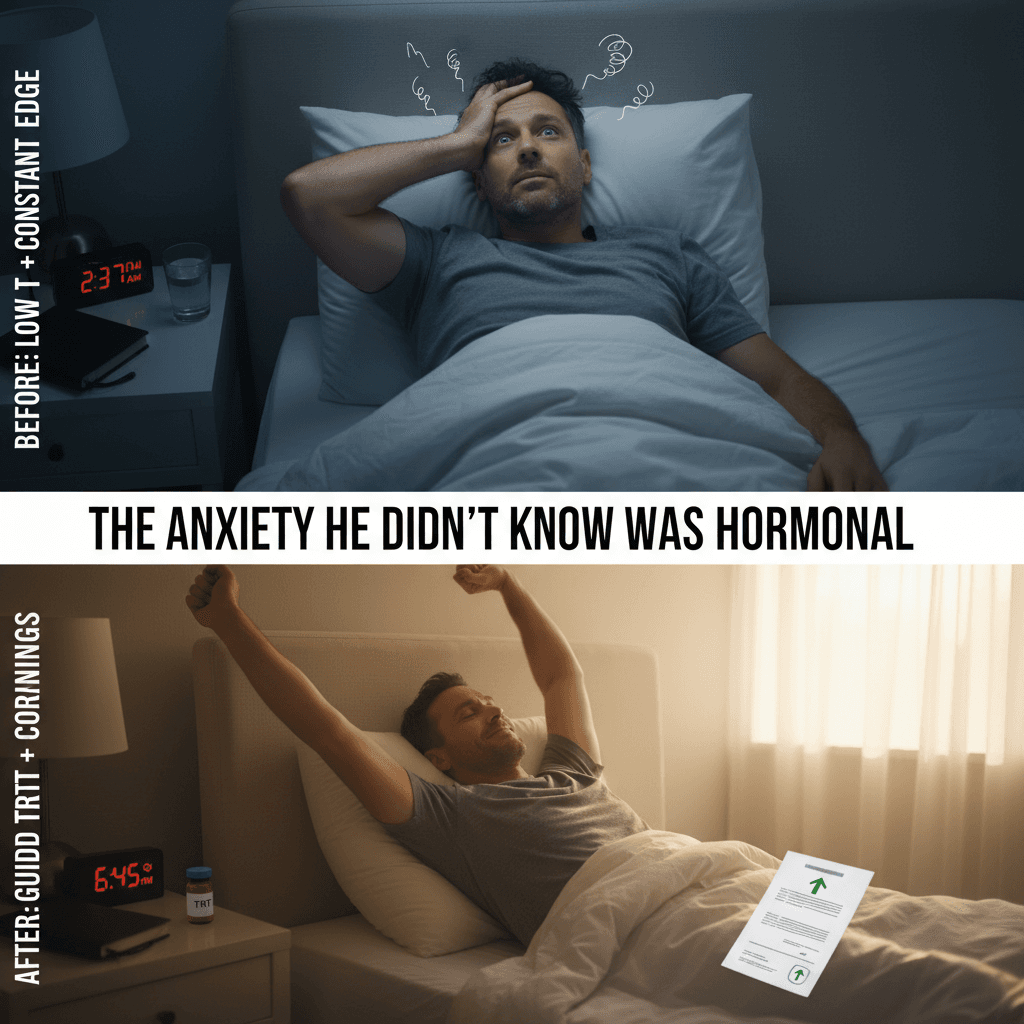
Mark didn't think much of it when his doctor suggested checking his testosterone levels during a routine physical. At 42, he'd been dealing with what he assumed was just chronic stress: constant irritability, a short fuse with his kids, trouble sleeping, and a gnawing sense of unease that shadowed him through the day. He'd tried therapy, which helped a bit, and his doctor had even mentioned antidepressants. But when his blood work came back showing significantly low testosterone, Mark decided to try testosterone replacement therapy under medical supervision. Within a few months, something unexpected happened. The physical changes were there, sure, but what surprised him most was how much calmer he felt. The background hum of anxiety that had become his normal just... faded.
Mark's story isn't unique, and it points to something many men don't realize: testosterone doesn't just influence muscle mass and sex drive. It plays a surprisingly important role in how you feel emotionally, how you handle stress, and how your brain regulates mood.
The Hormone That Shapes How You Feel
Testosterone is often reduced to its most visible effects: strength, libido, physical performance. But this hormone operates on a much broader stage. Your brain is loaded with androgen receptors, the molecular docking stations where testosterone and related hormones exert their influence. These receptors are concentrated in areas that govern emotion, motivation, memory, and stress response, including the amygdala and hippocampus.
When testosterone levels are healthy, the hormone helps modulate neurotransmitter systems, including serotonin, dopamine, and GABA. These are the chemical messengers that regulate mood, reward, and feelings of calm. Testosterone also affects the hypothalamic-pituitary-adrenal (HPA) axis, your body's central stress response system. In other words, this hormone isn't just about what your body can do. It's deeply involved in how your mind feels and functions.
When testosterone drops below optimal levels, particularly in men who once had normal levels, the effects can ripple through both body and brain. You might expect fatigue, reduced muscle mass, or changes in libido. But many men are blindsided by the emotional and cognitive symptoms: persistent anxiety, irritability, brain fog, lack of motivation, and a feeling of being overwhelmed by things that used to be manageable.
When Low Testosterone Looks Like Anxiety
Anxiety doesn't always announce itself with obvious panic attacks. For many men, it's subtler: a constant low-grade tension, difficulty relaxing, racing thoughts at night, or feeling on edge for no clear reason. You might find yourself snapping at people you care about, avoiding social situations, or feeling like you're running on empty even after a full night's sleep.
These symptoms overlap significantly with what low testosterone can cause. Low energy and poor sleep quality, both common with declining testosterone, can worsen anxiety and irritability. Brain fog and difficulty concentrating can make you feel less capable, which erodes confidence and increases stress. Physical changes like weight gain or loss of muscle can affect self-esteem, creating a feedback loop that intensifies emotional distress.
There's also emerging evidence that low testosterone may directly affect how your brain processes fear and threat. Some research suggests that men with low testosterone show altered activity in brain regions associated with emotional regulation, particularly the amygdala, which plays a key role in anxiety and stress responses. When testosterone is low, you may literally experience the world as more threatening or stressful than you would otherwise.
It's important to emphasize that anxiety has many potential causes: genetics, life circumstances, trauma, other medical conditions, nutrient deficiencies, thyroid issues, and more. Low testosterone is just one possible contributor. But for men whose anxiety is partly driven or worsened by hormonal deficiency, addressing that deficiency can sometimes produce remarkable shifts in mental state.
The Unexpected Calm That Comes With Treatment
When men start medically supervised testosterone replacement therapy for confirmed low testosterone, they typically expect the classic benefits: more energy, better workouts, improved libido. What catches many by surprise is the change in their emotional landscape.
Several mechanisms may explain why appropriate TRT can reduce anxiety in some men. First, restoring testosterone to healthy levels can improve sleep architecture, particularly deep, restorative sleep. Better sleep alone is one of the most powerful tools for mood regulation and stress resilience. When you're actually resting at night, your nervous system has a chance to recalibrate.
Second, testosterone influences neurotransmitter systems that regulate mood. Optimizing testosterone may help rebalance serotonin and dopamine, which can reduce feelings of unease and improve overall emotional stability. Some men describe it as feeling more emotionally centered, less reactive, more able to handle daily stressors without spiraling.
Third, the physical improvements that come with TRT, such as increased energy, better body composition, and improved sexual function, can indirectly boost mental health. When you feel stronger, more capable, and more like yourself physically, it's easier to feel confident and less anxious emotionally. There's a real psychological benefit to regaining a sense of vitality and control over your body.
Finally, testosterone may improve resilience to stress by modulating the HPA axis and cortisol regulation. Chronic stress and anxiety are often associated with dysregulated cortisol patterns. By helping the body respond more adaptively to stressors, healthy testosterone levels may reduce the intensity and duration of anxious feelings.
But this is not a universal experience, and it's critical to set realistic expectations. TRT is not a magic bullet for anxiety. Some men notice significant improvements in mood and emotional well-being. Others see modest changes, and for some, the primary benefits remain physical. Individual biology, the severity and cause of anxiety, and other lifestyle factors all play a role.
What You Should Actually Expect
If you're considering TRT or have recently started, it's worth knowing what improvements might be realistic and what timelines to expect. Physical changes like increased energy and improved body composition often become noticeable within the first few months. Mood and anxiety improvements, when they occur, can show up around the same time, though some men report feeling emotionally better within weeks.
You should not expect TRT to eliminate anxiety entirely, especially if your anxiety has deep roots in trauma, life circumstances, or other mental health conditions. TRT is not a replacement for therapy, stress management, or other mental health treatments. It's one piece of a larger puzzle.
You should also not expect TRT to fix problems that aren't related to low testosterone. If your testosterone levels are already normal, adding more won't improve your mood and could cause side effects. This is why proper testing and medical supervision are non-negotiable.
Some men worry about side effects, and those concerns are valid. TRT requires monitoring for potential impacts on red blood cell count, prostate health, cardiovascular risk factors, and fertility. Working with a knowledgeable healthcare provider who understands both the physical and mental health aspects of TRT is essential. The goal is not just to raise a number on a lab report, but to improve quality of life in a safe, sustainable way.
Beyond Hormones: The Bigger Picture
Even if low testosterone is contributing to your anxiety, addressing it effectively means looking at the whole picture. Sleep, nutrition, exercise, stress management, and social connection all influence mental health profoundly. For many men, the best outcomes come from combining TRT with lifestyle changes and, when appropriate, therapy.
Cognitive behavioral therapy, for example, has strong evidence for treating anxiety and can be particularly helpful if you've developed anxious thought patterns or avoidant behaviors over time. Mindfulness practices, regular physical activity, and establishing consistent sleep routines all support emotional resilience, whether or not you're on TRT.
It's also worth considering other medical conditions that can mimic or coexist with low testosterone and anxiety. Thyroid disorders, vitamin D deficiency, sleep apnea, and chronic inflammation can all affect mood and energy. A thorough evaluation by a healthcare provider can help identify and address multiple contributing factors.
Paying Attention to What Your Body Is Telling You
One of the most important things you can do is take your symptoms seriously. Men are often taught to push through discomfort, to tough it out, to not complain. But persistent anxiety, irritability, fatigue, and loss of motivation are not character flaws or signs of weakness. They're signals that something may be off, whether that's hormonal, psychological, medical, or some combination.
If you've been struggling with anxiety and also notice other signs that might suggest low testosterone, such as persistent fatigue, reduced libido, difficulty building or maintaining muscle, weight gain (especially around the midsection), or poor sleep, it's worth talking to a healthcare provider about comprehensive testing. Blood work can reveal whether low testosterone is part of the picture.
Equally important: don't self-diagnose or self-treat. The internet is full of misinformation about testosterone, and using testosterone without medical supervision can be dangerous. Proper TRT involves careful evaluation, appropriate testing, individualized treatment plans, and ongoing monitoring. It's a medical intervention, not a lifestyle hack.
A Path Worth Exploring
For men whose anxiety is partly rooted in low testosterone, medically appropriate TRT can be life-changing. The relief isn't just about feeling less anxious. It's about reclaiming a sense of stability, energy, and confidence that makes life more enjoyable and manageable. It's about sleeping better, feeling more present with the people you love, and having the emotional bandwidth to handle challenges without feeling perpetually overwhelmed.
But this outcome requires the right approach: proper diagnosis, evidence-based treatment, professional guidance, and realistic expectations. It also means being open to addressing other aspects of your health and well-being, not just hormone levels.
This is where services like AlphaMD can make a meaningful difference. AlphaMD offers men access to experienced clinicians who understand the nuanced relationship between testosterone, mental health, and overall quality of life. Rather than a provider just prescribing medication and sending you on your way, the focus is on comprehensive care that considers your physical symptoms, emotional well-being, lifestyle factors, and individual health goals. It's TRT done thoughtfully, with ongoing provider monitoring and the kind of support that makes treatment both safe and effective.
If you've been living with anxiety that won't budge despite your best efforts, if you feel like you're not quite yourself and haven't been for a while, it may be time to look deeper. Your symptoms deserve attention, and you deserve answers. Low testosterone might not be the whole story, but for some men, it's a crucial chapter. And when addressed properly, it can open the door to feeling genuinely better, not just in body, but in mind.
Have a question? Ask us.
At AlphaMD, we're here to help. Feel free to ask us any question you would like about TRT, medical weightloss, ED, or other topics related to men's health. Or take a moment to browse through our past questions.
People are asking...
I’ve been struggling with a lot of depression and anxiety for 10 years on various medications. Believing that my hormones could have been unbalanced ...
Anxiety and depression are known symptoms of hypogonadism. However, they are rarely the only symptoms. While it’s true your level of 377 is on the lower end of the “normal” range, in the absence of ot... See Full Answer
Do you think that most mental health issues are contra indications for starting TRT? Such as depression and bipolar for example? Or have you seen peop...
Many patients who joined the AlphaMD platform with slight anxiety or depression have started TRT and found that those mental health issues improved or went away for them. It is likely that it wasn't t... See Full Answer
I felt great on aas. Physically and mentally. I never felt bad or lacked ambition anyway, but it made me more confident. Broke plateaus in the gym. Ma...
Great explanation. You felt better when your T was higher, it was good for your life, though the AAS were potentially illegal or bad for your organs. It was good that you swapped providers to someone ... See Full Answer
Get $30 off your first month’s order
Enter your email address now to receive $30 off your first month’s cost, other discounts, and additional information about TRT.
Legal Disclaimer
This website is a repository of publicly available information and is not intended to form a physician-patient relationship with any individual. The content of this website is for informational purposes only. The information presented on this website is not intended to take the place of your personal physician's advice and is not intended to diagnose, treat, cure, or prevent any disease. Discuss this information with your own physician or healthcare provider to determine what is right for you. All information is intended for your general knowledge only and is not a substitute for medical advice or treatment for specific medical conditions. The information contained herein is presented in summary form only and intended to provide broad consumer understanding and knowledge. The information should not be considered complete and should not be used in place of a visit, phone or telemedicine call, consultation or advice of your physician or other healthcare provider. Only a qualified physician in your state can determine if you qualify for and should undertake treatment.