
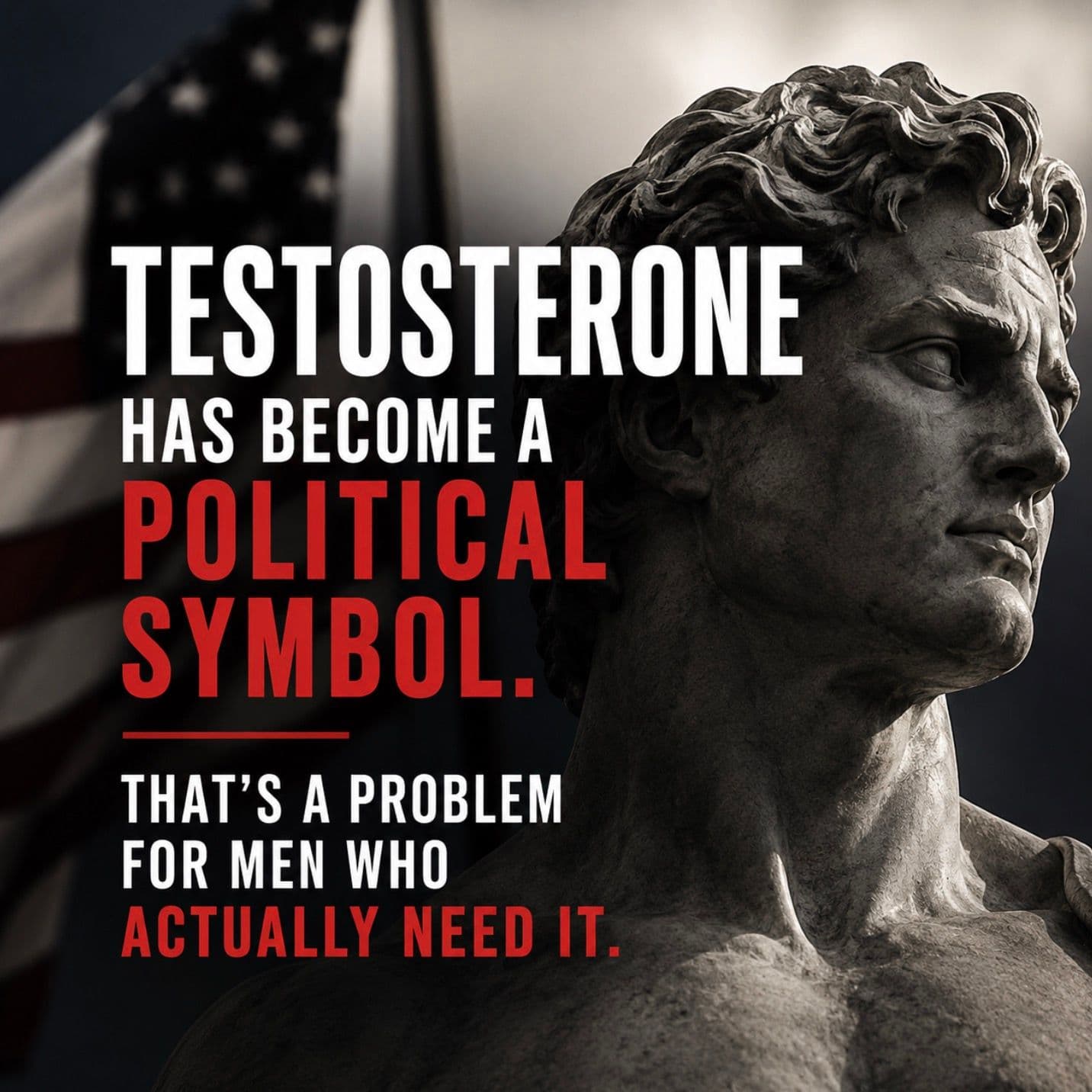
Testosterone Has Become a Political Symbol. That's a Problem for Men Who Actually Need It.
Published on:
Updated on:
People are asking...
Do you think people abusing (abusing may in most cases be a strong word) TRT for aesthetic purposes may hinder hypogonal men’s access to TRT?...
Yes. People are predictable and judgmental. Just like people assume all people with chronic pain and need narcotics are just addicts, people using AAS for aesthetic purposes have made society as a who... See Full Answer
What is the likelihood of a shortage of test?...
Of available injectable Testosterone on the market? Very low. It has been around for a long time and many pharmacies produce it both domestically and abroad. It's one the main reasons that TRT treatme... See Full Answer
Why does testosterone increase my anxiety ?...
Most men who use testosterone actually report a decrease in anxiety. Men who use testosterone that aromatize to excess (ie convert the testosterone to estrogen) are often the ones who complain of incr... See Full Answer
Have a question? Ask us.
At AlphaMD, we're here to help. Feel free to ask us any question you would like about TRT, medical weightloss, ED, or other topics related to men's health. Or take a moment to browse through our past questions.
A hormone that regulates muscle mass, bone density, mood, and fertility has somehow become a culture war prop. That transformation has real consequences for the men who need medical treatment and are now too embarrassed, confused, or skeptical to get it.
How a Medical Hormone Got Turned Into an Ideology
Over the past decade, testosterone drifted out of endocrinology textbooks and into political rhetoric. Podcasters, influencers, and a certain strain of masculinist commentary began treating high testosterone as a moral virtue and low testosterone as a character flaw. At the same time, critics on the other side started framing testosterone therapy as a vanity project for insecure men or a pharmaceutical cash grab. Neither camp was talking about medicine.
The result is a strange cultural moment in which a legitimate hormone disorder gets filtered through political identity before it ever reaches a doctor's office. Men who experience genuine symptoms hesitate to bring them up because they don't want to seem like they're chasing an ideological fantasy. Physicians sometimes approach requests with suspicion rather than inquiry. And the actual science, which is nuanced and still evolving in some areas, gets buried under noise.
This is not a minor inconvenience. Untreated hypogonadism, the clinical term for abnormally low testosterone production, is associated with reduced quality of life, metabolic disruption, bone loss, and significant psychological burden. When politics crowds out medicine, people get hurt.
What Testosterone Actually Does in the Body
Stripped of the mythology, testosterone is a steroid hormone produced primarily in the testes in men and in smaller amounts in the ovaries and adrenal glands in women. It plays a central role in male reproductive development, but its job doesn't stop there.
Throughout adult life, testosterone contributes to maintaining muscle mass and strength, regulating fat distribution, supporting bone mineral density, influencing mood and cognitive function, sustaining libido and sexual function, and stimulating red blood cell production. These aren't fringe effects. They are well-documented physiological functions that matter for everyday health and wellbeing.
Production naturally declines with age, typically beginning gradually in a man's 30s and continuing slowly over time. That gradual decline is considered a normal part of aging. The clinical concern arises when levels fall significantly below what is needed for normal function, or when a specific underlying condition is driving the drop.
The Difference Between "Low-T" Marketing and Actual Hypogonadism
Part of the political mess around testosterone traces back to a genuine overcorrection in early direct-to-consumer marketing. In the 2000s and 2010s, pharmaceutical companies ran aggressive campaigns suggesting that fatigue, low mood, or reduced drive in middle-aged men was likely a testosterone problem with a straightforward fix. Prescriptions surged. Regulators pushed back. Critics, reasonably, raised questions about overdiagnosis.
But the correction also created collateral damage. It became fashionable to dismiss any discussion of testosterone treatment as pharmaceutical hype, which left men with legitimate disorders caught in the crossfire.
Hypogonadism is a real condition with recognized diagnostic criteria. Primary hypogonadism originates in the testes themselves, often due to genetic conditions, injury, infection, or certain cancer treatments. Secondary hypogonadism originates in the brain, specifically in the pituitary gland or hypothalamus, which fail to send the right signals to trigger testosterone production. Causes can include tumors, head trauma, chronic illness, obesity, sleep apnea, or pituitary disorders.
Neither version of this condition is a lifestyle complaint. Both deserve proper evaluation and, when appropriate, treatment.
What Symptoms Actually Look Like and Why They Get Dismissed
The symptoms of low testosterone are real but also nonspecific, which makes them easy to wave off. Fatigue is the obvious one. But men also commonly report reduced sex drive, difficulty maintaining erections, decreased motivation, changes in mood including increased irritability or depression, difficulty concentrating, reduced muscle mass despite regular exercise, increased body fat particularly around the abdomen, and in some cases, reduced bone density that only shows up on imaging.
None of these symptoms point exclusively to testosterone deficiency. Thyroid dysfunction, sleep disorders, depression, cardiovascular problems, and many other conditions can produce overlapping pictures. That is precisely why symptoms alone are never sufficient for diagnosis and why the politicization of this topic is so counterproductive. When men read about testosterone on ideological platforms, they often arrive at a doctor's office either demanding a specific treatment or avoiding the conversation entirely. Both outcomes interfere with finding out what's actually going on.
What a Real Evaluation Looks Like
A responsible evaluation for suspected testosterone deficiency does not begin with a prescription. It begins with a conversation, a medical history, and laboratory testing.
Blood work typically measures total testosterone, and often free testosterone, along with other hormones that help clarify whether a problem exists at the testicular level or higher up in the signaling chain. A clinician will look at luteinizing hormone and follicle-stimulating hormone levels to understand where in the system any disruption is occurring. Thyroid function, complete blood counts, and metabolic panels are often part of the picture too.
Importantly, testosterone levels fluctuate throughout the day and are influenced by illness, stress, sleep quality, and recent activity. A single low reading is rarely enough to make a diagnosis. Guidelines from major medical organizations generally recommend confirming low levels on more than one occasion before proceeding.
According to guidance from the American Urological Association and supported by broader clinical literature, diagnosis requires both consistent symptoms and confirmed low laboratory values. Symptoms without lab confirmation, or lab values without symptoms, typically do not meet the threshold for treatment. This is not gatekeeping. It is medicine doing its job.
The Real Risks, Without the Exaggeration
Testosterone replacement therapy is not without risks, and a good clinician will not pretend otherwise. Understanding those risks accurately, rather than through a politically charged lens, is essential.
Fertility is one of the most clinically significant concerns. Exogenous testosterone suppresses the body's own signaling pathway for sperm production. Men who are interested in future biological fatherhood need to discuss this before starting treatment. One option that some clinicians use to preserve testicular function involves human chorionic gonadotropin, which can stimulate natural testosterone production without the suppressive effect on fertility that direct testosterone administration carries.
Cardiovascular effects have been debated at length in the medical literature. Earlier studies raised concerns, but more recent large-scale research, including the TRAVERSE trial published in the New England Journal of Medicine, found that testosterone therapy in middle-aged and older men with hypogonadism did not significantly increase the rate of major adverse cardiovascular events compared to placebo, though elevated risks for certain other outcomes such as atrial fibrillation and pulmonary embolism were observed. This is an evolving area and one that underscores why ongoing medical monitoring matters.
Hematocrit elevation, meaning an increase in red blood cell concentration, is a known physiological response to testosterone that requires monitoring because it can increase clotting risk at high levels. Prostate health is another area that gets appropriately tracked. Mood and behavior changes are often cited as a risk, but the relationship is more complex than popular culture suggests. Clinical treatment of deficiency is not the same as supraphysiological use in athletic or misuse contexts, and conflating them is one of the more persistent and damaging misconceptions in this space.
Shared Decision-Making Is the Whole Point
What good testosterone care looks like, at its foundation, is a partnership between a patient who is being heard and a clinician who is being honest. That means explaining what is known and what remains uncertain. It means discussing alternatives. It means setting realistic expectations about what treatment can and cannot do. And it means committing to follow-up, because this is not a prescription you write and forget.
That model of individualized, evidence-based, monitored care is exactly what gets undermined when testosterone becomes a political symbol. Men who approach care through an ideological framework often have expectations that no treatment could meet. Men who avoid care because they don't want to be seen as buying into a cultural trend may quietly suffer through symptoms that are treatable.
Neither outcome is acceptable.
When the Politics Step Aside, People Can Actually Get Help
The men who benefit most from testosterone treatment are not the ones who discovered it through a podcast about masculine optimization. They are the ones who described symptoms to a clinician, went through appropriate testing, received a genuine diagnosis, and entered a care relationship built on monitoring and honest communication.
For men who think they might have a hormonal issue, the path forward is the same it has always been: find a provider who will evaluate the whole picture, order the right tests, and treat the findings rather than the trend.
AlphaMD approaches testosterone care with exactly that framework, combining accessible telehealth with the clinical rigor that this kind of treatment requires. There is nothing ideological about wanting your body to function properly. There is nothing weak about seeking care for a medical condition. The noise around testosterone in popular culture has made both of those truths harder to hold onto, and that is worth pushing back on.
Have a question? Ask us.
At AlphaMD, we're here to help. Feel free to ask us any question you would like about TRT, medical weightloss, ED, or other topics related to men's health. Or take a moment to browse through our past questions.
People are asking...
Do you think people abusing (abusing may in most cases be a strong word) TRT for aesthetic purposes may hinder hypogonal men’s access to TRT?...
Yes. People are predictable and judgmental. Just like people assume all people with chronic pain and need narcotics are just addicts, people using AAS for aesthetic purposes have made society as a who... See Full Answer
What is the likelihood of a shortage of test?...
Of available injectable Testosterone on the market? Very low. It has been around for a long time and many pharmacies produce it both domestically and abroad. It's one the main reasons that TRT treatme... See Full Answer
Why does testosterone increase my anxiety ?...
Most men who use testosterone actually report a decrease in anxiety. Men who use testosterone that aromatize to excess (ie convert the testosterone to estrogen) are often the ones who complain of incr... See Full Answer
Get $30 off your first month’s order
Enter your email address now to receive $30 off your first month’s cost, other discounts, and additional information about TRT.
Legal Disclaimer
This website is a repository of publicly available information and is not intended to form a physician-patient relationship with any individual. The content of this website is for informational purposes only. The information presented on this website is not intended to take the place of your personal physician's advice and is not intended to diagnose, treat, cure, or prevent any disease. Discuss this information with your own physician or healthcare provider to determine what is right for you. All information is intended for your general knowledge only and is not a substitute for medical advice or treatment for specific medical conditions. The information contained herein is presented in summary form only and intended to provide broad consumer understanding and knowledge. The information should not be considered complete and should not be used in place of a visit, phone or telemedicine call, consultation or advice of your physician or other healthcare provider. Only a qualified physician in your state can determine if you qualify for and should undertake treatment.