
Switching TRT Providers: What to Bring, What to Ask, and What Most Men Forget
Published on:
Updated on:
People are asking...
I just started with this provider so they wanted to start on the lower side and titrate up in a few months. It’s an out of pocket expense so switching...
Understandable. There are TRT services out there where a provider can take over your care without forcing you off Testosterone and new testing though, do keep that in mind if you hit a wall with that ... See Full Answer
I’m currently going through a local clinic that frankly charges too much and expects labs too frequently, what’s the process like to switch to your cl...
Many TRT transfer patients come to AlphaMD. All we ask is that we get a copy of your current regimen and that you meet with a licensed provider to talk through how you're feeling on it. It would be gr... See Full Answer
How is traveling overseas with TRT? Especially in strict countries like the Arab countries. Do you provide a note? Any tips?...
You hit the nail on the head with that second part. Traveling with TRT tends to go two ways: It's a total non-issue or you need to do some work ahead of time. Most of the time you can travel to any co... See Full Answer
Have a question? Ask us.
At AlphaMD, we're here to help. Feel free to ask us any question you would like about TRT, medical weightloss, ED, or other topics related to men's health. Or take a moment to browse through our past questions.
Bad communication, cookie-cutter dosing, missing follow-ups, unclear lab reviews. These are the kinds of problems that push someone to look for a better TRT provider. But switching clinics is not just a paperwork move. It is a handoff of your health history, your protocol, your symptoms, and your goals. Show up prepared, and the transition can be smooth. Show up without the right information, and your new provider may be forced to guess their way through your treatment history.
Why Men Walk Away From Their Current TRT Provider
The reasons are more varied than most people assume. Some men leave because their provider doesn't explain anything, just adjusts numbers without a conversation. Others are frustrated by refill delays, inconsistent availability, or a practice that seems to treat TRT as an afterthought rather than a specialty. Cost transparency is another common friction point, where men discover unexpected fees for labs, visits, or follow-ups that were never clearly disclosed upfront.
Side effect management matters too. If you've raised concerns about mood changes, sleep disruption, elevated red blood cell counts, or changes in testicular size and received little more than a shrug, that's a legitimate reason to look elsewhere. Travel, access to telehealth, and wanting a provider who actually monitors you consistently rather than seeing you once a year are all valid motivators. None of these reasons make you a difficult patient. They make you an informed one.
What to Bring to Your First Appointment With a New Provider
Arriving prepared is the single most effective thing you can do to get your new provider up to speed quickly and avoid starting over from scratch. Think of it as writing a brief but thorough introduction to your health history, one that lets the clinician focus on your current needs instead of playing detective.
Start with your medical records related to TRT initiation. This includes whatever evaluation led to your diagnosis, any imaging, and the clinical notes that documented your symptoms before therapy began. If you can get those, bring them.
Your lab history is equally important, ideally more than just the most recent draw. Trends matter far more than single data points in TRT management, and a new provider who can see how your labs have moved over time is in a much stronger position to guide your care. Bring what you have, even if it's incomplete.
Put together a basic timeline of your TRT history. When did you start? Have your formulation or schedule changed since then? How did your symptoms respond at each stage? This doesn't need to be clinical or formal. A simple written summary works fine.
Bring a complete list of your current medications and supplements, including how and when you take them. General descriptions are fine. Certain supplements and medications interact with testosterone or affect the lab markers your provider monitors, so this information is directly relevant to your care.
Describe your current injection or application habits in general terms, including your schedule and any site rotation patterns if you're injecting. Note any issues you've experienced with injection sites, skin reactions, or inconsistent absorption.
Write down any side effects or concerning symptoms with context. When did they start? Do they fluctuate? Are they tied to specific points in your dosing schedule? That context helps far more than a list of symptoms alone.
Finally, flag any comorbid conditions, your sleep quality (especially if you've been told you might have sleep apnea or if you snore heavily), fertility goals, lifestyle habits, and any recent major life stressors. These factors don't exist in a separate box from your testosterone levels. They interact with your therapy in real and meaningful ways.
Bring your insurance information and current pharmacy details if those are relevant to how you receive your medication.
The Questions That Separate Good Providers From Great Ones
The first appointment is also your opportunity to evaluate the provider, not just the other way around. A clinician who welcomes thoughtful questions is demonstrating exactly the kind of practice you want.
Ask how they evaluate candidacy and confirm a diagnosis. Good providers don't just accept a previous diagnosis without reviewing it. They want to understand the clinical picture for themselves.
Ask how they monitor safety and effectiveness over time. What labs do they run, and on what schedule? How do they think about balancing symptom response with lab-based markers? This tells you whether they're paying attention to the whole picture or just chasing numbers.
Find out how they handle side effects and what they consider red flags that warrant prompt evaluation. A provider with a clear, calm approach to this question is one who has thought about it.
Ask about their policies on follow-ups, messaging, refills, and continuity of care during travel. If you travel frequently or live far from a clinic, you need to know whether access will be reliable or whether you'll be chasing refills from a different time zone.
Ask whether they coordinate with your primary care physician and how they handle documentation. If your PCP is managing your cardiovascular health or other conditions, that communication matters.
If fertility is on your radar, bring it up early and directly. Ask how they approach fertility considerations alongside TRT, because this affects treatment planning in meaningful ways.
Get clarity on cost. What's included in their fees? Are labs billed separately? Are follow-up visits covered? Knowing this upfront prevents the frustrating surprises that drive men away from providers in the first place.
What Most Men Forget, and Why It Derails the Transition
This is where transitions tend to go sideways, not because men are careless, but because these details aren't obvious until someone points them out.
Timing is one of the most overlooked factors. Missing doses during a transition or experiencing a gap in therapy while you wait for records, new prescriptions, or prior authorizations will affect how you feel and how your labs look. If labs are drawn during a period of inconsistency, the results won't reflect your actual response to therapy. Make sure your new provider knows about any interruptions.
Lab timing consistency matters more than most men realize. Testosterone levels fluctuate throughout the day and relative to your dosing schedule. If your previous labs were drawn at a specific point in your cycle and your new labs are drawn at a different point, the comparison isn't meaningful. Ask your new provider about their lab timing protocol and share when your prior labs were drawn relative to your last dose.
Many symptoms that men attribute to testosterone, including fatigue, low mood, poor sleep, brain fog, and reduced motivation, have other common contributors. Undiagnosed or undertreated sleep apnea is one of the most significant and most frequently missed. Thyroid dysfunction, mental health conditions, alcohol use, chronic stress, overtraining, and certain medication side effects can all produce symptoms that overlap with low testosterone. A thorough provider will consider these, and you should raise them proactively rather than waiting to be asked.
Don't forget about blood pressure, cardiovascular risk factors, and body composition. TRT affects these areas, and a good provider monitors them, not just hormone levels. If you've noticed changes in any of these areas, mention them.
Fertility goals and testicular changes deserve a direct, early conversation. Exogenous testosterone suppresses the body's own production signals, and this has implications for sperm production. If you have any interest in future fertility, your provider needs to know at the outset, not three months into a new treatment plan.
For men who inject, basic technique and storage habits matter. Injection site rotation, proper storage of medication, and handling practices affect consistency and safety. If you've had recurring site issues or aren't confident in your technique, ask.
Set realistic expectations going in. Testosterone replacement therapy can make a meaningful difference in quality of life for men who genuinely need it, but it is not a substitute for sleep, sound nutrition, consistent training, and stress management. The men who get the most from therapy are typically the ones who treat it as one part of a larger approach to their health. If you're expecting TRT alone to solve everything, the transition to a new provider is a good time to recalibrate.
One practical thing many men overlook: actually requesting that your records are sent. Don't assume your prior provider will forward them automatically. Request them in writing, confirm receipt, and follow up if needed. Delays in record transfer are one of the most common reasons a first appointment with a new provider is less productive than it should be.
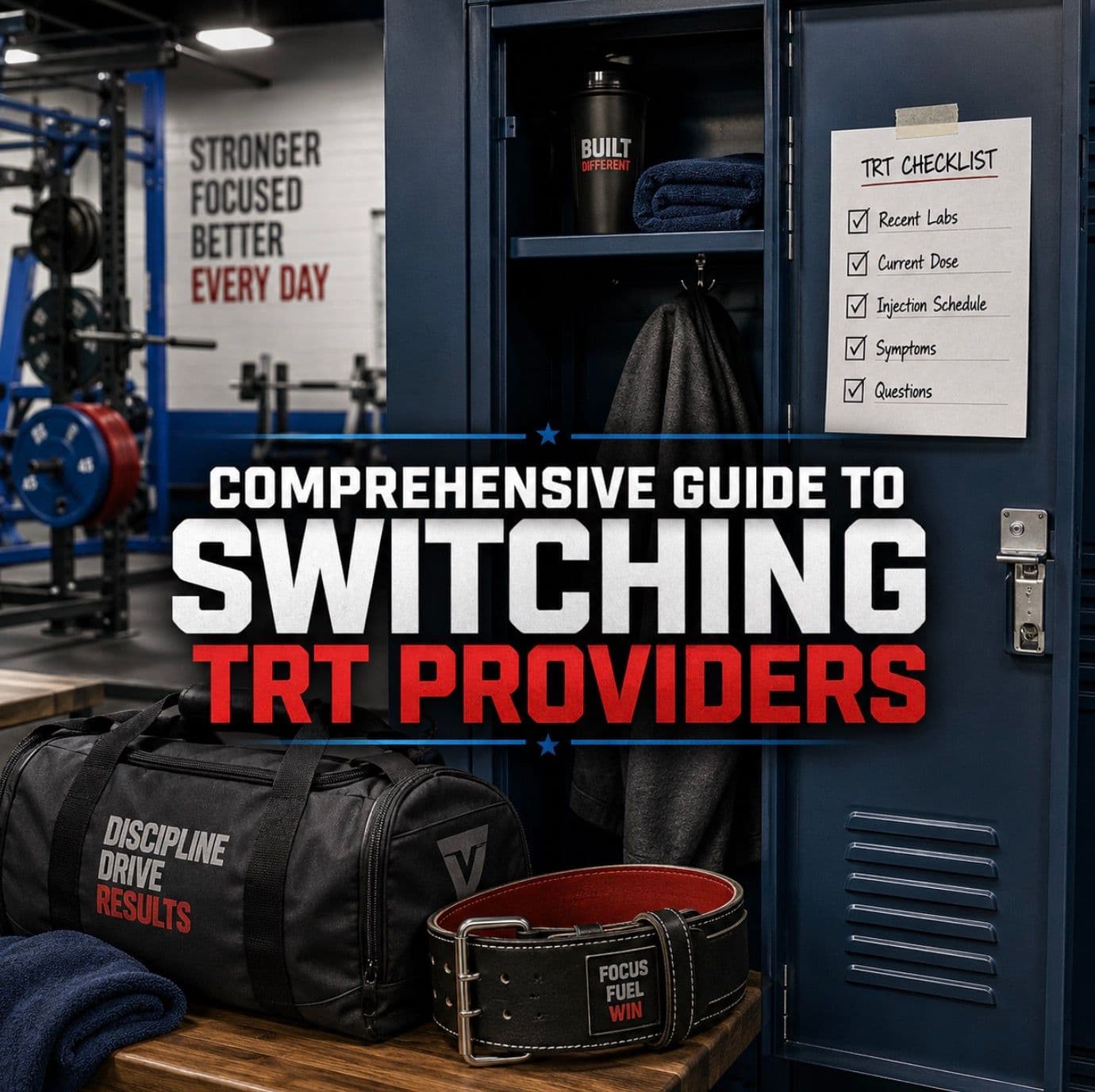
A Practical Checklist Before You Make the Switch
Before your first appointment with a new provider, work through this list:
- Request your full medical records, lab history, and clinical notes from your prior provider in writing
- Write a brief timeline of your TRT history, including changes and symptom responses
- Compile your current medication and supplement list with general usage descriptions
- Note any side effects, concerns, or symptoms with timing and context
- Document your injection or application schedule habits and any site issues
- List any comorbid conditions, sleep concerns, and relevant lifestyle factors
- Clarify your fertility goals before the appointment so you can raise them proactively
- Bring your insurance and pharmacy information
- Write down your questions for the new provider so you don't leave the appointment without answers
Arriving Prepared Makes All the Difference
Switching TRT providers doesn't have to mean starting from zero or navigating months of uncertainty. When you arrive with organized records, a clear history, and direct questions, you give your new clinician exactly what they need to care for you well from day one.
For men looking for a provider who treats the transition process with the same care as ongoing management, the AlphaMD platform is built around that philosophy. Providers on AlphaMD emphasize patient-centered education, consistent follow-up, and thorough monitoring, so men aren't left guessing about their health between appointments. Whether you're switching for the first time or have been through the process before, choosing a provider who communicates clearly and monitors comprehensively is one of the most important decisions you can make for your long-term health.
Have a question? Ask us.
At AlphaMD, we're here to help. Feel free to ask us any question you would like about TRT, medical weightloss, ED, or other topics related to men's health. Or take a moment to browse through our past questions.
People are asking...
I just started with this provider so they wanted to start on the lower side and titrate up in a few months. It’s an out of pocket expense so switching...
Understandable. There are TRT services out there where a provider can take over your care without forcing you off Testosterone and new testing though, do keep that in mind if you hit a wall with that ... See Full Answer
I’m currently going through a local clinic that frankly charges too much and expects labs too frequently, what’s the process like to switch to your cl...
Many TRT transfer patients come to AlphaMD. All we ask is that we get a copy of your current regimen and that you meet with a licensed provider to talk through how you're feeling on it. It would be gr... See Full Answer
How is traveling overseas with TRT? Especially in strict countries like the Arab countries. Do you provide a note? Any tips?...
You hit the nail on the head with that second part. Traveling with TRT tends to go two ways: It's a total non-issue or you need to do some work ahead of time. Most of the time you can travel to any co... See Full Answer
Get $30 off your first month’s order
Enter your email address now to receive $30 off your first month’s cost, other discounts, and additional information about TRT.
Legal Disclaimer
This website is a repository of publicly available information and is not intended to form a physician-patient relationship with any individual. The content of this website is for informational purposes only. The information presented on this website is not intended to take the place of your personal physician's advice and is not intended to diagnose, treat, cure, or prevent any disease. Discuss this information with your own physician or healthcare provider to determine what is right for you. All information is intended for your general knowledge only and is not a substitute for medical advice or treatment for specific medical conditions. The information contained herein is presented in summary form only and intended to provide broad consumer understanding and knowledge. The information should not be considered complete and should not be used in place of a visit, phone or telemedicine call, consultation or advice of your physician or other healthcare provider. Only a qualified physician in your state can determine if you qualify for and should undertake treatment.