
How Peptides Could Potentially Benefit Your TRT
Published on:
Updated on:
People are asking...
How about stacking TRT with peptide therapy. Are Sermorelin, Tesamorelin, or CJC w/ Ipamorelin actually safe to use with TRT? What are the real benef...
These are perfectly reasonable options. Currently, licensed providers can prescribe Sermorelin, though not long ago it was permissible to work with the other peptides you mentioned as well. Many men h... See Full Answer
What are the best peptides to pair with TRT for getting lean?...
In terms of current official pharmacy offerings, providers often recommend Sermorelin as a good boost. Anecdotally, Ipamorelin / CJC with or without dac is often described as a solid peptide for fitne... See Full Answer
Do you offer peptides and if so can you talk a little bit about which ones you offer and the possible benefits?...
Yes — providers on the AlphaMD platform can prescribe certain peptides, though the selection is more tightly focused than a full on peptide provider. This is because prescribing is limited to peptides... See Full Answer
Have a question? Ask us.
At AlphaMD, we're here to help. Feel free to ask us any question you would like about TRT, medical weightloss, ED, or other topics related to men's health. Or take a moment to browse through our past questions.
Testosterone replacement therapy can help men with clinically confirmed testosterone deficiency restore testosterone to a healthy range and improve related symptoms. Peptides are different. They do not replace testosterone, correct an ineffective TRT protocol, or eliminate the need for regular laboratory monitoring. However, certain experimental peptides are being studied for recovery, inflammation, metabolism, cognitive function, and sleep, all of which may affect how a man feels while receiving TRT.
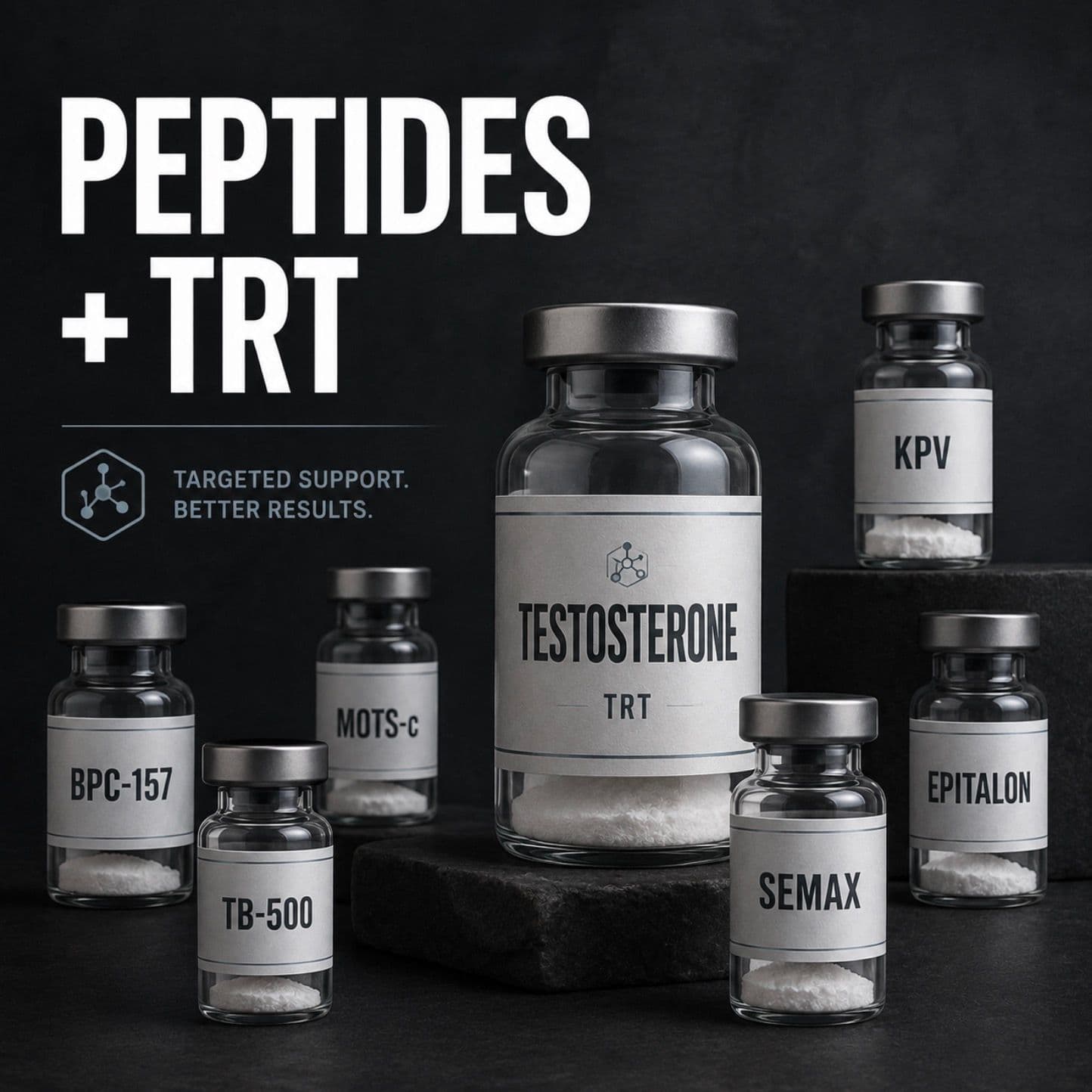
The AlphaMD peptide hub explains the research, potential uses, regulatory status, and unresolved risks surrounding six widely discussed peptides: BPC-157, KPV, TB-500, MOTS-c, Semax, and Epitalon.
The direct answer is that peptides could potentially complement TRT by addressing goals that testosterone alone may not resolve. BPC-157 and TB-500 are associated with tissue-repair research, KPV with inflammatory signaling, MOTS-c with metabolism, Semax with neurological pathways, and Epitalon with sleep and circadian biology.
That does not mean these peptides have been proven to improve TRT outcomes. There are no adequate controlled clinical trials showing that these six peptides increase the effectiveness of testosterone, improve testosterone absorption, raise testosterone levels, prevent TRT side effects, or produce better results when combined with TRT.
What Is the Difference Between TRT and Peptide Therapy?
TRT supplies testosterone to men whose bodies are not producing enough of it. Its primary purpose is to restore testosterone concentrations and address symptoms associated with hypogonadism.
Depending on the patient, properly managed TRT may help improve:
- Sexual function
- Libido
- Energy
- Lean body mass
- Muscle strength
- Bone density
- Mood
- Anemia related to testosterone deficiency
- Overall quality of life
Peptides are short chains of amino acids that can act as biological signals. Different peptides interact with different receptors, enzymes, cellular pathways, or tissues.
A peptide may be investigated for wound repair, metabolism, neurological signaling, inflammation, or sleep without having any direct effect on testosterone production.
This means TRT and peptide therapy should not be treated as interchangeable.
TRT addresses testosterone deficiency. Peptides may target separate biological processes that could affect recovery, body composition, cognition, inflammation, or sleep.
The Endocrine Society’s testosterone therapy guidelines recommend TRT for men who have symptoms consistent with testosterone deficiency and repeatedly low testosterone concentrations. They also emphasize appropriate evaluation, individualized treatment, and continued monitoring.
Can Peptides Make TRT Work Better?
There is currently no high-quality clinical evidence showing that BPC-157, KPV, TB-500, MOTS-c, Semax, or Epitalon makes testosterone replacement therapy more effective.
These peptides have not been proven to:
- Increase testosterone absorption
- Increase androgen-receptor sensitivity
- Make a lower testosterone dose more effective
- Prevent elevated hematocrit
- Control estradiol levels
- Preserve fertility
- Prevent hair loss
- Improve prostate safety
- Eliminate injection-related complications
- Replace proper TRT monitoring
- Correct an inappropriate dose or injection schedule
Their potential value is more indirect.
A man on TRT may also be dealing with tendon pain, poor sleep, excess body fat, inflammation, reduced exercise capacity, or lingering cognitive complaints. Researchers are studying peptides that may influence some of those separate problems.
The question is therefore not whether peptides enhance testosterone itself. The more accurate question is whether a specific peptide could eventually have a role in addressing a separate health or performance goal in a man who also happens to be on TRT.
1. BPC-157 and Physical Recovery on TRT
BPC-157 is a synthetic peptide containing 15 amino acids. It is commonly promoted for tendon, ligament, muscle, joint, nerve, and gastrointestinal recovery.
This makes BPC-157 particularly interesting to men who begin training more consistently after starting TRT.
TRT can improve lean body mass and strength in appropriately diagnosed men, but stronger muscles do not make tendons or joints immune to injury. A man who rapidly increases his training volume may place more stress on connective tissues that have not adapted at the same rate.
How BPC-157 Could Potentially Complement TRT
Laboratory and animal research suggests that BPC-157 may influence:
- Tendon-cell migration
- Fibroblast activity
- Formation of new blood vessels
- Tendon-to-bone healing
- Gastrointestinal tissue protection
- Wound-healing signals
- Inflammatory pathways
A frequently cited experimental study found that BPC-157 promoted tendon-cell survival, migration, and outgrowth. However, this research did not establish that BPC-157 accelerates tendon healing in human patients. Readers can review the experimental BPC-157 tendon research.
For a broader review, read about BPC-157 benefits, risks, side effects, and FDA status.
What BPC-157 Cannot Be Assumed to Do
BPC-157 has not been proven to:
- Prevent injuries caused by excessive training
- Repair a complete tendon rupture
- Replace physical therapy
- Replace appropriate imaging or orthopedic evaluation
- Accelerate muscle growth from TRT
- Make testosterone more anabolic
- Eliminate joint pain caused by poor technique or overuse
Potential TRT connection: BPC-157 may eventually have a role in tissue-repair medicine, which could be relevant to active men on TRT. That role has not been established through adequate human clinical trials.
2. TB-500 and Soft-Tissue Repair
TB-500 is generally identified as the seven-amino-acid sequence LKKTETQ. It is associated with thymosin beta-4, a naturally occurring 43-amino-acid peptide involved in actin regulation and cell movement.
Actin helps cells maintain their structure, move, and change shape. Those processes are important during wound repair.
How TB-500 Could Potentially Complement TRT
Men often associate TRT with renewed motivation, greater training consistency, increased strength, and improved recovery between workouts. That can also lead some patients to increase their physical activity faster than their tendons and connective tissues can tolerate.
Experimental research involving thymosin beta-4 or the LKKTETQ fragment suggests possible effects on:
- Cell migration
- Wound closure
- Collagen deposition
- Formation of new blood vessels
- Tissue remodeling
- Inflammatory responses
- Repair in certain animal models
A mouse study found that full-length thymosin beta-4 and a synthetic peptide containing its actin-binding region promoted dermal wound repair. This does not prove that commercially marketed TB-500 heals human muscle or tendon injuries. Readers can review the thymosin beta-4 fragment study.
Learn more about the distinction between the substances in the AlphaMD guide to TB-500 benefits, risks, and side effects.
Why the TB-500 Evidence Is Often Overstated
Full-length thymosin beta-4 and TB-500 are not the same molecule.
Much of the favorable research cited by peptide marketers investigated full-length thymosin beta-4 rather than the smaller TB-500 fragment. Results involving one substance should not automatically be attributed to the other.
There are no adequate clinical trials proving that TB-500:
- Repairs human tendons
- Heals muscle tears
- Prevents training injuries
- Improves TRT-related muscle growth
- Shortens recovery after surgery
- Enhances athletic performance in men on TRT
Potential TRT connection: TB-500 is associated with repair-related pathways that may interest physically active TRT patients, but the evidence does not establish a clinically proven recovery benefit.
3. KPV and Inflammatory Signaling
KPV is a three-amino-acid peptide made from lysine, proline, and valine. It is the final three-amino-acid sequence of alpha-melanocyte-stimulating hormone, also known as alpha-MSH.
KPV is primarily studied for its possible influence on inflammatory and immune signaling.
How KPV Could Potentially Complement TRT
Inflammation is not necessarily caused by TRT. A man receiving testosterone can still have unrelated gastrointestinal, skin, autoimmune, or inflammatory problems.
Cell and animal research suggests that KPV may influence:
- Pro-inflammatory signaling molecules
- Intestinal epithelial inflammation
- Immune-cell responses
- Skin inflammation
- Wound-healing pathways
- Experimental colitis
In mouse models of inflammatory bowel disease, KPV reduced several markers of intestinal inflammation. Researchers have also studied the mechanisms through which KPV may enter intestinal epithelial and immune cells. Readers can review the KPV inflammatory-bowel-disease research.
Read the full AlphaMD guide to KPV benefits, risks, and side effects.
What KPV Has Not Been Proven to Do
KPV has not been established as a treatment for:
- Ulcerative colitis
- Crohn’s disease
- Eczema
- Psoriasis
- Acne
- Rosacea
- Autoimmune disease
- Injection-site irritation
- General inflammation associated with training
- Any specific complication of TRT
The FDA has reported that it has not identified human exposure data involving KPV drug products administered through any route. Its effective dose, common side effects, contraindications, interactions, and long-term risks are therefore not established.
Potential TRT connection: KPV may eventually have applications involving inflammatory pathways, but it should not be presented as a treatment for TRT side effects or inflammatory disease.
4. MOTS-c, Metabolism, and Body Composition
MOTS-c is a 16-amino-acid peptide encoded within mitochondrial DNA. It is often described as a mitochondrial-derived peptide because it appears to participate in communication between mitochondria and the rest of the cell.
MOTS-c is most commonly discussed in relation to metabolism, insulin sensitivity, exercise capacity, weight management, and cellular stress.
How MOTS-c Could Potentially Complement TRT
TRT may improve lean body mass and reduce fat mass in some men with confirmed testosterone deficiency. However, testosterone is not a weight-loss medication, and it does not automatically overcome excessive calorie intake, poor nutrition, insulin resistance, inadequate activity, or poor sleep.
Some men experience stronger workouts and increased muscle mass after starting TRT but remain frustrated by abdominal fat or limited metabolic improvement.
Laboratory and animal research suggests that MOTS-c may influence:
- Glucose uptake
- Insulin sensitivity
- Skeletal-muscle metabolism
- AMPK-related energy signaling
- Fat metabolism
- Cellular responses to metabolic stress
- Exercise adaptation
- Age-related physical decline
The original MOTS-c research found that the peptide affected metabolic pathways, activated AMPK, and improved metabolic measurements in mouse models of obesity and insulin resistance. Readers can review the original MOTS-c study.
Is MOTS-c a Weight-Loss Peptide for Men on TRT?
MOTS-c is not an FDA-approved weight-loss drug. It has not been proven to produce meaningful or safe weight loss in men receiving TRT.
It should not be described as a substitute for:
- Appropriate calorie control
- Resistance training
- Cardiovascular exercise
- Diabetes treatment
- Sleep improvement
- FDA-approved weight-management medications
- Evaluation for thyroid or metabolic disorders
There are also no adequate clinical trials demonstrating that combining MOTS-c with TRT produces greater fat loss, improved insulin sensitivity, or better muscle retention than TRT alone.
Potential TRT connection: MOTS-c is scientifically relevant to metabolism and skeletal-muscle energy use, but its ability to improve body composition or metabolic health in TRT patients remains unproven.
5. Semax, Focus, and Mental Performance
Semax is a synthetic peptide containing seven amino acids. It was developed from the ACTH 4-10 fragment but is not the same as full-length adrenocorticotropic hormone.
Semax is commonly promoted as a neurological peptide or nootropic for focus, memory, mood, stress resilience, and mental performance.
How Semax Could Potentially Complement TRT
Some men begin TRT because they have fatigue, poor concentration, reduced motivation, or brain fog alongside documented testosterone deficiency.
Those symptoms may improve when low testosterone is corrected, but they do not always disappear completely. Cognitive complaints can also be related to:
- Inadequate sleep
- Sleep apnea
- Depression
- Anxiety
- Thyroid dysfunction
- Anemia
- Medication effects
- Alcohol use
- Excessive training
- Chronic stress
- Cardiovascular or neurological disease
Animal and laboratory studies suggest that Semax may influence:
- Brain-derived neurotrophic factor, or BDNF
- Neuroplasticity-related pathways
- Dopamine and serotonin signaling
- Inflammatory activity in the nervous system
- Oxidative stress
- Responses to reduced blood flow or oxygen
- Neural-cell survival
Small human imaging studies have reported short-term changes in resting-state brain connectivity following intranasal Semax. A brain-imaging change does not prove improved focus, memory, mood, or daily performance. Readers can review the human Semax imaging study.
Read AlphaMD’s detailed guide to Semax benefits, risks, and side effects.
What Semax Cannot Be Assumed to Fix
Semax has not been proven to:
- Treat brain fog in TRT patients
- Correct fatigue caused by a poorly adjusted TRT protocol
- Treat depression or anxiety
- Replace an evaluation for sleep apnea
- Improve testosterone-related motivation
- Treat ADHD
- Prevent stroke
- Improve recovery from traumatic brain injury
- Reliably enhance memory or productivity
A man who continues to feel mentally foggy after starting TRT should not assume he needs a higher testosterone dose or a cognitive peptide. The underlying cause should first be evaluated.
Potential TRT connection: Semax may affect neurological signaling, but there is no clinical evidence that it improves cognitive outcomes specifically in men receiving TRT.
6. Epitalon, Sleep, and Recovery
Epitalon, also spelled Epithalon, is a synthetic peptide containing four amino acids. It is widely promoted for sleep, circadian-rhythm regulation, melatonin production, telomere support, and longevity.
Sleep is particularly important for men receiving TRT because poor sleep can negatively affect energy, appetite, recovery, mood, cardiovascular health, and sexual function.
How Epitalon Could Potentially Complement TRT
Animal and laboratory researchers have investigated Epitalon’s possible effects on:
- Melatonin production
- Circadian hormone rhythms
- Telomerase activity
- Telomere length
- Gene expression
- Cellular-aging pathways
- Oxidative stress
- Animal lifespan
An older study in aging monkeys reported changes in melatonin and cortisol regulation after Epitalon administration. The study did not demonstrate that Epitalon treats human insomnia. Readers can review the Epitalon circadian-rhythm study.
Read the AlphaMD guide to Epitalon benefits, risks, and side effects.
Why Sleep Problems on TRT Require Proper Evaluation
Poor sleep should not automatically be treated with a peptide.
Possible causes include:
- Obstructive sleep apnea
- Alcohol use
- Medication effects
- Anxiety
- Depression
- Restless legs syndrome
- Inconsistent sleep timing
- Excessive caffeine
- Poor sleep environment
- An inadequately adjusted TRT schedule
- A medical condition unrelated to testosterone
The Endocrine Society recommends against starting testosterone therapy in men with untreated severe obstructive sleep apnea. Men who snore heavily, stop breathing during sleep, wake with headaches, or remain excessively sleepy during the day should be evaluated rather than attempting to mask the problem.
Epitalon has not been proven to:
- Treat obstructive sleep apnea
- Cure chronic insomnia
- Improve recovery from TRT
- Reverse biological aging
- Safely lengthen human telomeres
- Extend human lifespan
Potential TRT connection: Better sleep can improve how a man feels and recovers while on TRT, but Epitalon has not been established as a safe or effective sleep treatment.
What Peptides Cannot Replace in a TRT Protocol
Interest in peptides should never distract from the fundamentals of safe testosterone therapy.
A Confirmed Diagnosis
TRT should generally be considered when a man has symptoms consistent with testosterone deficiency and repeatedly low morning testosterone measurements.
Peptides cannot confirm or replace that diagnosis.
An Appropriate Testosterone Dose
More testosterone is not always better. A dose should be selected based on symptoms, laboratory results, treatment goals, side effects, and individual response.
A peptide cannot correct an excessive or inadequate testosterone dose.
Regular Laboratory Monitoring
Monitoring may include measurements such as:
- Total testosterone
- Free testosterone when appropriate
- Hematocrit or hemoglobin
- Prostate-specific antigen when appropriate
- Estradiol when clinically indicated
- Lipid levels
- Liver or metabolic markers
- Additional tests based on symptoms and medical history
Peptides cannot prevent complications that are missed because monitoring was skipped.
Evaluation of Persistent Symptoms
Fatigue, low libido, poor erections, anxiety, sleep disruption, brain fog, and difficulty losing weight do not always mean that testosterone needs to be increased.
Persistent symptoms may be caused by:
- Sleep apnea
- Thyroid disease
- Diabetes
- Depression
- Medication side effects
- Cardiovascular disease
- Excessive alcohol use
- Nutritional deficiencies
- Relationship stress
- Unrealistic expectations
Adding a peptide without identifying the actual cause may delay appropriate treatment.
Fertility Planning
Exogenous testosterone can suppress sperm production. The six peptides discussed in this article have not been proven to preserve fertility during TRT.
Men who want to maintain fertility should discuss that goal with a licensed medical provider before beginning or changing testosterone treatment.
Are Peptides Safe to Combine With TRT?
The absence of a known interaction does not prove that a combination is safe.
For BPC-157, KPV, TB-500, MOTS-c, Semax, and Epitalon, researchers generally lack sufficient clinical information about:
- Pharmacokinetics
- Effective dosages
- Long-term exposure
- Medication interactions
- Hormonal interactions
- Cardiovascular effects
- Liver and kidney effects
- Immune reactions
- Cancer-related risks
- Effects on fertility
- Risks of combining multiple peptides
- Risks in patients receiving testosterone
The FDA has raised concerns involving peptide aggregation, immune reactions, product impurities, and incomplete characterization for several experimental peptides. Readers can review the FDA’s identified safety concerns involving compounded bulk substances.
A licensed medical provider should review the patient’s complete medication list, health history, laboratory results, treatment goals, and risk factors before any additional treatment is considered.
Does an FDA Advisory Recommendation Mean These Peptides Are Approved?
No.
In July 2026, the FDA’s Pharmacy Compounding Advisory Committee reviewed BPC-157, KPV, TB-500, MOTS-c, Semax, and Epitalon-related bulk substances for possible inclusion on the Section 503A Bulks List.
Readers can review the FDA’s official peptide meeting materials.
An advisory recommendation is not FDA drug approval.
Even if a substance is eventually added to the Section 503A Bulks List:
- It does not become an FDA-approved medication
- Its advertised benefits are not automatically validated
- The FDA has not approved a standardized dosage
- Long-term safety is not established
- Every online peptide product does not become legal or medically appropriate
- A compounded drug is not reviewed like a commercially approved medication before being dispensed
Regulatory eligibility for pharmacy compounding and FDA approval are separate issues.
How to Evaluate a Peptide Before Adding It to TRT
Before considering any peptide alongside testosterone therapy, ask the following questions.
What Specific Problem Are You Trying to Address?
“Optimizing TRT” is too vague.
The actual goal might be:
- Recovering from a diagnosed tendon injury
- Improving sleep
- Managing obesity
- Investigating persistent fatigue
- Addressing gastrointestinal symptoms
- Improving exercise tolerance
- Treating a neurological condition
The cause should be identified before a treatment is chosen.
Has the Peptide Been Studied in Humans?
Animal and cell research can identify a possible mechanism. It cannot establish that a peptide is safe or effective in people.
Has It Been Studied With TRT?
A peptide may have experimental evidence in another context while having no evidence at all in men receiving testosterone.
Was the Exact Substance Studied?
TB-500 should not automatically be treated as full-length thymosin beta-4. Epitalon should not automatically be treated as a pineal extract. Different forms and sequences may not behave identically.
Is the Product Accurately Labeled?
An online vial can contain the wrong substance, an incorrect concentration, degradation products, endotoxins, microbial contamination, or no active peptide.
A purity certificate does not by itself prove accurate dosing, sterility, stability, or suitability for human use.
Is There a Better-Studied Option?
Established treatments, physical therapy, sleep evaluation, nutrition, exercise programming, and FDA-approved medications may provide more predictable benefits with better-characterized risks.
Frequently Asked Questions
What Are the Best Peptides to Take With TRT?
There is no universally established “best” peptide to combine with TRT.
BPC-157 and TB-500 are associated with recovery research, KPV with inflammation, MOTS-c with metabolism, Semax with neurological signaling, and Epitalon with sleep and circadian biology. None has been proven to improve TRT outcomes.
The appropriate approach depends on the specific medical problem, available evidence, health history, and whether a better-studied treatment exists.
Do Peptides Increase Testosterone?
The six peptides covered here are not established testosterone-raising treatments.
They have not been proven to increase natural testosterone production or increase blood testosterone concentrations in men receiving TRT.
Can Peptides Help Build More Muscle on TRT?
BPC-157, KPV, TB-500, MOTS-c, Semax, and Epitalon have not been proven to increase muscle growth when combined with TRT.
Some are associated with recovery, metabolism, or exercise-related pathways, but pathway activity is not the same as demonstrated muscle gain in clinical trials.
Could BPC-157 or TB-500 Help With Training Injuries?
Animal and laboratory research suggests possible effects on tissue-repair pathways. Adequate human clinical trials have not established that either peptide repairs tendon, ligament, or muscle injuries.
A persistent injury should be properly diagnosed rather than treated based only on symptoms.
Could MOTS-c Help With Belly Fat While on TRT?
MOTS-c has been studied for metabolic signaling and obesity-related pathways, mainly in laboratory and animal models.
It is not an FDA-approved weight-loss medication and has not been proven to reduce abdominal fat in men on TRT.
Could Semax Help With TRT Brain Fog?
There is no adequate evidence that Semax treats brain fog caused by low testosterone or improves cognition in men receiving TRT.
Persistent cognitive symptoms should prompt an evaluation for sleep problems, mood disorders, thyroid dysfunction, medication effects, cardiovascular risk, and other causes.
Could Epitalon Improve Sleep on TRT?
Epitalon has influenced melatonin-related rhythms in animal research, but it has not been proven to treat human insomnia or improve sleep in TRT patients.
Sleep apnea and other sleep disorders should be evaluated directly.
Can Multiple Peptides Be Stacked With TRT?
There are no established, FDA-approved protocols for stacking these experimental peptides with testosterone.
Combining several substances may increase uncertainty, introduce unknown interactions, and make it difficult to identify which product caused a benefit or adverse effect.
The Bottom Line
Peptides could potentially complement TRT by targeting health goals that testosterone alone does not directly address.
The proposed areas of interest include:
- BPC-157: Tissue and gastrointestinal repair pathways
- TB-500: Cell movement and wound-repair pathways
- KPV: Inflammatory and immune signaling
- MOTS-c: Metabolism and cellular-energy signaling
- Semax: Neurological and neurotrophic pathways
- Epitalon: Sleep, circadian, and telomere-related biology
These are potential areas of research, not established benefits for TRT patients.
No adequate clinical evidence currently shows that these six peptides make TRT more effective, increase testosterone, prevent TRT side effects, or produce superior outcomes when stacked with testosterone.
The safest and most evidence-based strategy remains straightforward: confirm the diagnosis, use an individualized TRT protocol, monitor the appropriate laboratory markers, investigate persistent symptoms, and discuss any additional treatment with a licensed medical provider.
Medical disclaimer: This article is for informational purposes only and does not constitute medical advice or create a medical-provider relationship. It is not intended to diagnose, treat, cure, or prevent any disease. BPC-157, KPV, TB-500, MOTS-c, Semax, and Epitalon are not currently FDA-approved medications. Speak with a licensed medical provider before using any medication, peptide, supplement, or injectable product.
Have a question? Ask us.
At AlphaMD, we're here to help. Feel free to ask us any question you would like about TRT, medical weightloss, ED, or other topics related to men's health. Or take a moment to browse through our past questions.
People are asking...
How about stacking TRT with peptide therapy. Are Sermorelin, Tesamorelin, or CJC w/ Ipamorelin actually safe to use with TRT? What are the real benef...
These are perfectly reasonable options. Currently, licensed providers can prescribe Sermorelin, though not long ago it was permissible to work with the other peptides you mentioned as well. Many men h... See Full Answer
What are the best peptides to pair with TRT for getting lean?...
In terms of current official pharmacy offerings, providers often recommend Sermorelin as a good boost. Anecdotally, Ipamorelin / CJC with or without dac is often described as a solid peptide for fitne... See Full Answer
Do you offer peptides and if so can you talk a little bit about which ones you offer and the possible benefits?...
Yes — providers on the AlphaMD platform can prescribe certain peptides, though the selection is more tightly focused than a full on peptide provider. This is because prescribing is limited to peptides... See Full Answer
Get $30 off your first month’s order
Enter your email address now to receive $30 off your first month’s cost, other discounts, and additional information about TRT.
Legal Disclaimer
This website is a repository of publicly available information and is not intended to form a physician-patient relationship with any individual. The content of this website is for informational purposes only. The information presented on this website is not intended to take the place of your personal physician's advice and is not intended to diagnose, treat, cure, or prevent any disease. Discuss this information with your own physician or healthcare provider to determine what is right for you. All information is intended for your general knowledge only and is not a substitute for medical advice or treatment for specific medical conditions. The information contained herein is presented in summary form only and intended to provide broad consumer understanding and knowledge. The information should not be considered complete and should not be used in place of a visit, phone or telemedicine call, consultation or advice of your physician or other healthcare provider. Only a qualified physician in your state can determine if you qualify for and should undertake treatment.