
When Does Testosterone Peak? Your Morning Testosterone Window Explained
Published on:
Updated on:
People are asking...
Why for the first two weeks of treatment did I start getting morning wood again but after about two weeks it has stopped. No issues with ED, I’m just ...
When you first undergo TRT your levels can fluctuate significantly. Initially this doesn’t mean the TRT program isn’t working, but if you’re finding a complete cessation of “morning wood” that could m... See Full Answer
Hello, I'm on 160 a week split into two dosages going into my 4th week. I'm feeling more energetic and my cognitive seems to be getting better. I have...
Morning wood is expected to return within the first 6 weeks or so once starting TRT. Strength increase should be expected within the first 8 weeks, give or take.... See Full Answer
Do you have any theories as to why some people experience a honeymoon phase for a few weeks then lose the benefits of TRT?...
The most common reason for this in men tends to be a need for a simple dose adjustment. There's a general 8 week uptake period where injected levels increase week over week & then natural production ... See Full Answer
Have a question? Ask us.
At AlphaMD, we're here to help. Feel free to ask us any question you would like about TRT, medical weightloss, ED, or other topics related to men's health. Or take a moment to browse through our past questions.
If you have ever been told to get your testosterone checked first thing in the morning, there is a biological reason for it.
In most men, testosterone rises during sleep, reaches its highest levels in the early morning, and gradually declines throughout the day. That daily pattern is called diurnal variation.
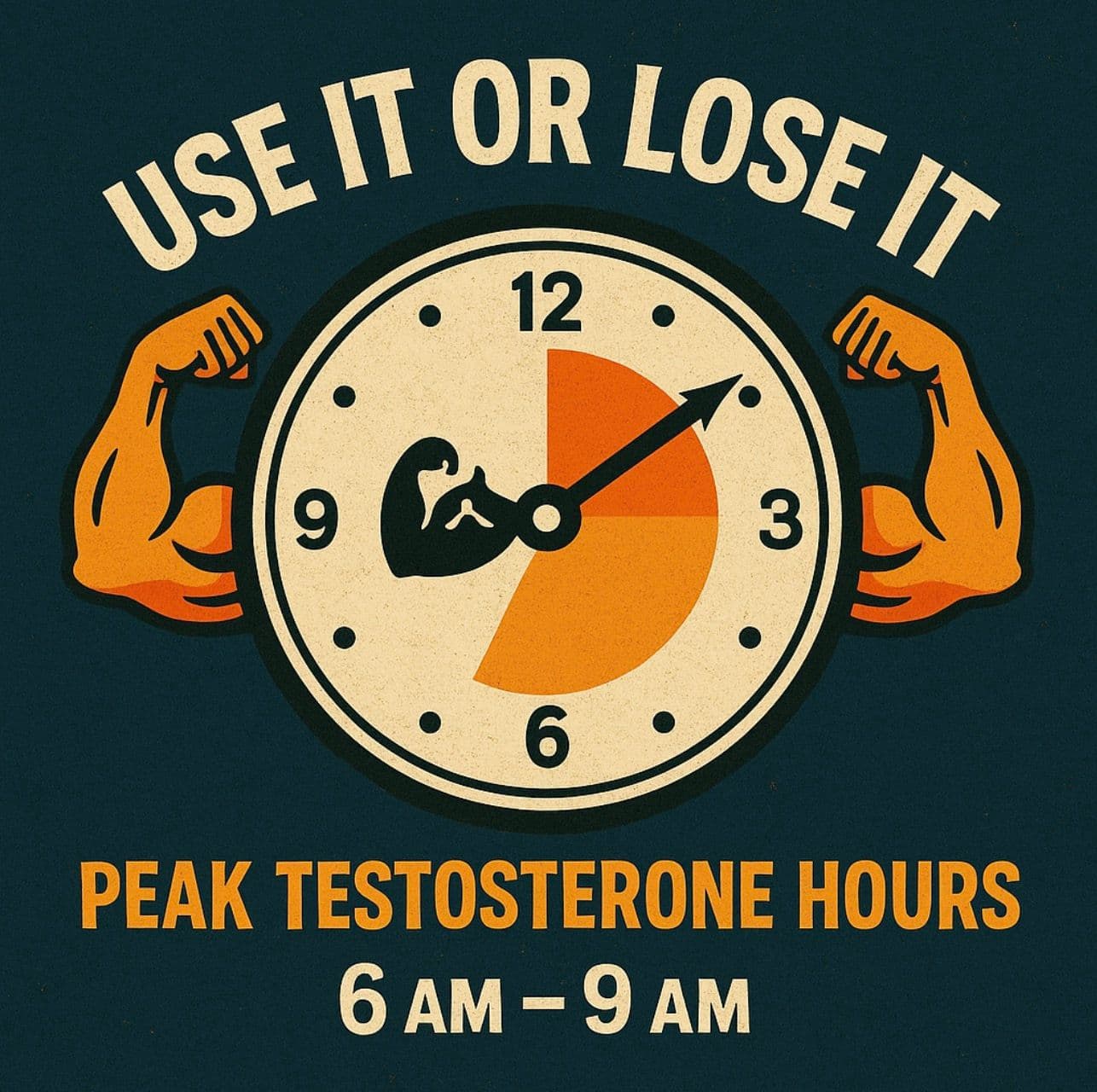
But there is an important distinction: having higher testosterone in the morning does not mean you have a three-hour window in which you must work out, eat a certain breakfast, or make your biggest decisions.
The morning testosterone window matters most for understanding your hormone levels and testing them accurately.
Quick Answer: What Time of Day Is Testosterone Highest?
For men who sleep at night and wake in the morning, testosterone is generally highest in the early morning, often around 7 AM to 10 AM, although the exact peak varies between individuals.
Testosterone then tends to decline throughout the day before beginning to rise again during sleep.
Research suggests testosterone concentrations may fall roughly 10% to 25% between the morning and late afternoon, with larger daily fluctuations generally occurring in younger men. The daily rhythm becomes less pronounced with age.
This daily variation is one reason a testosterone result taken at 8 AM cannot always be directly compared with one taken late in the afternoon.
Why Does Testosterone Peak in the Morning?
Your testosterone rhythm is closely connected to sleep.
Testosterone concentrations begin increasing after sleep begins and typically rise as the night progresses. By the time you wake, testosterone is usually near its daily high.
This is not simply the result of sunlight or the clock saying 8 AM. Sleep itself appears to play an important role in establishing the pattern.
Research examining testosterone and sleep has found that the normal daily testosterone rhythm is strongly influenced by the sleep-wake cycle.
That also explains why someone's hormone rhythm may look different if they routinely work overnight shifts or sleep during the day.
How Much Does Testosterone Change During the Day?
There is no universal percentage that applies to every man.
Studies generally show a measurable decline from morning to afternoon or evening, but the size of that decline depends on factors including:
- Age
- Sleep duration and quality
- Individual hormone production
- Health status
- Testosterone deficiency
- Meals
- Shift work
- Medications
- Whether someone is using testosterone replacement therapy
A recent review of testosterone's daily rhythm reported an average reduction of approximately 10% to 25% between 8 AM and 4 PM.
Older men typically experience a smaller morning-to-evening difference than younger men.
That is important when interpreting bloodwork. A borderline-low afternoon result does not necessarily mean that the same man's testosterone would have been low earlier that morning.
Why Should Testosterone Be Tested in the Morning?
This is where the morning testosterone window becomes clinically important.
The Endocrine Society's clinical practice guideline recommends diagnosing testosterone deficiency only when a man has compatible symptoms plus consistently low testosterone concentrations. It recommends confirming the result with a repeat morning fasting total testosterone measurement.
The American Urological Association testosterone deficiency guideline similarly recommends that the diagnosis of low testosterone be based on two total testosterone measurements taken on separate occasions in the early morning.
For men following a conventional daytime schedule, testing is commonly performed around 7 AM to 10 AM.
One testosterone result should generally not be viewed in isolation.
Do You Need to Fast Before a Testosterone Test?
Usually, yes, particularly when the test is being used to evaluate possible testosterone deficiency.
Food intake can temporarily reduce measured testosterone concentrations.
In one study of healthy men, both a glucose drink and a mixed meal produced significant temporary decreases in total testosterone. Testosterone began declining shortly after eating, with the largest average decrease occurring around an hour later.
That does not mean eating breakfast is bad for your testosterone.
It means that eating immediately before a testosterone blood test can make the result harder to interpret.
For the most standardized measurement, follow the instructions from the clinician or laboratory ordering your test. When evaluating suspected hypogonadism, morning fasting measurements are commonly recommended.
Can Poor Sleep Lower Your Morning Testosterone?
Yes. Sleep can affect both your testosterone level and the reliability of a testosterone test.
A frequently cited JAMA study examined healthy young men after a week in which their sleep was restricted to approximately five hours per night. Testosterone concentrations during waking hours were lower after the period of restricted sleep than during the well-rested condition.
Sleep disruption, insufficient sleep, and certain sleep disorders can therefore complicate testosterone evaluation.
If you slept exceptionally poorly the night before your test, were awake most of the night, or are acutely ill, tell the clinician interpreting your result.
This is also why testosterone should not be viewed as an isolated number. Sleep, health status, symptoms, medications, body composition, and other factors can all influence the clinical picture.
For more on this connection, read AlphaMD's guide to testosterone, sleep, and stress.
What About Night-Shift Workers?
The standard advice to test testosterone between 7 AM and 10 AM assumes you sleep at night.
That assumption does not work nearly as well for someone who works overnight and routinely sleeps during the day.
Research suggests testosterone's daily pattern is influenced substantially by the timing of sleep rather than clock time alone. A joint position statement from the Society for Endocrinology and Association of Clinical Biochemistry and Laboratory Medicine specifically notes that testosterone testing can be more complicated in night-shift workers.
If you work nights or have an unusual sleep schedule, tell the clinician ordering or interpreting your testosterone test rather than assuming a conventional 8 AM measurement provides the complete picture.
Should You Work Out in the Morning Because Testosterone Is Higher?
Not necessarily.
This is one of the most common misconceptions surrounding the morning testosterone peak.
Yes, natural testosterone is generally higher in the morning. But research has not shown that lifting weights in the morning produces greater muscle growth simply because testosterone happens to be higher.
A systematic review and meta-analysis comparing morning and evening resistance training found similar increases in muscle size regardless of when participants trained.
Another systematic review found little evidence that exercising at one particular time of day consistently produces better health or performance adaptations.
The practical lesson is simple:
Train at the time that allows you to exercise consistently and perform well.
Your long-term training volume, progressive overload, nutrition, recovery, and adherence matter far more than trying to synchronize your workout with a temporary morning testosterone peak.
Does a High-Carbohydrate Breakfast Hurt Testosterone?
Eating can temporarily lower measured serum testosterone, but that does not mean carbohydrates at breakfast are "killing your testosterone."
That distinction matters.
The reduction seen after meals is one reason testosterone testing is often performed while fasting. It should not automatically be interpreted as evidence that eating breakfast damages testosterone production or that men need a high-fat breakfast to protect their hormones.
For long-term hormonal health, overall nutrition, body composition, sleep, physical activity, and metabolic health matter much more than attempting to prevent every short-term fluctuation in testosterone.
Does Morning Testosterone Make You More Focused or Productive?
There is not enough evidence to recommend scheduling important meetings, negotiations, workouts, or intellectually demanding work specifically around the morning testosterone peak.
Testosterone has important biological effects throughout the body, but normal hour-to-hour changes in testosterone should not be treated like a stimulant switching mental performance on and off.
In fact, clinical trials examining testosterone supplementation and cognition have not demonstrated a large, consistent cognitive advantage in men with testosterone levels already within the normal range.
If you personally feel more alert in the morning, there may be plenty of reasons to schedule demanding work then. Just do not assume testosterone is necessarily the cause.
How Does Age Affect Morning Testosterone?
The daily testosterone rhythm tends to be strongest in younger men.
As men get older, the difference between morning and evening testosterone levels generally becomes smaller. That does not mean timing stops mattering.
Research still supports morning testing in older men because laboratory reference ranges and clinical guidelines are generally based on morning measurements.
Age is also only one part of the testosterone picture.
Symptoms, total testosterone, free testosterone when appropriate, SHBG, medications, health conditions, sleep, weight, and other hormonal markers may all need to be considered.
Read more about how testosterone numbers are interpreted in our guide to optimal testosterone levels.
What Testosterone Level Is Considered Low?
There is no single testosterone number that should be interpreted without clinical context.
The American Urological Association uses total testosterone below 300 ng/dL as a reasonable cutoff supporting the diagnosis of testosterone deficiency, but diagnosis requires more than one low result.
Symptoms matter, and testing should generally be repeated.
The Endocrine Society similarly recommends diagnosing hypogonadism only when men have symptoms or signs consistent with testosterone deficiency along with unequivocally and consistently low testosterone concentrations.
This is why an isolated afternoon testosterone result should not automatically lead to a diagnosis or treatment decision.
Does TRT Still Have a Morning Testosterone Peak?
Not necessarily.
Natural testosterone production follows a daily sleep-related rhythm. Testosterone replacement therapy introduces testosterone from outside the body, so blood levels are influenced much more by the formulation, dose, dosing frequency, and timing of administration.
Different testosterone therapies produce different pharmacokinetic patterns. Injectable testosterone can create peaks and troughs across a dosing interval, while some daily formulations produce flatter testosterone exposure.
A review comparing testosterone therapies found that no testosterone replacement formulation perfectly reproduces the natural daily rhythm seen in healthy younger men.
This means that if you are already on TRT, your blood-test timing may need to be coordinated with your treatment schedule rather than simply assuming that every testosterone test should occur at 8 AM.
Follow the testing schedule recommended by the licensed clinician overseeing your treatment.
For more information, see our guide to when testosterone peaks after an injection.
What Should You Actually Do With Your Morning Testosterone Window?
You do not need to optimize every minute between waking up and breakfast.
Instead, focus on the things that actually matter:
- Prioritize consistent, adequate sleep.
- Get testosterone testing at the appropriate time.
- Use repeat measurements rather than relying on one result.
- Avoid testing during acute illness when possible.
- Follow fasting instructions when testing for suspected testosterone deficiency.
- Tell your clinician if you work night shifts or have an unusual sleep schedule.
- If you use TRT, coordinate bloodwork with your dosing schedule.
- Interpret testosterone numbers together with symptoms and the rest of your clinical picture.
That is far more useful than trying to time your breakfast, workout, or workday around a temporary hormone peak.
The Bottom Line
Testosterone is generally highest in the morning because levels rise during sleep and decline as the day progresses.
For most men who sleep at night, this makes the early morning the preferred time to evaluate natural testosterone production. Because testosterone can also vary from one day to another, professional guidelines recommend repeat morning testing before diagnosing testosterone deficiency.
The morning peak is biologically real.
What it does not mean is that you have three magical hours in which testosterone makes you stronger, smarter, more productive, or better able to build muscle.
The most important reason to understand your morning testosterone window is much simpler: it helps you test testosterone correctly and interpret the result in context.
If you are experiencing persistent low energy, reduced libido, fewer morning erections, loss of strength, poor recovery, or other symptoms associated with low testosterone, proper testing is the place to start.
Learn more about testosterone replacement therapy and AlphaMD's evaluation process.
Frequently Asked Questions
What time is testosterone highest in men?
Testosterone is generally highest in the early morning after a normal night's sleep. For men with conventional sleep schedules, levels are commonly highest around 7 AM to 10 AM and decline later in the day.
What time should testosterone be tested?
For men who sleep at night, testosterone is generally tested in the early morning. Major clinical guidelines recommend repeat early-morning measurements when diagnosing testosterone deficiency.
Should I fast before a testosterone blood test?
Morning fasting testing is commonly recommended when evaluating suspected testosterone deficiency because eating can temporarily reduce measured testosterone concentrations.
Can lack of sleep cause a low testosterone test?
Poor or restricted sleep can lower testosterone in some men and may affect test results. Significant sleep disruption should be considered when interpreting a testosterone measurement.
Is testosterone lower at night?
In men following a conventional daytime schedule, testosterone generally falls throughout the day and reaches lower levels in the afternoon or evening before rising again during sleep.
Is testosterone always highest at 8 AM?
No. Testosterone's rhythm is strongly related to sleep, and the exact timing varies between individuals. Shift workers and people with unusual sleep schedules may not follow the typical 7 AM to 10 AM pattern.
Does working out in the morning increase muscle growth because testosterone is higher?
Current research does not show that morning resistance training produces greater muscle hypertrophy simply because testosterone is higher. Consistency, training quality, recovery, nutrition, and progressive overload are more important.
Does TRT eliminate the morning testosterone peak?
TRT changes the normal pattern. Testosterone levels during treatment depend on the formulation, dose, dosing frequency, and timing of administration, so laboratory testing may need to be scheduled relative to the treatment protocol.
Have a question? Ask us.
At AlphaMD, we're here to help. Feel free to ask us any question you would like about TRT, medical weightloss, ED, or other topics related to men's health. Or take a moment to browse through our past questions.
People are asking...
Why for the first two weeks of treatment did I start getting morning wood again but after about two weeks it has stopped. No issues with ED, I’m just ...
When you first undergo TRT your levels can fluctuate significantly. Initially this doesn’t mean the TRT program isn’t working, but if you’re finding a complete cessation of “morning wood” that could m... See Full Answer
Hello, I'm on 160 a week split into two dosages going into my 4th week. I'm feeling more energetic and my cognitive seems to be getting better. I have...
Morning wood is expected to return within the first 6 weeks or so once starting TRT. Strength increase should be expected within the first 8 weeks, give or take.... See Full Answer
Do you have any theories as to why some people experience a honeymoon phase for a few weeks then lose the benefits of TRT?...
The most common reason for this in men tends to be a need for a simple dose adjustment. There's a general 8 week uptake period where injected levels increase week over week & then natural production ... See Full Answer
Get $30 off your first month’s order
Enter your email address now to receive $30 off your first month’s cost, other discounts, and additional information about TRT.
Legal Disclaimer
This website is a repository of publicly available information and is not intended to form a physician-patient relationship with any individual. The content of this website is for informational purposes only. The information presented on this website is not intended to take the place of your personal physician's advice and is not intended to diagnose, treat, cure, or prevent any disease. Discuss this information with your own physician or healthcare provider to determine what is right for you. All information is intended for your general knowledge only and is not a substitute for medical advice or treatment for specific medical conditions. The information contained herein is presented in summary form only and intended to provide broad consumer understanding and knowledge. The information should not be considered complete and should not be used in place of a visit, phone or telemedicine call, consultation or advice of your physician or other healthcare provider. Only a qualified physician in your state can determine if you qualify for and should undertake treatment.