
Why Your TRT Protocol From 2 Years Ago Is Probably Wrong for You Today
Published on:
Updated on:
People are asking...
Why does institutional endocrinology insist on horribly outdated treatment protocols, when modern evidence says they're wrong? eg: I asked my nearly ...
If you don't mind, I will be a bit blunt here because this kind of thing is the reason we started our company, so I hope it doesn't come off as overly rude. Providers, even specialists, are people. ... See Full Answer
I'm a 36-year-old male, I've been on TRT for hypogonadism for about 10 years now. The TRT specialist/internist I was getting treatment with, emigrate...
We hear a story like yours all the time. GP’s have a lot of things they have to keep up on. New treatments for diabetes, new diagnostics for rheumatic conditions, new screening rules for breast cance... See Full Answer
Been fighting with doctors and ins co for 30 years, chemo wiped out my ability to make test at the age of 18. I'm 52 now and I just take care of my me...
The fact that you have been fighting insurance tells me you are in the US. With that in mind, the main thing you need to be careful with self medicating is running afoul of the law. Going “legit” wou... See Full Answer
Have a question? Ask us.
At AlphaMD, we're here to help. Feel free to ask us any question you would like about TRT, medical weightloss, ED, or other topics related to men's health. Or take a moment to browse through our past questions.
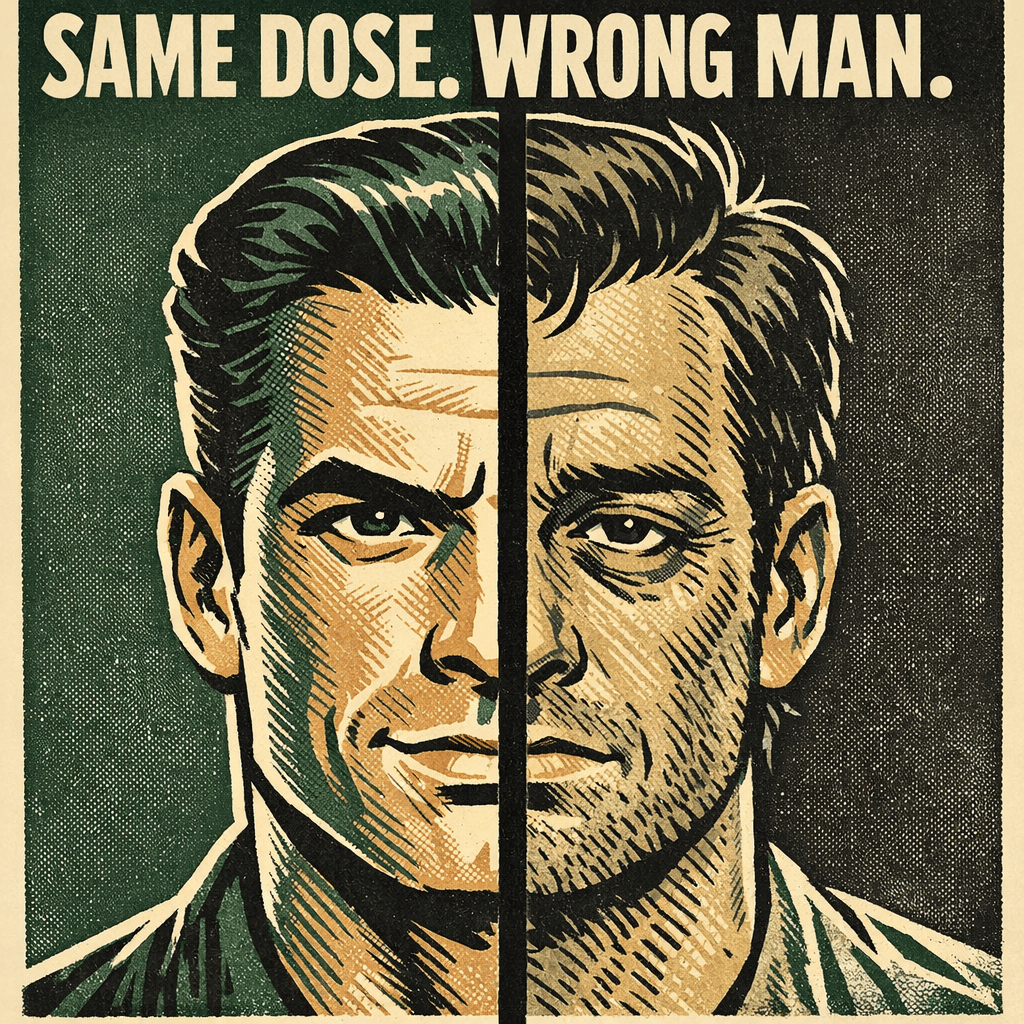
The protocol that made you feel like yourself again two years ago may be the very reason you feel off today. Your body has not stayed the same, and neither should your treatment.
Testosterone replacement therapy is not a set-it-and-forget-it prescription. It is a living, ongoing relationship between your physiology, your lifestyle, and the clinical guidance that keeps both in check. When men feel their energy slipping, their mood shifting, or their results plateauing, the instinct is often to wonder whether TRT is still working. The better question is whether their current protocol still fits who they are right now.
Your Hormones Are Not Frozen in Time
Men on long-term TRT often assume that once their levels are "stable," nothing fundamental needs to change. But stability on paper does not always translate to feeling stable in your daily life. The body's hormonal environment is dynamic. As you age, the way your body produces, converts, and responds to hormones continues to shift, even while you are supplementing testosterone.
Shbg, or sex hormone-binding globulin, is a good example. This protein binds to testosterone in the bloodstream and affects how much of it is actually available for your body to use. SHBG levels tend to change with age, weight fluctuations, thyroid function, insulin sensitivity, and other factors. A protocol calibrated to your SHBG levels from two years ago may not account for where those levels sit today. The same testosterone dose that once produced optimal free hormone availability might now be falling short or creating excess, depending on which direction things have shifted.
Estradiol balance is another area where things drift quietly over time. Testosterone converts to estradiol through a process called aromatization, and that conversion rate is influenced by body fat, stress, liver health, and age. A man who has gained weight, lost sleep consistently, or developed early metabolic changes will often see that balance tip in ways that produce real symptoms, even when total testosterone looks fine on a lab report.
What Has Changed in Your Life Since Then
Think back to two years ago. Were you training at the same intensity? Sleeping the same number of hours? Carrying the same amount of body weight? Drinking the same amount of alcohol? Managing the same level of work or life stress?
For most men, the honest answer is no.
All of those variables directly influence how your body responds to TRT. Training volume affects how your muscles use testosterone and how quickly your red blood cell production responds. Poor sleep raises cortisol, blunts the benefits of testosterone, and can create a state of chronic fatigue that mimics low testosterone symptoms even when levels look adequate. Significant weight changes alter aromatization rates, SHBG, insulin sensitivity, and cardiovascular load. Increased alcohol intake affects liver function, which plays a direct role in hormone metabolism and estradiol clearance.
These are not minor background details. They are active inputs into a complex system, and when they change, the protocol that was dialed in for your previous lifestyle may no longer be dialed in at all.
New Health Conditions Change the Equation
Men in their thirties, forties, and fifties are also at the age where new health conditions begin to emerge or get formally diagnosed. Thyroid dysfunction, sleep apnea, hypertension, metabolic syndrome, elevated blood lipids, and changes in cardiovascular risk profile are all conditions that interact meaningfully with TRT.
Sleep apnea is a particularly important one. Untreated sleep apnea raises hematocrit, strains the cardiovascular system, and worsens fatigue and cognitive function in ways that can mimic or amplify the symptoms TRT is meant to address. If you were not diagnosed with sleep apnea when you started TRT but have since developed it, your protocol may need to be reconsidered alongside treatment for the apnea itself.
Fertility goals are another major variable. TRT suppresses the body's own testosterone production and significantly reduces sperm production. A man who had no interest in having children two years ago may now be in a relationship where that has changed. That shift requires a clinically guided conversation about how to restructure or supplement the protocol to support fertility, and it is not a conversation to delay.
If you have started any new medications since beginning TRT, those interactions deserve attention too. Certain medications affect liver enzymes, hormone metabolism, blood pressure, and red blood cell production in ways that are not always obvious until symptoms appear.
When "Feeling Fine" Is Not the Whole Story
One of the quieter risks in long-term TRT is the gradual normalization of suboptimal states. Men are often remarkably good at adapting to feeling less than their best. If energy has been declining slowly for months, it is easy to attribute it to work stress or aging rather than recognizing it as a signal worth investigating.
Lab monitoring over time is not just about confirming that testosterone levels are in range. It is about tracking trends across a broader set of markers, including hematocrit and hemoglobin, which can rise with TRT and increase cardiovascular risk if left unchecked. It includes watching PSA trends in appropriate age groups, monitoring blood pressure, tracking lipid profiles, and paying attention to liver markers. None of these numbers tell the full story on their own, but collectively and in context, they paint a picture of how your body is actually responding to the protocol over time.
The timing and consistency of lab draws also matters more than many men realize. A single number pulled at a random point in your dosing cycle can be misleading. Experienced clinicians know when to draw labs relative to your last dose, and they interpret results against your symptoms and history, not just against a generic reference range.
Red Flags That Deserve a Real Conversation
There are signals that should prompt a re-evaluation without waiting for your next scheduled check-in. None of these are reasons to panic, but all of them are reasons to reach out to your provider.
Persistent fatigue that does not resolve with adequate sleep. Worsening mood, increased irritability, or a flattening of emotional baseline. Decreased libido or changes in sexual function that feel different from where you were six or twelve months ago. New or worsening acne, particularly on the back or shoulders. Headaches that are new in character or frequency. Elevated blood pressure or a noticeable increase in how hard your heart seems to be working during exercise. Any swelling, discomfort, or changes you would not have described as normal before TRT.
These are not obscure edge cases. They are relatively common experiences for men on long-term TRT whose protocols have drifted out of alignment with their current physiology. They are also all addressable, usually without dramatic changes, when caught and managed with proper clinical oversight.
The Difference Between Adjusting and Guessing
It is worth saying plainly: self-adjusting a TRT protocol based on how you feel, without lab context and clinical guidance, is rarely a good idea. The symptoms of too much testosterone and too little testosterone can feel surprisingly similar in some cases. Mood changes, fatigue, and low libido can be driven by estradiol imbalance, thyroid issues, sleep disorders, or a half-dozen other factors that look nothing like what you might expect on the surface.
A qualified clinician does not just look at one number and adjust the dose. They look at the full picture, including how you feel, what your labs show across multiple markers, what has changed in your life and health, and how your body has historically responded to previous adjustments. That kind of contextualized interpretation is what separates a protocol that works from one that simply exists.
Your Protocol Should Grow With You
The goal of TRT is not to hit a target number and stop paying attention. It is to support your health, energy, mood, and function across the years in a way that reflects who you are and how your body is changing. That requires ongoing attention, honest conversations with your provider, and a willingness to revisit assumptions that were made when your life looked different.
If it has been a while since you have had a thorough review of your protocol, including a real conversation about your symptoms and not just a glance at your labs, that conversation is worth having. Through AlphaMD, licensed providers do exactly that: ongoing, individualized monitoring that treats TRT as the long-term therapy it is meant to be. Your body two years from now will be different again, and your protocol should be ready to meet it there.
Have a question? Ask us.
At AlphaMD, we're here to help. Feel free to ask us any question you would like about TRT, medical weightloss, ED, or other topics related to men's health. Or take a moment to browse through our past questions.
People are asking...
Why does institutional endocrinology insist on horribly outdated treatment protocols, when modern evidence says they're wrong? eg: I asked my nearly ...
If you don't mind, I will be a bit blunt here because this kind of thing is the reason we started our company, so I hope it doesn't come off as overly rude. Providers, even specialists, are people. ... See Full Answer
I'm a 36-year-old male, I've been on TRT for hypogonadism for about 10 years now. The TRT specialist/internist I was getting treatment with, emigrate...
We hear a story like yours all the time. GP’s have a lot of things they have to keep up on. New treatments for diabetes, new diagnostics for rheumatic conditions, new screening rules for breast cance... See Full Answer
Been fighting with doctors and ins co for 30 years, chemo wiped out my ability to make test at the age of 18. I'm 52 now and I just take care of my me...
The fact that you have been fighting insurance tells me you are in the US. With that in mind, the main thing you need to be careful with self medicating is running afoul of the law. Going “legit” wou... See Full Answer
Get $30 off your first month’s order
Enter your email address now to receive $30 off your first month’s cost, other discounts, and additional information about TRT.
Legal Disclaimer
This website is a repository of publicly available information and is not intended to form a physician-patient relationship with any individual. The content of this website is for informational purposes only. The information presented on this website is not intended to take the place of your personal physician's advice and is not intended to diagnose, treat, cure, or prevent any disease. Discuss this information with your own physician or healthcare provider to determine what is right for you. All information is intended for your general knowledge only and is not a substitute for medical advice or treatment for specific medical conditions. The information contained herein is presented in summary form only and intended to provide broad consumer understanding and knowledge. The information should not be considered complete and should not be used in place of a visit, phone or telemedicine call, consultation or advice of your physician or other healthcare provider. Only a qualified physician in your state can determine if you qualify for and should undertake treatment.