
500mg Weekly Isn't TRT - Here's Why the Definition Matters for Your Health
Published on:
Updated on:
People are asking...
Why do TRT clinics just throw 200mg out to start...
They really shouldn't, but because many take the approach of uniform care over individual planning, they pick a dose that will *certainly* give results which is good for marketing, even if it will alm... See Full Answer
What is the goal level of free/testosterone to achieve on trt? What’s the aim range?...
It may not be the answer you're looking for, but it is very much it depends. Men are so wildly different in both their bodies and how they respond to treatment that it would not be right to aim for th... See Full Answer
I'm 50-years-old, and my doctor recently prescribed TRT to address my symptoms of low testosterone. While I don't suffer from hypogonadism, my doctor ...
First, most providers go by mg per week, so for this we will just say your dose is 100mg per week. That is generally a lower dose, especially for something as long as two weeks between doses. It would... See Full Answer
Have a question? Ask us.
At AlphaMD, we're here to help. Feel free to ask us any question you would like about TRT, medical weightloss, ED, or other topics related to men's health. Or take a moment to browse through our past questions.
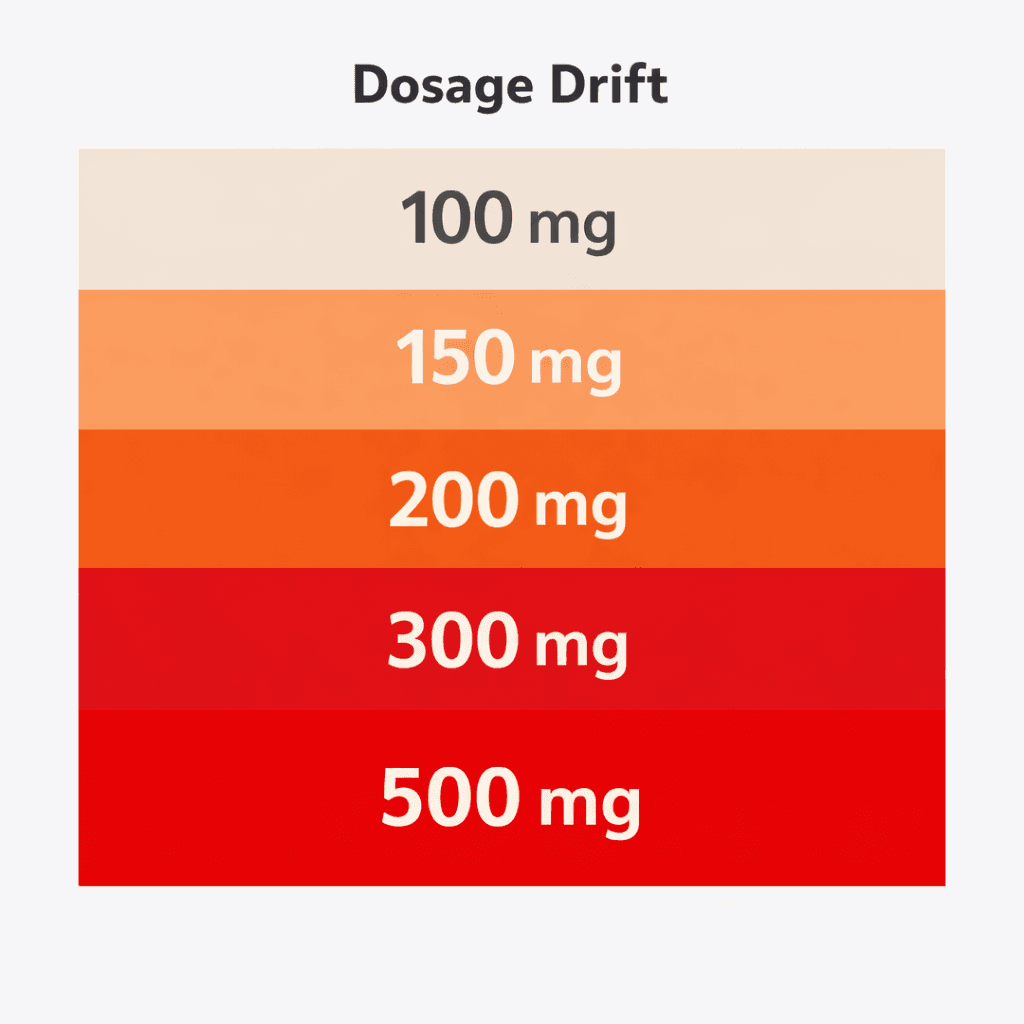
Scroll through fitness social media for five minutes and you'll see plenty of guys casually discussing their "TRT" protocol, yet the doses they mention would make an endocrinologist do a double take. If you're wondering whether your own protocol crosses the line from therapy to something else entirely, understanding the difference isn't just semantics - it's central to protecting your long-term health.
What TRT Was Actually Designed to Do
Testosterone replacement therapy exists for one core reason: to restore hormone levels in men who are genuinely deficient and experiencing real symptoms because of it. We're talking about the guy who's been struggling with crushing fatigue, brain fog, diminished libido, difficulty building or maintaining muscle despite training hard, and a general sense that something is off.
When a qualified clinician diagnoses hypogonadism through a combination of labs and clinical symptoms, the goal of treatment is straightforward. Bring testosterone back into a healthy, individualized range that allows the patient to feel normal again. Not superhuman. Normal.
That distinction matters because the intent behind medical TRT is symptom relief and restoration of function. You should wake up with energy. Your mood should stabilize. Sexual function should improve. Your body should respond appropriately to resistance training and good nutrition. The target is optimization within a physiologic range, meaning the levels a healthy male body would naturally produce.
This is fundamentally different from what happens when someone uses testosterone as a performance-enhancing drug.
When "TRT" Starts Looking More Like a Cycle
The confusion largely stems from the fact that testosterone is testosterone, whether it's prescribed by a doctor or acquired through other means. The molecule doesn't change. What changes is the dose, the intent, and the resulting hormone levels.
Cycle-style protocols push testosterone well above what a healthy male endocrine system would produce on its own. This isn't therapy anymore. It's enhancement. The goal shifts from feeling normal to achieving a physique or performance level that exceeds natural potential.
There's nothing inherently wrong with being honest about that goal, but calling it TRT muddies the water. When influencers with exceptional physiques claim they're "just on TRT," it creates unrealistic expectations for men who are genuinely seeking medical treatment. It also downplays the risks that come with supraphysiologic hormone levels.
The reality is that many protocols shared online under the TRT label would be considered moderate steroid cycles by traditional standards. The fact that someone is taking testosterone year-round doesn't automatically make it replacement therapy.
Why Your Body Knows the Difference
Your cardiovascular system doesn't care what label you put on your protocol. It responds to the actual hormone levels in your bloodstream.
When testosterone levels climb well above physiologic range, several things start to happen. Red blood cell production increases, which sounds great until your blood becomes thick enough to strain your cardiovascular system. This elevation in hematocrit can increase the risk of clots, stroke, and heart complications.
Blood pressure often rises with higher doses. Your lipid profile may shift in unfavorable directions, with HDL cholesterol dropping and other markers moving toward increased cardiovascular risk. These aren't abstract concerns. They're measurable changes that accumulate over time.
Sleep can become disrupted, especially if estrogen management becomes difficult at higher doses. Mood swings, irritability, and anxiety can emerge. Some men report feeling overstimulated rather than balanced - wired rather than energized.
The Fertility Question Nobody Wants to Hear
Any form of exogenous testosterone suppresses your body's natural production. That's unavoidable. Your pituitary gland senses the testosterone in your system and stops signaling your testicles to make their own.
For men on true replacement doses who are working with a knowledgeable provider, fertility can often be preserved or managed through adjunct medications. The suppression happens, but the protocols stay within bounds that make recovery or concurrent fertility preservation realistic.
With supraphysiologic doses, suppression is more profound. Recovery of natural production becomes more uncertain. Testicular atrophy is more pronounced. If you're planning to have children in the future, the difference between a replacement protocol and an enhancement protocol matters enormously.
Younger men, especially, need to understand this tradeoff. The temporary gains in muscle mass or strength aren't worth much if you're left struggling with fertility issues or facing a difficult recovery process down the road.
More Isn't Better - It's Just More
One of the most persistent myths in the testosterone space is that higher doses automatically mean better results. That thinking works up to a point, but it ignores the law of diminishing returns and the escalating side effects.
True optimization means finding the dose that resolves your symptoms, restores your quality of life, and allows your body to function well without pushing you into a constant management game. When doses climb too high, you don't just get more benefits. You get more estrogen conversion, which means more need for estrogen management. You get more blood pressure issues. More sleep disruption. More mood instability.
Suddenly you're not just taking testosterone. You're taking an AI to control estrogen. Maybe a blood pressure medication. Perhaps something to help you sleep. What started as a single therapy becomes a stack of interventions, each with its own side effects and interactions.
This is the opposite of health optimization. It's symptom whack-a-mole.
The men who do best on TRT long-term are usually those who resist the temptation to keep pushing the dose higher. They find their sweet spot - the level where they feel great, labs look good, and side effects are minimal - and they stay there. They understand that the goal isn't to feel like you're on something. The goal is to feel like yourself again, just the best version.
What Responsible TRT Actually Looks Like
Legitimate testosterone replacement starts with a thorough evaluation. A good clinician doesn't just glance at one lab value and write a prescription. They assess your full symptom picture, medical history, cardiovascular risk factors, and baseline labs that go beyond just testosterone.
Once treatment begins, monitoring is ongoing. You're not chasing a number on a lab report. You're tracking how you actually feel and function while keeping an eye on safety markers like hematocrit, lipids, blood pressure, and prostate health.
Dose adjustments are made based on response, not on what some guy on YouTube says he's taking. If you're feeling great and your labs are stable, there's no reason to increase. If you're having side effects, the answer might be to go down, not to add another medication to counteract the problem.
Just as important, a comprehensive approach acknowledges that testosterone isn't a magic bullet. Sleep matters. Nutrition matters. Resistance training matters. Stress management matters. Weight loss, if you're carrying excess body fat, can sometimes improve natural testosterone production enough that TRT becomes less necessary or requires lower doses.
The best outcomes happen when TRT is one component of an overall health strategy, not a shortcut that allows you to ignore everything else.
The Psychology of Chasing Numbers
There's a psychological trap that catches a lot of men who start TRT, especially if they're active in online communities where people compare doses and lab values.
You start feeling better. Your energy improves. You're building muscle. Then you see someone online claiming they're on a higher dose and looking even better, and you wonder if you're leaving gains on the table. The temptation to creep the dose upward becomes strong.
This is where the distinction between therapy and enhancement becomes deeply personal. What are you actually trying to achieve? If the answer is truly about health, function, and quality of life, then feeling good should be enough. If the answer is about physique goals or performance benchmarks, you're shifting into enhancement territory - and that's fine, but call it what it is.
The risk is convincing yourself you're still doing TRT when your goals and protocols have moved beyond that definition. This self-deception can lead to taking health risks you didn't intend to take, all while thinking you're being safe because it's "just TRT."
Protection Through Precision
The men who maintain healthy, sustainable testosterone protocols over years and decades share a common thread. They work with clinicians who understand the nuances of hormone optimization and who prioritize long-term health over short-term aesthetics.
They get regular bloodwork. They pay attention to symptoms, not just numbers. They make lifestyle choices that support their hormonal health rather than undermining it. They resist the urge to constantly tinker and escalate.
This approach requires patience, especially in a culture that constantly pushes for more, faster, bigger. But the payoff is that you can potentially stay on therapy for the long haul without wrecking your health markers, losing fertility, or creating a cascade of side effects that require more and more intervention.
Finding a provider who shares this philosophy makes all the difference. Clinics that treat TRT as a careful medical intervention rather than a product to be sold at the highest dose the market will bear tend to produce better outcomes. They understand that the definition of TRT matters because the definition determines the approach, and the approach determines whether you're building health or borrowing against it.
AlphaMD represents this kind of evidence-guided approach to men's health and hormone optimization. The providers on the platform focus on thorough evaluation, conservative dosing strategies, regular monitoring, and treat TRT as one part of comprehensive care rather than an isolated intervention. When the provider overseeing your care understands the difference between replacement and enhancement, you get a protocol designed for the long game.
The bottom line is simple, even if the execution requires nuance. Testosterone replacement therapy is about restoring what's missing, not about pushing past what's natural. The label matters because it reflects intent, shapes expectations, and guides decisions that accumulate into either better health or greater risk over time. If your protocol looks more like a cycle than a treatment, acknowledging that honestly is the first step toward making choices that actually serve your long-term wellbeing.
Have a question? Ask us.
At AlphaMD, we're here to help. Feel free to ask us any question you would like about TRT, medical weightloss, ED, or other topics related to men's health. Or take a moment to browse through our past questions.
People are asking...
Why do TRT clinics just throw 200mg out to start...
They really shouldn't, but because many take the approach of uniform care over individual planning, they pick a dose that will *certainly* give results which is good for marketing, even if it will alm... See Full Answer
What is the goal level of free/testosterone to achieve on trt? What’s the aim range?...
It may not be the answer you're looking for, but it is very much it depends. Men are so wildly different in both their bodies and how they respond to treatment that it would not be right to aim for th... See Full Answer
I'm 50-years-old, and my doctor recently prescribed TRT to address my symptoms of low testosterone. While I don't suffer from hypogonadism, my doctor ...
First, most providers go by mg per week, so for this we will just say your dose is 100mg per week. That is generally a lower dose, especially for something as long as two weeks between doses. It would... See Full Answer
Get $30 off your first month’s order
Enter your email address now to receive $30 off your first month’s cost, other discounts, and additional information about TRT.
Legal Disclaimer
This website is a repository of publicly available information and is not intended to form a physician-patient relationship with any individual. The content of this website is for informational purposes only. The information presented on this website is not intended to take the place of your personal physician's advice and is not intended to diagnose, treat, cure, or prevent any disease. Discuss this information with your own physician or healthcare provider to determine what is right for you. All information is intended for your general knowledge only and is not a substitute for medical advice or treatment for specific medical conditions. The information contained herein is presented in summary form only and intended to provide broad consumer understanding and knowledge. The information should not be considered complete and should not be used in place of a visit, phone or telemedicine call, consultation or advice of your physician or other healthcare provider. Only a qualified physician in your state can determine if you qualify for and should undertake treatment.