
TRT Won't Fix You If You're Sleeping 5 Hours. Period.
Published on:
Updated on:
People are asking...
i’ve been on compounded cream for 3 weeks. twice daily to scrotum. i am having difficulty sleeping but also started thyroid. is the thyroid medication...
In general Testosterone helps with sleep rather than hinders it, it's one of the big benefits providers often discuss with patients looking to start TRT. It can take 7-8 weeks to totally stabilize whe... See Full Answer
I’m new to TRT. I’m 47 yrs old. Did bloodwork and was put on 200ml/week in Oct of 2023.l. felt great, sex drive was good, even had “morning wood” most...
That progesterone dose may hold the answer. The average man produces 10-20mg of progesterone daily, so 200mg daily is far above what the body normally makes. Progesterone can be converted into other n... See Full Answer
Been on T for a few months now, 200mg/week, and my sleep is not as good as it was pre-T. Any thoughts on that? I was very active before (lifting 3x/...
That would be unusual, TRT usually improves sleep rather than worsens it. Although we don't know your initial Testosterone levels, it may be worth discussing a 10-20mg dosage reduction with the provid... See Full Answer
Have a question? Ask us.
At AlphaMD, we're here to help. Feel free to ask us any question you would like about TRT, medical weightloss, ED, or other topics related to men's health. Or take a moment to browse through our past questions.
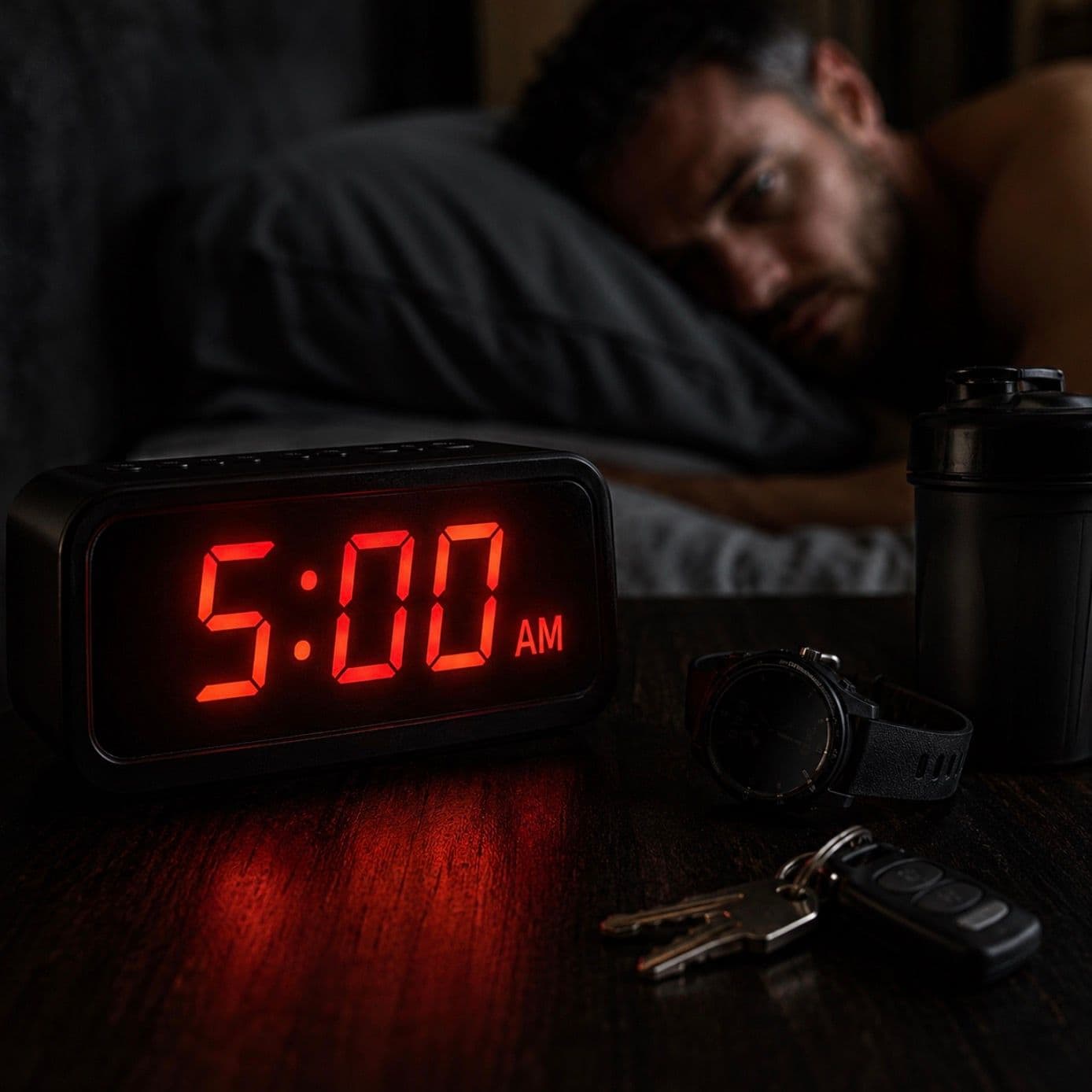
You could have perfect testosterone levels on paper and still feel like you're running on empty - because if you're only sleeping five hours a night, your hormones are fighting a losing battle before the day even starts.
TRT (testosterone replacement therapy) is a genuinely powerful tool for men with clinically low testosterone. But it is not a patch for a broken recovery system. If sleep deprivation is at the root of your symptoms, no amount of testosterone is going to fix that. Understanding why requires a closer look at what sleep actually does to your hormonal health - and why so many men come to TRT clinics describing symptoms that are, at least partly, a sleep problem in disguise.
The Symptoms You're Blaming on Low T Might Be Something Else
Fatigue that won't quit. Low libido. Mood that swings between flat and irritable. Brain fog thick enough to slow your reaction time at work. Poor recovery after workouts, even when you're eating and training right. These are the classic symptoms men describe when they suspect low testosterone. They're real, they're disruptive, and they deserve attention.
But here's the problem: they are also the exact symptoms of chronic sleep deprivation.
When a man is consistently sleeping five or six hours instead of the seven to nine his body needs, his hormonal environment starts to look a lot like someone with clinically low testosterone. His energy tanks. His sex drive drops. His ability to concentrate fades. His muscles struggle to recover. His mood worsens. None of this is in his head - it's physiology. And if he walks into a clinic describing these symptoms without mentioning that he's been sleeping poorly for two years, the conversation can head in the wrong direction fast.
The point is not that TRT is bad or that men are wrong to explore it. The point is that accurate diagnosis depends on an accurate picture of your lifestyle. Sleep is a massive part of that picture.
What Happens to Testosterone When You Don't Sleep
Testosterone production does not run on a flat, consistent cycle throughout the day. It follows your circadian rhythm, peaking in the morning after a full night of sleep and tapering through the day. The bulk of that production happens during sleep itself, particularly during the deep, slow-wave stages and during REM. Cut the sleep short, and you cut the production cycle short.
Research on this is consistent: men who restrict sleep to five hours or fewer for even a short period show meaningful drops in testosterone levels. The effect is not subtle. Some studies describe reductions comparable to aging a decade or more in terms of hormonal output. And unlike many things in health, this is not a slow, gradual decline - it can happen within days of pulling late nights.
Beyond testosterone itself, sleep affects the entire hormonal signaling chain. Cortisol, the primary stress hormone, is supposed to be low at night, allowing recovery hormones to do their work. When you don't sleep enough, cortisol stays elevated. Elevated cortisol suppresses testosterone production at multiple levels and impairs the body's ability to use the testosterone it does make. You end up with a double hit: less testosterone produced, and less of it working effectively.
Growth hormone also peaks during deep sleep. For muscle repair, fat metabolism, and general tissue recovery, growth hormone is critical. Disrupted sleep means disrupted growth hormone release, which is a big part of why men who sleep poorly never seem to recover well from training regardless of what else they try.
Why TRT Cannot Compensate for Chronic Sleep Loss
This is the conversation that does not happen often enough in men's health. TRT can raise circulating testosterone levels. It can improve libido, energy, mood, and body composition in men who are genuinely deficient. When it works well, the results are real and meaningful.
But TRT does not fix cortisol dysregulation from chronic stress and poor sleep. It does not restore normal growth hormone patterns. It does not repair the neurological effects of sleep deprivation - the cognitive slowness, the emotional blunting, the reduced stress tolerance. Men who start TRT while still sleeping five hours a night often report underwhelming results and wonder what went wrong. The answer is that they layered a hormonal intervention on top of a lifestyle that was actively working against them.
The relationship goes both ways, too. Low testosterone can genuinely make sleep harder - reducing sleep quality, increasing nighttime waking, and shortening the deeper stages of sleep. So in some cases, TRT does improve sleep somewhat. But if there is an underlying sleep disorder or a habit of chronically short sleep, TRT will not correct it. The two problems need to be addressed together, not in sequence.
Sleep Apnea: The Hidden Variable That Changes Everything
Any honest conversation about sleep and testosterone has to include obstructive sleep apnea. This condition, in which the airway partially or fully collapses during sleep causing repeated breathing disruptions, is significantly more common in men than women and becomes more prevalent as men age and gain weight.
Sleep apnea wrecks sleep architecture. Even if a man spends eight hours in bed, repeated apnea events prevent him from reaching or sustaining deep, restorative sleep. The result is that he wakes feeling unrested, his testosterone production is impaired, his cortisol is elevated, and he experiences every symptom associated with hormonal deficiency - even if his testosterone levels are not technically low.
There's also a clinical concern specific to TRT. Testosterone therapy can worsen sleep apnea in some men by affecting the muscles and tissues of the upper airway and by altering the brain's respiratory drive during sleep. For men with untreated apnea, starting TRT without addressing the underlying condition can make breathing during sleep significantly worse. This is not a reason to avoid TRT if you genuinely need it - it is a reason to get evaluated first.
If you snore loudly, if your partner has noticed you gasping or choking in your sleep, if you wake with headaches, or if you feel excessively tired no matter how long you spend in bed, a sleep apnea evaluation is worth pursuing before or alongside any hormonal work-up. It changes the clinical picture entirely.
Building a Sleep Foundation That Actually Supports Your Hormones
The good news is that sleep is highly responsive to behavioral change. You do not need a prescription to start improving it. What you need is consistency and a willingness to treat sleep like the physiological priority it actually is.
Going to bed and waking at the same time every day, including weekends, is one of the most powerful things you can do. Your circadian rhythm is not just a metaphor - it is a real biological timer that regulates hormone release, body temperature, cortisol patterns, and dozens of other processes. Irregular sleep schedules confuse this system, and the hormonal consequences are real.
Light exposure matters more than most men realize. Getting bright natural light in the morning helps anchor your circadian rhythm early in the day. Limiting bright and blue-spectrum light in the evening - from screens and overhead lighting - allows melatonin to rise naturally, making it easier to fall asleep. This is not about avoiding technology altogether. It's about being deliberate in the two hours before bed.
Caffeine and alcohol both deserve attention. Caffeine has a half-life of around five to six hours, meaning that afternoon coffee is still affecting your brain at midnight. Alcohol, despite helping some men fall asleep initially, fragments sleep architecture and reduces the restorative stages your hormones depend on. Cutting alcohol close to bedtime is one of the more impactful changes men in their thirties and forties can make.
Your bedroom environment - cool, dark, and quiet - is not optional if you're serious about recovery. Your body temperature needs to drop slightly to initiate and maintain deep sleep, and a warm room works against that process. Blackout curtains and keeping the room on the cooler side are simple and effective.
Stress management connects directly to sleep quality through the cortisol pathway. Men who carry high psychological stress into the bedroom often find themselves lying awake, mind active, despite genuine exhaustion. A wind-down period of thirty to sixty minutes before sleep - away from work, news, and screens - is not soft advice. It is cortisol management.
When to Get a Professional Involved
Behavioral changes are a powerful starting point, but they are not always enough. If you have been struggling with sleep for months, if you wake consistently unrested despite adequate time in bed, if daytime impairment is affecting your work or relationships, or if you suspect sleep apnea based on the signs described above, working with a qualified clinician is appropriate and important.
A sleep specialist can evaluate for apnea and other disorders. A primary care physician or men's health specialist can assess whether sleep issues are connected to hormonal imbalances, thyroid dysfunction, mood disorders, or other treatable conditions. The goal is a complete picture, not an isolated intervention.
Sleep Is the Foundation TRT Builds On
Testosterone replacement therapy, when indicated, is a legitimate and effective part of men's health care. But it performs best when it is supported by the biological conditions your body needs to respond to it - and sleep is the most foundational of those conditions.
Providers who take men's health seriously understand this. On the AlphaMD platform, for example, providers approach TRT not as a standalone fix but as part of a broader clinical picture that includes lifestyle factors like sleep. That kind of comprehensive view matters, because prescribing testosterone to a sleep-deprived man with untreated apnea is not good medicine - it's an incomplete answer to a complex question.
If you are considering TRT, or if you are already on it and not getting the results you expected, look hard at your sleep. Not as a minor factor, but as a central one. Fix the foundation, and everything built on top of it works better.
Have a question? Ask us.
At AlphaMD, we're here to help. Feel free to ask us any question you would like about TRT, medical weightloss, ED, or other topics related to men's health. Or take a moment to browse through our past questions.
People are asking...
i’ve been on compounded cream for 3 weeks. twice daily to scrotum. i am having difficulty sleeping but also started thyroid. is the thyroid medication...
In general Testosterone helps with sleep rather than hinders it, it's one of the big benefits providers often discuss with patients looking to start TRT. It can take 7-8 weeks to totally stabilize whe... See Full Answer
I’m new to TRT. I’m 47 yrs old. Did bloodwork and was put on 200ml/week in Oct of 2023.l. felt great, sex drive was good, even had “morning wood” most...
That progesterone dose may hold the answer. The average man produces 10-20mg of progesterone daily, so 200mg daily is far above what the body normally makes. Progesterone can be converted into other n... See Full Answer
Been on T for a few months now, 200mg/week, and my sleep is not as good as it was pre-T. Any thoughts on that? I was very active before (lifting 3x/...
That would be unusual, TRT usually improves sleep rather than worsens it. Although we don't know your initial Testosterone levels, it may be worth discussing a 10-20mg dosage reduction with the provid... See Full Answer
Get $30 off your first month’s order
Enter your email address now to receive $30 off your first month’s cost, other discounts, and additional information about TRT.
Legal Disclaimer
This website is a repository of publicly available information and is not intended to form a physician-patient relationship with any individual. The content of this website is for informational purposes only. The information presented on this website is not intended to take the place of your personal physician's advice and is not intended to diagnose, treat, cure, or prevent any disease. Discuss this information with your own physician or healthcare provider to determine what is right for you. All information is intended for your general knowledge only and is not a substitute for medical advice or treatment for specific medical conditions. The information contained herein is presented in summary form only and intended to provide broad consumer understanding and knowledge. The information should not be considered complete and should not be used in place of a visit, phone or telemedicine call, consultation or advice of your physician or other healthcare provider. Only a qualified physician in your state can determine if you qualify for and should undertake treatment.