
The 5 Non-Negotiables: TRT Habits That Make or Break 2026
Published on:
Updated on:
People are asking...
I’m 28 years old and got a major testosterone deficiency while working the night shift for 5 years. Was able to get levels up to 500 after going back...
Hey there! There's a few things to keep in mind but by and large it's totally fine.Like the one reply to you right now, plenty of men start TRT in their 20s after sitting below 250 and struggling with... See Full Answer
I see people post on various threads on steroids and how they age substantially in a few years. Does TRT have similar effects or is that more hardcore...
For traditional TRT, aka non-bodybuilding levels of Testosterone, this is generally considered almost the opposite. Testosterone in men helps to maintain metabolism & low Testosterone often leads to i... See Full Answer
Is getting on TRT a lifetime commitment? Should I expect bad side effects from coming off of it? Just wondering if I’ll be a 80 year old one day on TR...
Yes & no. It's better to think of it this way: If you have low Testosterone & do not treat it, you are committing to a life-time of low Testosterone symptoms that will for a fact always worsen with ag... See Full Answer
Have a question? Ask us.
At AlphaMD, we're here to help. Feel free to ask us any question you would like about TRT, medical weightloss, ED, or other topics related to men's health. Or take a moment to browse through our past questions.
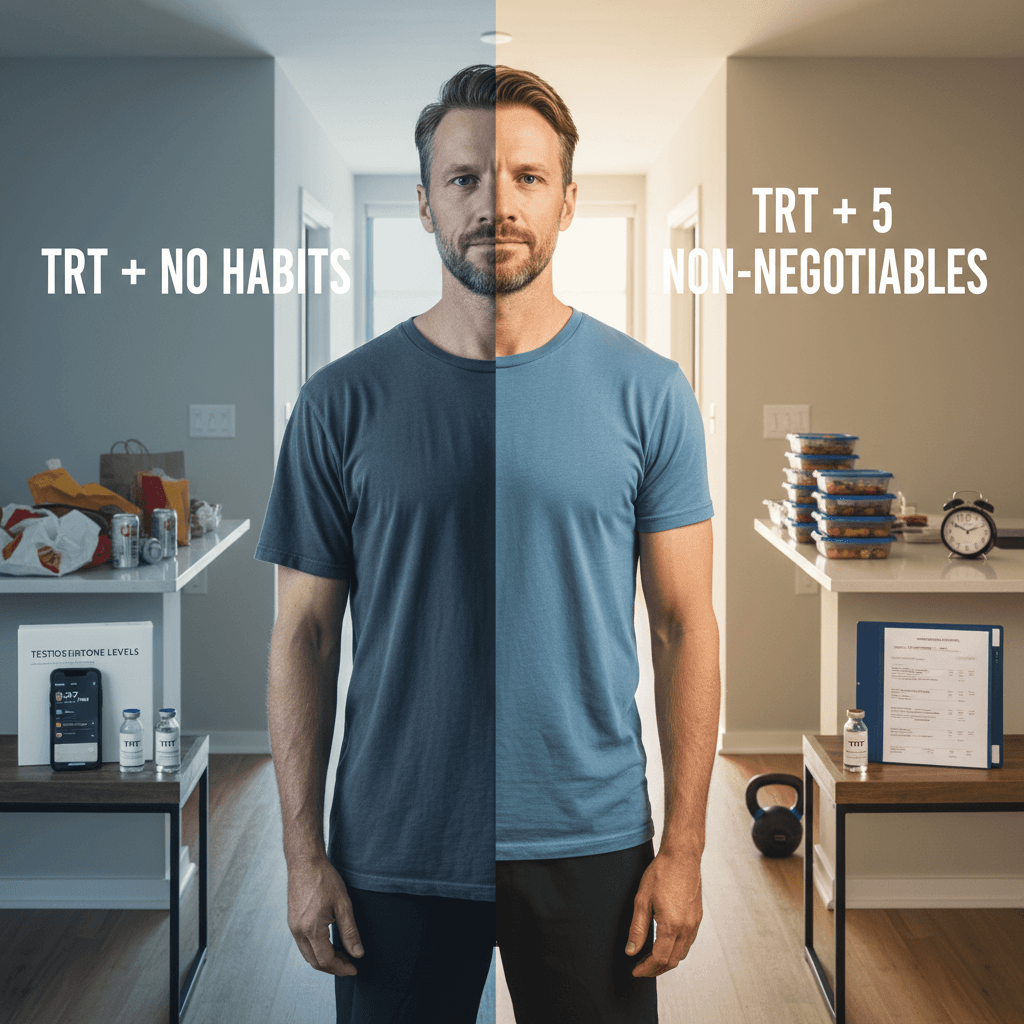
You can inject testosterone twice a week and still feel like garbage in 2026. The difference between men who thrive on TRT and those who wonder why they wasted their money comes down to five daily decisions that have nothing to do with the medication itself.
Testosterone replacement therapy is exactly what it sounds like: a medical intervention that restores testosterone levels in men whose bodies don't produce enough on their own. It's prescribed by doctors, monitored through bloodwork, and delivered through injections, gels, or other methods. But calling TRT a solution is like calling a gym membership a six-pack. The prescription is just the starting point. What you do every single day after that first dose determines whether 2026 becomes the year you finally feel like yourself again or another year of disappointment and side effects.
The men who get this right don't treat TRT as a magic bullet. They treat it as one piece of a larger puzzle, a foundation that only works when the other pieces are in place. Miss any of these five non-negotiables, and you're building a house on sand. Get them right, and testosterone can do what it's supposed to do: help you feel energized, focused, strong, and confident.
TRT Without Monitoring Is Just Guesswork
You wouldn't drive cross-country without checking your oil, yet thousands of men start TRT and disappear from medical oversight after the first month. This is how good intentions turn into preventable problems.
Consistent medical follow-up isn't about being paranoid. It's about being smart. Testosterone affects more than just your muscles and libido. It influences red blood cell production, cardiovascular function, prostate health, and a cascade of other biological processes that need watching. Regular lab work and honest communication with a qualified clinician give you the data you need to adjust dosing, catch side effects early, and make informed decisions instead of flying blind.
When you skip follow-ups, you're gambling. Maybe your estrogen has climbed too high and you're dealing with water retention, mood swings, or breast tissue growth. Maybe your hematocrit is creeping up and you're at risk for blood clots. Maybe your dose is too high or too low, and you're living with symptoms you don't need to tolerate. Without regular check-ins, you'll never know until something goes wrong.
The practical move is simple: schedule your labs and appointments like they're non-negotiable work meetings. Most men on TRT need bloodwork every few months initially, then less frequently once things stabilize. Find a provider who actually listens when you describe how you feel, not just someone who rubber-stamps refills. Telemedicine has made this easier than ever. You can work with a knowledgeable clinician without taking half a day off or sitting in a waiting room.
Ignoring medical oversight doesn't make you tough or independent. It makes you reckless. The men who feel great on TRT in 2026 are the ones who treat monitoring as part of the protocol, not an optional add-on.
Sleep Is Where Testosterone Does Its Job
TRT gives your body the raw material. Sleep is when your body uses it.
If you're sleeping five or six hours a night, crushing energy drinks to stay awake, and wondering why you still feel tired despite being on testosterone, you've found your answer. Sleep is the most powerful anabolic tool you have. It's when your body repairs muscle, consolidates memory, regulates appetite, and balances the hormones that make you feel human. Cut sleep short, and you undermine everything TRT is trying to accomplish.
Poor sleep doesn't just make you tired. It raises cortisol, the stress hormone that breaks down muscle and stores fat. It messes with insulin sensitivity, making it harder to stay lean. It tanks your mood and focus, leaving you irritable and scattered. It even reduces the effectiveness of testosterone itself by disrupting the hypothalamic-pituitary axis, the control center for your entire hormonal system.
Men who optimize TRT results treat sleep like a performance enhancer. They aim for seven to nine hours most nights. They keep a consistent schedule, even on weekends. They create a dark, cool bedroom and ditch screens an hour before bed. They avoid heavy meals and alcohol late at night, both of which destroy sleep quality even if they help you fall asleep initially.
If you snore, wake up gasping, or feel exhausted despite spending enough time in bed, get screened for sleep apnea. This condition is common in men, especially those carrying extra weight, and it obliterates sleep quality. Treating it can be life-changing, and it's essential if you want TRT to work properly.
You can't cheat biology. Testosterone won't fix chronic sleep deprivation. But pair good sleep with optimized hormones, and you'll feel the difference in energy, recovery, and mental clarity within weeks.
Lift Heavy Things and Move Every Day
Testosterone wants to build muscle. Your job is to give it a reason.
One of the most frustrating things men do on TRT is expect their body composition to improve without changing how they move. Testosterone increases your capacity for muscle growth and fat loss, but it doesn't do the work for you. If you're sedentary, you'll still be sedentary, just with slightly better blood markers. If you're lifting and moving consistently, TRT amplifies those efforts in ways that feel almost unfair.
Strength training is non-negotiable. Resistance exercise sends a signal to your body that muscle matters, that it's worth investing resources into building and maintaining. Testosterone makes that signal louder and more effective. You don't need to live in the gym or follow some punishing program designed for 22-year-old athletes. Two to four sessions per week, focused on compound movements like squats, presses, rows, and deadlifts, will get you most of the way there.
Just as important is daily movement outside the gym. Walk. Take the stairs. Stand instead of sitting when you can. Low-intensity activity improves insulin sensitivity, manages stress, supports cardiovascular health, and keeps your joints and connective tissues healthy. It's the difference between feeling stiff and creaky versus feeling mobile and capable.
The mistake to avoid is extremes. You don't need to train like you're preparing for a marathon or a bodybuilding competition unless that's genuinely your goal. Overtraining while on TRT is a real risk because testosterone can mask fatigue and let you push past your body's recovery capacity. You'll feel great in the moment, then wake up injured, inflamed, or burnt out.
Find a routine that fits your life and that you can sustain long-term. Consistency beats intensity every time. The men who look and feel great on TRT in 2026 aren't the ones who went all-out for three months and quit. They're the ones who showed up three times a week, every week, and made strength training a permanent part of their identity.
Your Diet Is Either Supporting Your Hormones or Sabotaging Them
You can't out-inject a bad diet. Testosterone therapy works best when your nutrition respects how hormones actually function.
The foundation is simple: eat enough protein to support muscle maintenance and growth, prioritize whole foods over processed junk, and keep your blood sugar stable. Protein is especially critical on TRT because your body has an enhanced ability to use it for muscle repair and synthesis. Aim to include a quality protein source at every meal, whether that's meat, fish, eggs, or plant-based options if that's your preference.
Whole foods give you the micronutrients your body needs to run smoothly. Vitamins, minerals, fiber, and phytonutrients all play roles in hormone production, inflammation control, and metabolic health. A diet built around vegetables, fruits, whole grains, healthy fats, and lean proteins will always outperform one built around protein bars, fast food, and energy drinks, no matter how convenient the latter might be.
Blood sugar stability matters more than most men realize. Insulin resistance and chronically elevated blood glucose interfere with testosterone's effects, promote fat storage, increase inflammation, and raise cardiovascular risk. Eating balanced meals with protein, fiber, and healthy fats helps keep insulin in check and prevents the energy crashes that make you reach for sugar and caffeine.
Body fat percentage also plays a role. Excess body fat, especially around the midsection, increases the activity of aromatase, an enzyme that converts testosterone into estrogen. This can leave you with high estrogen symptoms even though your testosterone dose is appropriate. Losing fat improves how your body handles testosterone and often reduces the need for additional medications to manage estrogen.
The trap to avoid is crash dieting or extreme restriction. Severe calorie deficits, especially when combined with high training volumes, can backfire by increasing stress hormones and reducing the effectiveness of TRT. You're not trying to starve yourself into leanness. You're trying to create a sustainable eating pattern that supports your goals without making you miserable.
Practical, realistic nutrition beats perfectionism. Cook more meals at home. Eat slowly and pay attention to hunger and fullness. Drink water instead of liquid calories. These aren't sexy strategies, but they're the ones that actually work long-term. Men who dial in their nutrition while on TRT report better energy, easier fat loss, and more stable moods than those who ignore this piece of the puzzle.
Your Head and Heart Matter as Much as Your Hormones
Testosterone can improve mood, motivation, and confidence. It won't fix a life you hate or relationships that are falling apart.
One of the biggest myths about TRT is that it solves everything. Men start treatment expecting their anxiety to vanish, their marriage to improve, their career frustrations to disappear, and their self-doubt to evaporate. Sometimes TRT does help with these things, especially if low testosterone was contributing to depression, brain fog, or lack of drive. But expecting a hormone to replace therapy, honest communication, and personal growth is setting yourself up for disappointment.
Stress management is a non-negotiable because chronic stress undermines everything TRT is trying to do. Elevated cortisol breaks down muscle, stores fat, disrupts sleep, and interferes with testosterone's effects. If you're grinding through 80-hour work weeks, never taking time off, and treating relaxation like a weakness, TRT won't save you. You'll just be a stressed-out guy with better labs.
Building stress resilience looks different for everyone. Some men benefit from meditation or breathwork. Others find relief in hobbies, time outdoors, or regular social connection. Many discover that working with a therapist or coach helps them process emotions, set boundaries, and develop healthier coping strategies. None of this is soft or optional. It's essential maintenance for your mental health, which directly affects your physical health.
Realistic expectations are just as important. TRT isn't a personality transplant. It won't turn you into someone you're not or fix problems that have nothing to do with hormones. What it can do is remove the fog, give you back your energy, and help you show up as the best version of yourself. But you still have to do the work of being that person.
Relationships also deserve attention. Some men find that improved energy and libido on TRT strengthen their connection with their partner. Others discover that unresolved relationship issues don't magically disappear just because their testosterone is optimized. Communication, intimacy, and emotional connection require effort, and TRT doesn't replace that effort.
The men who thrive on TRT in 2026 are the ones who treat it as part of a holistic approach to health. They manage stress. They invest in their mental health. They set realistic expectations and understand that hormones are one variable among many. They recognize that feeling great isn't just about testosterone levels, it's about building a life that supports physical, mental, and emotional well-being.
Building the Life TRT Makes Possible
TRT in 2026 isn't about chasing some fantasy version of yourself. It's about removing the barriers that kept you from feeling capable, energized, and present in your own life. But the medication only opens the door. You're the one who has to walk through it.
These five non-negotiables aren't optional extras or nice-to-haves. They're the difference between wasting money on treatment that doesn't work and actually experiencing the benefits you hoped for. Consistent medical oversight keeps you safe and optimized. Quality sleep multiplies the effects of testosterone on recovery and mood. Strength training and daily movement give your body a reason to build muscle and burn fat. Smart nutrition supports hormonal balance and metabolic health. Stress management and realistic expectations ensure that TRT enhances your life instead of becoming another source of frustration.
The best part? None of this requires perfection. You don't need to sleep nine hours every single night, eat chicken and broccoli at every meal, or meditate for an hour daily. You just need to be consistent enough that these habits become part of your identity. Small, sustainable changes compound over months and years into results that feel transformative.
Modern online men's health services like AlphaMD have made it easier than ever to get the medical oversight, education, and support that make TRT work. You can access knowledgeable clinicians, stay on top of labs, and get answers to your questions without the hassle of traditional healthcare. But even the most attentive provider can't do the daily work for you. That part is yours.
The men who look back on 2026 as the year everything changed aren't the ones who found a magic solution. They're the ones who combined smart medical treatment with disciplined daily habits. They showed up for themselves consistently, even when it wasn't easy. They treated TRT as a tool, not a shortcut. And because of that, they got the energy, strength, confidence, and quality of life they were looking for all along.
Have a question? Ask us.
At AlphaMD, we're here to help. Feel free to ask us any question you would like about TRT, medical weightloss, ED, or other topics related to men's health. Or take a moment to browse through our past questions.
People are asking...
I’m 28 years old and got a major testosterone deficiency while working the night shift for 5 years. Was able to get levels up to 500 after going back...
Hey there! There's a few things to keep in mind but by and large it's totally fine.Like the one reply to you right now, plenty of men start TRT in their 20s after sitting below 250 and struggling with... See Full Answer
I see people post on various threads on steroids and how they age substantially in a few years. Does TRT have similar effects or is that more hardcore...
For traditional TRT, aka non-bodybuilding levels of Testosterone, this is generally considered almost the opposite. Testosterone in men helps to maintain metabolism & low Testosterone often leads to i... See Full Answer
Is getting on TRT a lifetime commitment? Should I expect bad side effects from coming off of it? Just wondering if I’ll be a 80 year old one day on TR...
Yes & no. It's better to think of it this way: If you have low Testosterone & do not treat it, you are committing to a life-time of low Testosterone symptoms that will for a fact always worsen with ag... See Full Answer
Get $30 off your first month’s order
Enter your email address now to receive $30 off your first month’s cost, other discounts, and additional information about TRT.
Legal Disclaimer
This website is a repository of publicly available information and is not intended to form a physician-patient relationship with any individual. The content of this website is for informational purposes only. The information presented on this website is not intended to take the place of your personal physician's advice and is not intended to diagnose, treat, cure, or prevent any disease. Discuss this information with your own physician or healthcare provider to determine what is right for you. All information is intended for your general knowledge only and is not a substitute for medical advice or treatment for specific medical conditions. The information contained herein is presented in summary form only and intended to provide broad consumer understanding and knowledge. The information should not be considered complete and should not be used in place of a visit, phone or telemedicine call, consultation or advice of your physician or other healthcare provider. Only a qualified physician in your state can determine if you qualify for and should undertake treatment.