
The Three-Week Rule for TRT Side Effects
Published on:
Updated on:
People are asking...
Do you have any theories as to why some people experience a honeymoon phase for a few weeks then lose the benefits of TRT?...
The most common reason for this in men tends to be a need for a simple dose adjustment. There's a general 8 week uptake period where injected levels increase week over week & then natural production ... See Full Answer
I know everyone's different in how they react to trt. I've been doing pretty well for about 2 months. At what dosages and frequency do you see side e...
Two months in is a great time to evaluate how you're feeling on your dose. Most fluctuations are settled down at this point & you can more confidently say what you're feeling is purely your dose rathe... See Full Answer
36 M - 4 weeks into treatment. 60MG test cyp injection Tuesdays and Fridays. Started w T level around 280 - all typical symptoms. Low energy, moodines...
Check out this timeline we share with patients: - The Start, Weeks 1-4 - Many notice effects from the first few injections. During this time, more benefits will become apparent as the half-lives ... See Full Answer
Have a question? Ask us.
At AlphaMD, we're here to help. Feel free to ask us any question you would like about TRT, medical weightloss, ED, or other topics related to men's health. Or take a moment to browse through our past questions.
Men starting testosterone replacement therapy often find themselves scrutinizing every physical sensation, wondering if the tightness in their chest is anxiety or something worse, if the acne appearing on their shoulders means they should stop treatment, or whether the irritability that flared up last Tuesday signals that their dose is all wrong. The informal "three-week rule" has become a touchstone in TRT communities, a shared understanding that the body needs time to adapt before panic sets in or judgments are made about whether treatment is working.
This rule isn't carved in stone, and it's not a medical decree handed down from on high. It's more of a practical observation drawn from the experiences of countless men and the clinicians who treat them. The idea is straightforward: many of the uncomfortable or confusing symptoms that appear when you first introduce exogenous testosterone into your system tend to shift, settle, or resolve somewhere around the three-week mark. Understanding this timeline can be the difference between riding out a rough patch and abandoning a treatment that might ultimately improve your quality of life.
What Happens When Testosterone Hits Your System
When you begin TRT, you're not just adding fuel to an empty tank. You're introducing a powerful hormone into a finely tuned feedback system that has been running a certain way for years, maybe decades. Your body has grown accustomed to whatever testosterone level it's been operating at, even if that level has been suboptimal. The hypothalamus and pituitary gland in your brain have been sending signals to your testes based on that baseline, and suddenly you're bypassing part of that conversation entirely.
Your androgen receptors, the cellular doorways that testosterone uses to exert its effects, may have downregulated over time if your natural levels were low. When testosterone levels rise quickly, these receptors need time to adjust their sensitivity. Think of it like walking from a dark room into bright sunlight. The light isn't harmful, but your eyes need a moment to adapt. Similarly, tissues throughout your body, from muscle and fat to brain and skin, are recalibrating in response to this new hormonal environment.
This recalibration isn't instant, and it doesn't happen uniformly across all systems. Your muscles might respond relatively quickly to increased protein synthesis signals, while your mood regulation systems, which involve complex interactions between testosterone, estrogen metabolites, and neurotransmitters, may take longer to find a new equilibrium.
The First Week: When Your Body Realizes Something Changed
The initial days of TRT can feel like a mixed bag. Some men report an almost immediate sense of increased energy or mental clarity, while others feel largely the same or even slightly worse. Both experiences are normal, and neither predicts how you'll feel in a month.
Early side effects during the first week often relate to fluid shifts and the body's immediate response to changing hormone levels. You might notice some water retention, making you feel slightly bloated or causing the scale to jump up a few pounds. Your skin may start producing more oil as sebaceous glands react to higher androgen levels, potentially leading to breakouts on your face, back, or shoulders.
Sleep patterns can shift during this early phase. Some men find themselves sleeping more deeply, while others experience disrupted sleep or vivid dreams. These changes reflect testosterone's influence on sleep architecture and the sleep-wake cycle, systems that need time to adjust to new hormonal signals.
Mood in the first week is particularly unpredictable. The relationship between testosterone and mood isn't as simple as "more testosterone equals better mood." Testosterone converts to estrogen through an enzyme called aromatase, and both hormones influence neurotransmitter systems that regulate mood, anxiety, and emotional stability. During the first week, these conversions and interactions are finding a new balance, which can lead to irritability, anxiety, or even temporary low mood in some men, even as others feel notably better.
Weeks Two and Three: The Peak Panic Period
If there's a danger zone for men on TRT, it's often the second and third weeks. This is when side effects that started in week one may intensify before they improve, and it's when doubt tends to creep in most forcefully.
By the second week, you've been on treatment long enough to wonder why you don't feel dramatically better yet, but you're also dealing with side effects that may have become more pronounced. The acne that appeared as a few spots might have spread. The fluid retention might make your rings feel tight or your face look puffy. You might feel more irritable than usual, snapping at your partner or feeling on edge in situations that wouldn't normally bother you.
This is also when the shutdown of your natural testosterone production becomes more complete. The exogenous testosterone you're taking signals your hypothalamus and pituitary to stop telling your testes to produce testosterone and sperm. As your body's own production winds down while you're still adjusting to the external supply, you can experience a temporary dip in how you feel, particularly if your dosing schedule creates peaks and valleys in your blood levels.
Many men reach out to their clinicians during this window, convinced something is wrong with their protocol. The temptation to adjust the dose, change the injection frequency, or add other medications can be strong. This is precisely why the three-week rule exists as a guidepost: it reminds both patients and clinicians that what's happening might be part of a normal adjustment rather than a sign that the treatment plan is fundamentally flawed.
That said, not every side effect should be white-knuckled through. If you're experiencing symptoms that feel severe, frightening, or significantly interfere with your daily life, reaching out to your clinician sooner rather than later is always appropriate. Significant mood disturbances that include thoughts of self-harm, dramatic swelling that appears suddenly, chest pain or pressure, severe headaches, or anything that your gut tells you is genuinely wrong shouldn't be ignored in the name of waiting three weeks.
Why Three Weeks Matters Physiologically
The three-week timeframe isn't arbitrary. It reflects several overlapping biological processes that take roughly this long to stabilize.
First, there's the half-life and clearance pattern of the testosterone preparation you're using. Different forms of TRT have different pharmacokinetics, but most reach a relatively steady state in the blood within two to three weeks of consistent dosing. Once your blood levels stabilize rather than swinging dramatically, many side effects related to those fluctuations begin to settle.
Second, androgen receptor density and sensitivity adjust over a period of days to weeks. Cells throughout your body upregulate or downregulate these receptors based on the hormonal signals they're receiving. This adaptation period typically takes at least a couple of weeks, and until it happens, you may experience symptoms related to receptor overstimulation or incomplete signaling.
Third, the conversion of testosterone to other hormones and the metabolism of those hormones takes time to reach equilibrium. Testosterone converts to dihydrotestosterone, a more potent androgen, and to estradiol, a form of estrogen. The balance between these hormones affects everything from mood and libido to skin quality and fluid retention. The enzymes that mediate these conversions adjust their activity based on substrate availability, and this adjustment isn't instantaneous.
Fourth, the hypothalamic-pituitary-gonadal axis, the feedback loop that regulates your natural hormone production, takes time to fully respond to the new reality that exogenous testosterone is providing the signal. During the transition period, you may experience symptoms related to this system's recalibration.
After Three Weeks: Reassessment and Reality Check
Once you cross the three-week threshold, you're in a better position to evaluate how TRT is actually affecting you. Many of the acute adjustment symptoms have settled, your blood levels are more stable, and your tissues have had time to adapt their receptor sensitivity.
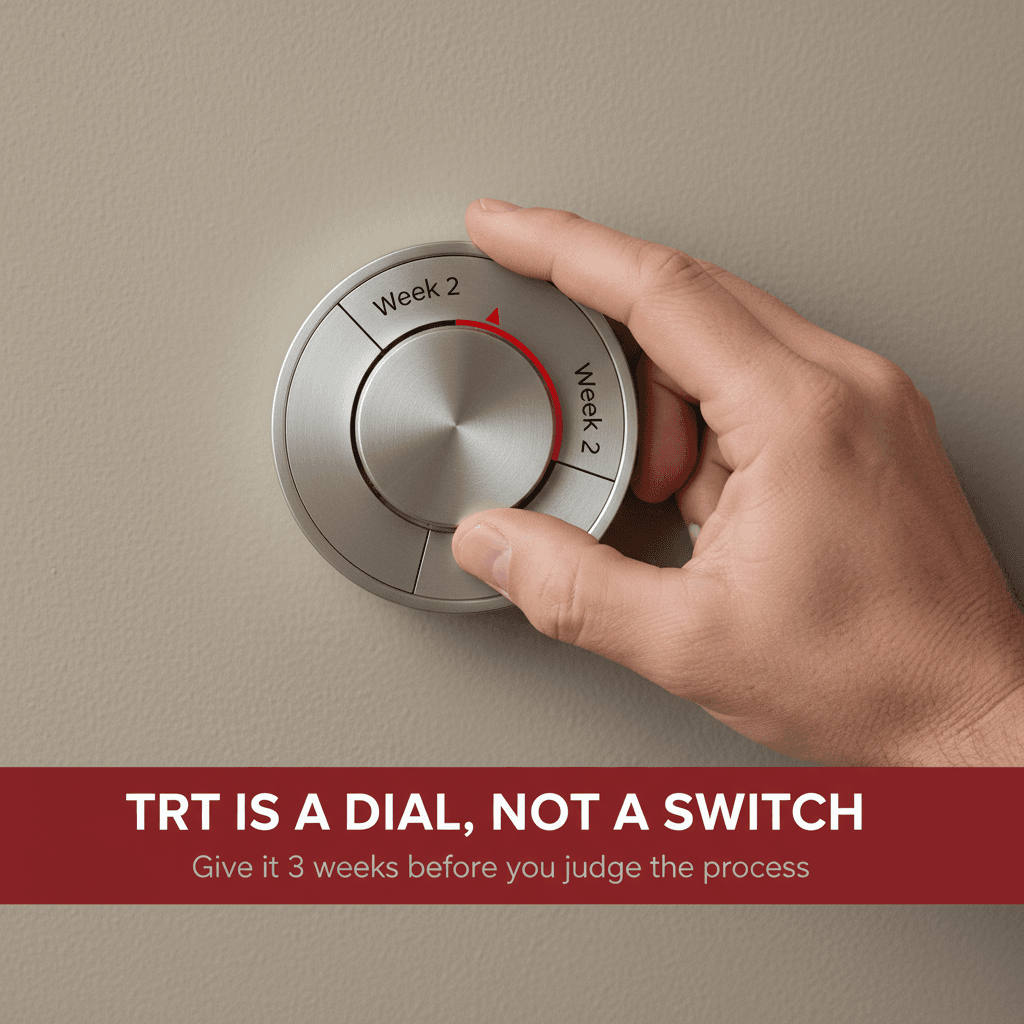
This doesn't mean everything will be perfect at three weeks. TRT is not a light switch that turns on and suddenly fixes everything. It's more like adjusting the thermostat: changes happen gradually, and fine-tuning may be necessary. But by three weeks, you and your clinician can have a more meaningful conversation about whether the current protocol is moving you in the right direction.
Some side effects that appeared early may have resolved entirely. Others may have diminished to tolerable levels. And some may persist, signaling that an adjustment to your treatment plan might be helpful. This is when discussions about things like injection frequency, adjunct medications, or dose modifications become most productive, because you're working with data from a stabilized state rather than reacting to the chaos of initial adjustment.
It's also worth noting that the benefits of TRT often lag behind the side effects. You might experience oily skin or water retention in the first week, but the improvements in energy, mental clarity, motivation, and physical performance typically take longer to manifest and build over weeks to months. This asymmetry, where negatives appear before positives, is one reason why the three-week rule emphasizes patience.
When Adjustment Takes Longer Than Three Weeks
Not everyone fits neatly into the three-week timeframe. Individual variation in hormone metabolism, receptor sensitivity, body composition, age, and overall health means that some men stabilize faster while others need more time.
Men with higher body fat percentages, for instance, may experience more estrogen conversion and related side effects that take longer to balance out. Older men or those with certain health conditions may find that their systems adjust more slowly. Conversely, some younger men or those who were only mildly deficient to begin with might feel stable within a week or two.
The three-week rule should be understood as a general guideline, not a countdown timer. If you're at three weeks and still experiencing significant side effects but you're seeing some positive changes and your clinician believes you're on the right track, it may be worth giving it another week or two before making changes. On the other hand, if you're miserable at two weeks with no signs of improvement, you don't necessarily have to suffer through another week just because of some informal rule.
Common Myths That the Three-Week Rule Helps Dispel
One pervasive myth is that TRT results should be immediate and dramatic. Men sometimes start treatment expecting to feel like a superhero within days, and when that doesn't happen, they assume something is wrong. Understanding that the body needs an adjustment period helps set realistic expectations.
Another myth is that any side effect means TRT is dangerous or wrong for you. While side effects should always be taken seriously and communicated to your clinician, many initial side effects are temporary and reflect adaptation rather than harm. The three-week perspective helps distinguish between adjustment reactions and genuine problems.
There's also a myth that more testosterone always means better results and fewer problems. In reality, higher doses often mean more side effects, and the goal of TRT is optimization, not maximization. The three-week rule reinforces the importance of patience and proper dosing rather than the impulse to keep increasing testosterone in search of faster or more dramatic effects.
The Role of Structured Support in Those Critical First Weeks
The difference between successfully navigating the first weeks of TRT and abandoning treatment prematurely often comes down to support and education. Men who understand what to expect, who have clear channels of communication with their clinicians, and who receive structured follow-up during this adjustment period tend to have better outcomes and fewer unnecessary dose changes or treatment discontinuations.
This is one area where services like AlphaMD have structured their approach specifically around this vulnerable early period. Rather than starting treatment and then waiting months for a follow-up, the platform emphasizes education about the adjustment timeline and proactive check-ins during the first weeks, so the provider overseeing your care can help you distinguish between normal adaptation and genuine concerns that need immediate attention. This kind of support can be invaluable when you're in week two, breaking out like a teenager, and wondering whether you've made a terrible mistake.
Staying the Course While Staying Safe
The three-week rule is ultimately about informed patience. It's a reminder that your body is a complex system that doesn't pivot on a dime, and that giving treatment time to work is an essential part of the process. But patience should never mean ignoring your body's signals or suffering in silence.
Good TRT management involves a partnership between you and your clinician. Your job is to observe and communicate honestly about what you're experiencing. Your clinician's job is to help you interpret those experiences, distinguish between expected adjustment and concerning developments, and make informed decisions about whether to stay the course or make changes.
Don't adjust your dose on your own, don't add or stop medications without guidance, and don't let internet forums or locker room advice override the medical judgment of someone who knows your full health picture. The three-week rule isn't a substitute for clinical oversight; it's a framework that makes that oversight more effective by helping both you and your clinician understand what symptoms might be temporary and which ones warrant attention.
Making Peace With the Adjustment Period
Starting TRT is a significant step, and the first few weeks can test your resolve. You've made the decision to treat low testosterone because your quality of life was suffering, but now you're dealing with new symptoms that make you wonder if you should have left well enough alone.
Understanding the three-week pattern helps you contextualize what you're going through. That acne isn't necessarily permanent. That irritability may well settle. The bloating and sleep disruption might resolve as your system finds its new equilibrium. None of this is guaranteed, but knowing that many men experience similar patterns and that improvement often comes after an uncomfortable adjustment period can provide the reassurance needed to keep moving forward.
The goal isn't to feel perfect at three weeks. The goal is to have enough information at that point to make a thoughtful assessment with your clinician about whether the treatment plan is working, needs adjustment, or needs to be reconsidered entirely. Sometimes the answer is to change the protocol. Sometimes it's to give it more time. And occasionally, it's to acknowledge that TRT may not be the right solution for a particular individual.
What the three-week rule really offers is perspective. It reminds you that bodies are slow to change, that adaptation is real, and that patience paired with careful monitoring usually leads to better decisions than reacting impulsively to every symptom. When you understand this timeline, you're less likely to panic in week two, more likely to communicate effectively with your clinician, and better equipped to make informed choices about your treatment and your health.
Have a question? Ask us.
At AlphaMD, we're here to help. Feel free to ask us any question you would like about TRT, medical weightloss, ED, or other topics related to men's health. Or take a moment to browse through our past questions.
People are asking...
Do you have any theories as to why some people experience a honeymoon phase for a few weeks then lose the benefits of TRT?...
The most common reason for this in men tends to be a need for a simple dose adjustment. There's a general 8 week uptake period where injected levels increase week over week & then natural production ... See Full Answer
I know everyone's different in how they react to trt. I've been doing pretty well for about 2 months. At what dosages and frequency do you see side e...
Two months in is a great time to evaluate how you're feeling on your dose. Most fluctuations are settled down at this point & you can more confidently say what you're feeling is purely your dose rathe... See Full Answer
36 M - 4 weeks into treatment. 60MG test cyp injection Tuesdays and Fridays. Started w T level around 280 - all typical symptoms. Low energy, moodines...
Check out this timeline we share with patients: - The Start, Weeks 1-4 - Many notice effects from the first few injections. During this time, more benefits will become apparent as the half-lives ... See Full Answer
Get $30 off your first month’s order
Enter your email address now to receive $30 off your first month’s cost, other discounts, and additional information about TRT.
Legal Disclaimer
This website is a repository of publicly available information and is not intended to form a physician-patient relationship with any individual. The content of this website is for informational purposes only. The information presented on this website is not intended to take the place of your personal physician's advice and is not intended to diagnose, treat, cure, or prevent any disease. Discuss this information with your own physician or healthcare provider to determine what is right for you. All information is intended for your general knowledge only and is not a substitute for medical advice or treatment for specific medical conditions. The information contained herein is presented in summary form only and intended to provide broad consumer understanding and knowledge. The information should not be considered complete and should not be used in place of a visit, phone or telemedicine call, consultation or advice of your physician or other healthcare provider. Only a qualified physician in your state can determine if you qualify for and should undertake treatment.