
The Muscle-to-Fat Ratio Metric That Predicts How Well You'll Age on TRT
Published on:
Updated on:
People are asking...
Estradiol 20.4 T 175.8 FSH 3.9 LH 1.0 Prolactin 5.8 Thsr 1.59 Xt wbc 5.3 35m 170lb 16 % bf decent sleep , clean eating no alcohol Fatigue sex drive ha...
Your LH is low and your FSH is on the lower end as well. This suggests you may have secondary hypogonadism. You would expect a rather drastic improvement in quality of life with the addition of TRT. W... See Full Answer
Estradiol 20.4 T 175.8 FSH 3.9 LH 1.0 Prolactin 5.8 Thsr 1.59 Xt wbc 5.3 35m 170lb 16 % bf decent sleep , clean eating no alcohol Fatigue sex drive ha...
Your LH is low and your FSH is on the lower end as well. This suggests you may have secondary hypogonadism. You would expect a rather drastic improvement in quality of life with the addition of TRT. W... See Full Answer
Fitness question: Many men think about starting TRT with their natural T levels in the 200-400 range. How much improvement in the gym would such patie...
In general, men who have levels in those ranges & who are experiencing low Testosterone symptoms will already have difficulty putting on muscle mass, maintaining it, and keeping fat off due to those f... See Full Answer
Have a question? Ask us.
At AlphaMD, we're here to help. Feel free to ask us any question you would like about TRT, medical weightloss, ED, or other topics related to men's health. Or take a moment to browse through our past questions.
Your bathroom scale is lying to you. Not about your weight, but about what that weight actually means for how long you'll stay healthy, strong, and functional as you get older.
Weight is a number. Muscle-to-fat ratio is a story. And for men on testosterone replacement therapy, that story determines almost everything about how well TRT actually works for you.
Why the Scale Misses the Point Entirely
Two men can both weigh 190 pounds and look, feel, and function completely differently. One carries 35 pounds of fat and a solid foundation of lean muscle. The other carries 60 pounds of fat and has been losing muscle quietly for years. Both register the same number on a scale. BMI treats them identically. But their biological age, their metabolic health, their cardiovascular risk, their hormonal environment - these are worlds apart.
Muscle-to-fat ratio, sometimes called body composition, is simply the proportion of your body weight made up of lean mass (muscle, bone, organs, water) versus fat mass. The more favorable that ratio, meaning more muscle relative to fat, the better almost every measurable health marker tends to look. It is not a perfect metric, but it is a far more meaningful one than the number staring back at you from a scale.
This matters because fat is not just stored energy sitting passively in your body. Visceral fat, the kind that accumulates deep in the abdomen, is metabolically active in a harmful way. It drives low-grade systemic inflammation, disrupts insulin signaling, contributes to arterial stiffness, and suppresses testosterone production. Muscle, by contrast, acts like a metabolic anchor. It draws glucose out of the bloodstream, improves insulin sensitivity, supports hormonal health, and protects your joints and skeleton from the wear that comes with age.
The Aging Clock That Body Composition Controls
Healthspan, the years you spend genuinely healthy and capable rather than just alive, is heavily shaped by how your body composition evolves over time. Starting around your mid-thirties, most men begin losing muscle mass gradually, a process called sarcopenia. Fat tends to accumulate in its place, particularly around the midsection. The result is a slow metabolic downshift that touches nearly every system in the body.
Insulin sensitivity declines as muscle mass drops, because muscle is one of the primary sites where your body disposes of blood sugar. Cardiovascular risk climbs as visceral fat increases inflammation and stresses the endothelial lining of your blood vessels. Joints become more vulnerable as the muscular support around them weakens. Sleep quality often deteriorates, partly because excess fat increases the risk of sleep apnea and partly because metabolic dysfunction disrupts hormonal sleep signals.
Mood, energy, and libido follow a similar pattern. Testosterone has a complicated relationship with body fat, and it runs in both directions. Low testosterone promotes fat gain and muscle loss. But excess fat, especially visceral fat, increases the activity of an enzyme called aromatase, which converts testosterone into estrogen. This creates a feedback loop that compounds over time, leaving men feeling sluggish, unmotivated, and foggy without understanding why.
Mobility and independence later in life are also closely tied to how much muscle you maintain. The ability to get off the floor, carry groceries, climb stairs, and recover from illness without a long hospital stay depends far more on your muscle reserves than your age alone.
Where TRT Fits Into the Picture
Testosterone replacement therapy, when prescribed and monitored appropriately, can meaningfully support the shift toward a better muscle-to-fat ratio. Testosterone plays a direct role in protein synthesis, which is the process your body uses to build and repair muscle tissue. It also influences fat distribution, particularly the tendency to store fat in the abdomen, and it affects motivation, drive, and recovery in ways that make consistent exercise feel more achievable.
Men who restore testosterone to a healthy physiological range often report that their response to resistance training improves, that they recover more quickly between sessions, and that they feel the kind of baseline energy that makes staying active feel natural rather than forced. These are real and meaningful benefits.
But TRT is not a body composition shortcut. This point cannot be overstated. Testosterone creates a more favorable hormonal environment for building muscle and losing fat, but it does not do either of those things on its own. Men who start TRT without changing their training, nutrition, sleep, or stress levels will see modest results at best. The therapy amplifies the response to good habits. It does not replace them.
Individual variability is also significant. Genetics, baseline hormone levels, age, existing health conditions, the quality of medical supervision, and lifestyle factors all influence how a man responds to TRT. Managing expectations here is not pessimism. It is the foundation of a sustainable approach.
Tracking Body Composition Without Obsessing Over Numbers
One of the most practical things you can do on TRT is track your body composition trends over time rather than chasing a specific number. No single method is perfect, but several tools are genuinely useful when used consistently and interpreted sensibly.
DEXA scans offer the most accurate look at body composition available outside of a research setting. They measure lean mass, fat mass, and bone density with a high degree of precision and can show regional changes, like how fat is distributed in your trunk versus your limbs. They are the gold standard, but they require access to a facility, cost money, and involve low-level radiation exposure. Getting one annually or every six months is generally enough to observe meaningful trends.
Bioelectrical impedance scales, the kind you stand on or grip with handheld devices, are convenient and affordable but notoriously sensitive to hydration levels. They can still be useful if you measure under consistent conditions, same time of day, same hydration state, and track the trend rather than any single reading.
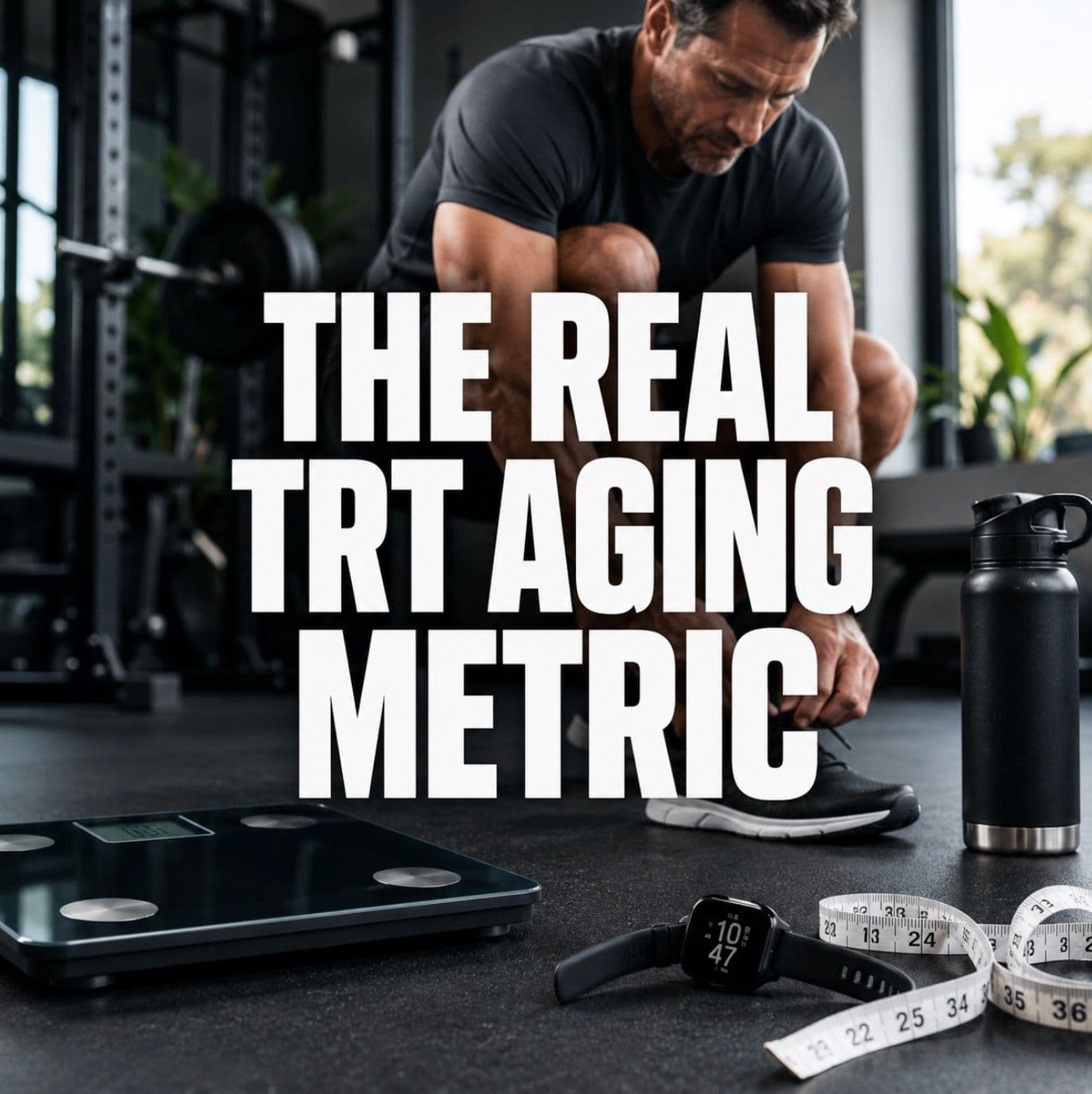
Waist circumference is one of the most underrated tools available. Visceral fat accumulation shows up reliably around the midsection, and a shrinking waist measurement often reflects real metabolic improvement even when the scale barely moves. It requires nothing more than a tape measure and consistency.
Progress photos, taken under the same lighting and conditions over weeks and months, often reveal changes that no device captures. The human eye notices shifts in muscularity, leanness, and posture that numbers miss entirely.
Strength and performance markers are arguably the most meaningful tracking tool of all. If you are getting stronger over time, adding weight to your lifts, completing more reps, or recovering faster between sessions, your muscle is responding. Muscle that is growing or maintaining itself under load is behaving exactly as you want it to.
Clothing fit, particularly how shirts fit through the shoulders and chest versus the waist, is a simple and honest feedback loop that requires no equipment and no appointment.
Building a Better Ratio: What Actually Moves the Needle
The fundamentals of improving muscle-to-fat ratio on TRT are not complicated, but they require genuine consistency.
Resistance training is non-negotiable. Testosterone amplifies the anabolic signal that strength training creates, which means the two work synergistically. Compound lifts, movements that recruit multiple muscle groups simultaneously like squats, deadlifts, rows, presses, and carries, produce the strongest anabolic stimulus. Progressive overload, the gradual and deliberate increase of demand placed on your muscles over time, is the core principle that drives adaptation. Frequency matters, but so does recovery. Training a muscle group two or three times per week with adequate rest between sessions tends to outperform both daily overtraining and sporadic effort.
Nutrition sets the ceiling on what training and testosterone can accomplish together. Protein is the building block of muscle tissue, and men on TRT who are training seriously need to prioritize it consistently at every meal. Whole food sources like meat, fish, eggs, dairy, and legumes provide not just protein but the micronutrients that support hormonal health and recovery. Caloric balance matters too. Trying to aggressively cut calories while expecting significant muscle gain is a losing battle. A moderate, sustainable approach to nutrition almost always outperforms extreme dieting.
Sleep is where testosterone is primarily produced and where muscle repair happens. Poor sleep is directly catabolic, meaning it breaks down muscle and promotes fat storage. Chronic sleep deprivation also raises cortisol, which is the body's primary stress hormone and one of the most potent antagonists to testosterone's effects. Prioritizing sleep quality is not optional if the goal is meaningful body composition change.
Stress management follows the same logic. Chronic psychological stress keeps cortisol elevated, which suppresses the anabolic environment that TRT helps create. Stress reduction practices, whether through mindfulness, time in nature, strength of social relationships, or simply protecting recovery time, are not soft suggestions. They are physiological necessities.
Daily movement beyond formal exercise, walking, active commuting, standing, light activity throughout the day, supports metabolic health in ways that a single gym session cannot fully replicate. Men who train hard but sit for 10 hours a day still face metabolic consequences that undermine their efforts.
Staying Safe and Working With the Right Support
TRT is a medical therapy, not a supplement, and it carries real physiological effects that require appropriate oversight. Before starting, a thorough clinical evaluation should rule out conditions where testosterone therapy may carry elevated risk. Regular lab monitoring is essential throughout treatment to assess how your body is responding and to catch any emerging concerns early. The specifics of monitoring and dosing should always be individualized by a qualified clinician, not sourced from forums or self-prescribed.
Working with a clinic that understands body composition as a central outcome of TRT, not just a side benefit, makes a meaningful difference. Programs that integrate hormonal support with guidance on training, nutrition, and lifestyle tend to produce better outcomes than hormone therapy delivered in isolation.
AlphaMD is built around exactly this model: TRT overseen by licensed providers, paired with practical support for the lifestyle factors that determine whether therapy actually translates into a better body composition and a healthier aging trajectory. The goal is not just normalized lab values. It is a man who is stronger, leaner, more energetic, and more capable than he was before.
The Metric Worth Tracking Your Whole Life
Muscle-to-fat ratio is not a number you hit once and forget. It is a dynamic, living indicator of how well your body is aging at the biological level. For men on TRT, it serves as the clearest possible window into whether the therapy is doing what it should, within the context of a life built around the habits that support it.
The scale will keep lying to you. Your strength, your waist, your energy, your sleep, and the way your clothes fit will tell you something much closer to the truth.
Have a question? Ask us.
At AlphaMD, we're here to help. Feel free to ask us any question you would like about TRT, medical weightloss, ED, or other topics related to men's health. Or take a moment to browse through our past questions.
People are asking...
Estradiol 20.4 T 175.8 FSH 3.9 LH 1.0 Prolactin 5.8 Thsr 1.59 Xt wbc 5.3 35m 170lb 16 % bf decent sleep , clean eating no alcohol Fatigue sex drive ha...
Your LH is low and your FSH is on the lower end as well. This suggests you may have secondary hypogonadism. You would expect a rather drastic improvement in quality of life with the addition of TRT. W... See Full Answer
Estradiol 20.4 T 175.8 FSH 3.9 LH 1.0 Prolactin 5.8 Thsr 1.59 Xt wbc 5.3 35m 170lb 16 % bf decent sleep , clean eating no alcohol Fatigue sex drive ha...
Your LH is low and your FSH is on the lower end as well. This suggests you may have secondary hypogonadism. You would expect a rather drastic improvement in quality of life with the addition of TRT. W... See Full Answer
Fitness question: Many men think about starting TRT with their natural T levels in the 200-400 range. How much improvement in the gym would such patie...
In general, men who have levels in those ranges & who are experiencing low Testosterone symptoms will already have difficulty putting on muscle mass, maintaining it, and keeping fat off due to those f... See Full Answer
Get $30 off your first month’s order
Enter your email address now to receive $30 off your first month’s cost, other discounts, and additional information about TRT.
Legal Disclaimer
This website is a repository of publicly available information and is not intended to form a physician-patient relationship with any individual. The content of this website is for informational purposes only. The information presented on this website is not intended to take the place of your personal physician's advice and is not intended to diagnose, treat, cure, or prevent any disease. Discuss this information with your own physician or healthcare provider to determine what is right for you. All information is intended for your general knowledge only and is not a substitute for medical advice or treatment for specific medical conditions. The information contained herein is presented in summary form only and intended to provide broad consumer understanding and knowledge. The information should not be considered complete and should not be used in place of a visit, phone or telemedicine call, consultation or advice of your physician or other healthcare provider. Only a qualified physician in your state can determine if you qualify for and should undertake treatment.