
The Cholesterol-Testosterone Paradox: Why High Cholesterol Tanks Your T
Published on:
Updated on:
People are asking...
What's the deal with TRT and lipid profile? Does TRT actually cause plaque build up and, if so, does the use of a statin in combination with TRT negat...
How does testosterone and TRT relate to the lipid profile? To answer that you need a little background. There are two types of hormones, peptide hormones (with a protein backbone), and steroid hormone... See Full Answer
35 M, Just got tested last week. My levels were 136 total test and 3.6 Free test. Doc who isn’t a specialist obviously wanted me to jump on a T script...
While providers on the AlphaMD platform have seen some somewhat "miracle" situations with men who have more than doubled their baseline Testosterone on their own, these are almost always with men who ... See Full Answer
Two questions. First, I find my testosterone significantly tanks when I've been extra busy, especially physically. When I first tanked (270 total or ...
For your first question, this can impact your Testosterone levels if you're not resting properly. I'll barrow from one of our earlier replies: "The majority of your Testosterone is produced and releas... See Full Answer
Have a question? Ask us.
At AlphaMD, we're here to help. Feel free to ask us any question you would like about TRT, medical weightloss, ED, or other topics related to men's health. Or take a moment to browse through our past questions.
You've probably heard that cholesterol is the raw material your body uses to make testosterone. That's true, but here's the twist: too much of it, especially when paired with metabolic dysfunction, can actually crush your T levels and wreck your health.
This is the cholesterol-testosterone paradox, and understanding it could be the key to protecting your hormone levels, your performance, and your long-term vitality.
Your Body's Hormone Factory Runs on Cholesterol
Testosterone doesn't appear out of thin air. Your Leydig cells in the testes need a steady supply of cholesterol to manufacture it. The process starts when cholesterol gets shuttled into mitochondria, where enzymes convert it through a series of steps into pregnenolone, then progesterone, and eventually testosterone.
Think of cholesterol as the lumber in a construction project. Without enough raw material, you can't build the house. This is why extremely low cholesterol diets or aggressive statin therapy sometimes raise concerns about hormone production.
The body is remarkably good at making its own cholesterol when needed, and most of the cholesterol used for steroid hormone synthesis comes from internal production, not directly from your last steak dinner. Your cells can also pull cholesterol from circulating lipoproteins when required.
But here's where things get interesting. Just because you need cholesterol doesn't mean more is better. In fact, when cholesterol levels climb too high and stay there, especially alongside other metabolic red flags, testosterone often goes in the opposite direction.
When Cholesterol Becomes a Metabolic Mess
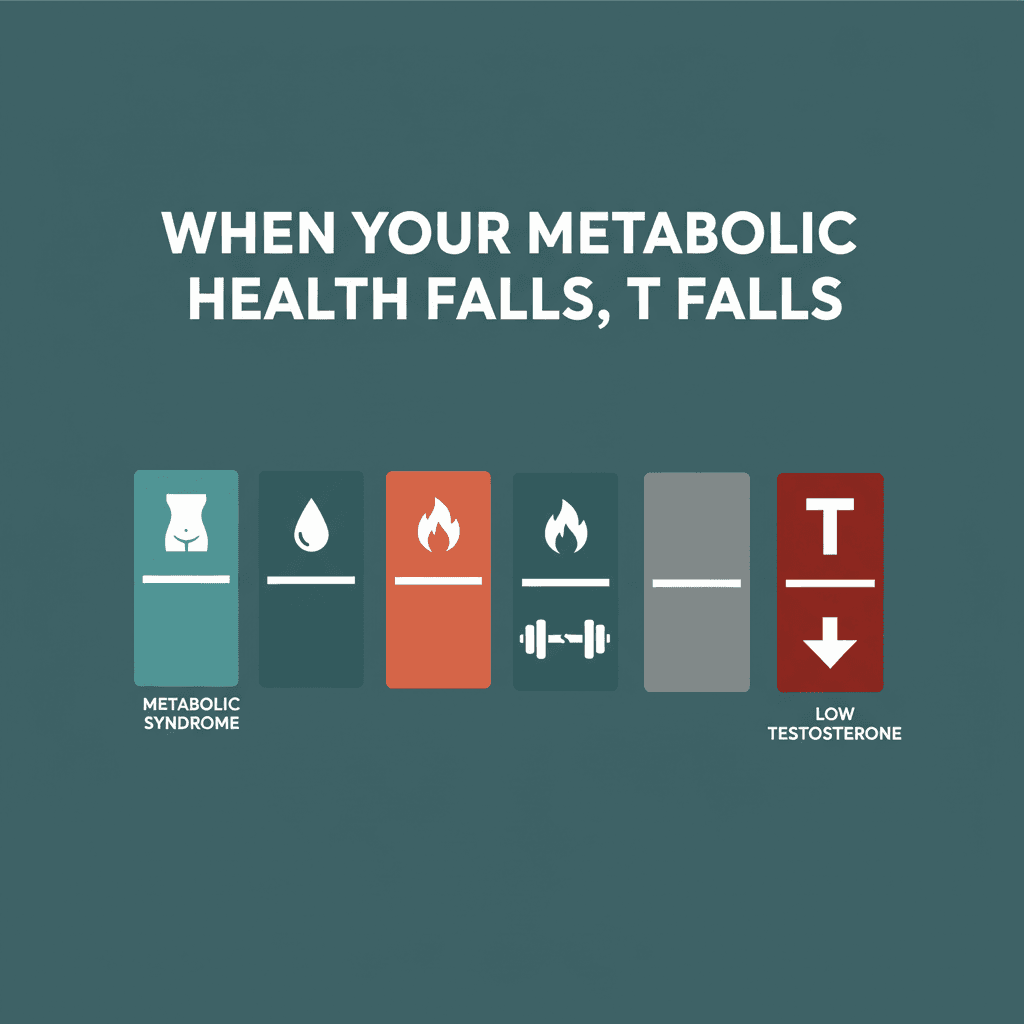
High LDL cholesterol rarely travels alone. It tends to show up with elevated triglycerides, insulin resistance, increased visceral fat, and chronic low-grade inflammation. This cluster of problems is often referred to as metabolic syndrome, and it's a testosterone killer.
Multiple studies have found that men with metabolic syndrome have significantly lower testosterone levels than metabolically healthy men. The relationship isn't just correlation, there are real biological mechanisms at play.
Insulin resistance disrupts the hypothalamic-pituitary-gonadal axis, the hormonal control system that regulates testosterone production. When cells stop responding properly to insulin, the whole system gets sluggish. The brain sends weaker signals to the testes, and testosterone production falls.
Visceral fat, the deep belly fat that accumulates around organs, acts like a toxic endocrine organ. It secretes inflammatory cytokines and produces aromatase, an enzyme that converts testosterone into estrogen. The more visceral fat you carry, the more testosterone you lose and the more estrogen you make.
High triglycerides and poor lipid patterns often reflect a diet high in refined carbohydrates, excess calories, and poor-quality fats. These same dietary patterns independently tank testosterone through multiple pathways, including oxidative stress and disrupted signaling in testicular cells.
The Inflammation and Oxidative Stress Connection
Chronic inflammation is a common thread linking high cholesterol, metabolic disease, and low testosterone. When LDL cholesterol becomes oxidized, it triggers an immune response. Oxidized LDL particles are recognized as foreign invaders, setting off a cascade of inflammatory signals.
This inflammation doesn't stay confined to your arteries. It becomes systemic, affecting tissues throughout the body, including the testes. Inflammatory cytokines directly interfere with testosterone synthesis and can damage the Leydig cells responsible for hormone production.
Oxidative stress, an imbalance between free radicals and antioxidants, accompanies this inflammatory state. The delicate cellular machinery that converts cholesterol into testosterone is vulnerable to oxidative damage. When the mitochondria in Leydig cells are under oxidative attack, hormone production suffers.
The cardiovascular system takes a beating too. Erectile function, a key marker of both vascular health and hormone status, deteriorates when blood vessels lose their flexibility and develop plaque. Poor erectile function often appears years before a heart attack, serving as an early warning system for cardiovascular and metabolic trouble.
Men with high cholesterol and metabolic syndrome frequently experience both low testosterone and erectile dysfunction, not as separate issues but as interconnected consequences of the same underlying problem: a body in metabolic distress.
The Statin Question and What It Really Means
Statins are among the most prescribed medications in the world, and the question of whether they affect testosterone gets asked often. The evidence is mixed and the effects, when they occur, tend to be modest.
Some studies show small decreases in testosterone with statin use, others show no effect, and a few even show slight increases. The biological rationale for concern makes sense since statins work by blocking an enzyme involved in cholesterol synthesis, but the real-world impact appears to be less dramatic than feared.
What matters more than the medication itself is the overall metabolic context. A man who starts a statin because he has severe metabolic syndrome, obesity, and sky-high lipids probably already has low testosterone from the metabolic dysfunction. The statin didn't cause the problem; the underlying disease did.
Conversely, when men improve their metabolic health through weight loss, exercise, and dietary changes, testosterone often rises even if they're taking a statin. The lifestyle interventions matter far more than the medication for hormone health.
The key takeaway is that statins should be considered in the full clinical picture, not feared or avoided based on oversimplified hormone concerns. Any decision about cholesterol-lowering medication should involve a thoughtful conversation with a physician who understands your cardiovascular risk, metabolic health, and hormone status.
Building a Healthy Cholesterol Environment
Chasing a single cholesterol number misses the bigger picture. What you really want is a healthy metabolic environment where cholesterol is part of a balanced, well-functioning system rather than a marker of disease.
This means paying attention to the pattern of your lipids, not just total cholesterol. High triglycerides, low HDL, and small dense LDL particles signal metabolic trouble and predict worse outcomes than moderately elevated LDL alone.
Diet quality plays a huge role. Diets rich in whole foods, healthy fats from fish and nuts, plenty of vegetables, and moderate protein support both favorable lipid patterns and healthy testosterone levels. Replacing refined carbohydrates and industrial seed oils with nutrient-dense options can shift the entire metabolic picture.
Exercise is non-negotiable. Resistance training builds muscle mass, which improves insulin sensitivity and helps regulate lipids. Cardiovascular exercise improves heart health and vascular function. Both types of training have been shown to support testosterone levels, especially in men who are overweight or sedentary.
Sleep deprivation is a silent saboteur. Poor sleep raises cortisol, drives insulin resistance, worsens lipid profiles, and directly suppresses testosterone production. Most testosterone is produced during sleep, so chronic sleep restriction is like trying to fill a bucket with a hole in the bottom.
Chronic stress keeps cortisol elevated, which competes with testosterone for resources and receptor sites. Stress also drives poor food choices, disrupts sleep, and promotes fat accumulation around the midsection.
Alcohol deserves special mention. Moderate to heavy drinking raises triglycerides, promotes liver fat accumulation, increases aromatase activity, and directly impairs testicular function. The guy having several drinks every night is systematically undermining both his cholesterol profile and his testosterone.
The Danger of Self-Treatment Without Data
The internet is full of advice about supplements, biohacks, and extreme diets that promise to fix cholesterol or boost testosterone. Some of these interventions have merit, but trying to self-diagnose and self-treat without proper lab work and medical guidance is risky.
Testosterone optimization isn't just about raising a number. It's about understanding why the number is where it is, identifying underlying causes like metabolic dysfunction or lifestyle factors, and addressing the root problems safely.
Supplements marketed for cholesterol or testosterone often lack strong evidence, can interact with medications, and may have side effects. Taking handfuls of supplements based on internet forums rather than personalized medical advice wastes money at best and causes harm at worst.
Extreme diets, whether very low fat or very low carb, can sometimes worsen the problem if not implemented carefully. Context matters. A ketogenic diet might help one man lose visceral fat and improve metabolic markers, while another man might see rising LDL and worsening lipid patterns.
Lab testing provides the roadmap. A comprehensive panel that includes lipids, metabolic markers like glucose and insulin, testosterone and related hormones, and inflammatory markers gives a clear picture of what's actually happening in your body. Guessing or going by symptoms alone leaves you flying blind.
A Smarter Approach to Metabolic and Hormone Health
The most effective way to address the cholesterol-testosterone connection is with a comprehensive approach that looks at the whole person, not isolated lab values.
This means starting with detailed lab work that evaluates your lipid panel, metabolic health, hormone levels, and other relevant markers. It means discussing your symptoms, your lifestyle, your medical history, and your goals.
A thoughtful clinician will see the patterns. High cholesterol with insulin resistance and low testosterone isn't three separate problems; it's one metabolic problem with three faces. Treatment targets the system, not just individual numbers.
Lifestyle interventions come first because they address root causes. Weight loss, improved diet, regular exercise, better sleep, and stress management improve cholesterol, testosterone, and overall health simultaneously. These changes are powerful medicine, often more effective than any single pill.
When hormone replacement therapy is appropriate, it should be implemented with attention to cardiovascular and metabolic health. TRT can improve body composition, insulin sensitivity, and lipid profiles in some men, but it requires monitoring and shouldn't be used as a band-aid for poor lifestyle choices.
Modern telehealth men's health clinics have made this kind of comprehensive care more accessible. Services like AlphaMD focus on medically guided hormone optimization that includes thorough lab evaluation, lifestyle coaching, and ongoing monitoring to ensure safety and effectiveness. The goal isn't just to prescribe testosterone, it's to optimize the entire metabolic and hormonal environment for long-term health.
This kind of partnership between patient and clinician, supported by data and guided by evidence, is how you actually solve the cholesterol-testosterone paradox rather than just wondering about it.
Protecting Your Hormones by Protecting Your Metabolism
The paradox resolves when you zoom out. Cholesterol is necessary for testosterone production, but chronically elevated cholesterol in the context of metabolic disease represents a system under stress. That stress crushes testosterone, damages blood vessels, promotes inflammation, and accelerates aging.
You can't supplement your way out of metabolic syndrome. You can't ignore high cholesterol and visceral fat while expecting to maintain healthy testosterone and vitality. The body doesn't work in isolated silos; everything connects.
Taking control means committing to the basics: eating real food, moving your body, sleeping enough, managing stress, and limiting alcohol. It means getting proper lab work and working with clinicians who understand the intersection of metabolic and hormonal health.
When you improve your metabolic environment, cholesterol patterns normalize, inflammation decreases, body composition improves, and testosterone often rises naturally. When lifestyle interventions aren't enough, medical treatments can be added thoughtfully, with full awareness of how they fit into the bigger picture.
Your testosterone levels are a reflection of your overall health. Protect your metabolism, and you protect your hormones. Take care of the foundation, and the rest tends to follow.
Have a question? Ask us.
At AlphaMD, we're here to help. Feel free to ask us any question you would like about TRT, medical weightloss, ED, or other topics related to men's health. Or take a moment to browse through our past questions.
People are asking...
What's the deal with TRT and lipid profile? Does TRT actually cause plaque build up and, if so, does the use of a statin in combination with TRT negat...
How does testosterone and TRT relate to the lipid profile? To answer that you need a little background. There are two types of hormones, peptide hormones (with a protein backbone), and steroid hormone... See Full Answer
35 M, Just got tested last week. My levels were 136 total test and 3.6 Free test. Doc who isn’t a specialist obviously wanted me to jump on a T script...
While providers on the AlphaMD platform have seen some somewhat "miracle" situations with men who have more than doubled their baseline Testosterone on their own, these are almost always with men who ... See Full Answer
Two questions. First, I find my testosterone significantly tanks when I've been extra busy, especially physically. When I first tanked (270 total or ...
For your first question, this can impact your Testosterone levels if you're not resting properly. I'll barrow from one of our earlier replies: "The majority of your Testosterone is produced and releas... See Full Answer
Get $30 off your first month’s order
Enter your email address now to receive $30 off your first month’s cost, other discounts, and additional information about TRT.
Legal Disclaimer
This website is a repository of publicly available information and is not intended to form a physician-patient relationship with any individual. The content of this website is for informational purposes only. The information presented on this website is not intended to take the place of your personal physician's advice and is not intended to diagnose, treat, cure, or prevent any disease. Discuss this information with your own physician or healthcare provider to determine what is right for you. All information is intended for your general knowledge only and is not a substitute for medical advice or treatment for specific medical conditions. The information contained herein is presented in summary form only and intended to provide broad consumer understanding and knowledge. The information should not be considered complete and should not be used in place of a visit, phone or telemedicine call, consultation or advice of your physician or other healthcare provider. Only a qualified physician in your state can determine if you qualify for and should undertake treatment.