
Testosterone Gel vs Injections: The DHT Side Effect Secret Nobody Told You
Published on:
Updated on:
People are asking...
I am a 52 year old woman. I am taking testosterone because my energy and motivation to get out of my chair were both really low. I also didn't have an...
Transdermal treatment, with both gels and creams, have been proven to have a higher conversion rate to DHT. The skin has a higher amount of the 5a-reductase enzyme, so more of the T you apply will bec... See Full Answer
I don’t know anything about TRT but I know some guys that use it and say it’s helped a lot. Any side effects how do u administer it...
The main side effects would be a reduction of fertility via lower spermatic production while on TRT, a chance for hair loss if you're genetically predisposed to it (otherwise extremely unlikely), and ... See Full Answer
How does testosterone cream compare to injections? Are side effects less likely with the cream? Can you reach the same test levels with the cream (eve...
Both forms have pros and cons, and both are excellent options. The creams have the convenience of no needles, but at the cost of needing daily applications. Also, you can transfer the medications to o... See Full Answer
Have a question? Ask us.
At AlphaMD, we're here to help. Feel free to ask us any question you would like about TRT, medical weightloss, ED, or other topics related to men's health. Or take a moment to browse through our past questions.
Most men on testosterone replacement therapy obsess over total testosterone levels, but the real culprit behind many frustrating side effects might be a lesser-known hormone derivative called DHT. The method you choose to deliver testosterone into your body - whether through daily gel or periodic injections - can dramatically influence how much DHT you produce, yet this critical difference rarely gets the attention it deserves.
Testosterone replacement therapy has become increasingly common as more men seek treatment for low testosterone symptoms like fatigue, decreased libido, reduced muscle mass, and mood changes. While the conversation typically centers on restoring testosterone to healthy ranges, the story doesn't end there. Your body doesn't simply absorb testosterone and leave it unchanged. Instead, enzymes throughout your system convert testosterone into other potent hormones, and the delivery method you choose plays a surprisingly large role in determining which pathways dominate.
The Molecule Your Doctor Forgot to Mention
Dihydrotestosterone, or DHT, is a metabolite of testosterone that forms when an enzyme called 5-alpha reductase gets to work on testosterone molecules. Think of DHT as testosterone's more aggressive cousin. It binds to androgen receptors with significantly greater affinity than testosterone itself, making it extremely powerful in certain tissues.
DHT plays essential roles in male physiology. During development, it drives the formation of male genitalia and secondary sexual characteristics. In adult men, it influences everything from body hair growth to libido to certain aspects of cognitive function. The challenge emerges when DHT levels climb too high relative to testosterone, or when you're genetically predisposed to sensitivity in specific tissues.
The 5-alpha reductase enzyme concentrates heavily in certain areas: the skin, hair follicles, prostate, and liver. This distribution pattern becomes incredibly relevant when we consider how different TRT delivery methods interact with these enzyme-rich tissues.
When Gel Meets Skin: A Conversion Story
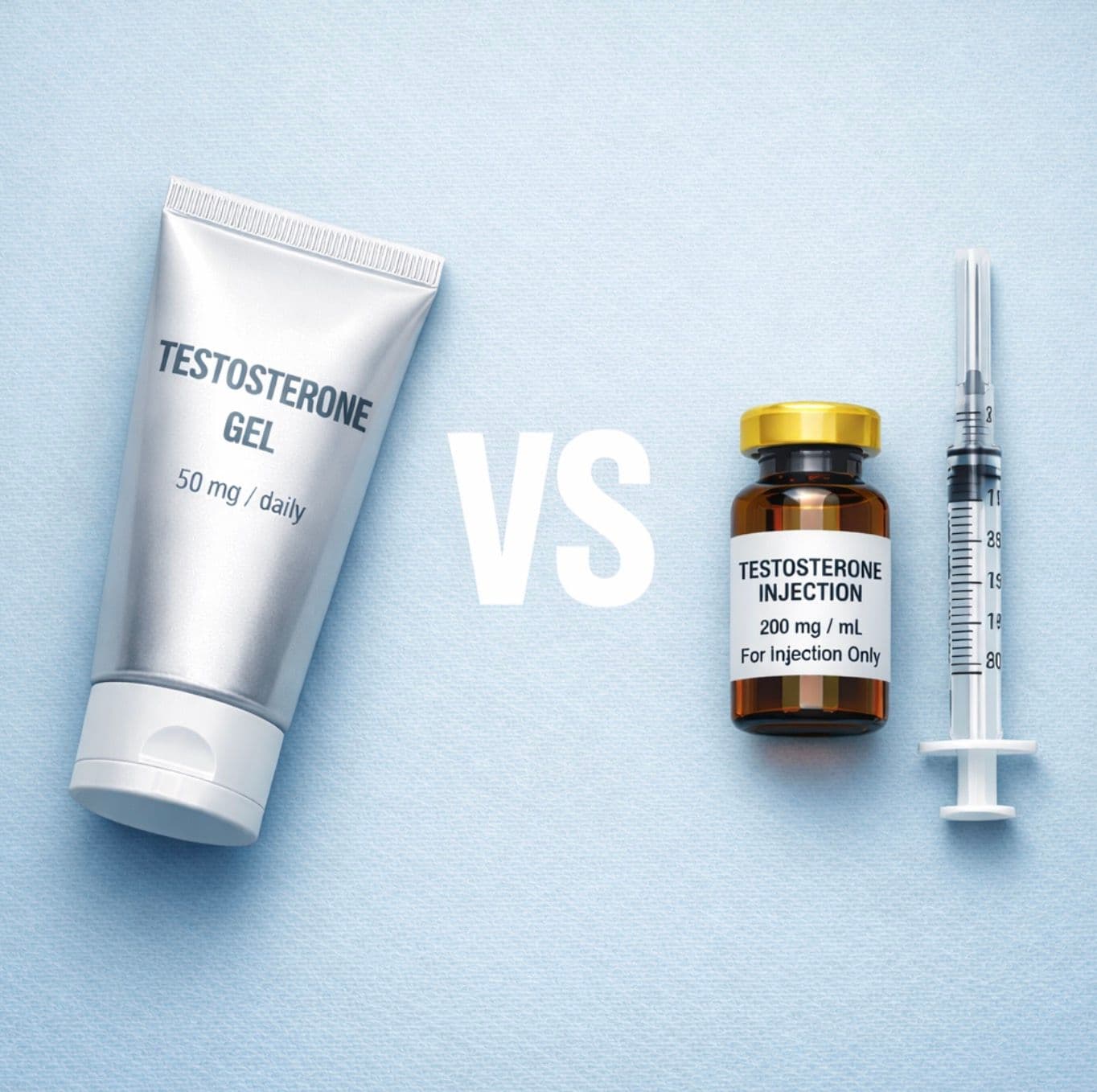
Testosterone gel represents one of the most convenient TRT options available. You apply it daily to your shoulders, upper arms, or abdomen, and the hormone absorbs through your skin into your bloodstream. It sounds straightforward, but this skin contact creates a unique biochemical situation.
Your skin contains substantial amounts of 5-alpha reductase. When testosterone gel sits on your skin surface and gradually absorbs, testosterone molecules pass directly through tissue loaded with the very enzyme that converts testosterone into DHT. This first-pass effect through enzyme-rich skin can lead to disproportionately high DHT production compared to your testosterone levels.
Some men using gel notice their DHT levels climbing into ranges that seem out of proportion to their testosterone numbers. While their testosterone might sit at a healthy level, their DHT could be significantly elevated. This ratio shift matters because many of the side effects men want to avoid on TRT are actually driven more by DHT than testosterone itself.
The daily application pattern of gel also creates relatively stable hormone levels without dramatic peaks and troughs. While this stability offers advantages for mood and energy consistency, it also means that DHT production remains elevated throughout each day if you're someone who converts testosterone aggressively through the skin pathway.
The Injection Alternative and Its Different Math
Injectable testosterone takes an entirely different route into your system. Whether delivered intramuscularly into larger muscle groups or subcutaneously into fatty tissue, the hormone enters your bloodstream without passing through that enzyme-rich skin barrier first.
This doesn't mean injections avoid DHT conversion entirely. Your body still converts testosterone to DHT through enzymes in the liver, prostate, and other tissues. However, the initial high-concentration exposure to skin-based 5-alpha reductase doesn't occur with injections. For many men, this translates to a more favorable testosterone-to-DHT ratio.
Injections do create a different challenge: hormone level fluctuations. Depending on injection frequency and the ester type used, testosterone levels typically peak within the first day or two after injection, then gradually decline until the next dose. Some men experience these fluctuations as changes in energy, mood, or libido throughout their injection cycle.
Interestingly, these peaks and troughs can influence DHT conversion in their own way. Enzyme activity doesn't always scale linearly with testosterone levels, and the pattern of exposure may matter as much as the total amount. Some men find that more frequent, smaller injections help minimize both the fluctuation issue and keep DHT production more moderate.
The Side Effect Profile Nobody Warned You About
Understanding the DHT dimension helps explain why two men on TRT with similar testosterone levels might have wildly different experiences with side effects.
Scalp hair loss represents one of the most distressing DHT-related effects. If you carry genetic susceptibility to male pattern baldness, elevated DHT accelerates the miniaturization of hair follicles on your scalp. Men using gel who produce excessive DHT often notice accelerated hair thinning or shedding that seems disproportionate to their age or family history. Switching to injections sometimes slows or halts this progression, even when total testosterone levels remain similar.
Skin issues tell a similar story. DHT stimulates sebaceous glands, increasing oil production and potentially triggering or worsening acne. If you developed unexpectedly oily skin or adult acne after starting gel, DHT overproduction through skin conversion might be the mechanism. Some men describe their skin feeling perpetually greasy, with breakouts appearing on the face, shoulders, or back.
Prostate concerns add another layer of complexity. DHT exerts powerful effects on prostate tissue, and chronically elevated DHT levels may contribute to prostate enlargement in susceptible individuals. While testosterone replacement itself requires careful monitoring of prostate health, disproportionately high DHT from certain delivery methods could theoretically amplify these risks. Regular prostate screening remains essential regardless of TRT method.
Mood and behavior changes linked to DHT are less straightforward but still significant. Some men report feeling more aggressive, irritable, or experiencing increased anxiety when their DHT runs high. Others notice changes in libido that don't match their testosterone levels. DHT influences brain chemistry differently than testosterone, and extreme ratios in either direction can create unwanted neurological effects.
Why Your Labs Tell Only Half the Story
Many physicians managing TRT focus primarily on total testosterone levels, sometimes checking estradiol as well. DHT often goes unmeasured unless a patient specifically requests it or reports suspicious symptoms. This oversight means countless men never discover that their side effects stem from DHT dynamics rather than testosterone dosing issues.
Even when DHT gets measured, interpreting the number in isolation misses the point. The ratio between testosterone and DHT often matters more than the absolute DHT value. A man with robust testosterone production might handle moderately elevated DHT without issue, while someone with more modest testosterone levels and similar DHT could experience pronounced side effects.
Genetic variation in 5-alpha reductase enzyme activity also means that two people using identical TRT protocols can produce vastly different amounts of DHT. Some men are naturally high converters who turn a large percentage of their testosterone into DHT, while others convert minimally. Skin-based delivery amplifies this existing tendency.
Making the Choice That Fits Your Biology
Choosing between gel and injections shouldn't be purely about convenience or fear of needles. Your individual side effect profile, family history, and biochemical response patterns all matter.
If you have genetic predisposition to male pattern baldness, a history of acne, or concerns about prostate health, starting with injections might reduce your DHT-related risk. If you try gel first and develop suspicious symptoms, checking your DHT level and ratio can provide valuable insight before simply increasing or decreasing your testosterone dose.
Conversely, if you tolerate gel well without DHT-driven side effects, the daily application simplicity and stable levels offer real advantages. Some men are low converters who produce modest DHT regardless of delivery method, making gel an excellent option for them.
Injection protocols offer flexibility too. Frequency adjustments can fine-tune how your levels fluctuate and potentially influence conversion patterns. Working with a knowledgeable clinician who understands these nuances makes all the difference.
Monitoring and Adjusting Your Protocol
Successful TRT requires ongoing monitoring beyond the initial prescription. Regular lab work should track not just testosterone, but also DHT, estradiol, blood counts, liver function, and prostate markers. These comprehensive panels reveal how your body is actually processing the testosterone you're introducing.
Pay attention to subjective symptoms as well. Changes in hair quality, skin condition, mood stability, sleep patterns, and urinary function all provide clues about whether your current protocol suits your biology. Keeping a simple journal of these observations helps identify patterns that might otherwise go unnoticed.
Communication with your physician matters enormously. If you're experiencing side effects, describing them clearly and requesting specific testing can guide protocol adjustments. Sometimes a simple switch from gel to injections, or vice versa, resolves issues that seemed resistant to dosing changes.
Remember that any form of hormone replacement therapy carries potential risks and requires medical supervision. TRT isn't appropriate for everyone, and even when indicated, finding the optimal approach takes time and careful attention.
A Smarter Approach to Hormone Optimization
The difference between testosterone gel and injections extends far beyond application convenience. How each method influences DHT production can determine whether your TRT experience is transformative or plagued by frustrating side effects. Understanding this connection empowers you to work with your healthcare provider in choosing and refining a protocol that matches your unique physiology.
For men navigating these decisions, services like AlphaMD provide online access to TRT management with clinicians who understand the importance of monitoring DHT alongside testosterone. The providers there emphasize individualized treatment and ongoing side effect evaluation, recognizing that optimal hormone replacement looks different for each person.
The path to successful TRT isn't about finding a one-size-fits-all solution. It's about understanding how your body processes testosterone, which downstream hormones like DHT drive your specific side effects, and matching your delivery method to your biochemistry rather than fighting against it. When you account for the DHT factor that nobody warned you about, the choice between gel and injections becomes much clearer.
Have a question? Ask us.
At AlphaMD, we're here to help. Feel free to ask us any question you would like about TRT, medical weightloss, ED, or other topics related to men's health. Or take a moment to browse through our past questions.
People are asking...
I am a 52 year old woman. I am taking testosterone because my energy and motivation to get out of my chair were both really low. I also didn't have an...
Transdermal treatment, with both gels and creams, have been proven to have a higher conversion rate to DHT. The skin has a higher amount of the 5a-reductase enzyme, so more of the T you apply will bec... See Full Answer
I don’t know anything about TRT but I know some guys that use it and say it’s helped a lot. Any side effects how do u administer it...
The main side effects would be a reduction of fertility via lower spermatic production while on TRT, a chance for hair loss if you're genetically predisposed to it (otherwise extremely unlikely), and ... See Full Answer
How does testosterone cream compare to injections? Are side effects less likely with the cream? Can you reach the same test levels with the cream (eve...
Both forms have pros and cons, and both are excellent options. The creams have the convenience of no needles, but at the cost of needing daily applications. Also, you can transfer the medications to o... See Full Answer
Get $30 off your first month’s order
Enter your email address now to receive $30 off your first month’s cost, other discounts, and additional information about TRT.
Legal Disclaimer
This website is a repository of publicly available information and is not intended to form a physician-patient relationship with any individual. The content of this website is for informational purposes only. The information presented on this website is not intended to take the place of your personal physician's advice and is not intended to diagnose, treat, cure, or prevent any disease. Discuss this information with your own physician or healthcare provider to determine what is right for you. All information is intended for your general knowledge only and is not a substitute for medical advice or treatment for specific medical conditions. The information contained herein is presented in summary form only and intended to provide broad consumer understanding and knowledge. The information should not be considered complete and should not be used in place of a visit, phone or telemedicine call, consultation or advice of your physician or other healthcare provider. Only a qualified physician in your state can determine if you qualify for and should undertake treatment.