
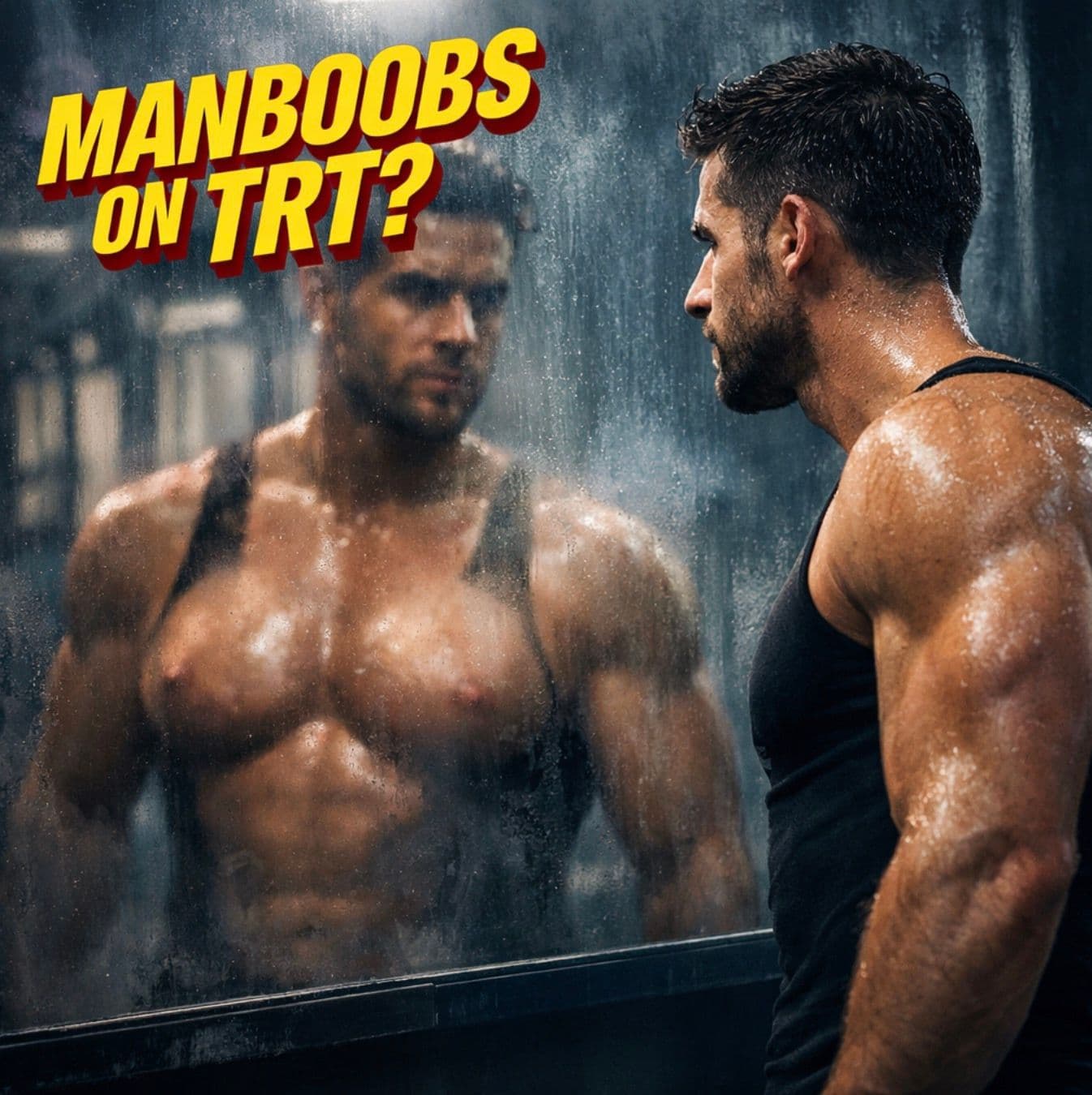
Gynecomastia on TRT? Here's Why Crashing Your Estrogen Makes It Worse
Published on:
Updated on:
People are asking...
My question is about gyno. Currently I am on my 4th bottle of test. My gyno (I think it’s gyno) started on my second bottle of test, 100mg a week, inj...
Your description of your symptoms is typical for gynecomastia. This is from an excess of estradiol. An AI is commonly considered in cases like yours — something the provider overseeing your care can e... See Full Answer
I just had 6 week bloods done. e2 was 48. SHBG must be crashed because my free T was 255. Obviously an e2 of 48 is unlikely to cause any puff or itchi...
Well, to break things down, when starting TRT you should generally not be adjusting your routine or adding medications until the 7-8 week mark when your body's hormones balance out for exactly this re... See Full Answer
Is there anything you can take to remove/reduce gyno or is surgery the only option? Have gyno from steriods when younger and now on TRT...
Tamoxifen can been used to reduce or resolve gynecomastia. How effective it is depends on the severity and the duration (it is most effective on mild-moderate cases that have been present for a year o... See Full Answer
Have a question? Ask us.
At AlphaMD, we're here to help. Feel free to ask us any question you would like about TRT, medical weightloss, ED, or other topics related to men's health. Or take a moment to browse through our past questions.
You notice it one morning: a subtle tenderness behind the nipple, maybe a slight puffiness that wasn't there before. Your first instinct is to panic, blame estrogen, and reach for something to crush it. That instinct, while understandable, may be the exact wrong move.
What Gynecomastia Actually Is, and What It Isn't
Gynecomastia is the development of glandular breast tissue in men. The word "glandular" matters. This is not fat accumulation around the chest, which is called pseudogynecomastia and is common in men with higher body fat percentages. True gynecomastia involves the proliferation of actual ductal and stromal tissue beneath the nipple, and the distinction is important because the causes, progression, and treatment pathways are different.
On TRT, men often notice nipple tenderness or sensitivity first. Sometimes there is a small, firm, disc-like mass directly under the areola that can feel almost like a button. Swelling, sensitivity to touch, or a burning sensation in the nipple area are all common early complaints. These symptoms can be alarming, especially if you have never experienced them before. However, these early signs do not automatically mean you have developed significant gynecomastia, and they certainly do not automatically mean your estrogen is dangerously high.
The confusion between pseudogynecomastia and true gynecomastia leads a lot of men down the wrong path. Chest fat redistributes, body composition shifts on TRT, and early water retention can make the chest area look and feel different. That is not the same as glandular tissue growing. Getting an accurate picture of what is actually happening matters before making any hormonal decisions.
Estrogen Is Not Your Enemy, It Is Your Co-Pilot
Here is what often gets lost in TRT forums and online discussions: estradiol, the primary estrogen in men, is not a poison. It is an essential hormone that plays a critical role in male physiology, and treating it like a foreign invader creates problems rather than solving them.
Estradiol supports libido. Many men who aggressively suppress their estrogen find their sex drive drops off a cliff, which is ironic given that the goal of TRT is often to feel more vital and engaged. Estrogen also plays a direct role in erectile function, not just testosterone. Men with crashed estrogen often report difficulty achieving and maintaining erections despite having testosterone levels that look fine on paper.
Beyond sexual health, estradiol is critical for mood regulation and cognitive clarity. Low estrogen in men is associated with irritability, depression, and brain fog. Joint health depends on estrogen as well, since it supports synovial fluid and connective tissue integrity. Men who take too much of an aromatase inhibitor often complain of aching joints that they mistakenly attribute to other causes. Cardiovascular health, bone density, and metabolic function are also tied to adequate estrogen levels in men.
Estrogen does interact with breast tissue, and this is where the concern about gynecomastia originates. But the presence of estrogen is not the sole driver of glandular tissue development. The ratio of estrogen to androgens, individual sensitivity, genetics, and the speed of hormonal change all factor in. This is a nuanced picture, and reducing it to "estrogen bad, block it" consistently leads men into trouble.
Why Crashing Your Estrogen Can Make Things Worse
When men notice nipple sensitivity on TRT, the reflexive response is often to take an aromatase inhibitor or significantly increase their dose of one they are already using. This is one of the more common and consequential mistakes in self-managed TRT.
Aggressive estrogen suppression creates volatility. Hormones do not operate in isolation, and when you dramatically drop estrogen, you create a cascade of changes that the body then tries to compensate for. When the suppression lifts or you reduce the AI dose, estrogen can rebound sharply, sometimes higher than where it started. This hormonal seesaw, from over-suppression to rebound, is genuinely destabilizing. That instability is itself a risk factor for tissue changes in the breast, because rapid hormonal shifts can sensitize breast tissue in ways that a stable, slightly elevated estrogen level might not.
Symptom misreading is a major driver of this cycle. Nipple tenderness does not always mean estrogen is elevated. Water retention does not confirm high estrogen. Mood swings and irritability can reflect low estrogen just as readily as high estrogen. Men often feel the symptoms of crashed estrogen and, because the symptoms are uncomfortable and unfamiliar, they interpret them as evidence of a problem that requires even more suppression. This is how the cycle escalates.
Aggressive aromatase inhibitor use also creates its own side effects that can mimic or amplify the very things men are trying to avoid. Fatigue, low libido, joint pain, emotional instability, and changes in fluid balance are all potential consequences of suppressing estrogen too hard. At that point, the side effect profile of the cure is indistinguishable from the thing being treated, and it becomes very difficult to know what is driving what.
The foundation of a well-functioning TRT protocol is stability. Consistent testosterone levels, stable hormonal ratios, and a body that is not constantly adjusting to swings create an environment where symptoms are easier to interpret and manage. Constant tinkering in response to every fluctuation in mood or nipple sensitivity disrupts that stability and makes outcomes harder to predict.
What Actually Raises Gynecomastia Risk on TRT
Understanding the genuine risk factors helps men think about this more clearly rather than attributing everything to estrogen.
Individual aromatization rates vary significantly. Some men convert testosterone to estradiol more readily than others, and this is partly genetic. Higher baseline body fat increases aromatase activity because adipose tissue is a primary site of aromatization, which is one of the reasons body composition matters in TRT management. Men who had pubertal gynecomastia, even if it resolved, may have glandular tissue that is more reactive to hormonal stimulation in adulthood.
Certain medications and substances interact with sex hormone pathways in ways that can contribute to breast tissue changes. Anabolic steroids beyond prescribed testosterone, some gastrointestinal medications, certain antifungals, and recreational substances including cannabis and alcohol can all influence the hormonal environment. Inconsistent TRT protocols, meaning irregular dosing schedules that create peaks and valleys in testosterone and estradiol levels, contribute to the kind of hormonal volatility that increases risk.
Genetics also determines individual tissue sensitivity. Two men with identical lab values can have very different experiences at the tissue level. This is why blanket protocols and copy-paste dosing from online communities rarely serve any individual man well.
How to Actually Respond When You Suspect Something Is Wrong
If you notice nipple tenderness, swelling, or a palpable change under the areola while on TRT, the appropriate response is evaluation, not immediate medication adjustment.
Start by documenting your symptoms carefully. When did they begin? Are they bilateral or on one side? Is there discharge? How does the tenderness compare to what you felt when you first started TRT? This timeline matters to a clinician trying to assess what is happening. Early, transient tenderness is common during the initial phases of TRT as the body adjusts to new hormonal levels, and it often resolves without intervention.
Lab monitoring is an important part of understanding your hormonal picture, and this is where working with a clinician is genuinely valuable. Relevant markers to discuss with your provider include total testosterone, free testosterone, and estradiol measured using a sensitive assay where that is appropriate for your situation. Depending on your symptoms and history, prolactin may be worth assessing, since elevated prolactin is an independent driver of breast tissue changes and is sometimes overlooked. Thyroid markers can also be relevant because thyroid dysfunction contributes to hormonal imbalances in ways that affect breast tissue and fluid balance.
Self-medicating with aromatase inhibitors, selective estrogen receptor modulators, or other estrogen-related compounds purchased without medical oversight is genuinely risky. Without knowing your actual hormonal levels and how your body is responding, you are guessing. And the consequences of guessing wrong, whether that is crashing your estrogen or taking the wrong compound for your specific situation, can create problems that are harder to unravel than the original concern.
If symptoms persist, worsen, or if there is a palpable mass that does not resolve, imaging can help distinguish glandular tissue from fat and rule out other causes. A referral to an endocrinologist or a specialist familiar with men's hormonal health may be appropriate. Persistent, established glandular gynecomastia often does not fully reverse with hormone optimization alone once the tissue has matured. Early intervention and accurate diagnosis are always better than delayed action or misguided self-treatment.
Nuance Matters: Sometimes Estrogen Does Need Managing
None of this means that estrogen is irrelevant or that it never needs clinical attention. Some men on TRT do aromatize heavily, experience symptoms that are genuinely connected to elevated estradiol, and benefit from thoughtful, clinician-guided protocol adjustments. That might include changes to the testosterone protocol itself, such as dose or injection frequency, or carefully monitored use of an aromatase inhibitor at an appropriate level.
The operative words are "thoughtful" and "monitored." Tailored management means responding to the full clinical picture, including symptoms, labs, and individual history, not reacting to one data point or one uncomfortable day. It means making changes incrementally and giving the body time to stabilize before making the next adjustment. It means working with someone who actually understands male hormonal physiology.
Balance and Stability Are the Goal, Not Zero Estrogen
The men who do best on TRT long-term are not the ones who chase perfect numbers or react to every symptom with a medication change. They are the ones who work with providers who take the time to understand their individual physiology, monitor them appropriately, and make measured adjustments when something is genuinely out of range.
Crashing your estrogen in response to nipple tenderness or water retention is a reactive strategy built on a misconception, and it frequently backfires. The volatility it creates can worsen symptoms, destabilize your protocol, and make it harder to get back to feeling well. Balance, not suppression, is what a well-managed TRT protocol looks like.
If you are navigating these questions and want guidance from a team that approaches men's health with individualized attention and real clinical oversight, AlphaMD is an online men's health platform built specifically for this. The providers you connect with prioritize education, appropriate monitoring, and protocols that are tailored to the individual rather than copied from a forum. That kind of support makes a meaningful difference when you are trying to get TRT right.
Have a question? Ask us.
At AlphaMD, we're here to help. Feel free to ask us any question you would like about TRT, medical weightloss, ED, or other topics related to men's health. Or take a moment to browse through our past questions.
People are asking...
My question is about gyno. Currently I am on my 4th bottle of test. My gyno (I think it’s gyno) started on my second bottle of test, 100mg a week, inj...
Your description of your symptoms is typical for gynecomastia. This is from an excess of estradiol. An AI is commonly considered in cases like yours — something the provider overseeing your care can e... See Full Answer
I just had 6 week bloods done. e2 was 48. SHBG must be crashed because my free T was 255. Obviously an e2 of 48 is unlikely to cause any puff or itchi...
Well, to break things down, when starting TRT you should generally not be adjusting your routine or adding medications until the 7-8 week mark when your body's hormones balance out for exactly this re... See Full Answer
Is there anything you can take to remove/reduce gyno or is surgery the only option? Have gyno from steriods when younger and now on TRT...
Tamoxifen can been used to reduce or resolve gynecomastia. How effective it is depends on the severity and the duration (it is most effective on mild-moderate cases that have been present for a year o... See Full Answer
Get $30 off your first month’s order
Enter your email address now to receive $30 off your first month’s cost, other discounts, and additional information about TRT.
Legal Disclaimer
This website is a repository of publicly available information and is not intended to form a physician-patient relationship with any individual. The content of this website is for informational purposes only. The information presented on this website is not intended to take the place of your personal physician's advice and is not intended to diagnose, treat, cure, or prevent any disease. Discuss this information with your own physician or healthcare provider to determine what is right for you. All information is intended for your general knowledge only and is not a substitute for medical advice or treatment for specific medical conditions. The information contained herein is presented in summary form only and intended to provide broad consumer understanding and knowledge. The information should not be considered complete and should not be used in place of a visit, phone or telemedicine call, consultation or advice of your physician or other healthcare provider. Only a qualified physician in your state can determine if you qualify for and should undertake treatment.