
Are Your Peptides Even Real? Why 1 in 5 Tested Vials Came Back Mislabeled
Published on:
Updated on:
People are asking...
The pharmacy recently messed up my script. I was supposed to get a 10ml vile of 200mg cypionate, and it was supposed to be for .50ml (100mg a week). T...
The manufacturing of single use vials and multi-use vials is the same. Each puncture of a vial does increase the risk of contamination, so all vials regardless of size are supposed to be discarded aft... See Full Answer
Do you need a large barrel needle to reconstitute peptides, or would poking drawing and adding BAC water to the peptide vial over and over be ok?...
Either should be just fine, though doing it multiple times still needs you to follow sterile procedures each time. Use plenty of needle swaps & alcohol pads before each and every time, would be the be... See Full Answer
Have you guys ever looked into the various manufacturers. Commercial and compounding? The question is regarding the raws they use. A few of us have no...
Great question, and yes. In general the commercial products are going to be Depo-Testosterone as a brand name & are all the same. These are just the Testosterone & the carrier oil, which in this case ... See Full Answer
Have a question? Ask us.
At AlphaMD, we're here to help. Feel free to ask us any question you would like about TRT, medical weightloss, ED, or other topics related to men's health. Or take a moment to browse through our past questions.
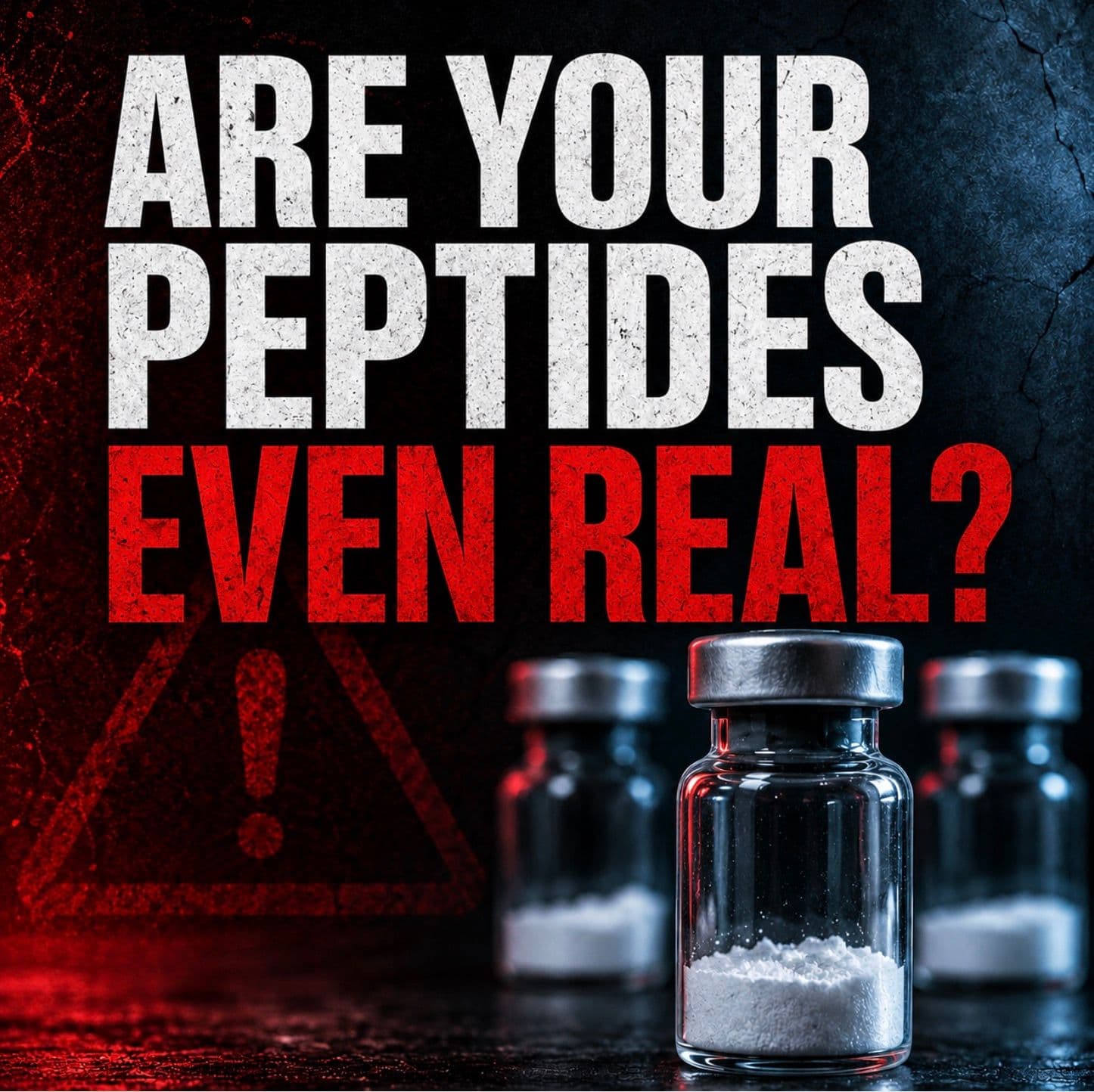
If you are buying peptides online without a prescription, there is a real chance the vial does not contain what the label says. Independent lab testing found that at least 1 in 5 unapproved peptides came back mislabeled, meaning the powder inside was a different compound, a different dose, or a different blend than what was printed on the label. When you are injecting these things, that is not a rounding error. That is a serious problem.
Here is what is actually going on, why it is happening right now, and how to make sure what you are putting in your body is what you think it is.
What does a "mislabeled peptide" mean?
A mislabeled peptide is a product whose contents do not match its label. Sometimes the vial holds a completely different peptide. Sometimes it is the right peptide at the wrong concentration. And sometimes a popular blend has been swapped for a cheaper, similar-sounding one. In every version of this, you are dosing something other than what you intended, which makes side effects, bad reactions, and wasted money a lot more likely.
How common is peptide mislabeling?
More common than most people injecting them would ever guess. A drug-testing company that has been screening these products found that at least 20 percent of the unapproved peptides it tested were mislabeled. In one case, vials sold as retatrutide, an experimental obesity drug, actually contained semaglutide, an entirely different GLP-1 medication. Popular blends were also being passed off as other blends with different ingredients.
So on the low end, that is a 1 in 5 failure rate, and it is coming from vials people already trusted enough to put in their bodies.
Why is this happening now?
Peptides exploded in popularity, largely driven by social media. Wellness influencers, podcasters, and fitness accounts made compounds like BPC-157, TB-500, and the newer GLP-1 drugs part of everyday conversation. Demand shot up fast.
The problem is that many of these compounds are not FDA-approved and are not sold through regulated pharmacies. A lot of the supply moved into "research chemical" channels, which are not built for human use and have no meaningful quality control. When demand outruns oversight, cutting corners on what actually goes in the vial becomes easy, and nobody is checking.
Which peptides are most affected?
The ones getting the most hype are also the ones most likely to be unregulated. Compounds like BPC-157 (used for injury recovery), TB-500 (marketed for muscle and inflammation), CJC-1295 (promoted for fat loss and sleep), and GHK-Cu (sold for skin and hair) are not FDA-approved and have not gone through rigorous human testing. The newer weight-loss peptides like retatrutide are a favorite target for swaps because demand is enormous and the real thing is hard to get.
The timing here matters. On July 23 and 24, an FDA advisory committee is set to review seven of the most popular peptides on the market, including BPC-157 and TB-500, to decide whether they qualify for legal pharmacy compounding. Until that plays out, these compounds sit in a regulatory gray zone, and that limbo is exactly where mislabeling thrives.
If a peptide is trendy and only available through a gray-market seller, assume the contents are unverified until proven otherwise.
Are any peptides FDA-approved and actually verified?
Yes, and this is the distinction that matters most. Several peptides are FDA-approved drugs that come through regulated pharmacies with confirmed contents and dosing. GLP-1 medications like semaglutide and tirzepatide are approved peptide drugs (the P in GLP literally stands for peptide). Insulin is a peptide too.
Sermorelin has a real regulatory history as well. It was FDA-approved back in 1997, later pulled from the market for business reasons rather than any safety issue, and is now available through licensed compounding pharmacies under 503A rules. The point is not that one peptide is magic and another is junk. The point is that approved and pharmacy-compounded peptides come with quality control, and anonymous gray-market vials do not.
So what should you actually do?
The single most effective way to avoid a mislabeled peptide is to stop self-sourcing from unregulated sellers. If a peptide is part of your plan, get it through a licensed medical provider who prescribes through vetted, regulated pharmacies. That means the contents are verified, the dosing is real, and someone with a medical license is looking at your bloodwork before you inject anything.
This is exactly the gap AlphaMD exists to close. Working with a provider is not about red tape. It is about knowing that what is in the vial is what is on the label, and that your protocol is built around your actual labs instead of a TikTok video.
Quick answers
Is BPC-157 FDA-approved? No. BPC-157 is not FDA-approved and has not been through rigorous human testing. It is one of the seven peptides an FDA advisory committee is reviewing on July 23 and 24 for compounding eligibility, which is a separate question from approval.
Can you test peptides you bought online? Yes. A handful of labs now let consumers send in samples to verify contents, which exists precisely because mislabeling is common. A cleaner solution is to not buy unverified product in the first place.
Are GLP-1 drugs like semaglutide peptides? Yes. Semaglutide and tirzepatide are FDA-approved peptide medications, which is why they come through regulated pharmacies with verified contents.
Why would a vial contain the wrong peptide? Gray-market suppliers face no quality control and no accountability. Cheaper or more available compounds get substituted for expensive or scarce ones, and the buyer has no way to know.
If you are going to take peptides seriously, treat the source as seriously as the compound. What is in the vial only matters if it is actually what you paid for.
Have a question? Ask us.
At AlphaMD, we're here to help. Feel free to ask us any question you would like about TRT, medical weightloss, ED, or other topics related to men's health. Or take a moment to browse through our past questions.
People are asking...
The pharmacy recently messed up my script. I was supposed to get a 10ml vile of 200mg cypionate, and it was supposed to be for .50ml (100mg a week). T...
The manufacturing of single use vials and multi-use vials is the same. Each puncture of a vial does increase the risk of contamination, so all vials regardless of size are supposed to be discarded aft... See Full Answer
Do you need a large barrel needle to reconstitute peptides, or would poking drawing and adding BAC water to the peptide vial over and over be ok?...
Either should be just fine, though doing it multiple times still needs you to follow sterile procedures each time. Use plenty of needle swaps & alcohol pads before each and every time, would be the be... See Full Answer
Have you guys ever looked into the various manufacturers. Commercial and compounding? The question is regarding the raws they use. A few of us have no...
Great question, and yes. In general the commercial products are going to be Depo-Testosterone as a brand name & are all the same. These are just the Testosterone & the carrier oil, which in this case ... See Full Answer
Get $30 off your first month’s order
Enter your email address now to receive $30 off your first month’s cost, other discounts, and additional information about TRT.
Legal Disclaimer
This website is a repository of publicly available information and is not intended to form a physician-patient relationship with any individual. The content of this website is for informational purposes only. The information presented on this website is not intended to take the place of your personal physician's advice and is not intended to diagnose, treat, cure, or prevent any disease. Discuss this information with your own physician or healthcare provider to determine what is right for you. All information is intended for your general knowledge only and is not a substitute for medical advice or treatment for specific medical conditions. The information contained herein is presented in summary form only and intended to provide broad consumer understanding and knowledge. The information should not be considered complete and should not be used in place of a visit, phone or telemedicine call, consultation or advice of your physician or other healthcare provider. Only a qualified physician in your state can determine if you qualify for and should undertake treatment.