
Your TRT Is Only as Good as the Life You Build Around It - The Non-Negotiable Lifestyle Foundation
Published on:
Updated on:
People are asking...
Thoughts on people under 30 seeking TRT? Seeing as this is a lifetime commitment?...
It sucks if a man has to start TRT before 30. It also sucks that it is unlikely that a man who gets low T in his 30s is able to naturally increase his testosterone. Providers on the AlphaMD platform h... See Full Answer
Is getting on TRT a lifetime commitment? Should I expect bad side effects from coming off of it? Just wondering if I’ll be a 80 year old one day on TR...
Yes & no. It's better to think of it this way: If you have low Testosterone & do not treat it, you are committing to a life-time of low Testosterone symptoms that will for a fact always worsen with ag... See Full Answer
It makes no rational sense to me that total testosterone “far more important”…. even for starting dose. When subjects can have the same total testoste...
Maybe think of it a different way. Your FT level varies a lot based on your SHBG and your albumin levels. And since no one knows to what degree your body will respond to TRT, initial dosing, for the T... See Full Answer
Have a question? Ask us.
At AlphaMD, we're here to help. Feel free to ask us any question you would like about TRT, medical weightloss, ED, or other topics related to men's health. Or take a moment to browse through our past questions.
Most men who start testosterone replacement therapy expect the treatment to do the heavy lifting. They imagine the protocol working silently in the background, quietly correcting years of fatigue, low drive, and sluggish body composition while their daily habits stay exactly the same.
That is not how this works.
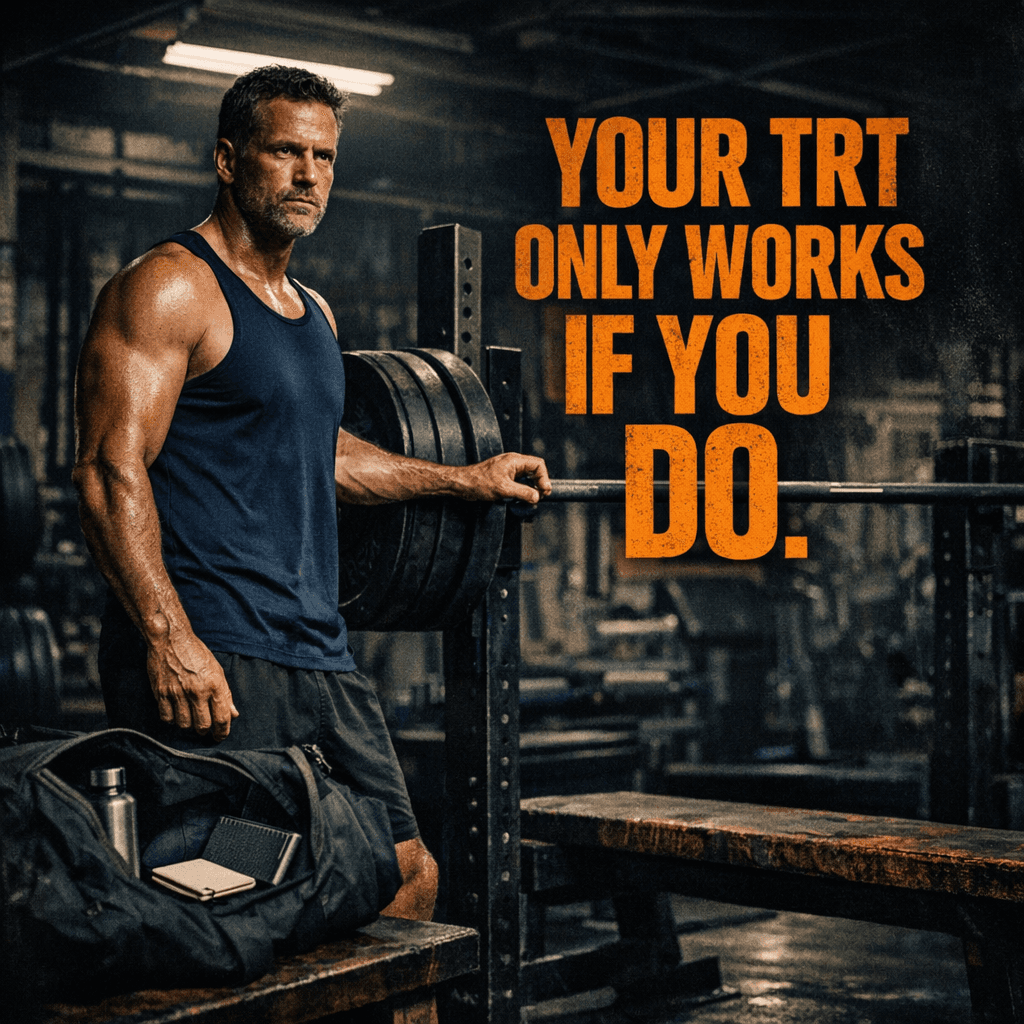
Testosterone replacement therapy is a clinical tool, not a magic override. It restores a hormonal environment that makes meaningful change possible. What you build inside that environment determines how far you actually go. The men who see transformative results are not just the ones on the right protocol. They are the ones who treat their lifestyle as the actual therapy, and the TRT as the foundation beneath it.
This is not a motivational premise. It is a physiological one.
The Hormonal Environment You Build Matters More Than the Prescription
Testosterone operates inside a broader biological system. It interacts with cortisol, insulin, growth hormone, sleep architecture, and inflammation markers every single day. When those surrounding variables are chaotic, even a well-calibrated protocol will underperform. You may notice modest improvements in energy or libido, but the full picture, the changes in body composition, cognitive clarity, mood stability, and long-term metabolic health, requires the rest of the system to cooperate.
This is why clinicians who specialize in men's hormonal health consistently emphasize lifestyle as a non-negotiable part of care. The prescription alone is not the treatment plan. The prescription is one layer of it.
The sections below break down each pillar of that foundation, what the evidence suggests, and why each one matters specifically in the context of testosterone optimization.
Sleep Is Not a Recovery Tool, It Is the Foundation of the Foundation
Sleep is where testosterone does a significant portion of its anabolic work. The majority of daily testosterone secretion in men occurs during sleep, tightly linked to sleep stage cycling. If you are chronically under-sleeping, sleeping at inconsistent times, or suffering from undiagnosed obstructive sleep apnea, you are undermining your protocol at the most basic level.
Circadian rhythm consistency matters as much as total sleep duration. Going to bed and waking at irregular times disrupts the hormonal signaling patterns that sleep is supposed to reinforce. The body calibrates cortisol, growth hormone, and sex hormones against a consistent internal clock. Break that clock habitually and the hormonal environment becomes noisier regardless of what you are prescribed.
Obstructive sleep apnea deserves specific attention. It is far more common in men with metabolic dysfunction, and it directly suppresses testosterone production through repeated oxygen desaturation events during the night. If you snore loudly, wake frequently, or feel unrested despite adequate hours in bed, screening for sleep apnea is a clinical priority, not an optional add-on.
Alcohol timing is another underappreciated variable. Even moderate alcohol consumption within a few hours of sleep measurably degrades sleep architecture, particularly REM and slow-wave stages. This is where recovery and hormonal secretion are concentrated. Pushing alcohol earlier in the evening, or eliminating it on most nights, is one of the highest-return behavioral adjustments a man on TRT can make. Research published through the National Institutes of Health confirms the relationship between sleep quality, testosterone, and metabolic function.
Training Smart Beats Training Hard
Resistance training and testosterone share a bidirectional relationship. TRT improves muscle protein synthesis, recovery capacity, and neuromuscular signaling. Resistance training, in turn, increases androgen receptor sensitivity, meaning the muscles become more responsive to the testosterone that is present. These two variables amplify each other when training is programmed intelligently.
The key phrase is "programmed intelligently." Overtraining is a real and counterproductive pattern for men on TRT. Excessive training volume without adequate recovery drives cortisol chronically elevated, which directly opposes testosterone's anabolic effects. More is not always better. Progressive overload, adequate rest between sessions, and periodized programming matter far more than training frequency alone.
Zone 2 cardiovascular training, meaning sustained, conversational-pace aerobic work, supports mitochondrial health, insulin sensitivity, and cardiovascular function without the cortisol burden of high-intensity training done daily. It complements strength work rather than competing with it. A few sessions per week of walking, cycling, or rowing at moderate intensity covers a meaningful amount of metabolic ground.
Mobility and connective tissue work tend to be ignored until injury forces the issue. Maintaining joint health and movement quality matters for training longevity, which ultimately determines how much benefit a man accumulates over years, not weeks.
What You Eat Either Supports the Protocol or Fights It
Nutrition does not need to be complicated, but it does need to be honest. The fundamentals are clear and consistent across the research: prioritize protein, eat enough fiber, build meals around whole and minimally processed foods, and limit ultraprocessed products that drive inflammation and blood sugar dysregulation.
Protein is the most directly relevant macronutrient for men on TRT. Testosterone amplifies muscle protein synthesis, but only when the raw material, dietary protein, is available in sufficient quantity. Men who under-eat protein while on a testosterone protocol are leaving the most visible results on the table.
Fiber deserves more attention than it typically gets in the men's health space. Adequate fiber intake supports gut health, modulates estrogen metabolism, and stabilizes blood sugar. All three of those functions matter for hormonal balance and body composition in men on TRT.
Ultraprocessed foods and excessive alcohol are the clearest dietary saboteurs. Ultraprocessed foods are associated with systemic inflammation, insulin resistance, and poor gut microbiome diversity. Alcohol, consumed regularly and in meaningful quantity, suppresses testosterone production through multiple pathways and adds empty caloric load that promotes visceral fat accumulation. These are not minor influences. They are significant ones.
Hydration is the least glamorous of all the nutrition variables, and also one of the most consistently neglected. Dehydration impairs cellular function, training performance, cognitive output, and energy regulation. Testosterone does not override a chronically dehydrated cellular environment.
The Cortisol Problem Most Men on TRT Overlook
Cortisol and testosterone are physiological opposites in many respects. Cortisol is a catabolic hormone, meaning it breaks down tissue and mobilizes energy for stress response. Testosterone is anabolic, meaning it builds and repairs. When cortisol is chronically elevated, the downstream effects undermine virtually every benefit TRT is designed to provide.
Chronic psychological stress, unmanaged anxiety, and untreated depression all maintain elevated cortisol signaling. This is not a willpower issue. It is a physiological one. Men who come to testosterone optimization carrying significant psychological burden, whether from work pressure, relationship dysfunction, financial stress, or mental health conditions, need those stressors addressed as part of the full care picture.
Therapy, coaching, structured social connection, and deliberate recovery practices are not soft additions to a TRT protocol. They are load-bearing pillars of it. The relationship between mental health and hormonal function runs in both directions: poor mental health suppresses hormonal outcomes, and hormonal imbalance worsens mental health. Treating one without addressing the other produces incomplete results.
Social connection and relational health matter here too. Isolation and chronic loneliness are associated with elevated inflammatory markers and dysregulated stress hormones. Building meaningful human connection is a physiological intervention, not just a quality-of-life nicety.
Body Fat Is Both a Symptom and a Driver
Visceral body fat, the fat stored around the abdominal organs, is metabolically active tissue. It produces inflammatory signals and an enzyme called aromatase, which converts testosterone into estrogen. This means that carrying significant visceral fat while on TRT creates a constant internal pressure pulling the hormonal environment in the wrong direction.
Insulin resistance, often associated with excess visceral fat, further complicates hormonal optimization. The Mayo Clinic describes the relationship between insulin resistance and metabolic syndrome in detail, and the downstream effects on cardiovascular and hormonal health are meaningful for men considering or already on TRT.
The goal is not to achieve an aesthetic ideal. The goal is to move the metabolic environment toward one where the protocol can function as intended. Waistline trends over time matter more than a number at any single point. Sustainable habits that gradually reduce visceral fat, consistent training, adequate protein, managed stress, and quality sleep, create compounding returns over months and years.
Realistic Expectations Are Not a Limitation, They Are a Strategy
TRT is not a fast process when measured against the full scope of its benefits. Some changes, improved energy, mood stabilization, libido response, can be noticed relatively early. Others, meaningful changes in body composition, bone density, cognitive function, and metabolic markers, accumulate over months of consistent effort.
Men who approach TRT with unrealistic short-term expectations tend to either abandon the protocol before it can deliver, or chase increasingly aggressive optimization in ways that create new problems. Excessive supplementation stacking, extreme caloric restriction, or overtraining on top of TRT can stress the system rather than support it.
Tracking habits rather than obsessing over outcomes is a more durable approach. Monitoring sleep quality, training consistency, dietary patterns, stress levels, and energy trends over time gives a clearer picture of what is actually driving results than fixating on any single metric.
Patience combined with consistency is the real optimization strategy.
Medical Supervision Is Not Optional
TRT affects multiple physiological systems simultaneously. Hematocrit, cardiovascular markers, liver function, and other variables require monitoring throughout the course of treatment. A clinician who understands men's hormonal health will establish a monitoring schedule, respond to side effects proactively, and adjust the protocol as the body changes over time.
Fertility is a specific consideration that deserves direct conversation with a clinician before starting TRT. Exogenous testosterone can suppress the body's natural signaling pathway for sperm production. Men who are considering fatherhood in the near or medium term should discuss this openly and early. There are clinical strategies to address it, but they require planning.
Side effects including acne, fluid retention, mood changes, and changes in hematocrit are real and manageable when supervised appropriately. Self-managed protocols without clinical oversight remove the safety layer that makes long-term treatment viable.
Adjunct Therapies Worth Understanding
For some men, TRT is part of a broader hormonal optimization picture that may include adjunct therapies depending on individual goals and clinical assessment.
HCG, or human chorionic gonadotropin, is sometimes used alongside TRT to support testicular function and endogenous testosterone signaling, particularly relevant for men who want to preserve fertility or testicular volume during treatment.
Sermorelin is a growth hormone-releasing peptide that some men explore in conjunction with hormonal optimization for its potential effects on recovery, sleep quality, and body composition. It works through the body's own growth hormone axis rather than introducing exogenous growth hormone directly.
It is also worth noting that testosterone therapy is not exclusive to men. Female TRT is a legitimate and increasingly recognized area of women's health, addressing hormonal decline that affects energy, libido, mood, and body composition in women. While it is not the focus of this article, it reflects the broader reality that hormonal optimization is a field that serves both sexes with appropriate, sex-specific protocols.
None of these therapies are universal recommendations. They are clinical decisions made in the context of individual health history, goals, and ongoing monitoring.
What This All Adds Up To
The central truth of testosterone optimization is straightforward: the protocol is only as powerful as the life built around it. Sleep, training, nutrition, stress management, body composition, consistency, and medical supervision are not lifestyle bonuses layered onto a pharmaceutical intervention. They are the intervention itself, with TRT as a powerful supporting layer.
The men who experience the most meaningful and lasting results from TRT are not the ones who simply fill a prescription. They are the ones who treat their daily habits with the same seriousness they bring to their clinical protocol.
AlphaMD works with men across the country through a medically supervised, online model that makes accessing testosterone optimization straightforward. But what AlphaMD cannot do, and what no clinic can do, is build the lifestyle foundation for you. That part remains yours to construct. The protocol gives you better tools. What you build with them is the real result.
Have a question? Ask us.
At AlphaMD, we're here to help. Feel free to ask us any question you would like about TRT, medical weightloss, ED, or other topics related to men's health. Or take a moment to browse through our past questions.
People are asking...
Thoughts on people under 30 seeking TRT? Seeing as this is a lifetime commitment?...
It sucks if a man has to start TRT before 30. It also sucks that it is unlikely that a man who gets low T in his 30s is able to naturally increase his testosterone. Providers on the AlphaMD platform h... See Full Answer
Is getting on TRT a lifetime commitment? Should I expect bad side effects from coming off of it? Just wondering if I’ll be a 80 year old one day on TR...
Yes & no. It's better to think of it this way: If you have low Testosterone & do not treat it, you are committing to a life-time of low Testosterone symptoms that will for a fact always worsen with ag... See Full Answer
It makes no rational sense to me that total testosterone “far more important”…. even for starting dose. When subjects can have the same total testoste...
Maybe think of it a different way. Your FT level varies a lot based on your SHBG and your albumin levels. And since no one knows to what degree your body will respond to TRT, initial dosing, for the T... See Full Answer
Get $30 off your first month’s order
Enter your email address now to receive $30 off your first month’s cost, other discounts, and additional information about TRT.
Legal Disclaimer
This website is a repository of publicly available information and is not intended to form a physician-patient relationship with any individual. The content of this website is for informational purposes only. The information presented on this website is not intended to take the place of your personal physician's advice and is not intended to diagnose, treat, cure, or prevent any disease. Discuss this information with your own physician or healthcare provider to determine what is right for you. All information is intended for your general knowledge only and is not a substitute for medical advice or treatment for specific medical conditions. The information contained herein is presented in summary form only and intended to provide broad consumer understanding and knowledge. The information should not be considered complete and should not be used in place of a visit, phone or telemedicine call, consultation or advice of your physician or other healthcare provider. Only a qualified physician in your state can determine if you qualify for and should undertake treatment.