
When TRT Feels Like a Heart Attack in the First 48 Hours
Published on:
Updated on:
People are asking...
I've been on trt for about a year and it started right away, started at 160 a week and it was so bad I wouldn't be able to sleep for two days, but I'm...
RHR increase on TRT - while this is not a common complaint, it is known to occur. While the phenomenon has not been evaluated extensively, a common theory is that increased viscosity (thickness) of th... See Full Answer
32 year old male. I’ve tried every antidepressant there is to no avail. Energy and mood are always in the dumps. I’m 5’10” 250pounds(down from 267) 40...
A great many men respond to having low Testosterone return to appropriate levels with a marked increase to their mental health and mood. You should keep in mind that while dieting like that, your Test... See Full Answer
2 weeks in TRT why do I feel like crap about two days after injection? Is this normal until injected levels elevate and blood levels get steady? And h...
At this point, you may just need time to adjust to the changes. You could reasonable be experiencing suppression effects with not-yet-optimal improvement from injection amounts. Unless you had high na... See Full Answer
Have a question? Ask us.
At AlphaMD, we're here to help. Feel free to ask us any question you would like about TRT, medical weightloss, ED, or other topics related to men's health. Or take a moment to browse through our past questions.
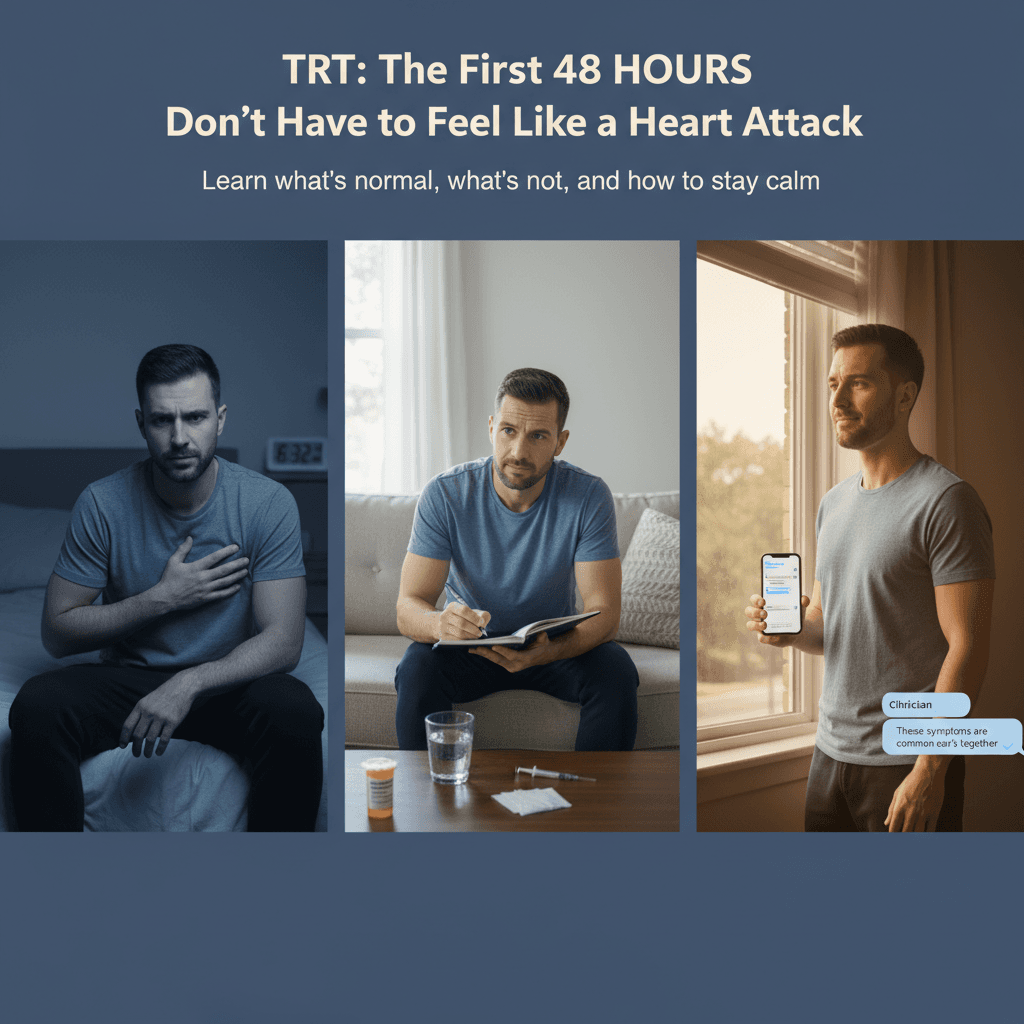
You've just taken your first dose of testosterone replacement therapy, and now your chest feels tight, your heart is pounding, and you're convinced you're having a heart attack. The panic is real, the symptoms are real, and the fear that you've made a terrible mistake is overwhelming.
Take a breath. What you're experiencing right now is common, usually not dangerous, and almost certainly not what you think it is. But let's be clear from the start: if you're having severe chest pain, pain radiating to your arm or jaw, or difficulty breathing, you need to get evaluated immediately. This article is not a substitute for emergency care. What it can do is help you understand why the first 48 hours of TRT can feel so intensely physical, why your body seems to be staging a revolt, and when those sensations cross the line into something that requires urgent medical attention.
When Your Chest Tightens And Your Mind Jumps To The Worst
The human brain is wired for threat detection. When you introduce something new into your body, especially something hormonal that you've been told can affect your heart, you become hyperaware of every sensation. That awareness isn't just psychological theater. It genuinely amplifies what you feel.
Your heart beats roughly 100,000 times per day. Most of those beats go unnoticed. But when you're anxious, when you're scanning your body for signs of danger, you suddenly notice the thump in your chest. You feel the pause between beats. You register the slight irregularity that's been there all along but never bothered you before.
This hypervigilance combines with anticipation anxiety to create a feedback loop. You expect something to happen, so you monitor closely. You notice sensations. Those sensations trigger more anxiety. The anxiety creates more sensations. Within hours of your first injection, you're convinced your cardiovascular system is failing, even though your testosterone levels haven't actually changed enough yet to cause any meaningful physiological effect.
The Reality Of What Happens In The First 48 Hours
Testosterone doesn't work like flipping a light switch. When you receive an injection, the hormone enters your system gradually. Blood levels begin to rise, but the cellular changes, the receptor binding, the downstream effects on muscle, mood, energy, and metabolism take days to weeks to become significant.
In the first 48 hours, you're not experiencing the therapeutic benefits of TRT. You're not experiencing most of the side effects either. What you are experiencing is a combination of psychological response, pre-existing body sensations you're now paying attention to, and possibly some very early, minor physiological adjustments.
That said, some men do report feeling flushed, slightly jittery, or energetically different within the first day or two. These sensations are usually mild and related to the awareness of having done something significant for your health. They're the physical manifestation of anticipation, not cardiovascular catastrophe.
Common sensations that get misinterpreted as heart attack symptoms include chest tightness from shallow breathing during anxiety, palpitations triggered by stress hormones like adrenaline, flushing or warmth in the face and chest, mild dizziness from dehydration or changes in blood pressure related to nervousness, and shortness of breath from panic rather than cardiac distress.
None of these mean you're having a heart attack. But all of them can feel terrifying when you're already on edge.
Heart Attack Vs. Anxiety: Knowing The Difference
The challenge is that anxiety and cardiac events can sometimes present with overlapping symptoms. Chest discomfort, rapid heartbeat, sweating, and shortness of breath appear in both scenarios. That's why medical evaluation is the only reliable way to know for certain what's happening.
Typical warning signs of a possible heart attack include sudden, severe chest pain or pressure that feels like an elephant sitting on your chest, pain or discomfort that spreads to your shoulder, arm, neck, jaw, or back, shortness of breath that comes with chest discomfort, cold sweats, nausea, or lightheadedness, and a sense of impending doom that feels qualitatively different from regular anxiety.
Anxiety related symptoms, by contrast, tend to be sharp or stabbing rather than crushing, come and go or shift location, improve with distraction or relaxation techniques, and are accompanied by racing thoughts, hyperventilation, or tingling in the hands and feet.
But these are guidelines, not certainties. Heart attacks can present atypically, especially in younger men or those with diabetes. Anxiety can be severe and unrelenting. The only way to truly differentiate is with medical assessment, including an EKG, blood work for cardiac markers, and clinical evaluation.
Your underlying risk factors matter enormously. If you're 35 years old, exercise regularly, have no family history of early heart disease, normal cholesterol and blood pressure, and don't smoke, your risk of a heart attack in the first 48 hours of TRT is extraordinarily low. If you're 55, overweight, diabetic, with high blood pressure and a family history of heart attacks, your baseline risk is higher, and any new symptoms deserve more immediate attention.
Age, smoking status, diabetes, high blood pressure, high cholesterol, obesity, sedentary lifestyle, and family history are the real determinants of cardiac risk, not the testosterone injection you received yesterday.
What TRT Can Actually Change Early On
While testosterone levels don't shift dramatically in the first two days, TRT can begin to influence certain body systems relatively quickly. Understanding these changes helps separate real effects from imagined ones.
Fluid balance can shift slightly as testosterone influences aldosterone and other hormones involved in salt and water retention. Some men notice mild bloating or a sense of fullness within the first few days. This can cause a small increase in blood pressure, though typically not enough to be dangerous or even noticeable without a blood pressure cuff.
Mood and energy can fluctuate, not because testosterone has rebuilt your neurotransmitter systems yet, but because you're emotionally invested in this treatment. You might feel excited, anxious, hopeful, or scared. Those emotions have physical correlates. Excitement raises your heart rate. Anxiety tightens your chest. Hope can make you feel energized, while fear can exhaust you.
Sleep can be disrupted, especially if you're already a poor sleeper or prone to insomnia. The anticipation of starting treatment, combined with monitoring your body constantly, can make it hard to fall asleep or stay asleep. Poor sleep then amplifies every other physical sensation the next day.
Caffeine, dehydration, skipped meals, and pre-existing anxiety disorders can combine with these early TRT changes to create a perfect storm. You didn't sleep well because you were worried about TRT. You drank extra coffee to compensate for the fatigue. You forgot to drink water because you were distracted. By midday, you're jittery, your heart is racing, your chest feels tight, and you're convinced the testosterone is killing you.
It's not. But your body is genuinely uncomfortable, and that discomfort is valid even if it's not dangerous.
When To Worry And What To Do Right Now
If you're reading this in the middle of a scary episode, you need clear guidance, not nuance.
Seek immediate emergency care if you have sudden, severe chest pain or pressure, pain spreading to your arm, shoulder, neck, jaw, or back, trouble breathing or shortness of breath with chest pain, fainting or near fainting, or intense, unrelenting pressure in your chest that doesn't improve.
Call your prescribing clinician or a nurse line if you have mild to moderate chest discomfort that comes and goes, palpitations or a racing heart without severe pain, anxiety that feels overwhelming but not life threatening, or persistent symptoms that worry you but don't feel emergent.
It is always, always better to be evaluated and told you're fine than to stay home and hope for the best. Emergency departments see anxiety related chest pain every single day. You won't be the first person to come in worried about a heart attack only to be reassured and sent home. That's a good outcome, not an embarrassing one.
While you're in the first 48 hours and feeling uncertain, track your symptoms in writing. Note what you feel, when it started, how long it lasts, and what makes it better or worse. This information is valuable for your clinician and helps you see patterns rather than just reacting to each sensation as it arises.
Don't stop or change your TRT regimen on your own. If you're genuinely concerned about side effects, contact your prescribing provider and discuss it. Abruptly stopping treatment or adjusting your dose without guidance can create its own problems and won't necessarily make your symptoms go away.
Practice basic anxiety management. Slow, deep breathing through your nose, progressive muscle relaxation, going for a walk, drinking water, eating a balanced meal, and stepping away from online symptom searching can all help reduce the intensity of anxiety driven sensations.
How Responsible TRT Care Protects Your Heart
Good testosterone replacement therapy is not just about writing a prescription and wishing you luck. It's about comprehensive assessment before you start, clear education about what to expect, and ongoing monitoring after treatment begins.
Before starting TRT, responsible clinicians screen for cardiovascular risk factors. They check your blood pressure, review your cholesterol and blood sugar levels, ask about family history, assess your weight and lifestyle, and sometimes order additional testing if you have risk factors. This isn't about finding reasons to deny you treatment. It's about understanding your baseline risk and making informed decisions.
For men with existing heart disease, recent cardiac events, or poorly controlled risk factors, TRT may not be appropriate, or it may require closer collaboration with a cardiologist. For most men, especially those with low testosterone and manageable health conditions, TRT can be used safely when prescribed thoughtfully.
Ongoing monitoring means regular follow up visits, repeat lab work to track testosterone levels and check for side effects like elevated red blood cell counts, and open communication about any symptoms you're experiencing. It means adjusting the treatment plan if needed, addressing side effects proactively, and not treating TRT as a set it and forget it intervention.
Asking questions about heart risk is not overreacting. It's smart self advocacy. A good clinician will welcome those questions and answer them clearly. If your provider dismisses your concerns or makes you feel foolish for worrying, that's a red flag about the quality of care, not about the legitimacy of your concerns.
Moving Forward With Confidence, Not Fear
The first 48 hours of TRT can feel like a gauntlet. Your body is a mystery, your mind is racing, and every twinge feels like a potential disaster. But the overwhelming majority of men move through this window without incident. The chest tightness fades. The palpitations stop. The fear subsides. And the actual benefits of treatment begin to emerge over the coming weeks.
What you're feeling right now is almost certainly not a heart attack. It's anxiety, hyperawareness, and the normal turbulence of starting something new. But if your symptoms are severe, persistent, or genuinely frightening, get evaluated. There's no prize for toughing it out at home.
TRT is a tool, not a magic bullet or a guaranteed catastrophe. When used appropriately, with proper screening and monitoring, it can improve quality of life for men with genuine testosterone deficiency. When used carelessly, without attention to individual risk factors or ongoing care, it carries unnecessary risks.
AlphaMD is an online men's health platform where testosterone replacement therapy gets the seriousness it deserves. That means a thorough initial assessment by a licensed provider, clear education about what to expect in those first days and weeks, ongoing monitoring with regular lab work and check ins, and open lines of communication when symptoms arise. Whether you're just starting TRT or considering it for the first time, having a provider who treats your concerns as legitimate and your health as multifaceted makes all the difference between confidence and fear.
Your heart is probably fine. Your anxiety is real. And getting the support you need to navigate this process safely is exactly the right move.
Have a question? Ask us.
At AlphaMD, we're here to help. Feel free to ask us any question you would like about TRT, medical weightloss, ED, or other topics related to men's health. Or take a moment to browse through our past questions.
People are asking...
I've been on trt for about a year and it started right away, started at 160 a week and it was so bad I wouldn't be able to sleep for two days, but I'm...
RHR increase on TRT - while this is not a common complaint, it is known to occur. While the phenomenon has not been evaluated extensively, a common theory is that increased viscosity (thickness) of th... See Full Answer
32 year old male. I’ve tried every antidepressant there is to no avail. Energy and mood are always in the dumps. I’m 5’10” 250pounds(down from 267) 40...
A great many men respond to having low Testosterone return to appropriate levels with a marked increase to their mental health and mood. You should keep in mind that while dieting like that, your Test... See Full Answer
2 weeks in TRT why do I feel like crap about two days after injection? Is this normal until injected levels elevate and blood levels get steady? And h...
At this point, you may just need time to adjust to the changes. You could reasonable be experiencing suppression effects with not-yet-optimal improvement from injection amounts. Unless you had high na... See Full Answer
Get $30 off your first month’s order
Enter your email address now to receive $30 off your first month’s cost, other discounts, and additional information about TRT.
Legal Disclaimer
This website is a repository of publicly available information and is not intended to form a physician-patient relationship with any individual. The content of this website is for informational purposes only. The information presented on this website is not intended to take the place of your personal physician's advice and is not intended to diagnose, treat, cure, or prevent any disease. Discuss this information with your own physician or healthcare provider to determine what is right for you. All information is intended for your general knowledge only and is not a substitute for medical advice or treatment for specific medical conditions. The information contained herein is presented in summary form only and intended to provide broad consumer understanding and knowledge. The information should not be considered complete and should not be used in place of a visit, phone or telemedicine call, consultation or advice of your physician or other healthcare provider. Only a qualified physician in your state can determine if you qualify for and should undertake treatment.