
What to Say When Your Wife Asks Why You Need Testosterone
Published on:
Updated on:
People are asking...
How can I get info on getting my wife some blood work and possibly on hrt? Aside from testosterone, do you also deal with estrogen?...
Generally you would meet with your PCP & talk about her symptoms, then based on those run normal labs to see where she sits & where TRT might help. If you mean with us, then just scheduling a consulta... See Full Answer
I literally just started on TRT for the first time this week. 43 yo m, self aware moodiness and fights with my wife over dumb shit along with obvious...
Glad to hear you are finally getting treated. I’m sure with time your wife will see how it helps you be the best version of yourself and will come to see the merits of TRT. There are many myths surrou... See Full Answer
My doctor is only testing free testosterone for medically prescribed TRT at my appointments. What other levels and things should I ask him to check? ...
Truthfully if you're only on a moderate dose of TRT, it is providing the benefits you're looking for, and you have no side effects - Basic Testosterone testing should be just fine. The things you coul... See Full Answer
Have a question? Ask us.
At AlphaMD, we're here to help. Feel free to ask us any question you would like about TRT, medical weightloss, ED, or other topics related to men's health. Or take a moment to browse through our past questions.
She asks the question over dinner, or maybe in bed before the lights go out: "Why do you need testosterone?" The way she says it, there's weight behind the words, a mix of concern and something else you can't quite name.
You might freeze up. You might fumble through an explanation about energy levels or the doctor saying your numbers were low. But what she's really asking isn't always what the words suggest. Understanding that difference, and knowing how to answer both the spoken and unspoken questions, can turn a tense moment into an opportunity for connection and honesty.
Answering Her Real Question, Not Just Her Words
When your wife asks why you need testosterone, she's probably not looking for a lecture on endocrinology. The surface question might be medical, but underneath, she's likely worried about what this means for you, for her, and for your relationship.
Is this safe? Will you change? Are you trying to recapture something that's gone? Is there something wrong with us that you're not telling me about?
These are reasonable concerns. Testosterone therapy can sound intimidating or vague if you've never looked into it. It might conjure images of bodybuilders, needles, mood swings, or midlife crisis stereotypes. Your job isn't to dismiss her concerns or defend your decision like you're in a courtroom. Your job is to help her understand what's actually happening and why it matters to you.
Start by acknowledging that it's a fair question. "I'm glad you're asking" goes a long way. It signals that this isn't something you're hiding, and that you want her to be part of the process, not shut out of it.
From "I Am Just Tired" to "Something Is Off"
Most men don't wake up one day and decide they need testosterone therapy. It's usually a slow accumulation of things that don't feel right. You're more tired than you used to be, even with decent sleep. Your motivation has dulled. The gym feels harder, and recovery takes longer. You're irritable in ways that surprise you. Your sex drive has dropped, and when it does show up, the mechanics don't always cooperate.
At first, you chalk it up to stress, age, work, or just life. Everyone gets tired. Everyone has off weeks. But when off weeks turn into off months, and you start to feel like a dimmer version of yourself, that's when something clicks. Maybe a friend mentioned his experience. Maybe you read an article. Maybe your doctor brought it up during a checkup.
Low testosterone is a medical condition, not a character flaw. It's not about being weak or lazy or unable to tough it out. Testosterone is a hormone that plays a significant role in energy, mood, muscle mass, bone density, libido, and cognitive function. When levels drop below what your body needs to function optimally, the effects ripple through your life in ways that are hard to ignore.
Explaining this to your wife means being honest about what you've been feeling. Not in a way that blames her or makes her feel responsible, but in a way that opens the door to understanding. "I've been feeling off for a while. My energy is low, I'm not sleeping well, my mood has been all over the place, and I'm just not feeling like myself. I talked to my doctor, and it turns out my testosterone is lower than it should be."
That's not drama. That's facts. And it's a lot easier for her to connect with than a vague statement about wanting to optimize your hormones.
It Is Not About Being 25 Again
One of the biggest misconceptions about testosterone therapy is that it's about chasing youth or trying to reverse the clock. That's not what this is, and it's important to make that clear.
You're not trying to become someone you're not. You're trying to feel like yourself again. There's a difference between wanting to reclaim a sense of vitality and trying to relive your twenties. Testosterone therapy, when done properly, isn't about becoming superhuman. It's about addressing a deficiency that's impacting your quality of life.
This distinction matters because your wife might worry that you're dissatisfied with your life, your relationship, or your age. She might think you're looking for an escape hatch or trying to compete with younger men. Reassure her that this is about health, not vanity. It's about being present and engaged, not checked out and chasing an impossible ideal.
"I'm not trying to be 25 again. I just want to have the energy to show up for you, for our family, and for the things that matter. I want to feel capable and healthy, not like I'm dragging through every day."
That kind of honesty cuts through the noise.
What She Might Be Afraid Of
Your wife's concerns are valid, and they're worth addressing head on. Here are some of the fears she might have, even if she doesn't say them out loud.
Is testosterone safe? This is often the first question, and it's a good one. Testosterone therapy has been studied extensively, and when prescribed and monitored by qualified clinicians, it's generally considered safe for men with clinically low levels. Like any medical treatment, it comes with potential risks and side effects, which is why proper testing, individualized treatment plans, and ongoing monitoring are essential. Let her know you're not doing this casually. You're working with a doctor, getting labs, and approaching this as a medical decision.
Will it change your personality? She might worry that testosterone will make you aggressive, impulsive, or emotionally distant. The reality is that men with low testosterone often experience mood issues like irritability, depression, and brain fog. Restoring levels to a healthy range typically improves mood stability, not the opposite. You're not trying to become someone else. You're trying to feel like yourself again.
Is this about me? This is a big one, especially if low libido is part of the picture. She might internalize your symptoms and wonder if you're not attracted to her anymore, or if there's a problem in the relationship that you're not talking about. Be clear that this is about your body, not about her. Low testosterone affects desire and function in ways that have nothing to do with how attractive or desirable she is. In fact, one of the reasons you're pursuing treatment is so you can be more present and engaged with her.
Are you hiding something? If this is the first she's hearing about it, she might feel blindsided. Why didn't you mention this sooner? Are there other things you're not telling her? Be honest if you've been struggling in silence. A lot of men don't talk about feeling tired, low, or off because it feels like admitting weakness. Let her know that you're bringing her into the conversation now because you want her support and because this matters to both of you.
How to Frame the Conversation
The way you talk about testosterone therapy matters. If you frame it as something you're doing to get bigger arms or to compete with guys at the gym, it's going to sound shallow. If you frame it as a health decision that impacts your energy, mood, intimacy, and long term well-being, it lands differently.
Here are some angles that can help:
Focus on quality of life. "I want to have the energy to do things with you and the kids. I want to feel good, not just get through the day."
Emphasize medical supervision. "I'm working with a doctor who specializes in this. I'm getting tested, and if treatment makes sense, it'll be monitored closely."
Invite her into the process. "I want you to be part of this. If you have questions, we can talk to the doctor together. I'm not hiding anything from you."
Be honest about your struggles. "I've been feeling really worn down lately, and it's been hard to admit. I don't want to just accept feeling like this if there's something that can help."
Reassure her about the relationship. "This isn't about you or us. You're the reason I want to feel better. I want to be more present, more engaged, and more like the partner you deserve."
You don't need to have all the answers. You don't need to be perfect. You just need to be honest and open to the conversation.
The Medical Side Matters
It's worth emphasizing that testosterone therapy isn't something you should pursue without proper evaluation. This isn't about ordering something online because you saw an ad or heard a podcast. It's about working with qualified clinicians who can assess your symptoms, run appropriate labs, discuss your medical history, and determine whether treatment is right for you.
Not everyone with fatigue or low energy has low testosterone. And not everyone with low testosterone needs therapy. There are other factors that can affect energy, mood, and libido, including sleep disorders, stress, thyroid issues, vitamin deficiencies, and mental health conditions. A proper evaluation rules out other causes and ensures that if you do move forward with treatment, it's based on real data and individualized care.
Let your wife know that you're taking this seriously. You're not guessing. You're not self-diagnosing. You're working with professionals who understand the nuances of hormone health and can guide you safely.
When She Sees the Difference
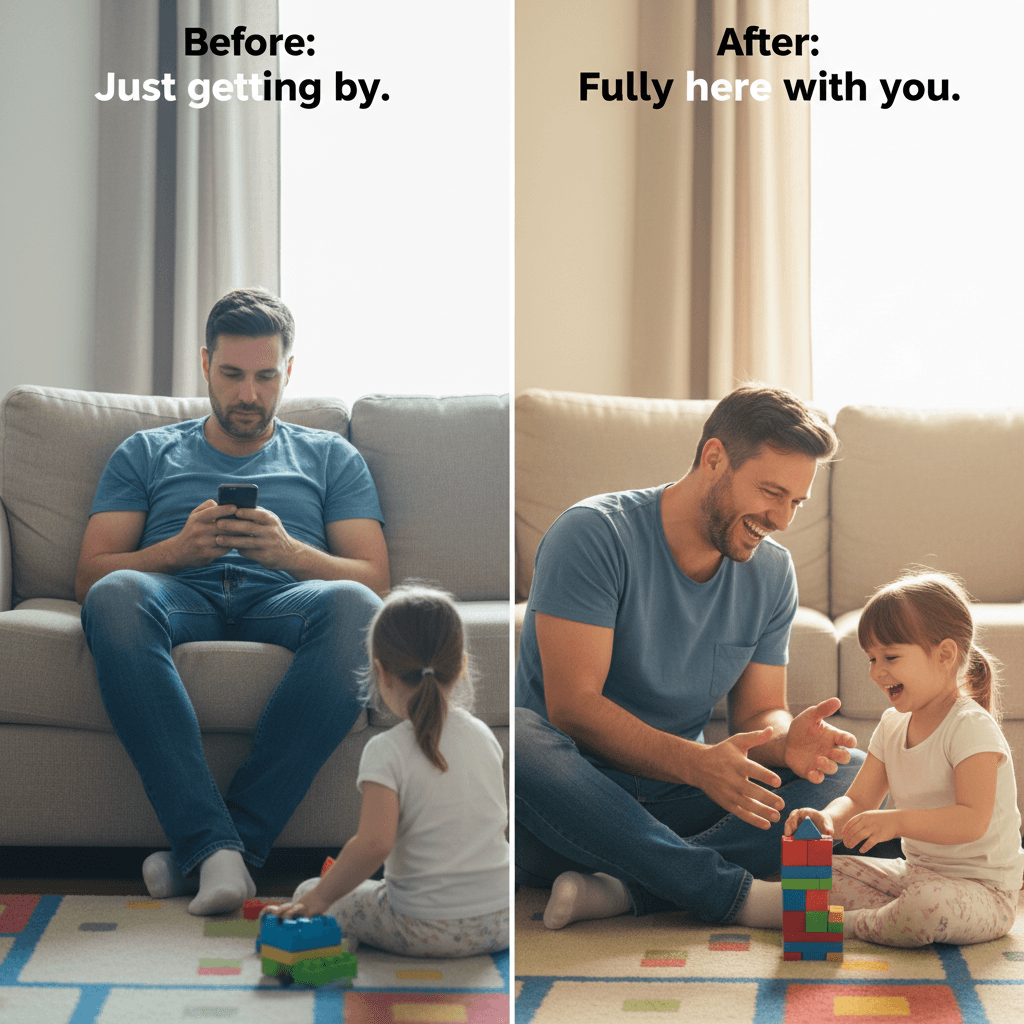
One of the most powerful things that can happen is when your wife starts to notice the changes, not because you're bragging about them, but because they show up in how you live. You have more energy. You're less irritable. You're more engaged. Your mood is steadier. Intimacy improves, not just physically but emotionally.
Those changes don't happen overnight, and they're not magic. But when testosterone levels are optimized under medical supervision, many men report feeling more like themselves again. And that version of you is often the one your wife fell in love with.
This isn't about proving something to her. It's about showing her, through your actions and your presence, that this was the right decision for your health and for your relationship.
Finding the Right Support
If you're ready to explore whether low testosterone is affecting your health, finding the right medical support is key. Services like AlphaMD connect men with licensed clinicians who specialize in hormone health, low energy, sexual wellness, and related concerns. These platforms offer convenience and privacy, with telemedicine consultations, coordinated lab work, and a treatment plan the provider overseeing your care tailors to fit your life. It's one option among many, but it's worth considering if you want a straightforward path to evaluation and care.
Whatever route you choose, make sure it's grounded in real medicine, real testing, and real oversight. Your health deserves that level of care.
This Is an Ongoing Conversation
The question your wife asked isn't a one-time hurdle you need to clear. It's the beginning of a conversation that will likely continue as you move through evaluation, potential treatment, and the adjustments that come with it. She might have more questions as things progress. She might notice changes and want to talk about them. She might have concerns that don't surface until later.
That's okay. In fact, it's healthy. Keeping the lines of communication open, being transparent about what you're experiencing, and inviting her to be part of the journey builds trust and connection. This doesn't have to be something you go through alone, and it doesn't have to be something that creates distance between you.
When you approach testosterone therapy as a health decision made with honesty, medical guidance, and respect for your relationship, it can actually bring you closer. It shows her that you're willing to take care of yourself, that you value feeling your best for her and your family, and that you're not afraid to be vulnerable about what you're going through.
That kind of honesty is worth more than any prescription.
Have a question? Ask us.
At AlphaMD, we're here to help. Feel free to ask us any question you would like about TRT, medical weightloss, ED, or other topics related to men's health. Or take a moment to browse through our past questions.
People are asking...
How can I get info on getting my wife some blood work and possibly on hrt? Aside from testosterone, do you also deal with estrogen?...
Generally you would meet with your PCP & talk about her symptoms, then based on those run normal labs to see where she sits & where TRT might help. If you mean with us, then just scheduling a consulta... See Full Answer
I literally just started on TRT for the first time this week. 43 yo m, self aware moodiness and fights with my wife over dumb shit along with obvious...
Glad to hear you are finally getting treated. I’m sure with time your wife will see how it helps you be the best version of yourself and will come to see the merits of TRT. There are many myths surrou... See Full Answer
My doctor is only testing free testosterone for medically prescribed TRT at my appointments. What other levels and things should I ask him to check? ...
Truthfully if you're only on a moderate dose of TRT, it is providing the benefits you're looking for, and you have no side effects - Basic Testosterone testing should be just fine. The things you coul... See Full Answer
Get $30 off your first month’s order
Enter your email address now to receive $30 off your first month’s cost, other discounts, and additional information about TRT.
Legal Disclaimer
This website is a repository of publicly available information and is not intended to form a physician-patient relationship with any individual. The content of this website is for informational purposes only. The information presented on this website is not intended to take the place of your personal physician's advice and is not intended to diagnose, treat, cure, or prevent any disease. Discuss this information with your own physician or healthcare provider to determine what is right for you. All information is intended for your general knowledge only and is not a substitute for medical advice or treatment for specific medical conditions. The information contained herein is presented in summary form only and intended to provide broad consumer understanding and knowledge. The information should not be considered complete and should not be used in place of a visit, phone or telemedicine call, consultation or advice of your physician or other healthcare provider. Only a qualified physician in your state can determine if you qualify for and should undertake treatment.