
We Reviewed 109 Testosterone Boosters. Here Are the Only 4 Worth Your Money.
Published on:
Updated on:
People are asking...
What exactly is included at your $129/month price point? I checked your website but didn’t find specifics. Thanks....
Provider consultations, lab test reviews, most doses of Testosterone, if prescribed (higher doses may carry a slight increase to cover the added medication cost), any AI the provider prescribes, injec... See Full Answer
What do you think of gels, creams, pellets, patches, natesto and other methods of testosterone administration other than injection? Seems to be mixed...
In general, they are less effective than injections. The reason for the mixed opinions is generally because for some people, just a small change is enough of a boost for them and they'd rather not hav... See Full Answer
How does your pricing compare to other online TRT clinics or in-person providers? It all seems expensive...
I would say that we're fairly well priced, if not one of the best prices around if you were to use our longer payment options. One thing that sets us apart is also the veteran's discount, which we've ... See Full Answer
Have a question? Ask us.
At AlphaMD, we're here to help. Feel free to ask us any question you would like about TRT, medical weightloss, ED, or other topics related to men's health. Or take a moment to browse through our past questions.
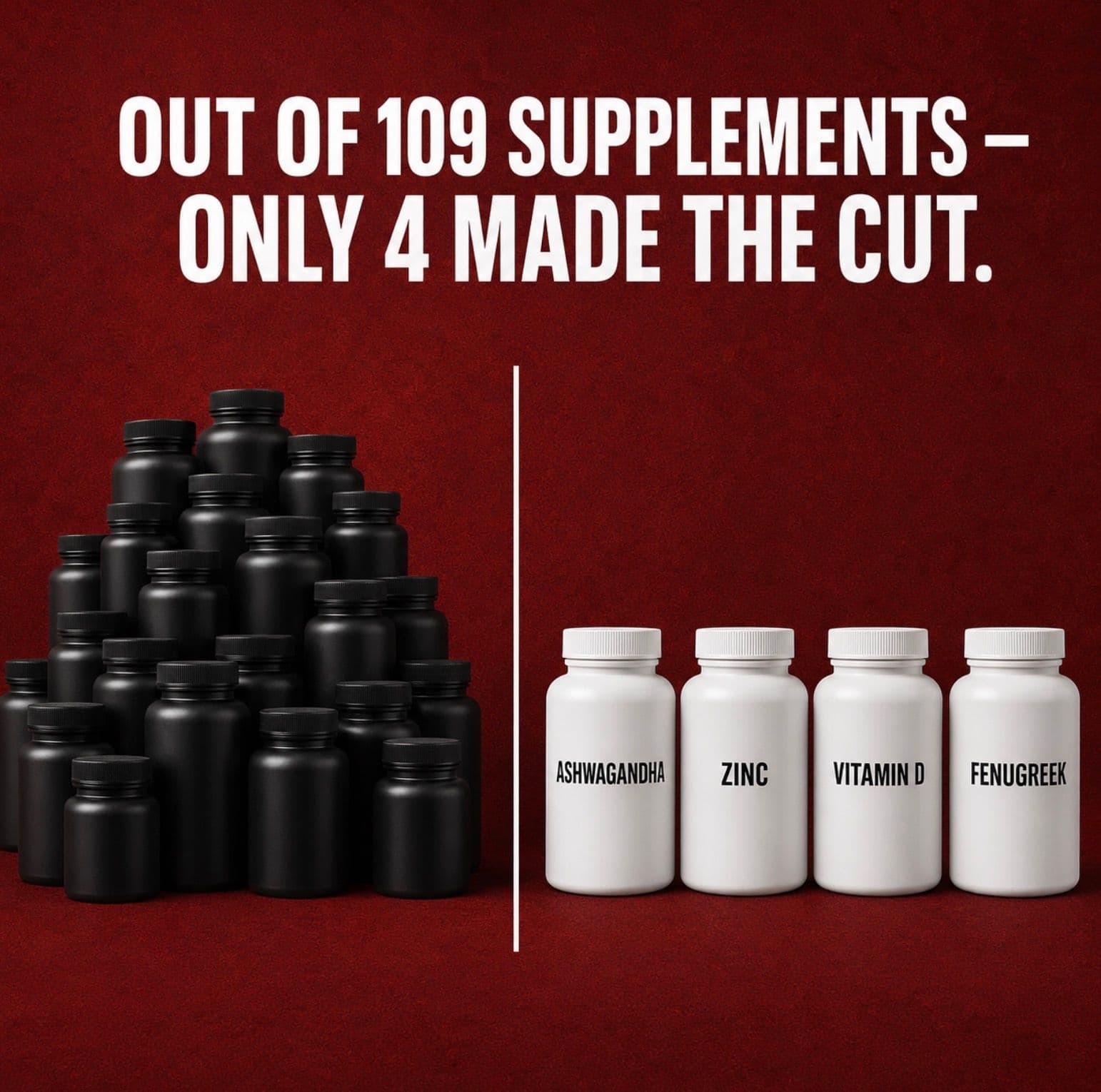
Most testosterone boosters are designed to take your money, not fix your hormones. After reviewing 109 products across dozens of brands, the pattern was clear: a crowded market full of overpromising labels, under-dosed ingredients, and a near-total absence of meaningful evidence.
That does not mean every product is worthless. A small handful of ingredient categories have genuine scientific interest behind them, are used in real quantities in quality products, and may offer something meaningful to the right person. The key phrase is "the right person," and getting there requires cutting through a lot of noise.
What Testosterone Boosters Actually Are (And What They Are Not)
Testosterone boosters are dietary supplements, usually capsules or powders, marketed to raise testosterone levels, improve energy, support libido, increase muscle mass, or sharpen mental drive. They typically contain plant extracts, vitamins, minerals, or amino acids, and they are sold without a prescription.
Here is what they are not: they are not hormone therapy. They do not deliver testosterone to your body. They work, in theory, by supporting the biological conditions under which your body produces testosterone on its own. That distinction matters enormously. If your testosterone is clinically low due to a diagnosed condition, no supplement is going to fix that, and relying on one instead of seeking proper evaluation could cost you years of wellbeing.
For men in relatively good health whose hormone levels are in the lower-normal range, or who are experiencing symptoms like fatigue or reduced drive without a clear clinical diagnosis, some of these ingredients may provide a modest but real benefit. The word "modest" is doing a lot of work in that sentence, and it should.
How We Evaluated 109 Products
The review framework was built around six criteria. First, ingredient quality: are the compounds included ones with actual biological plausibility? Second, human research support: animal studies and test-tube findings do not count the same as controlled trials in adult men. Third, label transparency: are exact amounts listed per ingredient, or are they buried in a proprietary blend? Fourth, third-party testing: has an independent organization verified that the product contains what it claims? Fifth, realistic marketing: does the brand make exaggerated promises that no supplement could keep? Sixth, safety profile: are there known interactions, contraindications, or concerns for specific populations?
Products failed on one or more of these criteria at a striking rate. Proprietary blends were the most common offender, hiding ingredient amounts behind a single total weight that tells you nothing about whether any single component is present in a useful quantity. Flashy label claims unsupported by any meaningful research were a close second.
Four ingredient categories survived the process with enough merit to recommend a closer look.
The 4 Ingredient Categories That Actually Earned Their Place
Ashwagandha: The Stress-Hormone Connection
Ashwagandha is an adaptogenic herb with a long history in traditional medicine, but its relevance here is not nostalgic. The reason it makes this list is the cortisol-testosterone relationship. Cortisol, your primary stress hormone, has an antagonistic relationship with testosterone production. When cortisol is chronically elevated, the body deprioritizes reproductive hormone output. Ashwagandha has been studied in men specifically for its ability to lower cortisol and support testosterone levels as a downstream effect.
The evidence is more consistent for ashwagandha than for almost anything else in this category. Multiple human trials, including controlled studies in healthy men and men under physical or psychological stress, have found statistically significant improvements in testosterone levels and, in some cases, physical performance markers. The effects are not dramatic, but they are real and they show up in actual people, not just rodents.
Who benefits most: men with high chronic stress loads, poor sleep, and lifestyle-related hormonal suppression. Who should skip it: people with thyroid conditions (ashwagandha can influence thyroid hormone levels), those on sedative medications, and anyone pregnant, though that is not the audience here. Look for products using a standardized extract with documented withanolide content, which is the active compound class. Products using generic "root powder" without standardization are a red flag.
Safety note: generally well tolerated at typical supplement amounts, but gastrointestinal discomfort has been reported. Talk to a clinician if you have a thyroid condition or take medications that affect the central nervous system.
Zinc: The Foundational Mineral Most Men Are Deficient In
Zinc is not glamorous, but it belongs on this list for a straightforward reason: it is essential for testosterone synthesis, and a meaningful portion of men, particularly athletes who sweat heavily, older men, and those with restrictive diets, are genuinely deficient in it. When you are deficient in zinc and you correct that deficiency, testosterone levels can normalize. That is a real, documented effect.
The marketing distortion here is significant. Supplement brands position zinc as a testosterone "booster" regardless of your baseline status. If your zinc levels are already adequate, adding more does not push testosterone higher. The benefit is specific to correcting a deficiency, not supplementing beyond sufficiency.
Who benefits most: men with dietary restriction, vegetarians and vegans (zinc from plant sources is less bioavailable), athletes with high training volumes, and older men. Who should skip it: anyone already getting adequate zinc from diet or who takes high-dose zinc long term without monitoring, since excess zinc can interfere with copper absorption and create its own problems.
Common red flag: products that list zinc alongside ten other ingredients and imply the whole formula "boosts testosterone" when the only evidence-supported component may be correcting a nutritional gap. Safety note: high doses of zinc over extended periods warrant periodic monitoring. A simple dietary assessment or blood test can clarify whether supplementation is warranted.
Vitamin D: A Hormone in Its Own Right
Vitamin D is technically a prohormone, not a vitamin, and it interacts with testosterone production through receptors found in testicular tissue. Deficiency is widespread, especially in men who spend most of their time indoors, live at higher latitudes, or have darker skin that reduces UV synthesis. The research linking vitamin D deficiency to lower testosterone is reasonably consistent, and supplementation in deficient men has shown improvements in testosterone levels in several trials.
As with zinc, the key word is deficiency. Vitamin D supplementation appears to support testosterone in men who are low in it. Whether it provides meaningful benefit to men who are already sufficient is much less clear.
Who benefits most: men with limited sun exposure, those living in northern climates through winter months, older men, and anyone with conditions that impair fat absorption (since vitamin D is fat-soluble). The red flag to watch for: products that include token amounts of vitamin D buried in a blend, far below what would be relevant for correcting a deficiency, while still marketing the product around it.
Safety note: vitamin D is one of the fat-soluble vitamins, meaning it accumulates and can reach toxic levels with excessive supplementation over time. Getting your levels tested before supplementing is genuinely worthwhile here, not just a disclaimer.
Fenugreek: Libido and Testosterone Signaling
Fenugreek is a seed extract that has attracted real research attention in the testosterone space. Its proposed mechanism involves inhibiting enzymes that convert testosterone into estrogen and dihydrotestosterone, potentially allowing more testosterone to remain in its active form. Several human trials have found improvements in free testosterone levels and self-reported libido in men using standardized fenugreek extracts.
The evidence is not ironclad, and some studies have methodological weaknesses. But fenugreek has more human-trial backing than the majority of ingredients you will see on supplement labels. It also has a plausible mechanism rather than just a plausible marketing story.
Who benefits most: men experiencing reduced libido and who are looking for a well-studied option with a reasonable safety profile. Who should skip it: men with hormone-sensitive conditions, those on diabetes medications (fenugreek can affect blood sugar), or anyone with allergies to legumes, since fenugreek is in the same family as peanuts and chickpeas.
Common red flag: fenugreek is frequently included in products at doses too low to reflect what was used in positive studies. Always look for a standardized extract and a transparent label showing the actual amount per serving.
How to Read a Label Without Getting Fooled
You do not need a biochemistry degree to evaluate a supplement label. A few checkpoints will filter out most of the junk.
Transparent labeling is non-negotiable. Every ingredient should have its own listed amount. If you see "proprietary blend" with only a total weight, put the product down. You have no way of knowing whether any single ingredient is present in a meaningful amount, and that opacity is almost always intentional.
Look for standardized extracts. Botanical ingredients vary enormously in their active compound content depending on how they are processed. A standardized extract specifies the percentage of the active compound, which means you actually know what you are getting.
Third-party testing matters more than it should have to. Look for certifications from organizations like NSF International, USP, or Informed Sport. These verify that a product contains what the label says and is free from banned substances or dangerous contaminants.
Reputable manufacturing practices, specifically facilities that follow current Good Manufacturing Practices (cGMP) as verified by the FDA, are a baseline requirement, not a premium feature.
Finally, be skeptical of any product making claims that sound like drug-level effects. Supplements do not function like pharmaceuticals. A product promising dramatic transformation in weeks is not being straight with you.
The Habits That Move Testosterone More Than Any Pill
Before spending money on supplements, it is worth being honest about the lifestyle factors that have documented, often substantial, effects on testosterone levels and the symptoms men typically associate with low testosterone.
Sleep is probably the most underrated factor. The majority of daily testosterone production happens during sleep, particularly deep sleep. Chronic short sleep is associated with meaningfully lower testosterone levels. Fixing your sleep may do more for your hormonal profile than any supplement stack.
Resistance training, particularly compound movements involving large muscle groups, stimulates testosterone release. Sedentary men who begin strength training regularly often notice improvements in energy, libido, and body composition that look a lot like what supplements promise.
Body composition plays a significant role. Adipose tissue (body fat), particularly visceral fat, converts testosterone to estrogen through a process called aromatization. Reducing excess body fat tends to improve the testosterone-to-estrogen ratio in men.
Alcohol, even in moderate amounts, suppresses testosterone production and impairs sleep quality. Men who drink regularly and report low energy or reduced drive would do well to look there before looking at their supplement drawer.
Chronic psychological stress elevates cortisol and suppresses the hormonal axis that drives testosterone production. Stress management is not soft advice; it has real endocrine consequences.
Certain medications, including opioids, glucocorticoids, some antidepressants, and others, can suppress testosterone levels significantly. If you are on a long-term prescription and experiencing symptoms of low testosterone, that conversation belongs with your prescribing clinician.
When to Stop Guessing and Get Tested
There is a point at which chasing supplements becomes a way of avoiding a conversation you need to have with a doctor. If you are experiencing persistent fatigue, low libido, difficulty maintaining muscle mass, mood changes, or reduced morning erections, those are symptoms that warrant lab work, not another bottle of pills.
A basic hormone panel is not complicated or expensive. It gives you actual data: where your testosterone sits, how it compares to age-appropriate ranges, whether other hormones like thyroid or cortisol might be involved, and whether clinical intervention is warranted. That information changes everything about how you approach this problem.
Clinical hypogonadism, a diagnosis of genuinely low testosterone with symptoms, is a medical condition. It has effective medical treatments. No supplement addresses it adequately, and delaying proper evaluation to try products that cannot work for that condition is a real cost.
For men who want that guided approach, AlphaMD offers clinician-led evaluation and hormone optimization, connecting you with medical professionals who can assess your symptoms, interpret your labs, and build a plan based on your actual biology rather than supplement marketing.
Most of Them Are Not Worth It. A Few Might Be. Context Is Everything.
Out of 109 products reviewed, the vast majority failed on at least one critical criterion, and many failed on several. Proprietary blends hiding under-dosed ingredients, claims that no supplement could honestly make, missing third-party verification, and ingredients with no meaningful human research were the rule, not the exception.
The four ingredient categories highlighted here, ashwagandha, zinc, vitamin D, and fenugreek, stood apart because they have genuine biological rationale, human trial evidence, and known safety profiles. But even these are not universal recommendations. Whether they are worth anything for you depends on your individual situation, your baseline status in terms of nutrient levels and stress load, and the quality of the specific product you choose.
The most useful thing you can do is get clear on your actual situation before spending a dollar. Sleep better, train consistently, manage your stress, and if symptoms persist, get a blood test. Supplements sit somewhere after all of that, for the right person, with the right ingredient, in the right product. That is a much narrower category than the industry wants you to believe.
---This article is for educational purposes only and does not constitute medical advice. Always consult a qualified healthcare provider before starting any supplement, especially if you have existing health conditions or take medications.
Have a question? Ask us.
At AlphaMD, we're here to help. Feel free to ask us any question you would like about TRT, medical weightloss, ED, or other topics related to men's health. Or take a moment to browse through our past questions.
People are asking...
What exactly is included at your $129/month price point? I checked your website but didn’t find specifics. Thanks....
Provider consultations, lab test reviews, most doses of Testosterone, if prescribed (higher doses may carry a slight increase to cover the added medication cost), any AI the provider prescribes, injec... See Full Answer
What do you think of gels, creams, pellets, patches, natesto and other methods of testosterone administration other than injection? Seems to be mixed...
In general, they are less effective than injections. The reason for the mixed opinions is generally because for some people, just a small change is enough of a boost for them and they'd rather not hav... See Full Answer
How does your pricing compare to other online TRT clinics or in-person providers? It all seems expensive...
I would say that we're fairly well priced, if not one of the best prices around if you were to use our longer payment options. One thing that sets us apart is also the veteran's discount, which we've ... See Full Answer
Get $30 off your first month’s order
Enter your email address now to receive $30 off your first month’s cost, other discounts, and additional information about TRT.
Legal Disclaimer
This website is a repository of publicly available information and is not intended to form a physician-patient relationship with any individual. The content of this website is for informational purposes only. The information presented on this website is not intended to take the place of your personal physician's advice and is not intended to diagnose, treat, cure, or prevent any disease. Discuss this information with your own physician or healthcare provider to determine what is right for you. All information is intended for your general knowledge only and is not a substitute for medical advice or treatment for specific medical conditions. The information contained herein is presented in summary form only and intended to provide broad consumer understanding and knowledge. The information should not be considered complete and should not be used in place of a visit, phone or telemedicine call, consultation or advice of your physician or other healthcare provider. Only a qualified physician in your state can determine if you qualify for and should undertake treatment.