
TRT Won't Fix Your Depression. But This Hormonal and Lifestyle Stack Might.
Published on:
Updated on:
People are asking...
Hi im questioning if i could benefit from trt. I'm 34m. 6' tall, 191lbs. in my late 20's i decided to try aas. since coming off my life has been a ro...
So the main questions here, did you feel good on AAS? How long ago was that? Typically with any steroid (Testosterone included, though we tend to not think of it as one) you'll have some natural suppr... See Full Answer
I’ve been struggling with a lot of depression and anxiety for 10 years on various medications. Believing that my hormones could have been unbalanced ...
Anxiety and depression are known symptoms of hypogonadism. However, they are rarely the only symptoms. While it’s true your level of 377 is on the lower end of the “normal” range, in the absence of ot... See Full Answer
38 with hormonal issues and it's attendant symptoms and effect since adolescence. Completely bald by 23, finger nails and pubic hair takes a very long...
Fatigue, confidence, libido, motivation, and erectile function are all things that improve on TRT. Head hair & likely nail growth speed is typically not improved with TRT. Body hair for most men tends... See Full Answer
Have a question? Ask us.
At AlphaMD, we're here to help. Feel free to ask us any question you would like about TRT, medical weightloss, ED, or other topics related to men's health. Or take a moment to browse through our past questions.
A lot of men start testosterone replacement therapy expecting to feel like themselves again, only to find that the fog, the flatness, and the low motivation are still there. That gap between expectation and reality is worth understanding, because it points to something important about how mood actually works.
What TRT Can and Cannot Do for Your State of Mind
Testosterone is genuinely connected to mood. Research consistently shows that men with clinically low testosterone often report fatigue, irritability, reduced drive, and a general sense of blunted engagement with life. When testosterone is restored to a healthy physiological range, many men do notice real improvements in energy, confidence, libido, and motivation.
But here is the catch: those improvements are not the same thing as treating depression.
Clinical depression is a multifactorial condition. It involves neurotransmitter systems, stress hormones, sleep architecture, inflammatory pathways, psychological patterns, relational dynamics, and life circumstances, often all at once. Testosterone influences some of those threads, but it does not pull all of them. A man whose testosterone normalizes but who is still sleeping poorly, under chronic stress, drinking heavily, or carrying unprocessed grief is unlikely to feel fully well, regardless of what his hormone levels look like.
TRT, when clinically indicated and properly managed, is a meaningful piece of the picture. It is rarely the whole picture.
When Low Mood Is a Signal, Not a Character Flaw
One of the most important things to understand is how much low testosterone and depression can look alike on the surface. Both conditions can produce fatigue that sleep does not fix. Both can reduce libido and flatten motivation. Both can make a person more irritable, more withdrawn, and less interested in things they used to enjoy.
This overlap creates real diagnostic confusion. Some men spend years being told they have depression when a hormonal evaluation was never done. Others start TRT convinced hormones are the answer, without ever addressing the psychological and behavioral factors that are equally, if not more, relevant.
The honest answer is that for many men, both things are true at once. Low testosterone and depression are not mutually exclusive. They can coexist, they can amplify each other, and addressing only one while ignoring the other tends to produce incomplete results.
If you are experiencing symptoms that significantly impair your daily functioning, or if you are having thoughts of harming yourself, please reach out to a qualified mental health professional or contact a crisis line. That is not a detour from addressing your hormonal health. It is the most important first step.
The Case for a Coordinated Stack
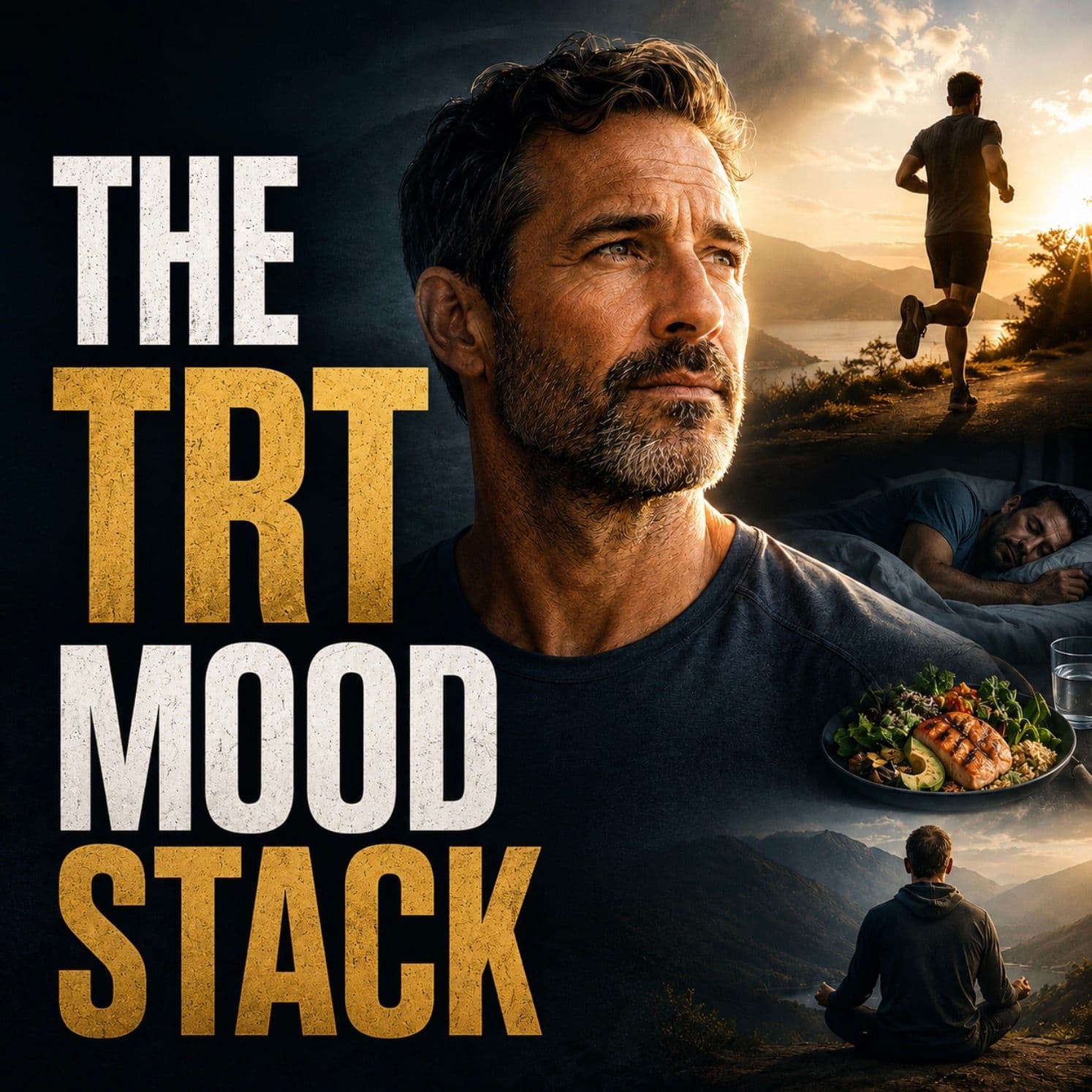
The word "stack" usually gets thrown around in supplement culture, but the concept applies just as well to health systems. A stack, in this context, means a set of coordinated interventions that work together rather than in isolation. Each element supports the others, and the combined effect tends to be greater than any single component on its own.
For men navigating the intersection of hormonal health and mood, that stack typically involves several pillars working in parallel.
The Evaluation You Might Not Have Gotten
A testosterone panel is a starting point, not a complete picture. A genuinely useful hormonal and metabolic evaluation looks at sleep quality and whether a sleep disorder like apnea might be suppressing testosterone and mood simultaneously. It considers thyroid function, which has its own substantial influence on energy and emotional regulation. It reviews current medications, some of which, including common antidepressants and blood pressure drugs, can directly suppress libido and testosterone. It accounts for alcohol use, body composition, blood sugar stability, and nutrient status, particularly factors like vitamin D, zinc, and magnesium, which are commonly suboptimal in men with fatigue and low mood.
This kind of comprehensive picture takes more time and more questions than a simple lab draw. But it is what separates a targeted intervention from a guessing game.
Sleep Is Not Optional Infrastructure
If there is one lifestyle variable that influences testosterone, cortisol, mood, and cognitive function simultaneously, it is sleep. Most testosterone is produced during deep sleep. Chronic sleep deprivation measurably suppresses testosterone levels in otherwise healthy men. It also raises cortisol, disrupts blood sugar regulation, impairs emotional resilience, and degrades motivation, the same symptom cluster that brings many men into a clinic asking about hormones in the first place.
Practical sleep hygiene is not complicated, but it is genuinely underutilized. Consistent wake times, morning light exposure within an hour of waking, limiting bright screens in the hour before bed, and keeping the bedroom cool and dark all shift circadian rhythms in a favorable direction. For men who snore heavily, wake unrefreshed despite adequate hours, or have partners who report witnessed breathing pauses, a sleep apnea screening is worth pursuing. Treating apnea can sometimes move the needle on testosterone and mood more significantly than supplementation alone.
Training That Builds Rather Than Depletes
Resistance training has some of the strongest evidence for both testosterone support and mood improvement of any lifestyle intervention. It also carries a real risk of backfiring when overdone. Men who are already exhausted, under-eating, and running high stress loads sometimes respond to low mood by training harder, which can drive cortisol higher and further suppress recovery hormones.
The productive range involves consistent progressive resistance training, adequate aerobic capacity work at lower intensities, and deliberate recovery. Movement should feel like something that restores you on balance, not something that leaves you flattened for days. If training consistently makes you feel worse rather than better, that is information worth paying attention to.
Nutrition as a Hormonal Input, Not Just a Calorie Equation
The relationship between nutrition and hormonal health is more direct than most men expect. Severe caloric restriction suppresses testosterone. Chronically unstable blood sugar patterns drive cortisol and disrupt sleep. Inadequate dietary fat limits the cholesterol substrate from which steroid hormones are synthesized. Excessive alcohol is one of the most significant and underappreciated suppressants of testosterone and sleep quality simultaneously.
None of this requires a rigid protocol. Eating sufficient protein across the day, building meals around whole foods, moderating alcohol, and staying adequately hydrated are unglamorous recommendations, but they address hormonal inputs that many men have never considered. Before attributing everything to testosterone deficiency, it is worth honestly auditing what you have been eating and drinking for the past few months.
The Stress Physiology Nobody Explains Clearly
Cortisol and testosterone exist in a physiological tension with each other. Chronic, unresolved psychological stress, particularly the kind that involves a persistent sense of threat or helplessness, tends to suppress testosterone over time while keeping stress hormones elevated. This is not a minor effect. It is one of the reasons men going through high-conflict divorces, demanding career transitions, or prolonged financial strain often experience dramatic declines in how they feel hormonally.
Addressing stress physiology does not mean meditating away real problems. It means building recovery capacity: structured downtime, social connection that is genuinely restorative, breathwork or relaxation practices that activate the parasympathetic nervous system, and, for many men, working with a therapist to process what is actually driving the chronic activation.
This last point is one that many men resist and later describe as transformative. Psychotherapy, particularly approaches like Cognitive Behavioral Therapy and Acceptance and Commitment Therapy, has strong evidence for depression and anxiety. It addresses the patterns of thought and behavior that hormones cannot touch.
Mental Health Support as Part of the Stack, Not a Fallback
When mood symptoms are significant, an evaluation for anxiety and ADHD is often valuable alongside a depression screen. Both conditions are commonly missed in men and both produce symptom profiles that can be mistaken for simple low testosterone. When psychological evaluation suggests it is appropriate, medication can be a useful component of a broader plan. The goal is not to find the single right answer but to build the most complete and individualized response to what is actually going on.
Behavioral activation, a core component of depression treatment that involves deliberately re-engaging with meaningful activities even when motivation is low, is particularly compatible with the hormonal and lifestyle approach described here. Movement, social engagement, creative work, and purpose-driven activity all feed back into the neurobiological systems that support mood. Waiting to feel motivated before acting tends to prolong the problem. Acting in the direction of what matters, even imperfectly, tends to shorten it.
Where TRT Fits When It Is Clinically Indicated
For men whose testosterone is genuinely deficient, properly managed TRT does have a meaningful role. The key words are properly managed. That means baseline and follow-up lab monitoring, attention to how testosterone affects related hormones, awareness of potential side effects including changes in red blood cell count, testicular volume, and fertility considerations, and ongoing communication with a clinician who understands the full picture.
TRT works best when it is one element of a coherent plan, not a standalone solution applied in isolation. When sleep is poor, stress is unmanaged, and diet is working against recovery, hormonal therapy tends to underperform. When those factors are addressed concurrently, the results are typically more sustained and more complete.
Something You Can Do This Week
Before adjusting anything, take an honest inventory. How is your sleep quality and duration actually looking, not in theory but in practice? How many drinks per week are you having? When did you last have a comprehensive metabolic and hormonal evaluation rather than a single testosterone number? Are you training in a way that restores or depletes? Is there a therapist, a doctor, or even a trusted person in your life with whom you have talked openly about how you are feeling?
None of these questions require a prescription. They require honesty. That audit is usually where the most important information lives.
The Stack in Practice
The most consistent pattern among men who genuinely improve their mood and hormonal health is not that they found the right single intervention. It is that they addressed multiple factors at the same time, with patience and professional support, and kept adjusting based on what they learned.
Clinics like AlphaMD are built around this philosophy, prioritizing comprehensive evaluation and ongoing monitoring rather than just writing a prescription and moving on. The goal of whole-person hormone optimization is not to chase a number on a lab report but to understand the full context of why someone feels the way they do, and to address as much of that context as possible.
Testosterone matters. So does sleep, stress, nutrition, movement, mental health, and the quality of support around you. No single piece of that picture is the whole answer, but together, they form something that can genuinely shift how a person feels, thinks, and moves through the world.
Have a question? Ask us.
At AlphaMD, we're here to help. Feel free to ask us any question you would like about TRT, medical weightloss, ED, or other topics related to men's health. Or take a moment to browse through our past questions.
People are asking...
Hi im questioning if i could benefit from trt. I'm 34m. 6' tall, 191lbs. in my late 20's i decided to try aas. since coming off my life has been a ro...
So the main questions here, did you feel good on AAS? How long ago was that? Typically with any steroid (Testosterone included, though we tend to not think of it as one) you'll have some natural suppr... See Full Answer
I’ve been struggling with a lot of depression and anxiety for 10 years on various medications. Believing that my hormones could have been unbalanced ...
Anxiety and depression are known symptoms of hypogonadism. However, they are rarely the only symptoms. While it’s true your level of 377 is on the lower end of the “normal” range, in the absence of ot... See Full Answer
38 with hormonal issues and it's attendant symptoms and effect since adolescence. Completely bald by 23, finger nails and pubic hair takes a very long...
Fatigue, confidence, libido, motivation, and erectile function are all things that improve on TRT. Head hair & likely nail growth speed is typically not improved with TRT. Body hair for most men tends... See Full Answer
Get $30 off your first month’s order
Enter your email address now to receive $30 off your first month’s cost, other discounts, and additional information about TRT.
Legal Disclaimer
This website is a repository of publicly available information and is not intended to form a physician-patient relationship with any individual. The content of this website is for informational purposes only. The information presented on this website is not intended to take the place of your personal physician's advice and is not intended to diagnose, treat, cure, or prevent any disease. Discuss this information with your own physician or healthcare provider to determine what is right for you. All information is intended for your general knowledge only and is not a substitute for medical advice or treatment for specific medical conditions. The information contained herein is presented in summary form only and intended to provide broad consumer understanding and knowledge. The information should not be considered complete and should not be used in place of a visit, phone or telemedicine call, consultation or advice of your physician or other healthcare provider. Only a qualified physician in your state can determine if you qualify for and should undertake treatment.