
The TRT Monitoring Blind Spot Putting Men at Risk
Published on:
Updated on:
People are asking...
So what are some risks of trt dose for rest of life besides not being able to have kids really just trying to understand ? Thanks in advance...
Risk factors for traditional managed TRT are quite low, it is one of the lowest cost malpractice medical fields to put it into perspective. Since you are generally just raising your Testosterone to it... See Full Answer
How dangerous is high hematorcrit?...
There are some studies that show it can increase cardiovascular issues, though you'd tend to notice some of the symptoms if it was induced from starting TRT. Brain fog & additional headaches are prett... See Full Answer
What are the most common side effects and symptoms you see in patients, that may eventually lead them to stop?...
The primary reasons men stop TRT, which providers on the platform rarely see (less than 5%), are desire to maximize chances of fertility, weight gain (TRT increases hunger because of anabolism), and w... See Full Answer
Have a question? Ask us.
At AlphaMD, we're here to help. Feel free to ask us any question you would like about TRT, medical weightloss, ED, or other topics related to men's health. Or take a moment to browse through our past questions.
You walk into a clinic feeling exhausted, mentally foggy, and wondering where your drive went. Within weeks, you're on testosterone replacement therapy and finally feeling like yourself again. But what happens after that initial spark of relief fades into routine?
For thousands of men across the country, the answer is often: not much. They get their prescription, feel better for a while, and then drift along with minimal follow-up, sporadic lab work, or no real assessment beyond "How do you feel?" This gap between starting TRT and staying safe on it is what we call the monitoring blind spot, and it's quietly putting men at risk every day.
Why Men Turn To TRT In The First Place
Testosterone replacement therapy addresses a real problem. When testosterone levels decline, whether from aging, medical conditions, or other factors, the symptoms can be debilitating. Men describe feeling like shadows of themselves: constant fatigue that sleep doesn't fix, a libido that's vanished, brain fog that makes work harder, mood swings, loss of muscle mass, and a general sense that something fundamental is off.
TRT offers a path back. By supplementing the body's natural testosterone production, men often experience renewed energy, sharper thinking, better mood stability, improved sexual function, and a return to feeling capable and engaged with life. The treatment works, and for many men, the difference is profound.
But effective treatment and safe treatment aren't automatically the same thing.
What TRT Monitoring Actually Means
When doctors talk about monitoring TRT, they're referring to a systematic approach to making sure the treatment continues working well while avoiding potential complications. This isn't just about refilling prescriptions or asking if you feel okay.
Proper monitoring involves several key components. Before starting, there should be a thorough baseline assessment: comprehensive lab work to understand your hormone levels, blood health, metabolic markers, and overall physical state. This creates a reference point for everything that follows.
Once treatment begins, monitoring means regular follow-up visits where your provider reviews new lab work, tracks how your symptoms are changing, assesses for any side effects, and makes adjustments as needed. It includes checking on things you might not immediately connect to testosterone: cardiovascular health markers, sleep quality, mood patterns, and even fertility considerations if that matters to you.
The goal is to create a feedback loop where your treatment gets refined over time based on both objective data and your lived experience. This is individualized medicine, not a one-size-fits-all prescription.
When Feeling Better Is Not The Whole Story
The monitoring blind spot emerges when that careful follow-up doesn't happen. Some men start TRT through clinics that prioritize fast prescriptions over thorough care. Others receive their initial treatment from attentive providers but then fall through the cracks as life gets busy and follow-ups get postponed indefinitely.
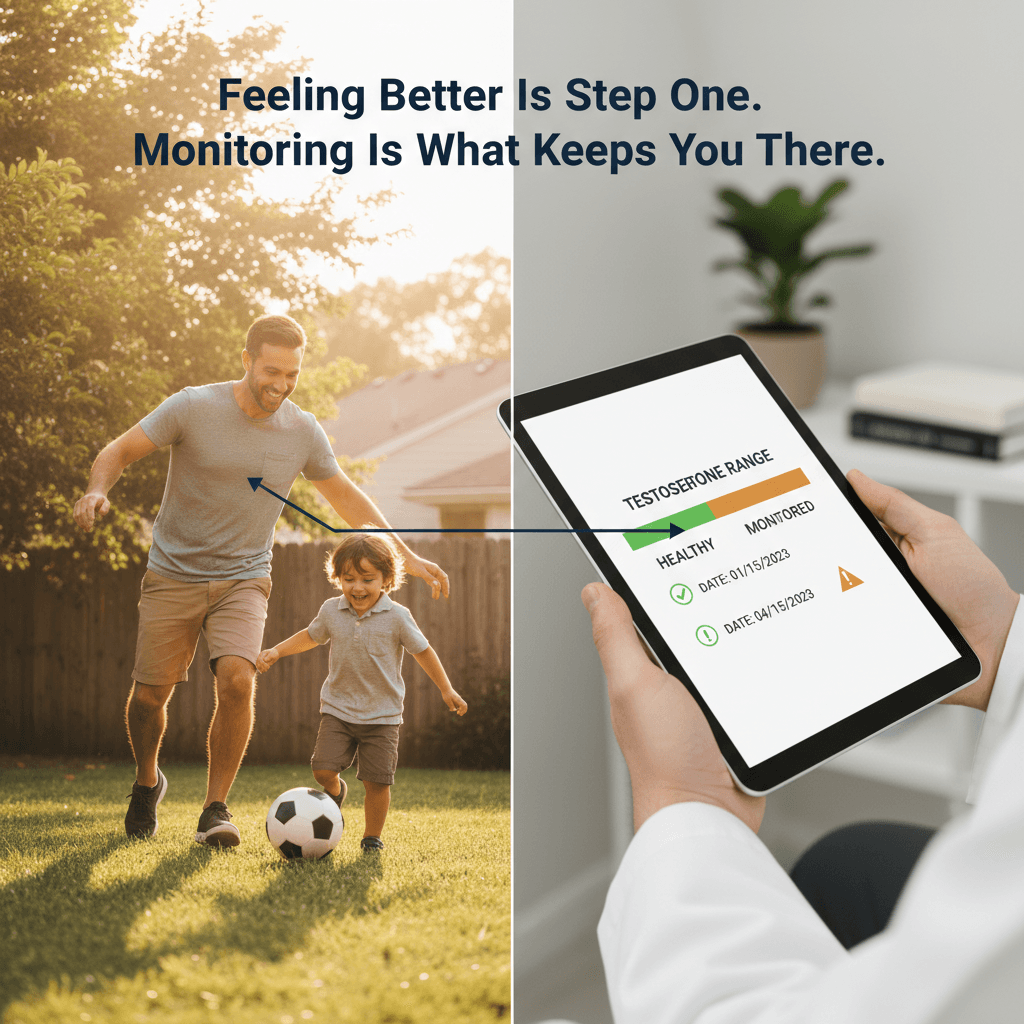
The dangerous part is that you might feel fine, at least for a while. TRT's benefits often appear quickly, and many men assume that as long as they feel good, everything must be working as it should. This is one of the most common misconceptions, and it's a risky one.
Your body is a complex system. Testosterone doesn't operate in isolation. It interacts with estrogen metabolism, affects red blood cell production, influences cholesterol and cardiovascular function, impacts mood-regulating neurotransmitters, and can alter other hormone pathways. Changes in these systems often develop gradually, showing up in lab work long before you notice symptoms.
By the time you feel something is wrong, the problem may have been building for months.
The Silent Risks You Cannot Feel
Poor or infrequent monitoring creates several specific risks that men on TRT need to understand.
First, there's the issue of missing early warning signs in blood work. Certain markers can shift in response to testosterone therapy in ways that require attention. These changes might indicate that your dose needs adjustment, that your body is responding unusually to treatment, or that secondary effects are developing. Without regular lab checks, these signals go unnoticed until they become more serious.
Second, there's the risk of over-suppression or under-treatment. TRT affects your body's natural hormone production, and finding the right balance is not always straightforward. Too much supplementation can create its own problems, while too little leaves you still struggling with symptoms. Dialing this in properly requires ongoing assessment, not guesswork based solely on how you feel on a given day.
Third, side effects can build slowly and become normalized. Maybe your sleep quality has gradually declined, or you've been more irritable lately, or you've noticed changes in body composition that seem minor individually. When changes happen slowly, humans are remarkably good at adapting and accepting them as the new normal. A good monitoring protocol catches these patterns early through systematic check-ins and questions designed to surface what you might not volunteer on your own.
Finally, there are broader health implications that demand attention. Cardiometabolic concerns, potential impacts on fertility, mood and mental health fluctuations, and interactions with other medications or health conditions all require ongoing evaluation. TRT is powerful medicine, and powerful medicine deserves respect through proper oversight.
Labs, Symptoms, And The Space In Between
Effective TRT monitoring lives in the space between pure numbers and pure feelings. Some men fixate entirely on lab values, treating testosterone optimization like a game where higher numbers always win. Others ignore labs completely, insisting that subjective well-being is the only metric that matters.
The truth is more nuanced. Labs provide objective data about what's happening in your body at a biochemical level. They reveal things you cannot perceive and offer early warning of developing issues. But they don't tell the complete story of how you're actually functioning in daily life.
Symptom tracking and quality of life assessment fill that gap. Are you sleeping well? How's your mood stability? What's happening with your energy throughout the day? How's your cognitive function at work? What about your relationships and sexual health? These subjective measures matter enormously because the whole point of TRT is to improve how you live, not just to move numbers on a page.
Good monitoring integrates both perspectives. It treats the whole person, considering mental health alongside physical health, looking at lifestyle factors that influence treatment outcomes, and accounting for other medications or supplements that might interact with therapy. This comprehensive view is what separates thoughtful care from assembly-line prescribing.
What Good Monitoring Actually Looks Like
Before starting TRT, you should receive a thorough baseline assessment. This means comprehensive lab work and a detailed discussion about your symptoms, health history, goals for treatment, and any concerns or risk factors specific to your situation.
Once treatment begins, expect regular follow-up lab checks. The exact timing varies based on individual factors, but the principle remains constant: recurring evaluation to track how your body is responding and to catch any developing issues early.
Your provider should also be tracking symptoms and quality of life over time, not just looking at a single lab value. This means structured conversations about multiple dimensions of your health and well-being, with attention to patterns and changes that might indicate needed adjustments.
The monitoring process should feel collaborative. Your input about how you're experiencing treatment matters. Your provider should explain what they're looking for in your labs, why certain checks matter, and how different aspects of your health connect to your testosterone therapy.
This isn't about creating fear or making TRT seem dangerous. It's about recognizing that any effective medical treatment deserves proper oversight to ensure it remains both beneficial and safe over the long term.
Questions That Protect Your Health
If you're considering TRT or already receiving treatment, certain questions can help you assess whether your monitoring is adequate.
Ask your provider: "What labs will we track over time, and why are those specific markers important?" This reveals whether they have a comprehensive monitoring plan or are just checking one or two basic values.
Ask: "How will we assess if treatment is working for me beyond just testosterone levels?" This question probes whether they're thinking about your overall health and quality of life or just focusing narrowly on hormone numbers.
Ask: "What side effects or changes should I report early, even if they seem minor?" A good answer here shows that your provider is proactive about catching problems before they escalate.
Ask: "How will we adjust treatment if needed, and what would trigger those adjustments?" This helps you understand the decision-making process and ensures there's a clear plan for optimization.
These aren't confrontational questions. They're the kind of engaged, informed inquiries that good providers welcome because they indicate a patient who's taking their health seriously.
Busting The Dangerous Myths
Several misconceptions about TRT monitoring persist, and they're worth addressing directly.
"If I feel good, I don't need labs." This might be the most dangerous myth. Feeling good is important, but it's not a guarantee that everything is optimal beneath the surface. Many health issues develop silently, showing up in blood work before producing symptoms. Waiting until you feel bad means waiting until problems have already progressed.
"Any clinic that gives me testosterone is good enough." The barrier to prescribing TRT has dropped dramatically in recent years. Some clinics prioritize volume and speed over comprehensive care. Just because a provider will prescribe doesn't mean they'll monitor properly. The quality of ongoing care matters as much as access to treatment.
"Monitoring is only about testosterone levels." Testosterone levels matter, but they're just one piece of a larger puzzle. Comprehensive monitoring looks at multiple body systems and considers how testosterone therapy affects your overall health, not just whether your testosterone number is in a particular range.
Understanding these misconceptions helps you avoid the monitoring blind spot that puts so many men at risk.
Virtual Care Done Right
The rise of online TRT services has created both opportunities and concerns. On one hand, telemedicine has expanded access for men who might not have local providers knowledgeable about testosterone therapy. On the other hand, some online services have been criticized for superficial evaluations and minimal follow-up.
The technology itself isn't the problem. Virtual care can actually improve monitoring if done thoughtfully. Digital platforms can make it easier to schedule regular check-ins, track symptoms over time through structured tools, receive and review lab results, and maintain consistent communication with your provider.
What matters is the philosophy and structure behind the service. Does the platform prioritize ongoing relationships and comprehensive monitoring, or is it designed mainly to process prescriptions quickly? Do providers have time to review your full picture, or are consultations rushed and formulaic? Are labs ordered proactively and reviewed carefully, or only when you specifically request them?
Virtual TRT care that includes regular lab monitoring, structured symptom tracking, and meaningful provider interaction can be excellent. Virtual care that amounts to an online prescription mill with minimal oversight falls directly into the monitoring blind spot.
Platforms like AlphaMD represent the thoughtful approach to online men's health and TRT. On AlphaMD, licensed providers conduct comprehensive initial evaluations and ongoing monitoring through lab work and follow-up visits, while the platform handles scheduling, lab coordination, and consistent communication — showing that telemedicine can raise the standard of care rather than compromise it. The key is choosing providers who understand that convenient access and thorough monitoring aren't mutually exclusive, they're both essential.
Making Monitoring Part Of Your TRT Journey
Treating the monitoring blind spot as a serious concern doesn't mean approaching TRT with fear. Testosterone replacement therapy has helped countless men reclaim their vitality, mental clarity, physical capability, and overall quality of life. For many, it's genuinely transformative.
The goal is to make that transformation sustainable and safe. Good monitoring is what allows you to stay on TRT long-term with confidence, knowing that your health is being protected while you enjoy the benefits of treatment. It's what distinguishes a quick fix that might cause problems down the road from a carefully managed therapy that supports your well-being for years to come.
If you're considering TRT, make monitoring part of your evaluation criteria from the start. Ask potential providers how they approach ongoing care. Look for detailed answers that go beyond "We'll check in if you have problems." Expect a clear plan for baseline assessment, regular follow-up, comprehensive lab work, and systematic evaluation of your symptoms and overall health.
If you're already on TRT but realize your monitoring has been minimal, it's not too late to course-correct. Reach out to your provider and ask for a comprehensive review. If your current provider isn't equipped or willing to provide thorough ongoing monitoring, consider finding one who is. Your health is worth that effort.
Testosterone replacement therapy works. The science is solid, the benefits are real, and for men dealing with genuinely low testosterone, treatment can be life-changing. But like any powerful medical intervention, TRT requires proper oversight to remain safe and effective over time. Monitoring isn't an optional extra or unnecessary hassle. It's the foundation that turns testosterone therapy from a gamble into a well-managed path to better health.
The monitoring blind spot is real, but it's also entirely avoidable. By understanding what comprehensive TRT care should include, asking the right questions, and insisting on ongoing support rather than just initial prescriptions, you can ensure that your journey with testosterone replacement therapy delivers all the benefits while protecting you from the risks that too many men unknowingly face.
Have a question? Ask us.
At AlphaMD, we're here to help. Feel free to ask us any question you would like about TRT, medical weightloss, ED, or other topics related to men's health. Or take a moment to browse through our past questions.
People are asking...
So what are some risks of trt dose for rest of life besides not being able to have kids really just trying to understand ? Thanks in advance...
Risk factors for traditional managed TRT are quite low, it is one of the lowest cost malpractice medical fields to put it into perspective. Since you are generally just raising your Testosterone to it... See Full Answer
How dangerous is high hematorcrit?...
There are some studies that show it can increase cardiovascular issues, though you'd tend to notice some of the symptoms if it was induced from starting TRT. Brain fog & additional headaches are prett... See Full Answer
What are the most common side effects and symptoms you see in patients, that may eventually lead them to stop?...
The primary reasons men stop TRT, which providers on the platform rarely see (less than 5%), are desire to maximize chances of fertility, weight gain (TRT increases hunger because of anabolism), and w... See Full Answer
Get $30 off your first month’s order
Enter your email address now to receive $30 off your first month’s cost, other discounts, and additional information about TRT.
Legal Disclaimer
This website is a repository of publicly available information and is not intended to form a physician-patient relationship with any individual. The content of this website is for informational purposes only. The information presented on this website is not intended to take the place of your personal physician's advice and is not intended to diagnose, treat, cure, or prevent any disease. Discuss this information with your own physician or healthcare provider to determine what is right for you. All information is intended for your general knowledge only and is not a substitute for medical advice or treatment for specific medical conditions. The information contained herein is presented in summary form only and intended to provide broad consumer understanding and knowledge. The information should not be considered complete and should not be used in place of a visit, phone or telemedicine call, consultation or advice of your physician or other healthcare provider. Only a qualified physician in your state can determine if you qualify for and should undertake treatment.