
The TRAVERSE Study: What Your Doctor Isn't Telling You About TRT Safety
Published on:
Updated on:
People are asking...
My primary physician says it’s a bad idea to start TRT and she says she gets patients all the time who have long-term complications directly related t...
Men who abuse anabolic steroids certainly can experience long term complications. These men use testosterone at levels far higher than TRT doses. They also use drugs never meant for use in humans. I t... See Full Answer
Do you foresee patients currently dependent on TRT to sort of be “screwed” at any point due to increased regulations that make it so they can no longe...
I don’t have a crystal ball, but I don’t see that being a problem. Treatment is becoming more prevalent because providers are better at recognizing the symptoms, more open about talking about it, and ... See Full Answer
I had six stents installed in my heart 10 yrs ago, why won't any trt clinics help me? I'm 65m battling low testosterone for 30yrs....
The main reason is liability & the kind of country we are with medicine. A small amount of people produce too many RBC on Testosterone therapy or experience initial upswings in BP or RHR. It's not ver... See Full Answer
Have a question? Ask us.
At AlphaMD, we're here to help. Feel free to ask us any question you would like about TRT, medical weightloss, ED, or other topics related to men's health. Or take a moment to browse through our past questions.
For years, men considering testosterone replacement therapy have heard whispers about heart attacks, strokes, and dangerous blood clots, but a landmark study published in 2023 may have rewritten the safety conversation entirely.
The TRAVERSE study stands as the largest and longest randomized controlled trial ever conducted on testosterone replacement therapy, and its findings challenge many of the fears that have kept both doctors and patients hesitant about treatment. Yet despite its significance, many physicians either haven't caught up with the data or aren't taking the time to explain what this research actually means for men struggling with low testosterone. If you're considering TRT or already on treatment, understanding TRAVERSE isn't just helpful, it's essential to making an informed decision about your health.
Why Researchers Launched the Largest TRT Safety Study Ever
Testosterone replacement therapy has been caught in a medical controversy for over a decade. In 2013 and 2014, a few observational studies and one flawed analysis suggested that men taking testosterone faced increased risks of heart attacks and strokes. The FDA responded by adding warnings to testosterone products, and prescription rates dropped significantly as doctors grew cautious about potential cardiovascular dangers.
The problem? Those early studies had serious limitations. They weren't randomized controlled trials, the gold standard for medical evidence. They couldn't prove cause and effect, only associations. Some had methodological flaws that later came to light. But the damage was done, leaving both physicians and patients uncertain about whether testosterone therapy was truly safe for the heart.
The medical community needed definitive answers, especially for the men who might benefit most from treatment: older men with cardiovascular risk factors or existing heart disease. These are often the same men who experience the most troublesome symptoms of low testosterone, including fatigue, reduced muscle mass, sexual dysfunction, and diminished quality of life. Were doctors supposed to withhold a potentially helpful treatment out of fear, or proceed with uncertainty?
That question led to TRAVERSE, formally known as the Testosterone Replacement Therapy for Assessment of Long-term Vascular Events and Efficacy Response in Hypogonadal Men. Funded in part by the FDA and conducted across multiple medical centers, this massive trial set out to determine once and for all whether testosterone therapy increased cardiovascular risk in men who needed it most.
What the TRAVERSE Study Actually Tested
TRAVERSE enrolled over 5,000 men between the ages of 45 and 80, all of whom had symptoms of low testosterone confirmed by blood tests. Critically, these weren't young, healthy men looking for an edge at the gym. Every participant had either existing cardiovascular disease or multiple risk factors for heart problems, such as high blood pressure, elevated cholesterol, or diabetes. In other words, the study deliberately included the exact population doctors had been most worried about treating.
The trial randomly assigned half the men to receive testosterone gel applied daily to the skin, while the other half received a placebo gel. Neither the participants nor their doctors knew who was getting real testosterone until the study ended. This double-blind, placebo-controlled design eliminates bias and provides the strongest possible evidence.
Researchers followed these men for an average of over three years, tracking major cardiovascular events including heart attacks, strokes, and deaths from cardiovascular causes. They also monitored for blood clots, heart failure, and other potential safety concerns. The study was designed to answer a straightforward question: Does testosterone replacement increase the risk of serious cardiovascular problems in men with low testosterone and high cardiovascular risk?
The Safety Results Your Doctor Might Not Have Mentioned
When the TRAVERSE results were published in mid-2023, they provided significant reassurance. The study found no significant increase in major cardiovascular events among men taking testosterone compared to those taking placebo. The rates of heart attacks, strokes, and cardiovascular deaths were similar between the two groups.
This finding directly contradicted the fears that had dominated the conversation for the previous decade. In the largest, most rigorous trial ever conducted, testosterone replacement did not appear to increase cardiovascular risk, even in men already at elevated risk for heart problems.
But here's what many doctors aren't taking the time to explain: these results don't mean testosterone is risk-free for everyone, nor do they mean every man should rush to start treatment. The study tells us that when testosterone is prescribed appropriately, to men with genuinely low levels who have symptoms, and monitored carefully, the cardiovascular safety profile appears acceptable.
What TRAVERSE Didn't Tell Us Matters Just As Much
Every clinical trial has limitations, and TRAVERSE is no exception. Understanding what the study didn't cover is just as important as knowing what it found.
First, the study used only one type of testosterone: a topical gel applied to the skin. While this is a common and convenient form of TRT, many men use injections, pellets, patches, or other formulations. We can't automatically assume the results apply equally to all forms of testosterone, though there's no strong reason to think they wouldn't.
Second, the study excluded certain groups entirely. Men with recent heart attacks or strokes, those with poorly controlled heart failure, and men with very high red blood cell counts couldn't participate. The study also didn't include younger, healthier men without cardiovascular risk factors, though these men would theoretically be at even lower risk.
Third, all participants in TRAVERSE received appropriate medical supervision throughout the trial. They had regular follow-up visits, blood tests, and monitoring for side effects. This matters enormously. The study's safety findings reflect what happens when TRT is prescribed and monitored responsibly by healthcare providers, not what happens when men obtain testosterone through unregulated sources or use it without proper oversight.
Fourth, the study focused on cardiovascular safety. While researchers did track other outcomes, TRAVERSE wasn't primarily designed to fully assess risks like prostate problems, sleep apnea, fertility effects, or behavioral changes. These considerations still matter when deciding whether TRT is appropriate.
How Responsible TRT Actually Works in Clinical Practice
When prescribed appropriately, testosterone replacement follows a careful process that bears little resemblance to the casual approach some men take through wellness clinics or internet suppliers.
It starts with proper evaluation. Before prescribing testosterone, responsible clinicians confirm that a man has both symptoms consistent with low testosterone and blood tests showing reduced levels, typically measured more than once and at the right time of day. They also screen for conditions that might cause secondary low testosterone, such as sleep disorders or pituitary problems, which might need different treatment.
Next comes discussion of risks and benefits specific to that individual. Every man has a unique health profile. Someone with a history of blood clots faces different considerations than someone with diabetes and heart disease. The conversation should be nuanced, not a sales pitch.
Once treatment begins, monitoring is critical. Regular follow-up appointments allow clinicians to check whether testosterone levels are responding appropriately, whether symptoms are improving, and whether any side effects are developing. Blood tests track not just testosterone but also red blood cell counts, which can rise with TRT and potentially increase clotting risk if they get too high. Prostate health gets evaluated periodically as well.
This ongoing supervision isn't optional or excessive. It's the standard of care that keeps TRT as safe as possible. The men in TRAVERSE received exactly this kind of careful monitoring, and that context is inseparable from the study's reassuring safety findings.
Separating Medical TRT from Lifestyle Testosterone Use
One crucial distinction often gets lost in conversations about testosterone safety: there's a vast difference between medically supervised TRT for men with diagnosed low testosterone and the use of testosterone as a performance enhancer or lifestyle drug.
Men who use high amounts of testosterone for bodybuilding or athletic performance are in an entirely different situation. They typically use much larger amounts than would be prescribed for replacement therapy, often combine testosterone with other substances, and frequently do so without medical supervision. The TRAVERSE study has nothing to say about the safety of this approach.
Similarly, some wellness clinics and online services prescribe testosterone aggressively to men who may not meet criteria for a legitimate diagnosis, sometimes based on minimal evaluation. This isn't what TRAVERSE studied either. The trial specifically enrolled men with genuinely low testosterone and clear symptoms, the population most likely to benefit from treatment.
When people talk about testosterone being dangerous, it's often unclear whether they mean properly prescribed replacement therapy or these other scenarios. The distinction matters enormously. TRAVERSE provides evidence specifically about the former: appropriate, supervised replacement in men who actually need it.
Addressing the Fear Factor Around TRT
Despite reassuring data, many men remain anxious about starting testosterone therapy, and some doctors remain reluctant to prescribe it. These fears are understandable given the decade of uncertainty, but they deserve to be examined in light of current evidence.
The fear of heart attacks and strokes was the primary concern, and TRAVERSE directly addressed it in the highest-risk population studied to date. While no treatment is completely without risk, the cardiovascular safety signal appears reassuring when TRT is used appropriately.
The fear of prostate cancer has also loomed large, though research has not established that testosterone therapy causes prostate cancer. Current guidelines generally recommend screening for prostate issues before starting TRT and monitoring during treatment, but testosterone doesn't appear to create cancer where none existed.
The fear of becoming dependent on treatment is another common concern. Testosterone replacement does suppress the body's own production, meaning most men will need to continue treatment indefinitely once started if they want to maintain benefits. This isn't dependence in the addiction sense, but it is a commitment. That's why the decision to start shouldn't be taken lightly.
What TRAVERSE and other modern research suggest is that these fears, while not groundless, may have been overblown. The conversation should shift from "Is TRT safe?" to "Is TRT safe for this particular person, prescribed responsibly and monitored appropriately?"
Making Sense of TRT in Your Own Health Journey
If you're experiencing symptoms that might be related to low testosterone - persistent fatigue, reduced libido, difficulty maintaining muscle mass, mood changes, or diminished quality of life - the TRAVERSE study offers important context for conversations with your doctor.
The research suggests that if you genuinely have low testosterone, documented by proper testing, and your doctor determines you're an appropriate candidate, cardiovascular safety concerns shouldn't automatically rule out treatment. Even if you have existing heart disease or risk factors, you may still be a candidate, though careful evaluation and monitoring become even more important.
That said, testosterone isn't a magic solution. It won't reverse aging, guarantee dramatic body composition changes, or fix problems unrelated to testosterone levels. Benefits, when they occur, tend to be meaningful but moderate: improved energy, better sexual function, somewhat easier time maintaining muscle and bone strength, and enhanced quality of life. These improvements matter, but they're not transformative for everyone, and they come with the commitment to ongoing treatment and monitoring.
You should also know that not every man with some symptoms of low testosterone actually needs treatment. Testosterone levels decline gradually with age, and having levels somewhat below the reference range doesn't automatically mean replacement therapy is necessary or beneficial. Symptoms matter more than numbers, and other health issues often contribute to fatigue, sexual dysfunction, and mood problems.
Evidence-Based TRT Through Modern Telemedicine
For men who do decide to pursue testosterone replacement, access to knowledgeable, conscientious care makes all the difference. Online men's health services have created new pathways to treatment, though quality varies widely.
AlphaMD represents the more careful end of this spectrum: on its platform, licensed providers perform thorough evaluations before treatment, follow evidence-based protocols informed by studies like TRAVERSE, and monitor patients consistently throughout therapy. The telemedicine model offers convenience without sacrificing the essential elements of responsible care: proper diagnosis, individualized treatment planning, and ongoing follow-up.
This approach recognizes that TRT isn't simply a matter of prescribing testosterone to any man who asks for it. It requires understanding each person's health history, confirming that treatment is medically appropriate, and maintaining the kind of long-term oversight that keeps therapy both safe and effective.
What the TRAVERSE Data Really Means Going Forward
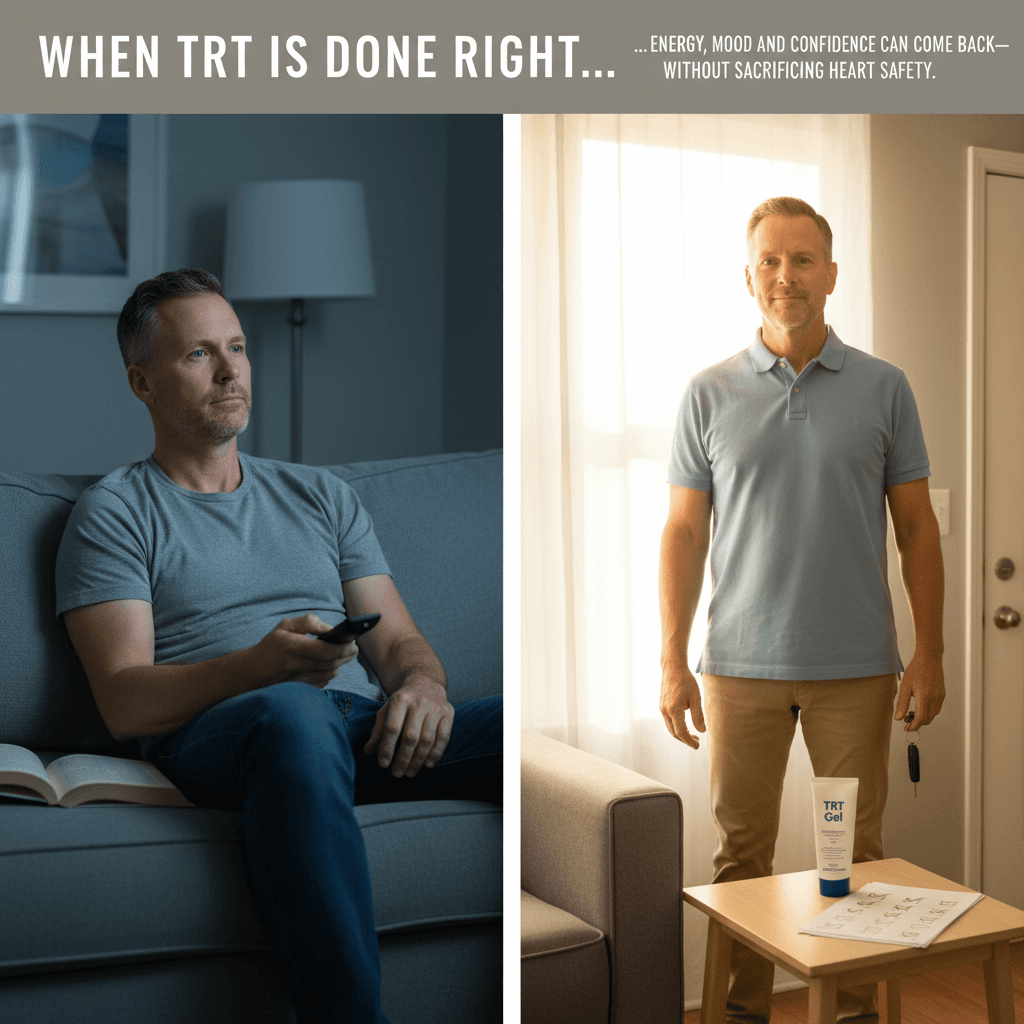
The TRAVERSE study didn't end the conversation about testosterone safety. Instead, it provided the strongest evidence to date that appropriately prescribed and monitored TRT doesn't appear to increase cardiovascular risk in men with low testosterone, even those already at elevated risk for heart problems.
This matters because it removes a major barrier that kept many men from considering treatment and many doctors from prescribing it. It doesn't mean testosterone is right for everyone or that it's completely risk-free. But it does mean that when the situation calls for it - genuine low testosterone, bothersome symptoms, proper patient selection, and responsible monitoring - the cardiovascular safety profile appears acceptable based on the best available evidence.
Your own doctor may or may not be familiar with TRAVERSE yet. Medical practice changes slowly, and it takes time for new evidence to filter through the healthcare system. If you're considering TRT, bringing up this research and asking how it applies to your specific situation can lead to a more informed conversation.
What the TRAVERSE study ultimately reinforces is that testosterone replacement therapy can be a reasonable medical treatment when used appropriately. Not a lifestyle drug, not a fountain of youth, not a risk-free intervention, but a legitimate therapeutic option for men who genuinely need it, prescribed and monitored by clinicians who understand both the benefits and the limitations of the treatment.
Have a question? Ask us.
At AlphaMD, we're here to help. Feel free to ask us any question you would like about TRT, medical weightloss, ED, or other topics related to men's health. Or take a moment to browse through our past questions.
People are asking...
My primary physician says it’s a bad idea to start TRT and she says she gets patients all the time who have long-term complications directly related t...
Men who abuse anabolic steroids certainly can experience long term complications. These men use testosterone at levels far higher than TRT doses. They also use drugs never meant for use in humans. I t... See Full Answer
Do you foresee patients currently dependent on TRT to sort of be “screwed” at any point due to increased regulations that make it so they can no longe...
I don’t have a crystal ball, but I don’t see that being a problem. Treatment is becoming more prevalent because providers are better at recognizing the symptoms, more open about talking about it, and ... See Full Answer
I had six stents installed in my heart 10 yrs ago, why won't any trt clinics help me? I'm 65m battling low testosterone for 30yrs....
The main reason is liability & the kind of country we are with medicine. A small amount of people produce too many RBC on Testosterone therapy or experience initial upswings in BP or RHR. It's not ver... See Full Answer
Get $30 off your first month’s order
Enter your email address now to receive $30 off your first month’s cost, other discounts, and additional information about TRT.
Legal Disclaimer
This website is a repository of publicly available information and is not intended to form a physician-patient relationship with any individual. The content of this website is for informational purposes only. The information presented on this website is not intended to take the place of your personal physician's advice and is not intended to diagnose, treat, cure, or prevent any disease. Discuss this information with your own physician or healthcare provider to determine what is right for you. All information is intended for your general knowledge only and is not a substitute for medical advice or treatment for specific medical conditions. The information contained herein is presented in summary form only and intended to provide broad consumer understanding and knowledge. The information should not be considered complete and should not be used in place of a visit, phone or telemedicine call, consultation or advice of your physician or other healthcare provider. Only a qualified physician in your state can determine if you qualify for and should undertake treatment.