
The Complete TRT Blood Panel - 11 Markers Your Clinic Should Be Running (But Probably Isn't)
Published on:
Updated on:
People are asking...
Regarding TRT, what are the most important blood tests that you check for?...
For initial diagnosis that would be total testosterone, free testosterone, and LH. For monitoring TRT it’s usually total and free testosterone, estradiol, hematocrit, and one PSA.... See Full Answer
What are some important things to include on a blood test to diagnose low T?...
Labs can be expensive, so I will list the most essential ones for diagnosis and treatment. I will also point out that there are different types of assays for each test which can effect their accuracy... See Full Answer
Besides total and free testosterone, what else in the blood test are you looking at when you start as a new patient to decide if TRT is appropriate t...
Additional initial testing typically would also include LH/FSH, estradiol, prolactin, and a PSA at a minimum.... See Full Answer
Have a question? Ask us.
At AlphaMD, we're here to help. Feel free to ask us any question you would like about TRT, medical weightloss, ED, or other topics related to men's health. Or take a moment to browse through our past questions.
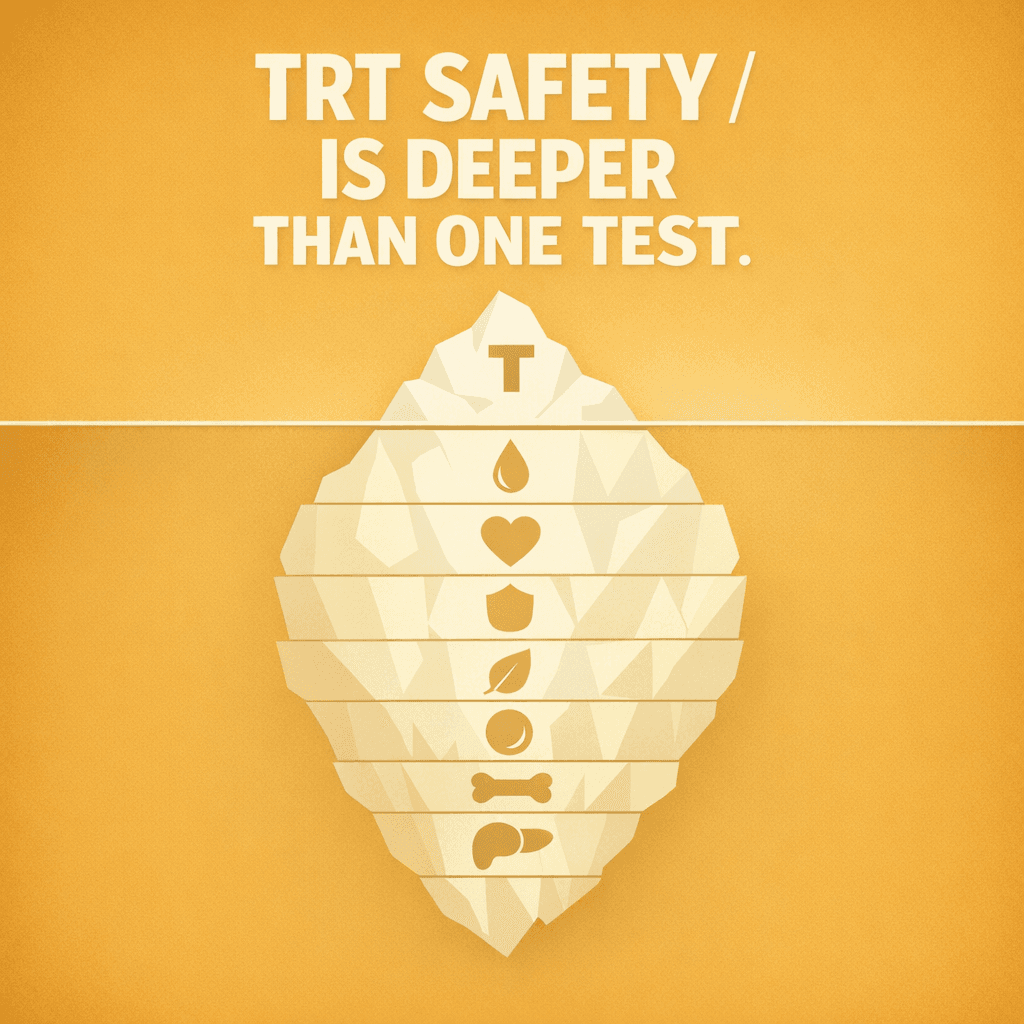
Most men on testosterone replacement therapy are being monitored with a handful of labs their clinic ordered at the start and never revisited. If your TRT check-in consists of a single total testosterone number and a quick "how do you feel," you are not getting the oversight your health deserves.
A complete blood panel is not a bureaucratic formality. It is the clinical foundation that separates a well-managed protocol from one that quietly creates problems for years before they surface. Understanding what should be in that panel, and why each marker matters, puts you in a far stronger position to ask the right questions and hold your provider accountable.
Why Total Testosterone Is Just the Starting Point
Total testosterone is the number most men fixate on, and for good reason. It reflects the overall amount of testosterone circulating in your blood and is the primary diagnostic marker used to identify low testosterone in the first place.
But total testosterone alone tells an incomplete story. A man can have a perfectly acceptable total testosterone reading and still experience every symptom of low T: fatigue, low libido, poor mood, sluggish recovery from training, and mental fog. The reason is that total testosterone measures both the testosterone that is actively available to your tissues and the portion that is tightly bound to proteins, essentially locked away. This is why total testosterone must always be read alongside the next markers.
Monitoring frequency for total testosterone is typically more intensive in the early months of a protocol, then shifts to a regular maintenance schedule once levels stabilize. Tracking trends over time matters far more than any single snapshot.
Free Testosterone and SHBG: The Pair That Explains Everything Total T Misses
Free testosterone represents the fraction of testosterone that is unbound and biologically active. This is the testosterone actually doing the work inside your cells. When free testosterone is low even as total testosterone looks adequate, symptoms persist because your tissues are not getting sufficient hormonal signal.
Sex hormone-binding globulin, known as SHBG, is the protein primarily responsible for binding testosterone and making it unavailable. High SHBG can effectively neutralize much of the testosterone your body or your protocol is producing, leaving you symptomatic despite numbers that look fine on paper.
These two markers are functionally inseparable. SHBG levels influence how a TRT protocol should be structured and how results are interpreted. A clinic that reports only total testosterone without flagging SHBG is missing a critical piece of the puzzle. Changes in SHBG can also signal underlying issues worth investigating, including thyroid dysfunction, liver health changes, or significant fluctuations in body composition.
Estradiol: The Marker Most Men Are Surprised to Need
Testosterone and estrogen are more closely related than most men expect. A significant portion of the testosterone introduced through TRT gets converted into estradiol via an enzyme called aromatase. This is a normal physiological process, but the balance matters enormously.
Estradiol plays essential roles in bone density, cardiovascular function, brain health, libido, and even joint comfort. The goal is not to eliminate estradiol. It is to keep it in a range appropriate for you as an individual.
When estradiol trends higher than optimal, men commonly report water retention, mood changes, reduced libido, and in some cases breast tissue sensitivity. When it trends too low, often from aggressive or unnecessary use of aromatase inhibitors, the result can be joint pain, low libido, poor sleep, and a flat, emotionally blunted feeling that some men mistake for depression.
The sensitive assay for estradiol matters here. Standard estradiol tests used for female patients are not calibrated accurately for the lower ranges relevant to men. A clinic using the wrong assay is essentially guessing. This marker warrants regular monitoring throughout a TRT protocol, particularly when symptoms shift or protocol adjustments are made.
CBC, Hemoglobin, and Hematocrit: The Safety Marker You Cannot Skip
Testosterone stimulates the production of red blood cells. In many men, this is a welcome effect and contributes to improved energy and exercise capacity. But when red blood cell production increases excessively, blood becomes thicker, a condition called erythrocytosis or polycythemia.
The complete blood count gives clinicians a broad view of your blood cell populations, but the specific values to watch here are hemoglobin and hematocrit. Elevated hematocrit in particular is one of the most clinically significant safety concerns associated with long-term TRT. Thick blood increases the risk of cardiovascular events, including clot formation, stroke, and pulmonary embolism.
This is not a rare edge case. Elevated hematocrit is one of the more common reasons TRT protocols are adjusted. Monitoring this marker consistently, especially in men who are older, smoke, live at altitude, or have other cardiovascular risk factors, is a non-negotiable part of responsible care. Catching an upward trend early allows for straightforward protocol adjustments before the risk becomes serious.
PSA: A Necessary Conversation, Not a Scare Tactic
Prostate-specific antigen has been the source of significant debate in medicine, and many men on TRT feel anxious about it. A measured, evidence-based approach removes the unnecessary fear.
PSA is a protein produced by prostate tissue. Elevated or rapidly rising PSA can be associated with prostate inflammation, benign growth, or, in some cases, prostate cancer. The relationship between TRT and prostate cancer risk is more nuanced than it was once portrayed, and current evidence does not support the idea that TRT causes prostate cancer in men with no pre-existing disease. That said, TRT may accelerate the growth of an already-present cancer, which is why baseline and ongoing PSA monitoring is standard practice.
The key clinical concept here is PSA velocity, meaning how quickly the value is changing over time. A slow, stable PSA across multiple draws is reassuring. A sharp or unexpected rise warrants further investigation regardless of absolute value. Men with a family history of prostate cancer or other risk factors may warrant closer monitoring. This is a marker where having a clinician with genuine expertise in men's health makes a meaningful difference.
Comprehensive Metabolic Panel: Liver, Kidneys, and the Big Picture
The comprehensive metabolic panel covers a range of markers that collectively assess how your major organs are functioning. For men on TRT, the liver and kidney markers within this panel are especially relevant.
Liver enzymes, particularly ALT and AST, can rise with certain forms of hormone therapy, though this is less of a concern with injectable or transdermal testosterone than with older oral formulations. Still, baseline liver function should be documented and monitored, particularly in men who drink alcohol regularly, take other medications processed by the liver, or have any prior liver concerns.
Kidney markers such as creatinine and BUN help ensure that the kidneys are filtering blood effectively. Electrolyte balance and blood glucose included in the CMP offer additional metabolic context. Together, these values paint a picture of how your body is tolerating and processing your protocol over time.
Lipid Panel: Cardiovascular Health Is Not Optional
TRT affects cholesterol profiles, and the direction of that effect depends on several factors including the form of testosterone used, the dose, lifestyle factors, and individual genetics.
A complete lipid panel measures HDL (the protective cholesterol), LDL (associated with arterial plaque risk when elevated), and triglycerides. Some research suggests that injectable testosterone, particularly in higher doses, may reduce HDL levels over time. Oral and some synthetic androgens carry a more pronounced lipid risk, but even with standard injectable protocols, monitoring matters.
For men with pre-existing cardiovascular risk factors, including family history, high blood pressure, obesity, or diabetes, lipid trends on TRT deserve serious clinical attention. This is an optimization and safety marker combined. A clinic that does not check lipids annually at minimum is not practicing responsible hormone management.
Hemoglobin A1c and Metabolic Markers: The Context TRT Works Within
Testosterone has a meaningful relationship with insulin sensitivity and metabolic health. Low testosterone is associated with increased visceral fat, reduced muscle mass, and greater insulin resistance. TRT can improve these parameters in many men, but the underlying metabolic picture needs to be assessed and tracked.
Hemoglobin A1c reflects average blood sugar over approximately three months and is a useful window into insulin regulation and diabetes risk. Some clinics supplement this with fasting glucose or fasting insulin for a more granular metabolic picture.
Why does this matter for TRT specifically? Because metabolic dysfunction can influence how testosterone is processed, how much aromatizes to estradiol, and how effective a protocol ultimately feels. A man with significant insulin resistance may respond differently to the same protocol than a metabolically healthy man of the same age. Tracking these markers ensures that TRT is working as it should within your overall health context.
Thyroid Panel: The Overlooked Mimicker of Low Testosterone
This is one of the most commonly skipped parts of a TRT workup, and the omission can lead to years of misdirected treatment.
Thyroid dysfunction, particularly hypothyroidism, produces a symptom profile that is nearly identical to low testosterone. Fatigue, weight gain, low libido, mood changes, cognitive fog, poor recovery, and cold intolerance are all consistent with both conditions. A man presenting with these symptoms who has his testosterone optimized but goes unscreened for thyroid disease may continue to feel terrible and have no idea why.
At minimum, a TSH (thyroid-stimulating hormone) and free T4 should be included in any comprehensive men's health panel. Free T3 adds additional nuance for men with ongoing symptoms despite normal TSH. The thyroid panel is particularly important at baseline before TRT is started, so that a preexisting condition is not misattributed to hormonal deficiency. It should also be revisited when symptoms persist or change unexpectedly during a protocol.
Prolactin: Small Gland, Big Influence on Libido and Sexual Function
Prolactin is a hormone produced by the pituitary gland, and it is frequently ignored in men's hormone panels despite having a direct impact on sexual function, libido, and testosterone production.
Elevated prolactin, a condition called hyperprolactinemia, can suppress the hormonal signaling that drives testosterone production and can directly impair libido and erectile function independent of testosterone levels. In some cases, elevated prolactin points to a pituitary adenoma, a benign but clinically relevant growth that warrants further investigation.
For men who report low libido or sexual dysfunction that does not improve adequately with TRT, prolactin is one of the first additional markers worth checking. It can also serve as a useful baseline marker before starting therapy, since identifying elevated prolactin at the outset changes the clinical approach considerably.
LH and FSH: Understanding Where Your Baseline Stands
Luteinizing hormone (LH) and follicle-stimulating hormone (FSH) are produced by the pituitary gland and are responsible for signaling the testes to produce testosterone and sperm, respectively. These markers tell a critical story before TRT begins.
Low testosterone with low or normal LH and FSH suggests the problem originates in the pituitary or hypothalamus, a pattern called secondary or central hypogonadism. Low testosterone with elevated LH and FSH indicates the testes themselves are not responding adequately, a pattern called primary hypogonadism. This distinction guides clinical decision-making significantly.
Once TRT is initiated, exogenous testosterone suppresses LH and FSH through a feedback mechanism. For men on standard TRT, these values will typically be very low or undetectable. However, for men concerned about fertility, monitoring FSH in particular becomes important because FSH suppression signals reduced sperm production. Clinics that take fertility seriously will factor this into protocol discussions and may approach treatment differently for men who wish to preserve fertility. Knowing where these values stood at baseline remains clinically useful even after TRT is underway.
Reading Labs as a Complete Picture, Not a Checklist
Each of these eleven markers contributes something distinct, but their real value comes from reading them together. An elevated hematocrit in isolation means something different than elevated hematocrit paired with rising PSA, a compressed lipid profile, and high estradiol. The interplay matters.
Lab interpretation is not a mechanical exercise. Symptoms, lifestyle, age, prior health history, and risk factors all shape what any given result means for a specific person. A number that falls within a standard reference range may still warrant clinical attention if it has been trending in one direction over several draws, or if the patient is symptomatic in ways that correlate with that marker.
This is exactly why the clinician-patient relationship in TRT care is not a formality. It is the mechanism through which data gets turned into meaningful decisions. A clinic that orders comprehensive labs but never discusses them in context with the individual is only doing half the job.
What Thorough Monitoring Actually Looks Like in Practice
A high-quality men's health clinic orders a complete baseline panel before any protocol begins. It revisits markers at appropriate intervals throughout the first year, and then maintains a structured monitoring schedule that reflects each patient's individual risk profile. It adjusts that schedule when something changes, whether that is a protocol modification, new symptoms, or an emerging trend in the data.
Too many clinics, including many popular online platforms, cut corners here. Some check only total testosterone and hematocrit. Others skip thyroid and prolactin entirely unless the patient specifically asks. A few rely on patient self-reporting without correlating it to objective data at all. This is not adequate care.
AlphaMD is one example of a men's health platform where providers approach TRT monitoring with the kind of thoroughness described above, treating comprehensive bloodwork as a central pillar of safe and effective care rather than a billing line item. When you are evaluating any provider for TRT, asking exactly which labs they run and how often is one of the most direct ways to assess the quality of the care you will receive.
Your testosterone levels are one number in a much larger conversation. The men who get the most out of TRT, safely and sustainably, are the ones whose providers are paying attention to the full picture.
Have a question? Ask us.
At AlphaMD, we're here to help. Feel free to ask us any question you would like about TRT, medical weightloss, ED, or other topics related to men's health. Or take a moment to browse through our past questions.
People are asking...
Regarding TRT, what are the most important blood tests that you check for?...
For initial diagnosis that would be total testosterone, free testosterone, and LH. For monitoring TRT it’s usually total and free testosterone, estradiol, hematocrit, and one PSA.... See Full Answer
What are some important things to include on a blood test to diagnose low T?...
Labs can be expensive, so I will list the most essential ones for diagnosis and treatment. I will also point out that there are different types of assays for each test which can effect their accuracy... See Full Answer
Besides total and free testosterone, what else in the blood test are you looking at when you start as a new patient to decide if TRT is appropriate t...
Additional initial testing typically would also include LH/FSH, estradiol, prolactin, and a PSA at a minimum.... See Full Answer
Get $30 off your first month’s order
Enter your email address now to receive $30 off your first month’s cost, other discounts, and additional information about TRT.
Legal Disclaimer
This website is a repository of publicly available information and is not intended to form a physician-patient relationship with any individual. The content of this website is for informational purposes only. The information presented on this website is not intended to take the place of your personal physician's advice and is not intended to diagnose, treat, cure, or prevent any disease. Discuss this information with your own physician or healthcare provider to determine what is right for you. All information is intended for your general knowledge only and is not a substitute for medical advice or treatment for specific medical conditions. The information contained herein is presented in summary form only and intended to provide broad consumer understanding and knowledge. The information should not be considered complete and should not be used in place of a visit, phone or telemedicine call, consultation or advice of your physician or other healthcare provider. Only a qualified physician in your state can determine if you qualify for and should undertake treatment.