
The Alcohol Ceiling: How Many Drinks Per Week Before Your TRT Protocol Stops Working
Published on:
Updated on:
People are asking...
Two questions. First, I find my testosterone significantly tanks when I've been extra busy, especially physically. When I first tanked (270 total or ...
For your first question, this can impact your Testosterone levels if you're not resting properly. I'll barrow from one of our earlier replies: "The majority of your Testosterone is produced and releas... See Full Answer
Do you have any theories as to why some people experience a honeymoon phase for a few weeks then lose the benefits of TRT?...
The most common reason for this in men tends to be a need for a simple dose adjustment. There's a general 8 week uptake period where injected levels increase week over week & then natural production ... See Full Answer
I’m new to TRT. I’m 47 yrs old. Did bloodwork and was put on 200ml/week in Oct of 2023.l. felt great, sex drive was good, even had “morning wood” most...
That progesterone dose may hold the answer. The average man produces 10-20mg of progesterone daily, so 200mg daily is far above what the body normally makes. Progesterone can be converted into other n... See Full Answer
Have a question? Ask us.
At AlphaMD, we're here to help. Feel free to ask us any question you would like about TRT, medical weightloss, ED, or other topics related to men's health. Or take a moment to browse through our past questions.
You're doing everything right on paper, but something is still off. Your energy is flat, your body composition has barely shifted, and your mood is inconsistent in ways you can't quite explain. Before assuming your TRT protocol needs adjustment, it's worth asking one honest question: how much are you drinking?
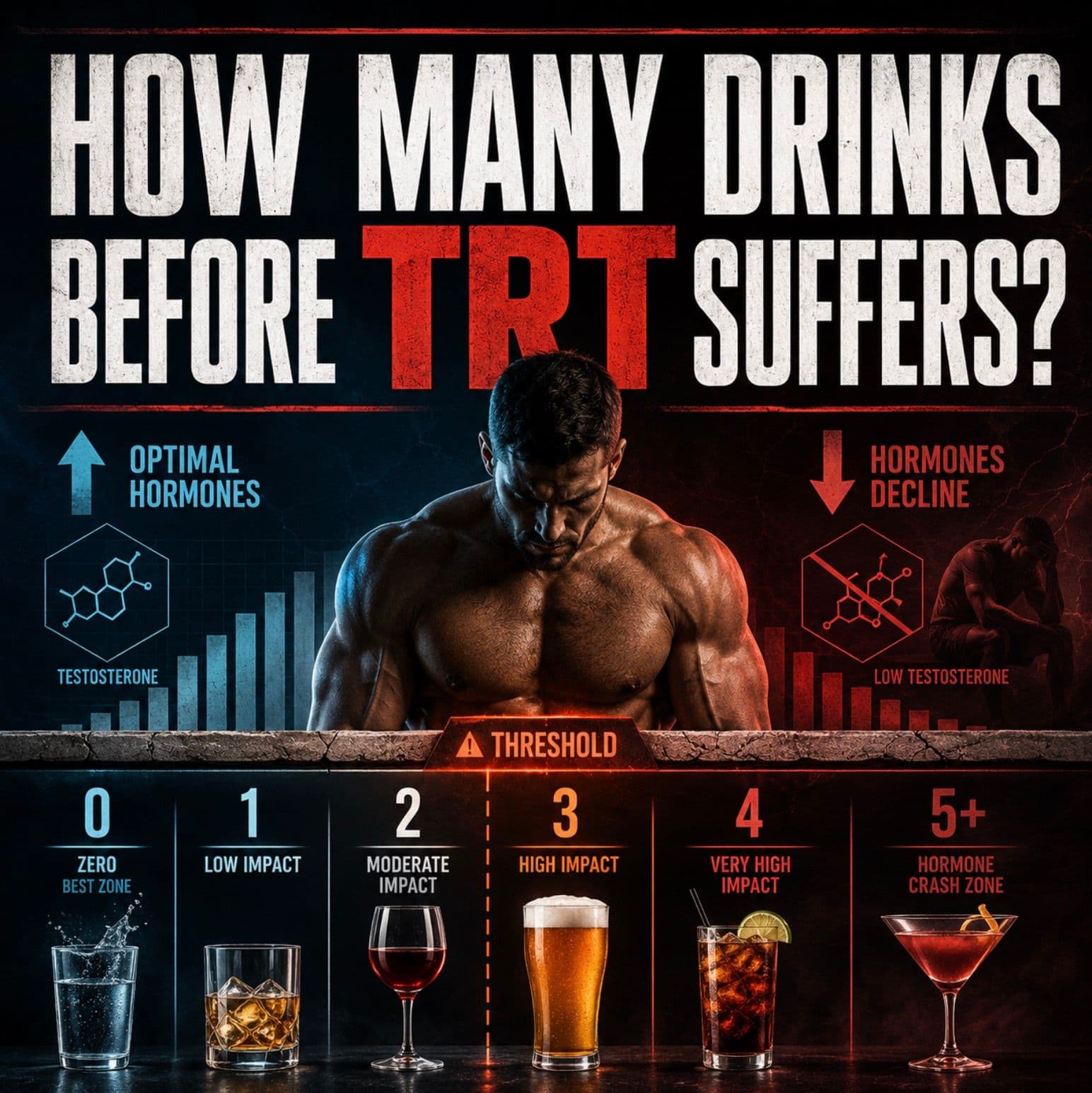
Testosterone replacement therapy works best when it operates inside a body that isn't constantly fighting against competing stressors. Alcohol, even at seemingly moderate levels, can create a biochemical environment where TRT delivers a fraction of what it's capable of. The relationship between alcohol and hormone optimization is not about fear or abstinence messaging. It's about understanding where the ceiling is, and whether you're bumping up against it.
What Alcohol Actually Does to Your Hormonal Environment
The liver is the body's primary processing hub for both alcohol and hormones. When alcohol enters the bloodstream, the liver prioritizes clearing it above virtually everything else. This metabolic reshuffling affects how hormones are broken down, converted, and circulated. The same organ responsible for clearing excess estrogen and processing testosterone metabolites is temporarily hijacked every time you drink.
This matters more than most men on TRT realize. Even with exogenous testosterone in your system, the downstream processing of that testosterone still depends on liver function. Chronic or frequent drinking can impair this processing efficiency over time, creating a situation where hormone levels look acceptable on paper but functional hormonal balance is compromised.
Beyond liver metabolism, alcohol directly suppresses the hypothalamic-pituitary-gonadal axis, the signaling pathway that regulates testosterone production and related hormonal feedback. Men on TRT are already working outside that natural feedback loop, but the HPG axis still plays a role in other hormones, including LH, FSH, and the balance of co-occurring androgens. Alcohol interference here is not irrelevant just because you're supplementing testosterone externally.
The Estrogen Problem Nobody Talks About Enough
One of the most overlooked consequences of regular alcohol consumption in men on TRT is its effect on estrogen balance. Alcohol promotes aromatization, the enzymatic process that converts testosterone into estradiol. When you're introducing exogenous testosterone and simultaneously encouraging more of it to convert into estrogen, managing estrogen balance becomes significantly harder.
Elevated estrogen in men can cause fluid retention, mood fluctuations, reduced libido, fatigue, and sensitivity in breast tissue. Here's the frustrating part: these are also symptoms men commonly attribute to TRT not working, or to needing a protocol adjustment. If alcohol is driving estrogen upward, the actual problem is being misread entirely.
Even a few regular drinking occasions per week can shift this balance in a measurable direction for some men. The degree varies based on body composition, alcohol type, genetic factors, and baseline hormone sensitivity. But the pattern is consistent: more frequent drinking tends to make estrogen management more difficult and symptom overlap more confusing.
Sleep Is Where TRT Does a Lot of Its Work
Testosterone and sleep are deeply interdependent. A significant portion of testosterone secretion occurs during sleep, particularly during slow-wave and REM stages. Alcohol is a known disruptor of sleep architecture. It may help you fall asleep faster, but it fragments the deeper, restorative stages that matter most for hormonal recovery.
For men on TRT, this creates a quiet sabotage. You may think you're sleeping adequately because your total hours look reasonable, but alcohol-impaired sleep quality means you're spending less time in the phases where recovery, hormone processing, and cellular repair actually happen. Over weeks and months, chronically disrupted sleep can blunt the benefits of TRT in ways that feel impossible to trace back to their source.
Poor sleep also elevates cortisol, the body's primary stress hormone. Elevated cortisol works directly against testosterone in terms of its effects on mood, body composition, and energy. Adding frequent alcohol use into this equation compounds the cortisol load and makes the hormonal balancing act significantly harder.
Inflammation, Blood Pressure, and How You Feel Day to Day
Alcohol is pro-inflammatory at higher intake levels, and inflammation is one of the most consistent obstacles to feeling well on TRT. Testosterone has beneficial anti-inflammatory properties in the body. When alcohol is simultaneously driving up inflammatory markers, those benefits are partially offset.
Cardiovascular health is another area where the two variables intersect. TRT, when well-managed, can have positive effects on cardiovascular risk factors for men with low testosterone. Alcohol, particularly at moderate-to-heavy intake levels, can raise blood pressure, alter lipid profiles, and increase cardiovascular strain. Men who drink frequently and then experience suboptimal TRT results may actually be experiencing the cardiovascular downstream effects of alcohol rather than a true protocol failure.
This is not a reason to panic. It is a reason to take an honest inventory of what your weekly alcohol intake actually looks like, and how it might be interacting with the cardiovascular picture your clinician is monitoring.
Training, Body Composition, and the Decisions You Make After a Few Drinks
Many men begin TRT with specific body composition goals, whether that's building lean muscle, reducing visceral fat, or both. Alcohol interferes with these goals through several mechanisms. It blunts muscle protein synthesis, impairs recovery from training, and contributes excess calories that are metabolized differently than food-based calories.
Beyond the direct physiological effects, alcohol introduces what might be called decision fatigue in the 12 to 24 hours following a drinking occasion. Appetite regulation is disrupted. Motivation to train is reduced. Food choices tend to shift toward high-calorie, low-nutrient options. Sleep quality, as already discussed, takes a hit. The result is a cluster of compounding setbacks that individually seem minor but collectively represent a meaningful drag on progress.
TRT can support muscle building and fat loss in ways that are genuinely significant. But those effects don't operate independently of behavior. Regular alcohol use can quietly consume the margin of benefit that TRT provides, leaving men wondering why results aren't materializing.
The Mental Health Overlap That Complicates Everything
Anxiety and mood instability are two of the most common complaints men bring to their TRT provider. They're also two of the most common effects of regular alcohol consumption. Alcohol initially blunts anxiety through its sedative properties, but the rebound effect in the hours and days following drinking often amplifies anxiety and emotional reactivity.
When a man on TRT is experiencing mood swings, low motivation, or persistent anxiety, alcohol's contribution to those symptoms is frequently underestimated or not considered at all. Protocol adjustments get made. Dosages get discussed. New supplements get added. Meanwhile, a pattern of three to five or more drinking nights per week continues unchallenged, driving the very symptoms that prompted the clinical concern.
This is one of the clearest examples of the alcohol ceiling in practice. TRT can improve mood, motivation, and emotional stability in men with low testosterone. But those effects have limits, and regular alcohol use can keep a man perpetually below those limits without anyone identifying why.
Reading the Signs That Alcohol Is Undermining Your Protocol
Self-assessment is a useful starting point, even though lab work and clinical oversight are ultimately necessary for a complete picture. Consider whether the following patterns apply to your situation.
Are your energy and mood noticeably worse in the days following drinking occasions? Do you feel like you have good weeks and then unexplained crashes that seem to align with social or recreational drinking? Is your sleep consistently feeling unrestorative despite what looks like adequate hours? Has your body composition stalled despite consistent training and TRT? Are you experiencing symptoms commonly associated with estrogen imbalance, including fluid retention, mood swings, or reduced libido, without a clear protocol-based explanation?
These are conversations to have with your clinician, not conclusions to draw independently. But recognizing the pattern is the first step. Lab work that looks at hormonal balance, liver enzymes, inflammatory markers, lipids, and hematocrit can help paint a clearer picture of whether alcohol is quietly interfering with your results.
Harm Reduction for Men Who Choose to Drink
Abstinence is not the only answer, and for most men, it isn't a realistic or desirable goal. The aim is to drink in ways that minimize interference with your protocol and your health.
Timing matters. Drinking closer to training days compresses recovery windows. If possible, creating distance between drinking occasions and your most demanding training sessions gives your body a better chance to manage both. Hydration is essential, as alcohol is dehydrating and dehydration compounds many of its negative effects on sleep and recovery. Prioritizing sleep protection means being thoughtful about when you stop drinking before bed, since the timing affects how much alcohol disrupts sleep architecture.
Nutrition surrounding drinking occasions also makes a difference. Eating adequate protein and avoiding the post-drinking junk food spiral protects body composition outcomes. Consistency in your TRT protocol itself matters too. Alcohol does not change the clinical recommendations around how you administer your protocol, but it does underscore why consistency in sleep, exercise, and nutrition provides the foundation that TRT needs to perform.
Perhaps most importantly, honest tracking helps. Many men significantly underestimate how frequently and how much they drink over a given week. Logging actual intake for two to four weeks can reveal patterns that are genuinely surprising.
When to Bring This Conversation to a Clinician
If you suspect alcohol is affecting your TRT results, say so directly during your next clinical check-in. A good TRT provider will want to know about your lifestyle factors, including alcohol intake, because those factors change the interpretation of your labs and your symptoms.
Individualized care means that the right answer for one man may not be the right answer for another. Someone who drinks lightly and infrequently faces a very different hormonal picture than someone drinking heavily several nights per week. Your clinician can help identify which of your symptoms, if any, are protocol-related versus lifestyle-related, and that distinction changes everything about how the situation gets addressed.
Providers like AlphaMD specialize in exactly this kind of nuanced, ongoing TRT oversight, helping men navigate not just the clinical side of hormone optimization but the real-world factors that influence how well it works. Getting that kind of informed, individualized support makes a meaningful difference in outcomes.
The Ceiling Is Real, But It Isn't Fixed
Alcohol doesn't erase the benefits of TRT. But it can cap them, quietly and consistently, in ways that are easy to mistake for protocol failure. The men who get the most out of testosterone replacement tend to be the ones who treat it as one part of a broader commitment to their health, rather than a solution that works independently of everything else they do.
If your results have plateaued, if your symptoms feel inconsistent, or if you've been modifying your protocol without seeing the changes you expect, alcohol deserves an honest place in that conversation. Sustainable habits built around supporting your hormonal health are what allow TRT to deliver on its actual potential. That's not about being perfect. It's about removing the obstacles that are quietly holding the ceiling down.
Have a question? Ask us.
At AlphaMD, we're here to help. Feel free to ask us any question you would like about TRT, medical weightloss, ED, or other topics related to men's health. Or take a moment to browse through our past questions.
People are asking...
Two questions. First, I find my testosterone significantly tanks when I've been extra busy, especially physically. When I first tanked (270 total or ...
For your first question, this can impact your Testosterone levels if you're not resting properly. I'll barrow from one of our earlier replies: "The majority of your Testosterone is produced and releas... See Full Answer
Do you have any theories as to why some people experience a honeymoon phase for a few weeks then lose the benefits of TRT?...
The most common reason for this in men tends to be a need for a simple dose adjustment. There's a general 8 week uptake period where injected levels increase week over week & then natural production ... See Full Answer
I’m new to TRT. I’m 47 yrs old. Did bloodwork and was put on 200ml/week in Oct of 2023.l. felt great, sex drive was good, even had “morning wood” most...
That progesterone dose may hold the answer. The average man produces 10-20mg of progesterone daily, so 200mg daily is far above what the body normally makes. Progesterone can be converted into other n... See Full Answer
Get $30 off your first month’s order
Enter your email address now to receive $30 off your first month’s cost, other discounts, and additional information about TRT.
Legal Disclaimer
This website is a repository of publicly available information and is not intended to form a physician-patient relationship with any individual. The content of this website is for informational purposes only. The information presented on this website is not intended to take the place of your personal physician's advice and is not intended to diagnose, treat, cure, or prevent any disease. Discuss this information with your own physician or healthcare provider to determine what is right for you. All information is intended for your general knowledge only and is not a substitute for medical advice or treatment for specific medical conditions. The information contained herein is presented in summary form only and intended to provide broad consumer understanding and knowledge. The information should not be considered complete and should not be used in place of a visit, phone or telemedicine call, consultation or advice of your physician or other healthcare provider. Only a qualified physician in your state can determine if you qualify for and should undertake treatment.