
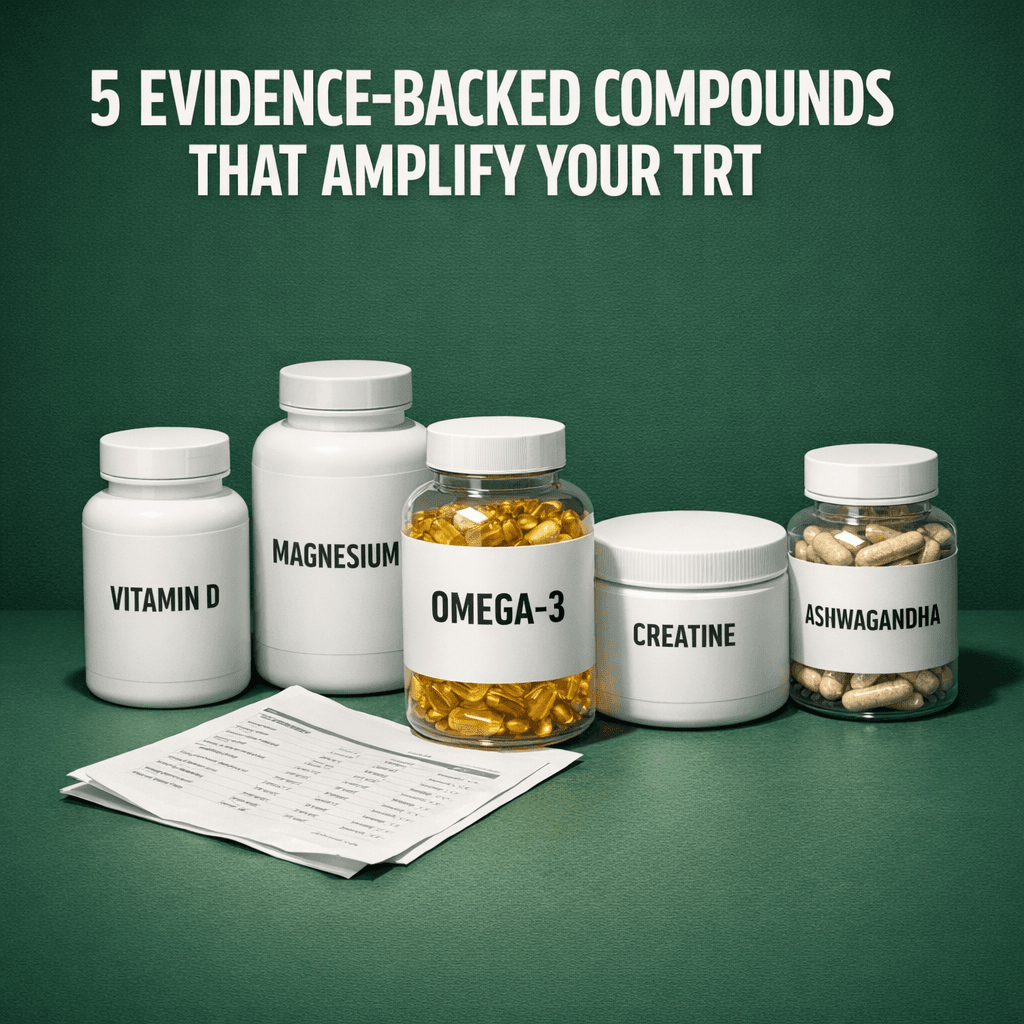
The 5 Evidence-Backed Compounds That Amplify Every Milligram of Testosterone You're Taking
Published on:
Updated on:
People are asking...
Have you guys ever looked into the various manufacturers. Commercial and compounding? The question is regarding the raws they use. A few of us have no...
Great question, and yes. In general the commercial products are going to be Depo-Testosterone as a brand name & are all the same. These are just the Testosterone & the carrier oil, which in this case ... See Full Answer
Empower is great for compounding. And as for the generics. I guess you would just trust the ones that you could actually find on the FDA website? I gu...
We trust the large chains more just like you suggest, and like the poster below states, since Testosterone is such a safe product & the production isn't hampered by a ton of restrictions like HCG is, ... See Full Answer
Where does testosterone come from? Is it made in the USA? How is it typically made?...
From a USA based domestic company — prescriptions filled through AlphaMD go to an USA based compounding pharmacy that produces their Testosterone here. You can usually get Testosterone for a very reas... See Full Answer
Have a question? Ask us.
At AlphaMD, we're here to help. Feel free to ask us any question you would like about TRT, medical weightloss, ED, or other topics related to men's health. Or take a moment to browse through our past questions.
Most men on testosterone replacement therapy focus entirely on the hormone itself, assuming the prescription does all the work. What they miss is that TRT is a system, and the supporting physiology around it can either amplify or undercut every milligram they take.
Why the "T" Is Only Part of the Equation
Testosterone does not act in isolation. Once it enters the bloodstream, it has to navigate a chain of biological events before it produces the effects men are looking for: free testosterone must become available rather than bound to proteins, it must reach androgen receptors and activate them efficiently, it must convert to the right downstream hormones in balanced proportions, and the cellular environment around muscle, mood, and metabolism has to be functioning well enough to respond. Disruptions anywhere in that chain, whether from nutritional gaps, inflammation, oxidative stress, or poor insulin sensitivity, can blunt outcomes even when testosterone levels look adequate on paper.
This is the context in which certain evidence-backed compounds become genuinely relevant, not as testosterone boosters in the dramatic, marketing-driven sense, but as agents that may support the physiology surrounding TRT. Five compounds in particular have accumulated enough human evidence to merit serious attention from men working with a hormone optimization clinician.
What "Amplify" Actually Means Here
Before diving into the compounds themselves, it is worth being precise about what "amplify" means in this context. None of these compounds dramatically raise endogenous testosterone production, which is largely suppressed during exogenous TRT anyway. What they may do is improve how efficiently the body uses and responds to the testosterone already present: supporting conversion pathways, reducing the inflammatory or metabolic interference that dulls hormone signaling, improving body composition responses to training, or addressing deficiencies that were already undermining well-being before TRT began.
Thinking of these compounds as force multipliers on a biological system is more accurate than thinking of them as hormone boosters. The distinction matters, because overpromising leads to misuse and unmet expectations.
Vitamin D: The Steroid Hormone Most Men Are Missing
Vitamin D is technically a secosteroid, and its receptors are found in the same tissues that respond to androgens, including Leydig cells in the testes and skeletal muscle. That biological overlap is one reason researchers have consistently found associations between vitamin D status and testosterone levels in observational studies. Men with low vitamin D tend to report lower energy, mood disturbances, and reduced muscle recovery, all symptoms that can mirror or worsen hypogonadal symptoms.
The mechanistic case is plausible. Vitamin D receptors appear to influence androgen receptor expression, and vitamin D may play a role in reducing sex hormone-binding globulin, the protein that binds testosterone and renders it biologically inactive. Lower SHBG generally means more free testosterone available to tissues. Controlled trials have shown mixed but generally favorable results, with some finding meaningful improvements in testosterone levels and mood in deficient men who supplemented.
For men on TRT, the relevance is straightforward: if vitamin D deficiency is blunting androgen receptor sensitivity or inflating SHBG, correcting it could improve how the body responds to exogenous testosterone. Men with limited sun exposure, darker skin tones, higher body fat percentages, or those living at northern latitudes are at greater risk of deficiency and may benefit most.
Safety considerations are important. Vitamin D is fat-soluble and can accumulate to toxic levels with excessive supplementation over time. It also interacts with calcium metabolism, and in men with certain conditions affecting calcium regulation or kidney function, supplementation requires careful clinician oversight. Status is straightforward to assess with a standard blood test, and any supplementation should be guided by those results rather than assumption.
Magnesium: The Mineral That Competes With SHBG
Magnesium is involved in hundreds of enzymatic reactions, and its relevance to testosterone physiology is increasingly recognized. One of the more compelling mechanisms involves SHBG again. Research suggests that magnesium may compete with testosterone for SHBG binding sites, which could mean more free testosterone circulating in the bloodstream. Studies in both athletic and general male populations have found associations between magnesium status and total and free testosterone levels.
Magnesium also plays a role in insulin sensitivity and sleep architecture, two factors with indirect but real connections to hormone function. Poor insulin sensitivity is associated with higher SHBG, lower free testosterone, and worse body composition outcomes. Disrupted sleep, even without outright sleep disorders, impairs the hormonal recovery that TRT patients are trying to optimize.
Men who train hard, sweat frequently, consume diets high in processed foods, or drink alcohol regularly are more likely to be marginally deficient in magnesium, often without knowing it. Serum magnesium tests can be misleading because the body maintains serum levels at the expense of intracellular stores, so deficiency may not show clearly until it is significant.
Gastrointestinal tolerance varies by form; some forms are better absorbed than others and less likely to cause loose stools. Men taking medications for blood pressure, heart rhythm disorders, or kidney disease should consult their prescriber before adding magnesium supplementation, as interactions with these conditions and medications are well documented.
Omega-3 Fatty Acids: Cooling the Inflammation That Disrupts Hormones
Chronic low-grade inflammation is one of the most underappreciated obstacles to TRT success. Inflammatory cytokines can impair androgen receptor signaling, reduce the sensitivity of tissues to testosterone, and worsen insulin resistance, all of which diminish the practical benefit of hormone therapy. Omega-3 fatty acids, specifically EPA and DHA from marine sources, are among the most studied anti-inflammatory agents available without a prescription.
Beyond inflammation, omega-3s appear to favorably influence SHBG levels and may support testosterone bioavailability. Research also points to cardiovascular benefits, which matter specifically for TRT patients given the ongoing clinical conversation about testosterone therapy and cardiovascular risk. Omega-3s have established effects on triglycerides, endothelial function, and platelet aggregation, making them a reasonable addition for men with metabolic or cardiovascular risk factors.
For body composition, which is a primary goal for many men on TRT, omega-3s may enhance muscle protein synthesis and improve the anabolic response to resistance training, a finding that several controlled trials have explored in both younger and older men.
Men taking blood thinners, including anticoagulants or antiplatelet medications, should discuss omega-3 supplementation with their prescriber before starting, as high doses can have additive effects on bleeding risk. Quality matters enormously with fish oil products, as oxidation and contaminant levels vary widely between brands.
Creatine Monohydrate: The Training Variable That Compounds TRT's Effects
Creatine is perhaps the most extensively studied sports supplement in existence, and its relevance to TRT extends well beyond gym performance. Creatine monohydrate increases phosphocreatine stores in muscle, which supports high-intensity training output, accelerates recovery, and may contribute to lean mass gains when combined with resistance exercise. For men on TRT who are trying to realize improvements in muscle composition and strength, creatine may meaningfully compound the anabolic environment testosterone creates.
There is also evidence that creatine supports neurological function and mood, two areas where men on TRT often seek improvement. Some research suggests creatine supplementation may reduce markers of mental fatigue and support cognitive performance, though the evidence here is less definitive than for physical performance.
One area of nuance: creatine is associated with a modest increase in dihydrotestosterone, or DHT, a potent androgen derived from testosterone. For most men this is not a concern, but those with a history of androgenic alopecia or prostate issues should be aware of this and discuss it with their clinician.
Creatine is generally very well tolerated. Concerns about kidney damage in healthy individuals are not supported by the research literature, though men with pre-existing kidney conditions should consult their doctor. It may cause water retention in muscle tissue initially, which can affect scale weight without representing fat gain.
Ashwagandha: Stress Physiology, Cortisol, and Testosterone
Ashwagandha, an adaptogenic herb from Ayurvedic medicine, has generated a growing body of human clinical trials suggesting it may reduce cortisol levels, improve stress resilience, and support testosterone levels in men, particularly those dealing with chronic stress or overtraining. Cortisol and testosterone exist in a kind of biological tension; chronically elevated cortisol is associated with suppressed testosterone signaling, impaired recovery, poor sleep quality, and reduced libido, all outcomes that undermine TRT.
Several randomized controlled trials have found that ashwagandha supplementation was associated with modest but statistically meaningful improvements in testosterone, sperm parameters in men with fertility concerns, muscle recovery, and psychological stress measures. The evidence is more compelling than for many herbal compounds in this space, though it should still be characterized as promising rather than definitive. Study populations, product formulations, and standardization levels vary significantly across trials.
Product quality is a particular concern with ashwagandha. The supplement market has documented issues with adulteration, inconsistent standardization of withanolides (the presumed active compounds), and contamination. Third-party testing is not optional here; it is essential.
Men with thyroid conditions should use caution, as ashwagandha may influence thyroid hormone levels. It is not recommended during pregnancy and should be used with care in men on immunosuppressants or sedatives due to possible interactions. Those with autoimmune conditions should discuss use with their prescriber.
The Quality Control Problem Nobody Talks About Enough
None of these compounds will perform as expected if the product itself is compromised. The supplement industry in the United States is regulated less strictly than pharmaceuticals, which means label accuracy, contamination levels, and actual active ingredient content can vary dramatically between products that look identical on a shelf.
Third-party testing through organizations like USP, NSF International, or Informed Sport provides meaningful assurance that what is on the label is in the bottle, and that the product does not contain heavy metals, pathogens, or undeclared substances. This matters particularly for men who undergo athletic drug testing, but it also matters for anyone who wants to avoid taking something that could interfere with their health or their TRT protocol.
For compounds like ashwagandha and omega-3s especially, the gap between a high-quality product and a low-quality one can be the difference between a real benefit and no effect at all, or worse, a harmful contaminant exposure.
Working With a Clinician, Not Around One
The most important factor in how these compounds perform is the clinical context in which they are used. Adding supplements to a TRT protocol without clinician involvement creates a polypharmacy situation where interactions, redundancies, and contraindications may go unrecognized. A prescriber managing hormone optimization should know about every supplement a patient is taking, because some of these compounds can influence lab results, interact with medications, or alter how a TRT protocol needs to be adjusted over time.
Regular monitoring of relevant lab categories, including hormonal markers, metabolic panels, cardiovascular indicators, and red blood cell parameters, is a standard part of responsible TRT management. Symptom tracking alongside labs helps clinicians understand whether a protocol adjustment or a supportive intervention is actually producing the intended result. That feedback loop is how optimization actually happens.
Platforms like AlphaMD are designed around exactly this kind of individualized, clinician-guided approach to hormone optimization and supportive health strategies. Telehealth-based hormone care has made it more accessible for men to get the monitoring and clinical judgment these protocols require, without having to navigate fragmented care between providers who do not communicate with each other.
Getting the Most From What You Are Already Taking
Testosterone replacement therapy can be genuinely life-changing for men with documented hypogonadism, but the outcomes depend on far more than the prescription. The biochemical environment in which testosterone operates, shaped by nutritional status, inflammation, stress physiology, training quality, and cellular responsiveness, determines how much of that therapy translates into the energy, body composition, mood, and vitality men are seeking. Addressing that environment thoughtfully, with compounds that have real human evidence behind them and with the guidance of a clinician who understands the full picture, is how men get the most from what they are already taking.
Have a question? Ask us.
At AlphaMD, we're here to help. Feel free to ask us any question you would like about TRT, medical weightloss, ED, or other topics related to men's health. Or take a moment to browse through our past questions.
People are asking...
Have you guys ever looked into the various manufacturers. Commercial and compounding? The question is regarding the raws they use. A few of us have no...
Great question, and yes. In general the commercial products are going to be Depo-Testosterone as a brand name & are all the same. These are just the Testosterone & the carrier oil, which in this case ... See Full Answer
Empower is great for compounding. And as for the generics. I guess you would just trust the ones that you could actually find on the FDA website? I gu...
We trust the large chains more just like you suggest, and like the poster below states, since Testosterone is such a safe product & the production isn't hampered by a ton of restrictions like HCG is, ... See Full Answer
Where does testosterone come from? Is it made in the USA? How is it typically made?...
From a USA based domestic company — prescriptions filled through AlphaMD go to an USA based compounding pharmacy that produces their Testosterone here. You can usually get Testosterone for a very reas... See Full Answer
Get $30 off your first month’s order
Enter your email address now to receive $30 off your first month’s cost, other discounts, and additional information about TRT.
Legal Disclaimer
This website is a repository of publicly available information and is not intended to form a physician-patient relationship with any individual. The content of this website is for informational purposes only. The information presented on this website is not intended to take the place of your personal physician's advice and is not intended to diagnose, treat, cure, or prevent any disease. Discuss this information with your own physician or healthcare provider to determine what is right for you. All information is intended for your general knowledge only and is not a substitute for medical advice or treatment for specific medical conditions. The information contained herein is presented in summary form only and intended to provide broad consumer understanding and knowledge. The information should not be considered complete and should not be used in place of a visit, phone or telemedicine call, consultation or advice of your physician or other healthcare provider. Only a qualified physician in your state can determine if you qualify for and should undertake treatment.