
The 10 Lab Values That Matter More Than Your Testosterone Number
Published on:
Updated on:
People are asking...
What are some important things to include on a blood test to diagnose low T?...
Labs can be expensive, so I will list the most essential ones for diagnosis and treatment. I will also point out that there are different types of assays for each test which can effect their accuracy... See Full Answer
What is the list of everything checked with your blood test’s? Thanks...
A licensed provider personalizes lab orders to each individual patient based on their needs during the initial consult, and outside lab results are accepted as well. But at a minimum for diagnosis, at... See Full Answer
Why don’t more clinics put an emphasis on free testosterone over total? I was initially prescribed 200mg weekly but find 120mg puts total test in 700...
Two reasons: On initial dosing Total Testosterone is far more important to find a starting dose, and then on follow-up labs combined with how your symptoms have changed is when examining Free Testoste... See Full Answer
Have a question? Ask us.
At AlphaMD, we're here to help. Feel free to ask us any question you would like about TRT, medical weightloss, ED, or other topics related to men's health. Or take a moment to browse through our past questions.
Your testosterone levels look great on paper, but you feel like garbage. Maybe you're tired all the time. Maybe your libido is still in the basement. Maybe you're retaining water or your joints ache for no apparent reason.
Here's the thing most guys don't realize: your testosterone number is just one piece of a much bigger puzzle. It's like judging a car's performance by only looking at the horsepower while ignoring the oil pressure, coolant temperature, and tire pressure. Sure, the engine might be powerful, but if everything else is off, you're not going anywhere good.
Let's talk about the markers that separate guys who feel amazing on TRT from those who wonder why they're not getting the results they expected.
Why Your Free Testosterone Matters More Than Total
Total testosterone gets all the glory, but free testosterone is where the magic happens. Think of total T as your bank account balance and free T as the cash you can actually spend. You might have a big number on the statement, but if it's all tied up, you can't use it.
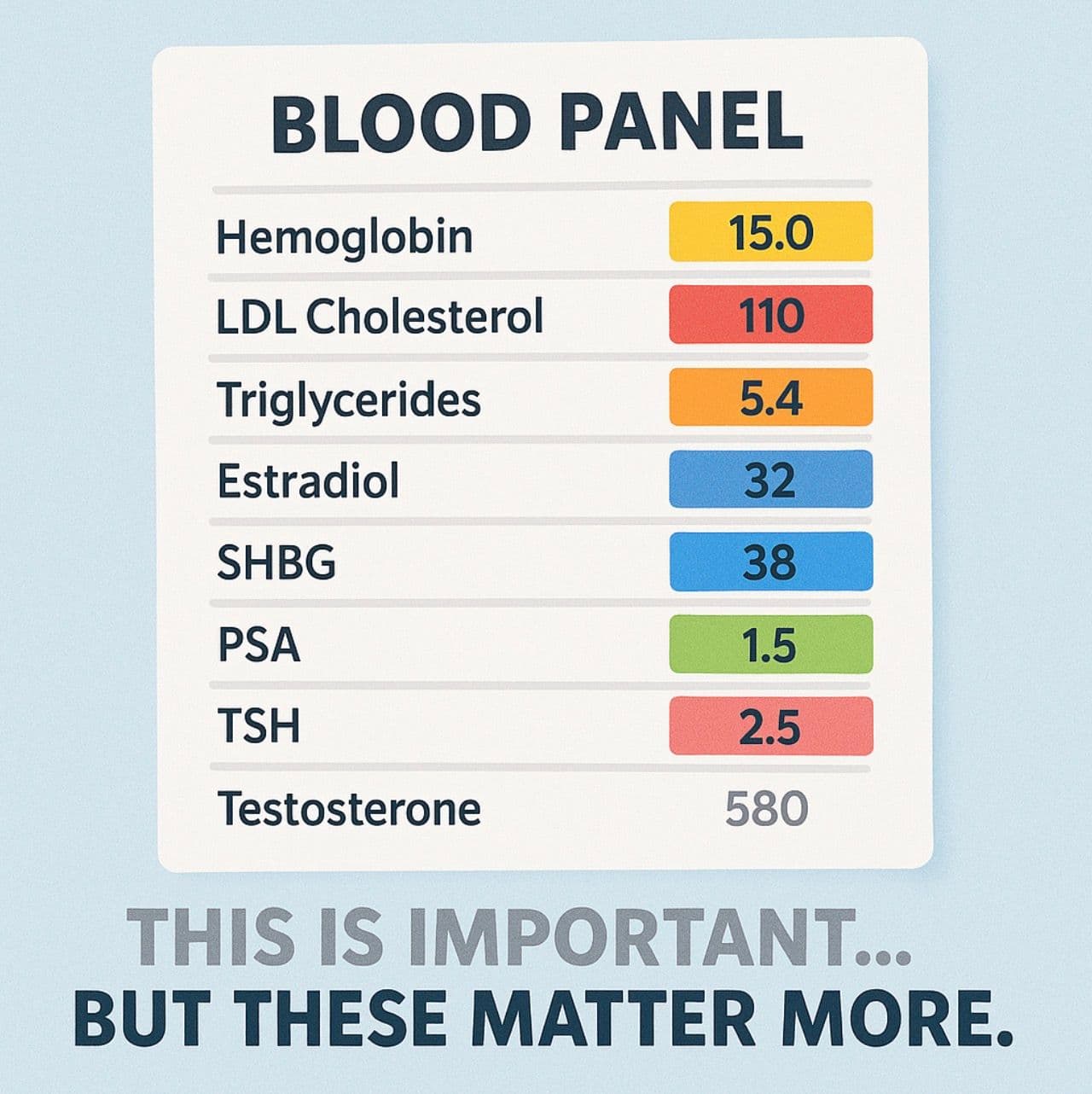
Free testosterone is the bioavailable hormone actually working in your body. If your SHBG (we'll get to that next) is high, your total T could be 1,200 ng/dL while your free T is still in the gutter. This is why some guys on TRT have impressive numbers but still can't seem to dial things in. Always check both.
SHBG: The Binding Protein Nobody Talks About
Sex Hormone Binding Globulin is basically testosterone's babysitter. It binds to your testosterone and holds onto it, making it unavailable for your body to use. Some guys naturally run high SHBG, which means they need higher total testosterone levels just to get adequate free T.
Low SHBG has its own issues too. Your testosterone becomes more readily available, but it also gets metabolized faster, which can mean you need more frequent injections to keep levels stable. This is one reason why injection frequency matters so much, and it's completely individual based on your own SHBG levels.
Estradiol: The Hormone Men Love to Hate (But Shouldn't)
Here's where things get controversial. A lot of guys on TRT think estrogen is the enemy and try to crush it with AI's (aromatase inhibitors). Bad move. Estradiol is crucial for bone density, libido, joint health, cardiovascular protection, and even cognitive function.
The sweet spot for most guys is between 20-40 pg/mL, but some feel great at 50-60 while others need to be closer to 20. The key is finding your personal range. If you're getting symptoms like water retention, sensitive nipples, or emotional changes, check your E2 before reaching for an AI. Often the solution is adjusting your testosterone dose or injection frequency, not adding another drug.
Hematocrit and Hemoglobin: When Your Blood Gets Too Thick
Testosterone increases red blood cell production. That's usually great for energy and endurance, but it can go too far. When your hematocrit (the percentage of red blood cells in your blood) gets too high, your blood becomes thicker and harder for your heart to pump.
Most doctors get nervous when hematocrit hits 54%, and for good reason. Thick blood increases stroke and heart attack risk. If yours creeps up, you've got options: donate blood regularly, adjust your dose, or increase injection frequency to keep levels more stable. Some guys also respond well to staying well-hydrated and taking grapefruit seed extract or nattokinase, though you should discuss these with your provider.
Your Lipid Panel: The Cardiovascular Reality Check
TRT can impact your cholesterol, and not always in good ways. HDL (the "good" cholesterol) sometimes drops while LDL and triglycerides can rise. This doesn't happen to everyone, but it's common enough that you need to keep tabs on it.
The good news? You're not powerless here. Clean diet, regular cardio, fish oil, and citrus bergamot can make a real difference. Some guys find that their lipids actually improve on TRT because they have more energy to train consistently. The key is checking every 3-6 months and staying proactive rather than waiting for a problem to develop.
Liver Enzymes: Making Sure You're Not Overtaxing the System
Your liver processes hormones, and while injectable testosterone is generally easy on the liver, you still want to keep an eye on ALT and AST. These enzymes can elevate if you're overdoing it with supplements, drinking too much, or if your protocol needs adjusting.
Slightly elevated liver enzymes aren't always a crisis. Heavy training can bump them up temporarily, as can certain supplements. But consistently high numbers mean something needs to change. Your liver is doing a lot of work, and TRT should make you healthier overall, not add unnecessary stress.
PSA: The Prostate Marker You Can't Ignore
Prostate Specific Antigen is non-negotiable, especially if you're over 40. TRT doesn't cause prostate cancer, but it can accelerate growth if cancer is already present. A baseline PSA before starting TRT and regular monitoring afterward is standard practice.
Most providers want to see PSA under 4.0 ng/mL, but what really matters is the trend. A sudden jump or consistently rising PSA needs investigation, even if the absolute number seems fine. This is health 101 stuff, but it's amazing how many guys skip it because they feel fine.
DHT: The Androgenic Wild Card
Dihydrotestosterone is testosterone's more powerful cousin. Some guys convert a lot of their testosterone into DHT, which can be great for libido and that alpha feeling, but it's also the main culprit behind male pattern baldness and can contribute to prostate enlargement.
If you're noticing hair loss on TRT or having urinary symptoms, checking DHT makes sense. For some guys, a 5-alpha reductase inhibitor like finasteride helps, though it comes with its own set of considerations. Others just adjust their protocol or make peace with the tradeoffs.
Complete Blood Count: The Full Picture
Your CBC tells you about overall blood health - red blood cells, white blood cells, and platelets. We already talked about hematocrit, but the full CBC gives you context. Low white blood cells might mean your immune system is struggling. Platelet issues could point to clotting concerns.
This is baseline health monitoring that everyone should do, TRT or not. But when you're on testosterone, you're making changes to your body's hormonal environment, and you want to make sure everything is responding well.
Thyroid Panel: The Metabolic Foundation
Your thyroid and testosterone work together. Low thyroid function can sabotage your TRT results, leaving you feeling tired and unable to lose weight despite having great testosterone levels. At minimum, check TSH, but free T3 and free T4 give you the complete picture.
Some guys find that optimizing their thyroid alongside TRT is the missing piece that finally gets them feeling dialed in. If your testosterone looks good but you're still dealing with low energy, brain fog, or stubborn weight gain, your thyroid might be the culprit.
Getting It All Done Without Breaking the Bank
Look, running all these tests every few months can get expensive if you're not strategic about it. Start with a comprehensive panel before beginning TRT to establish baselines. Then after 6-8 weeks, retest everything to see how your body is responding.
Once you're stable, you can typically scale back to checking the critical markers (testosterone levels, E2, hematocrit, and PSA) every 3-4 months, with a full comprehensive panel once or twice a year. If you're working with a provider who understands optimization, they'll help you prioritize based on your individual response and risk factors.
The providers on the AlphaMD platform take this comprehensive approach seriously because they know that feeling your best on TRT isn't just about hitting a testosterone number. It's about dialing in every piece of the puzzle so you can actually enjoy the benefits you're working toward. When everything is tracked and optimized properly, TRT becomes what it's supposed to be: a tool for living better, not a protocol you're just hoping works out.
Have a question? Ask us.
At AlphaMD, we're here to help. Feel free to ask us any question you would like about TRT, medical weightloss, ED, or other topics related to men's health. Or take a moment to browse through our past questions.
People are asking...
What are some important things to include on a blood test to diagnose low T?...
Labs can be expensive, so I will list the most essential ones for diagnosis and treatment. I will also point out that there are different types of assays for each test which can effect their accuracy... See Full Answer
What is the list of everything checked with your blood test’s? Thanks...
A licensed provider personalizes lab orders to each individual patient based on their needs during the initial consult, and outside lab results are accepted as well. But at a minimum for diagnosis, at... See Full Answer
Why don’t more clinics put an emphasis on free testosterone over total? I was initially prescribed 200mg weekly but find 120mg puts total test in 700...
Two reasons: On initial dosing Total Testosterone is far more important to find a starting dose, and then on follow-up labs combined with how your symptoms have changed is when examining Free Testoste... See Full Answer
Get $30 off your first month’s order
Enter your email address now to receive $30 off your first month’s cost, other discounts, and additional information about TRT.
Legal Disclaimer
This website is a repository of publicly available information and is not intended to form a physician-patient relationship with any individual. The content of this website is for informational purposes only. The information presented on this website is not intended to take the place of your personal physician's advice and is not intended to diagnose, treat, cure, or prevent any disease. Discuss this information with your own physician or healthcare provider to determine what is right for you. All information is intended for your general knowledge only and is not a substitute for medical advice or treatment for specific medical conditions. The information contained herein is presented in summary form only and intended to provide broad consumer understanding and knowledge. The information should not be considered complete and should not be used in place of a visit, phone or telemedicine call, consultation or advice of your physician or other healthcare provider. Only a qualified physician in your state can determine if you qualify for and should undertake treatment.