
Sermorelin Isn't a Testosterone Booster — It's a Recovery and Body Composition Tool. Here's the Difference.
Published on:
Updated on:
People are asking...
Same with men on TRT getting cosmetic surgery like a jaw surgery, can anything else added to TRT speed recovery?...
outside of TRT, the main medicine shown in studies to assist with recovery after a cosmetic surgery would be sermorelin.... See Full Answer
How about stacking TRT with peptide therapy. Are Sermorelin, Tesamorelin, or CJC w/ Ipamorelin actually safe to use with TRT? What are the real benef...
These are perfectly reasonable options. Currently, licensed providers can prescribe Sermorelin, though not long ago it was permissible to work with the other peptides you mentioned as well. Many men h... See Full Answer
Is there any reason to use Testosterone Cypionate and Enclomiphene concurrently?...
There are two negative feedback loops on LH release, estrogen and testosterone. So having normal or high levels of estrogen will shut down GnRH (gonadotropin releasing hormone) from the hypothalamus a... See Full Answer
Have a question? Ask us.
At AlphaMD, we're here to help. Feel free to ask us any question you would like about TRT, medical weightloss, ED, or other topics related to men's health. Or take a moment to browse through our past questions.
Most men who start researching sermorelin are already thinking about testosterone. That assumption, that sermorelin is some kind of indirect testosterone hack, is one of the most common and most consequential misunderstandings in men's health today.
Sermorelin operates on an entirely different hormonal pathway. It does not raise testosterone directly, it does not replace testosterone, and it is not a shortcut to the results men typically associate with TRT. What it can do, when used appropriately and under proper supervision, is genuinely useful, just not in the way most people expect.
What Sermorelin Actually Is
Sermorelin is a synthetic peptide. More specifically, it is an analog of growth hormone-releasing hormone, commonly abbreviated as GHRH. When administered, it acts on the pituitary gland and encourages the body to produce and release more of its own growth hormone. The emphasis on "its own" matters here. Unlike direct growth hormone injections, sermorelin works by stimulating your body's natural production through an existing signaling pathway rather than bypassing it.
This distinction has real implications. Because sermorelin works with your body's feedback systems rather than around them, the release of growth hormone it triggers tends to follow a more physiological pattern. The pituitary still regulates the process. There are still natural limits. This is not a flood, it is a nudge.
Once growth hormone is released, the liver responds by producing insulin-like growth factor 1, or IGF-1. This is the downstream signal that carries out much of what people attribute to growth hormone: tissue repair, metabolic support, changes in body composition over time. The growth hormone and IGF-1 axis is its own system, largely independent of testosterone.
Two Different Axes, Two Different Conversations
Testosterone is produced primarily in the testes through a completely separate signaling chain. The brain releases gonadotropin-releasing hormone, which signals the pituitary to release luteinizing hormone and follicle-stimulating hormone, which in turn tell the testes to produce testosterone. That is the hypothalamic-pituitary-gonadal axis, and it does not share meaningful overlap with the growth hormone and IGF-1 pathway that sermorelin targets.
Increasing activity in one axis does not automatically move the other. If your testosterone is low, sermorelin is not going to fix that. If you have low growth hormone output but normal testosterone, TRT is not going to address that. These are parallel systems with different functions, different feedback loops, and different clinical implications.
This is not a minor technical point. It shapes everything about how sermorelin should be evaluated, who it makes sense for, and what outcomes are actually realistic.
Why the "Testosterone Booster" Label Misleads
The phrase "testosterone booster" has become a catch-all in men's health marketing. It is applied to everything from zinc supplements to herbal compounds to prescription therapies that have little or no direct effect on testosterone. The label gets used because testosterone is the thing men most commonly associate with energy, strength, libido, and vitality, so framing anything near those outcomes in testosterone terms makes it easier to sell.
Sermorelin sometimes gets pulled into this framing because its benefits, when they occur, can overlap with some of the things men seek when they think they need more testosterone. Better sleep, improved recovery, changes in body composition, more energy during training. These are outcomes that sermorelin may support through growth hormone signaling. They are also outcomes that low testosterone can impair. The overlap in desired outcomes does not mean the mechanisms are the same, and it does not mean sermorelin is addressing testosterone deficiency.
When a man is told sermorelin will "boost" his hormones, and he is thinking about testosterone while the clinician is thinking about growth hormone, the result is misaligned expectations and eventual frustration. Getting clear on the difference upfront is not just semantics. It determines whether a treatment approach actually fits what a person needs.
What Sermorelin Can Realistically Do
With realistic expectations set, the actual picture of what sermorelin may offer becomes more interesting and more useful.
Sleep quality is often the first thing people notice. Growth hormone is released in significant amounts during deep sleep, and supporting that system can improve sleep architecture over time. This matters more than most people appreciate. Poor sleep degrades recovery, suppresses hormone production broadly, increases appetite, and undermines training adaptations. Supporting deeper, more restorative sleep has downstream effects that compound over weeks and months.
Recovery is another area where the growth hormone and IGF-1 axis plays a real role. Tissue repair, including muscle repair after training, is influenced by growth hormone signaling. Men who train hard and feel like their recovery has slowed, whether from age or accumulated stress, sometimes find that supporting growth hormone production helps them bounce back faster between sessions.
Body composition changes are possible but need to be understood carefully. Sermorelin is not a fat burner. It does not produce rapid, dramatic changes in weight or body fat. Over time, with consistent training and adequate nutrition, improved growth hormone signaling can support lean mass and may influence how the body handles fat metabolism. These are gradual shifts, not transformations. Anyone framing it otherwise is overpromising.
Exercise performance support is a related benefit. Better recovery, improved sleep, and favorable shifts in body composition collectively support training capacity. Sermorelin does not make you stronger in a direct pharmacological sense. It creates better conditions for adaptation if the training and lifestyle work is already happening.
Who Should Consider It, and Who Should Be Cautious
Generally, sermorelin is most relevant for adults who have evidence of reduced growth hormone output, who are experiencing symptoms that align with growth hormone decline, and who want to support recovery and body composition without pursuing direct hormone replacement. Men who are already doing the fundamentals well, training consistently, sleeping reasonably, managing stress, eating with some intention, and still feeling like something is missing in recovery or body composition, may be reasonable candidates for evaluation.
There are also men for whom sermorelin is not the right starting point. If testosterone is genuinely low and clinically significant, addressing that deficiency first is usually the more direct and impactful move. Sermorelin will not compensate for hypogonadism. Similarly, if a man's growth hormone output is already adequate for his age and health context, the marginal benefit of stimulating more of it may be minimal.
Certain health conditions warrant caution. Anyone with a history of cancer, active neoplastic disease, or certain other conditions should have a careful conversation with a physician before considering any peptide therapy that affects growth factor signaling. This is not a reason to be alarmed, but it is a reason why evaluation and medical oversight are not optional. Sermorelin is a prescription therapy, not a supplement. It should be treated accordingly.
Side effects, when they occur, are generally mild and often administration-related: injection site reactions, transient flushing, or headache. More significant concerns are uncommon but possible, and ongoing monitoring is part of responsible use.
Sermorelin, TRT, and Lifestyle Optimization: Picking the Right Tool
These three approaches are not mutually exclusive, but they are also not interchangeable. Understanding when each is appropriate, and when they might work together, is part of what a good evaluation process looks like.
TRT is appropriate when testosterone is clinically low, symptoms are consistent with that deficiency, and the benefits of replacing testosterone outweigh the considerations involved. It directly addresses testosterone deficiency. It does not address growth hormone decline. For men with both issues, combining TRT and sermorelin under medical supervision may be relevant, but that is a clinical determination, not a default assumption.
Sermorelin is appropriate when growth hormone output has declined, symptoms align with that pattern, and the goal is to support recovery, sleep, and body composition through a mechanism that works with the body's own signaling. It is not appropriate as a substitute for TRT when testosterone is genuinely deficient.
Lifestyle optimization is always appropriate and always relevant. No peptide therapy or hormone replacement works optimally in a vacuum. Sleep hygiene, resistance training, nutrition quality, stress management, and body weight all influence hormone production and sensitivity significantly. In some men, improving those fundamentals moves the needle enough that therapeutic intervention becomes less urgent. In others, doing the work and still falling short is exactly the situation that clinical intervention is designed to address.
Timelines, Expectations, and Why Patience Is Not Optional
This is where many people's experience with sermorelin goes sideways. The mechanism is gradual by design. Because sermorelin works through the body's own production and regulation processes, changes accumulate over weeks and months, not days. The first noticeable shifts are often subtle: slightly better sleep, marginally faster recovery, a sense that training feels more productive. Body composition changes, if they happen, typically emerge after consistent use over several months.
Individual variability is real. Age, baseline hormone levels, body composition, sleep quality, training consistency, and nutrition all influence how someone responds. Two men with similar starting points can have meaningfully different experiences. This is true of most therapeutics, but it is worth stating plainly here because the expectation gap is wide for sermorelin specifically.
The men who tend to get the most out of sermorelin are the ones who treat it as one part of a broader strategy, not a substitute for doing the work. It is a supportive tool. It functions best when sleep, training, and nutrition are already being taken seriously.
Understanding What You Are Actually Looking For
Sermorelin is not a testosterone booster. It does not belong in that category, and framing it that way leads men toward the wrong expectations, the wrong comparisons, and sometimes the wrong treatment decisions. What it is, more accurately, is a tool that may support recovery, sleep quality, and body composition over time by working through growth hormone signaling. For the right person, in the right context, with proper evaluation and realistic expectations, that is genuinely valuable.
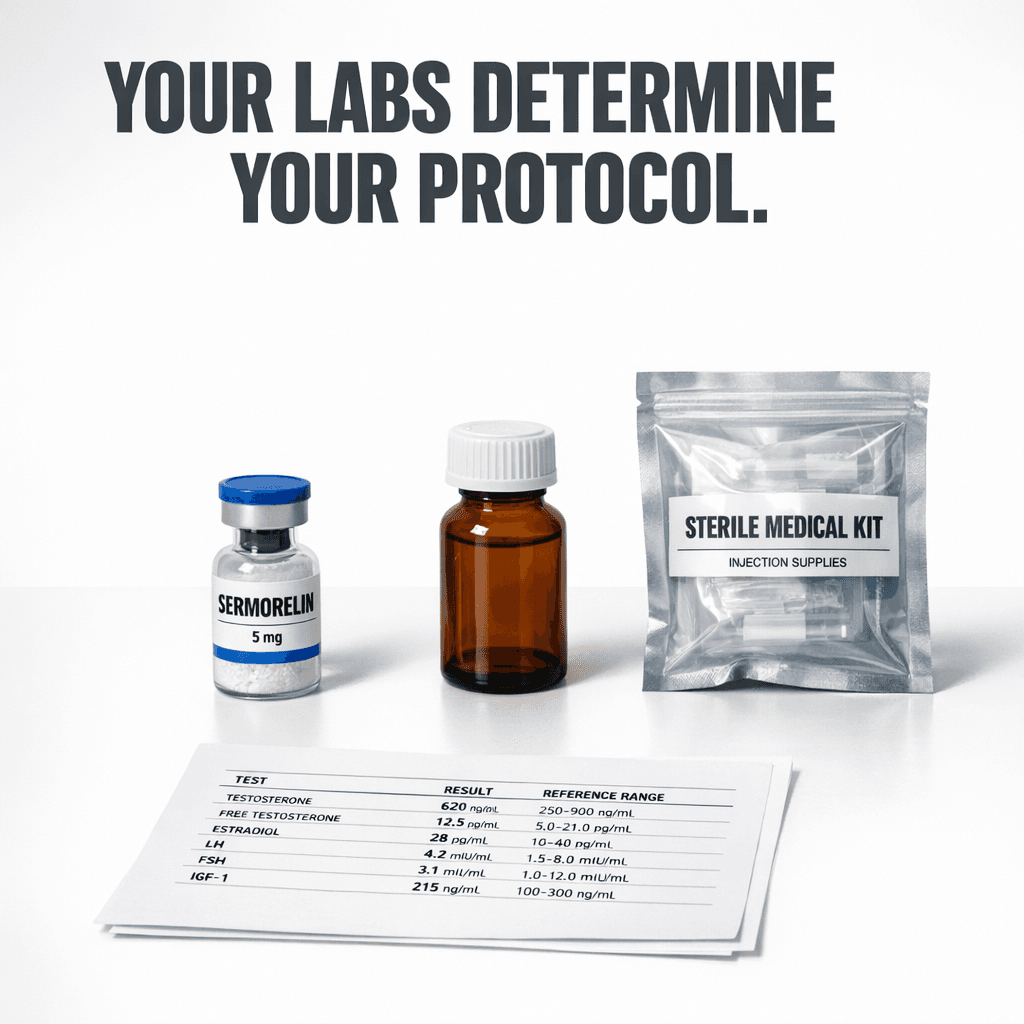
If you are trying to figure out whether testosterone, growth hormone support, or a combination of approaches makes sense for your situation, the answer starts with a real evaluation. Through AlphaMD, a licensed provider reviews your symptoms, lab work, and goals with you to determine whether TRT, sermorelin, or another path is actually the right fit. The difference between the right tool and the wrong one is worth getting right.
Have a question? Ask us.
At AlphaMD, we're here to help. Feel free to ask us any question you would like about TRT, medical weightloss, ED, or other topics related to men's health. Or take a moment to browse through our past questions.
People are asking...
Same with men on TRT getting cosmetic surgery like a jaw surgery, can anything else added to TRT speed recovery?...
outside of TRT, the main medicine shown in studies to assist with recovery after a cosmetic surgery would be sermorelin.... See Full Answer
How about stacking TRT with peptide therapy. Are Sermorelin, Tesamorelin, or CJC w/ Ipamorelin actually safe to use with TRT? What are the real benef...
These are perfectly reasonable options. Currently, licensed providers can prescribe Sermorelin, though not long ago it was permissible to work with the other peptides you mentioned as well. Many men h... See Full Answer
Is there any reason to use Testosterone Cypionate and Enclomiphene concurrently?...
There are two negative feedback loops on LH release, estrogen and testosterone. So having normal or high levels of estrogen will shut down GnRH (gonadotropin releasing hormone) from the hypothalamus a... See Full Answer
Get $30 off your first month’s order
Enter your email address now to receive $30 off your first month’s cost, other discounts, and additional information about TRT.
Legal Disclaimer
This website is a repository of publicly available information and is not intended to form a physician-patient relationship with any individual. The content of this website is for informational purposes only. The information presented on this website is not intended to take the place of your personal physician's advice and is not intended to diagnose, treat, cure, or prevent any disease. Discuss this information with your own physician or healthcare provider to determine what is right for you. All information is intended for your general knowledge only and is not a substitute for medical advice or treatment for specific medical conditions. The information contained herein is presented in summary form only and intended to provide broad consumer understanding and knowledge. The information should not be considered complete and should not be used in place of a visit, phone or telemedicine call, consultation or advice of your physician or other healthcare provider. Only a qualified physician in your state can determine if you qualify for and should undertake treatment.