
Prolactin Above 15 ng/mL? The Hidden Libido Killer Even 'Perfect' Testosterone Can't Fix
Published on:
Updated on:
People are asking...
What course would you recommend if Total T is at 282 but prolactin is in the 1150 range?...
That prolactin level is more than just a little high. Low T in the setting of high prolactin raises concern for a prolactinoma (a usually benign neoplasm of the pituitary gland). Typically an MRI woul... See Full Answer
I'm 37. I went to a clinic with my complaints and a hormonal test was done: Fsh 2.69mIU/mL Lh 7.28mIU/mL Prolactin 3.95ng/mL Testosterone 18.0nmol...
Your doctors didn’t lie in saying your labs don’t show anything abnormal. But they won’t always because what is “normal” is based on population averages, not what is normal for you. There is a new di... See Full Answer
My libido has gotten worse since trt. Didn’t have libido issues before, now I feel like it’s just not really there, kinda feel numb in that department...
Libido issues can unfortunately be difficult to pin down sometimes because there are many factors, both intrinsic and extrinsic, that affect it. It seems like your testosterone and estradiol are ide... See Full Answer
Have a question? Ask us.
At AlphaMD, we're here to help. Feel free to ask us any question you would like about TRT, medical weightloss, ED, or other topics related to men's health. Or take a moment to browse through our past questions.
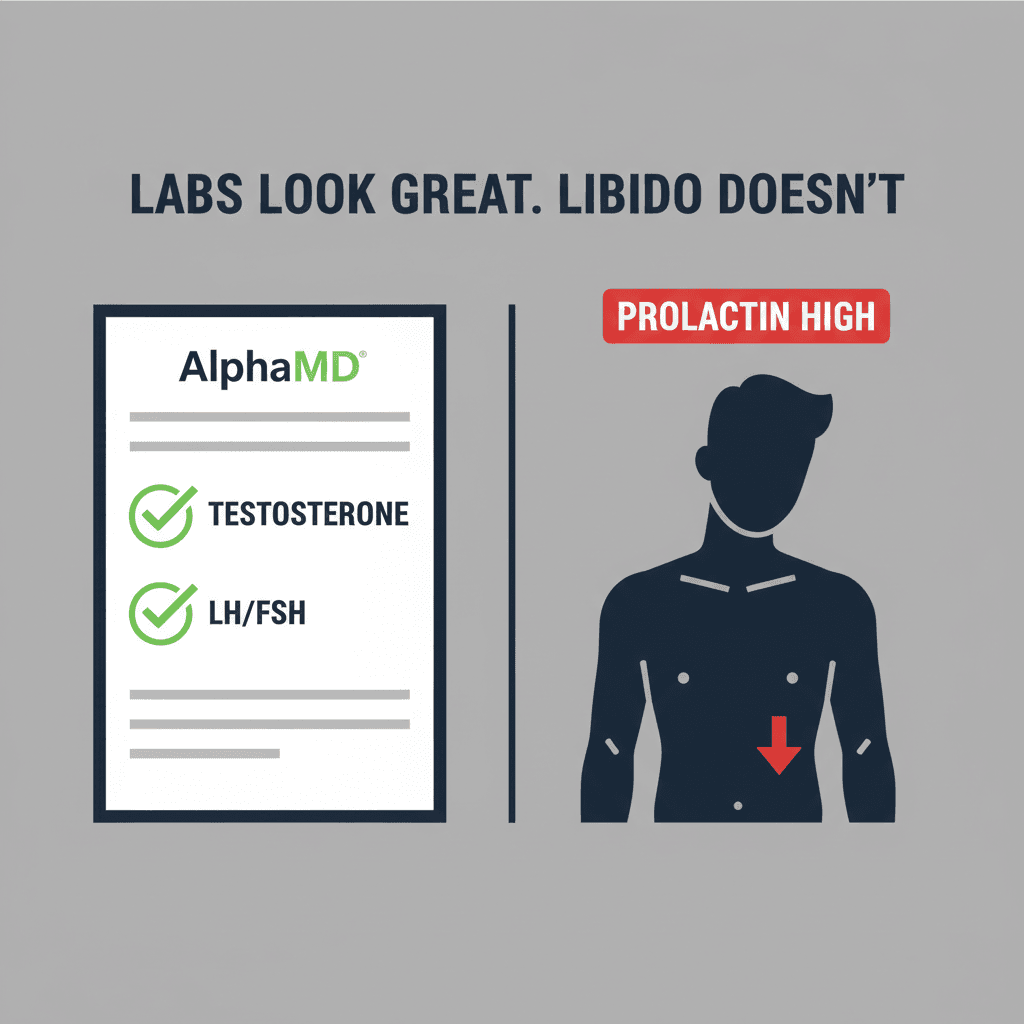
Your testosterone levels came back perfect. Your doctor smiled and nodded approvingly at the lab sheet. Yet you're still staring at the ceiling at night wondering why your sex drive feels like it's been unplugged, why erections that used to be effortless now require concentration, and why the passion that once came naturally feels more like a distant memory. The answer might not be in your testosterone at all, but in a hormone most men have never even heard of: prolactin.
Prolactin doesn't get the airtime that testosterone does. It doesn't have the marketing muscle of T-boosting supplements or the mystique of anabolic hormones. But when prolactin creeps above certain thresholds, particularly around 15 ng/mL or higher, it can act as a silent assassin to your libido, your erection quality, and your overall drive, rendering even optimized testosterone levels functionally useless for the things that matter most to you.
When Testosterone Looks Great But You Still Feel Flat
This is the frustrating position countless men find themselves in. They've done everything right. They've dialed in their testosterone replacement therapy, brought their levels up from the basement into a robust, healthy range. Their total testosterone might be sitting comfortably in the 700s or 800s. Free testosterone looks good. Estradiol is managed. On paper, everything checks out.
Yet something fundamental is still broken.
Libido remains stubbornly low. Erections might work mechanically but lack the firmness and reliability they once had. The refractory period after sex, which used to be measured in minutes or hours, now stretches into days. Motivation feels blunted. There's a flatness to emotions, a sense of going through the motions rather than feeling genuinely engaged with life.
When men bring these concerns back to their healthcare providers, the knee-jerk response is often to adjust testosterone doses higher or fiddle with estrogen management. And while those tweaks sometimes help, they often don't address the real issue lurking in the shadows: elevated prolactin.
Prolactin is one of those hormones that flies under the radar in men's health discussions because it's traditionally associated with women, particularly breastfeeding and lactation. But men produce prolactin too, and when levels rise beyond normal ranges, the effects on sexual function and overall vitality can be devastating.
What Prolactin Actually Does in Men
Prolactin is a hormone secreted by the pituitary gland, that small but mighty structure at the base of your brain that acts as mission control for much of your endocrine system. In women, prolactin's primary role involves milk production and reproductive regulation. In men, its functions are less obvious but no less important.
Under normal circumstances, prolactin levels in men remain relatively low and stable. The hormone plays a role in immune function, metabolic regulation, and reproductive behavior. But the key word there is "low." When prolactin starts climbing, particularly into the mid-teens or higher on standard lab measurements, it begins interfering with other critical hormonal systems.
One of prolactin's most significant effects is its inverse relationship with dopamine, the neurotransmitter intimately connected with motivation, reward, pleasure, and sexual desire. This relationship works both ways: dopamine normally keeps prolactin levels in check, acting as a natural brake on prolactin secretion. When dopamine activity drops, prolactin can rise. Conversely, when prolactin rises, it can suppress dopamine signaling, creating a feedback loop that dampens the very neurochemical pathways responsible for sexual desire and satisfaction.
This explains why men with elevated prolactin often describe their symptoms not just in physical terms but in psychological ones. It's not just that erections are weaker or that they're not interested in sex. It's that the drive, the hunger, the spark that makes you want to pursue sex in the first place has been chemically muted.
Prolactin, Dopamine, and Desire
The prolactin-dopamine axis is central to understanding why this hormone can sabotage your sex life even when testosterone is dialed in perfectly. Dopamine is often called the "motivation molecule" or the "reward chemical," and sexual desire and function are deeply rooted in dopaminergic pathways.
When you feel sexual desire, when you're attracted to someone, when you're mentally engaged during sex, dopamine is flooding specific circuits in your brain. Orgasm itself triggers a massive dopamine release, followed by a natural rise in prolactin that contributes to the feeling of satisfaction and the refractory period that follows.
This temporary prolactin spike after orgasm is normal and healthy. It's part of why you feel relaxed and satiated rather than immediately ready for round two. The problem arises when prolactin levels are chronically elevated, not just after orgasm but all the time.
Chronically high prolactin essentially creates a state where your brain is stuck in post-orgasm mode. The dopamine pathways that generate desire, arousal, and motivation are persistently dampened. Your brain chemistry is telling you that you've already had enough, that there's no need to pursue sexual activity, even though you logically want to want it.
This is why men with elevated prolactin often report that they can achieve erections with stimulation, that the plumbing technically works, but that the mental drive and spontaneous desire are missing. The testosterone is there to support the physical mechanisms, but the neurochemical switch that turns on desire has been flipped off by excess prolactin.
The Erection Quality Connection
Beyond desire, prolactin elevation can directly impact erection quality and sexual performance. The mechanisms here are multifactorial and not entirely understood, but the clinical pattern is consistent.
Men with elevated prolactin frequently describe erections that are adequate for penetration but lack the firmness and rigidity they remember from their younger years or from before prolactin became an issue. They might notice that erections are difficult to maintain during position changes or if stimulation becomes less intense. Morning erections, those spontaneous markers of healthy erectile function, may become less frequent or less firm.
The refractory period, that recovery time needed before another erection and orgasm are possible, often becomes dramatically extended when prolactin is elevated. What used to be an hour or two might stretch to a full day or more. This happens because the post-orgasm prolactin surge, stacked on top of already elevated baseline levels, creates an even more pronounced suppression of sexual function.
Interestingly, some men with prolactin issues report that the first sexual encounter after a period of abstinence feels relatively normal, but subsequent attempts within the same day or even the next day feel significantly more difficult. This pattern reflects the cumulative effect of prolactin's impact on the dopamine system and erectile physiology.
Testosterone alone can't override these effects. You can have all the testosterone in the world, but if prolactin is acting as a brake on the dopamine pathways and potentially affecting the vascular and neurological components of erections, that testosterone won't translate into the sexual function you're seeking.
Why Prolactin Gets Elevated in the First Place
Understanding what drives prolactin higher is important both for context and for thinking about how to address it. Prolactin elevation in men can stem from various causes, ranging from benign to more serious.
Prolactinomas, benign tumors of the pituitary gland that secrete prolactin, are one potential cause. These are actually more common in women but do occur in men. Most prolactinomas are small microadenomas that cause hormonal issues without other symptoms, though larger tumors can occasionally cause headaches or vision changes if they press on nearby structures.
Certain medications are notorious for raising prolactin levels. Antipsychotic medications, some antidepressants, certain blood pressure medications, and even some medications used for nausea or gastrointestinal issues can interfere with dopamine signaling and allow prolactin to rise.
Chronic stress, poor sleep, and thyroid dysfunction can all influence prolactin levels. The pituitary gland doesn't operate in isolation. It's part of an interconnected hormonal system where dysfunction in one area can ripple outward.
Sometimes, prolactin elevation is mild and idiopathic, meaning there's no clear identifiable cause but levels are persistently a bit high. Even these modest elevations can impact sexual function in sensitive individuals, particularly when combined with other hormonal or lifestyle factors.
This is why elevated prolactin isn't just a number to be treated in isolation. It's a signal that warrants thoughtful evaluation to understand the underlying cause and context.
What Evaluation Actually Looks Like
If you suspect prolactin might be an issue, or if you're experiencing low libido despite apparently optimized testosterone, bringing prolactin into the conversation with your healthcare provider is essential.
The initial step is typically a blood test measuring prolactin levels. One important caveat: prolactin can be somewhat variable and is affected by stress, sleep, timing of the blood draw, and even recent sexual activity. A single mildly elevated reading doesn't automatically mean there's a problem. Repeat testing, often done fasting and in the morning when prolactin is typically at its baseline, helps confirm whether elevation is persistent.
If prolactin is consistently elevated, particularly if levels are significantly high, further evaluation is warranted. This might include assessing other pituitary hormones to see if there's broader dysfunction, checking thyroid function since hypothyroidism can elevate prolactin, and reviewing medications that might be contributing.
Depending on the degree of elevation and clinical picture, imaging of the pituitary gland with MRI might be recommended to rule out a prolactinoma or other structural issue. This sounds more alarming than it usually is. Most prolactinomas are small, benign, and very manageable with appropriate medical treatment.
The key point is that elevated prolactin deserves investigation, not panic. It's a piece of the puzzle that helps paint a complete picture of what's happening hormonally and points toward appropriate management strategies.
Lifestyle Factors and the Bigger Picture
While some causes of elevated prolactin require medical intervention, lifestyle factors can influence hormonal balance more broadly and are worth addressing as part of a comprehensive approach.
Sleep quality and quantity matter enormously for hormonal health. Chronic sleep deprivation disrupts pituitary function, elevates stress hormones, and can contribute to prolactin dysregulation. Prioritizing consistent, adequate sleep isn't just about feeling rested. It's about giving your endocrine system the conditions it needs to function properly.
Chronic stress activates the hypothalamic-pituitary-adrenal axis, which can indirectly influence prolactin and directly suppress libido through cortisol and other stress hormones. Managing stress isn't about eliminating it entirely, which is unrealistic, but about building resilience through practices like regular exercise, social connection, and activities that promote psychological well-being.
Nutrition plays a role too. Deficiencies in certain micronutrients, particularly vitamin D and zinc, have been linked to hormonal dysfunction in men. While no specific food or supplement will directly lower prolactin in a clinically meaningful way, maintaining overall nutritional adequacy supports the complex web of hormonal signaling.
Alcohol deserves mention as well. Excessive alcohol consumption can raise prolactin levels and suppress testosterone, creating a double hit on sexual function. Moderation or abstinence, depending on individual patterns, can be part of a strategy for optimizing hormone health.
These lifestyle factors won't necessarily reverse prolactin elevation caused by a pituitary tumor or medication, but they create the foundation for better overall hormonal function and can make a meaningful difference in how you feel day to day.
Why Chasing Higher Testosterone Won't Fix This
There's a pervasive belief in men's health circles that more testosterone is always better, that if you're not feeling great then you just need to push your levels higher. This mindset is understandable given how central testosterone is to male vitality, but it's fundamentally flawed when other hormonal issues are at play.
If prolactin is elevated, pushing testosterone from 700 to 1000 or beyond isn't going to magically restore libido or erection quality. You can't out-testosterone a prolactin problem. The mechanisms by which prolactin suppresses sexual function operate independently of testosterone levels, primarily through the dopamine system and potentially through direct effects on sexual tissues and neural pathways.
In fact, aggressively pushing testosterone higher while ignoring prolactin can sometimes make things worse. Higher testosterone doses can increase aromatization to estrogen, which might cause its own set of issues. They can also create a false sense of progress when the real problem remains unaddressed.
This is where a more sophisticated, comprehensive approach to men's hormone health becomes critical. It's not about finding the one magic number or the one magic hormone. It's about understanding the interplay between testosterone, estrogen, prolactin, thyroid hormones, cortisol, and the various neurotransmitter systems that collectively determine how you feel and function.
A good clinician doesn't just look at testosterone in isolation. They consider symptoms, they measure multiple relevant hormones, they think about underlying causes, and they treat the person, not just the lab value.
A More Complete Approach to Hormone Health
Addressing hormone health comprehensively means starting with symptoms and using lab work to inform, not dictate, treatment decisions. If low libido, poor erection quality, extended refractory periods, or emotional flatness persist despite optimized testosterone, prolactin absolutely deserves evaluation.
If prolactin is found to be elevated, the next steps depend on the degree of elevation and the underlying cause. Medical management guided by a knowledgeable physician can often bring prolactin back into a healthy range, with corresponding improvements in sexual function and overall well-being. The specifics of treatment vary based on individual circumstances and should always be personalized.
But even beyond prolactin specifically, the broader lesson is about not accepting surface-level answers. If you're told "your testosterone looks great" but you still feel terrible, that's not the end of the conversation. That's the beginning of a deeper investigation into what else might be going on.
Thyroid function, cortisol patterns, metabolic health, nutrient status, sleep quality, psychological factors, and yes, prolactin, all contribute to how you feel and function sexually. A truly comprehensive approach considers all these dimensions rather than fixating solely on testosterone.
This kind of thoughtful, individualized care is what separates superficial hormone optimization from genuine health improvement. It's the difference between chasing numbers on a lab report and actually helping men feel like themselves again.
AlphaMD takes this comprehensive view of men's health and hormone optimization seriously. Rather than simply prescribing testosterone and calling it a day, the provider overseeing your care evaluates your symptoms thoroughly, orders lab work that includes often-overlooked hormones like prolactin, and adapts your ongoing management to your individual response and needs. It's about recognizing that optimal hormone health is multifaceted and that cookie-cutter protocols rarely work when real symptoms persist.
If you've been stuck in the frustrating cycle of optimized testosterone numbers but continued sexual dysfunction or low libido, prolactin might be the missing piece you've been searching for. Understanding this hormone, having it properly evaluated, and addressing it when elevated can be the difference between continuing to struggle and finally reclaiming the sexual vitality and drive you've been missing. The answer isn't always more testosterone. Sometimes it's about looking at what else is quietly sabotaging your progress.
Have a question? Ask us.
At AlphaMD, we're here to help. Feel free to ask us any question you would like about TRT, medical weightloss, ED, or other topics related to men's health. Or take a moment to browse through our past questions.
People are asking...
What course would you recommend if Total T is at 282 but prolactin is in the 1150 range?...
That prolactin level is more than just a little high. Low T in the setting of high prolactin raises concern for a prolactinoma (a usually benign neoplasm of the pituitary gland). Typically an MRI woul... See Full Answer
I'm 37. I went to a clinic with my complaints and a hormonal test was done: Fsh 2.69mIU/mL Lh 7.28mIU/mL Prolactin 3.95ng/mL Testosterone 18.0nmol...
Your doctors didn’t lie in saying your labs don’t show anything abnormal. But they won’t always because what is “normal” is based on population averages, not what is normal for you. There is a new di... See Full Answer
My libido has gotten worse since trt. Didn’t have libido issues before, now I feel like it’s just not really there, kinda feel numb in that department...
Libido issues can unfortunately be difficult to pin down sometimes because there are many factors, both intrinsic and extrinsic, that affect it. It seems like your testosterone and estradiol are ide... See Full Answer
Get $30 off your first month’s order
Enter your email address now to receive $30 off your first month’s cost, other discounts, and additional information about TRT.
Legal Disclaimer
This website is a repository of publicly available information and is not intended to form a physician-patient relationship with any individual. The content of this website is for informational purposes only. The information presented on this website is not intended to take the place of your personal physician's advice and is not intended to diagnose, treat, cure, or prevent any disease. Discuss this information with your own physician or healthcare provider to determine what is right for you. All information is intended for your general knowledge only and is not a substitute for medical advice or treatment for specific medical conditions. The information contained herein is presented in summary form only and intended to provide broad consumer understanding and knowledge. The information should not be considered complete and should not be used in place of a visit, phone or telemedicine call, consultation or advice of your physician or other healthcare provider. Only a qualified physician in your state can determine if you qualify for and should undertake treatment.