
Nandrolone + TRT: The Joint-Healing Stack That Clinical Medicine Has Used for Decades
Published on:
Updated on:
People are asking...
Do you prescribe nandrolone as a trt add on for joint pain?...
Nandrolone is a legal medication, and assuming appropriate representation for treatment (like joint recovery concerns due to injury or intense physical work), it can be a major benefit to patients to ... See Full Answer
For someone interested in both TRT and Nandrolone, would you start them at the same time? Or get the TRT dialed in first? For proof of joint pain, wou...
Each medical provider has a slightly different approach to treatment...and this can be a good thing. As there are no hard fixed guidelines to treatment initiation, experienced providers are aware that... See Full Answer
I have read that some patients are using a Deca+Test protocol and some have a deca solo protocol. Have you seen this? Benefits? I have read it helps w...
We typically do use Nandrolone for those who are having joint issues or very physically demanding lifestyles that are hard on them. It is rare to have someone on this but we have more folks in this ca... See Full Answer
Have a question? Ask us.
At AlphaMD, we're here to help. Feel free to ask us any question you would like about TRT, medical weightloss, ED, or other topics related to men's health. Or take a moment to browse through our past questions.
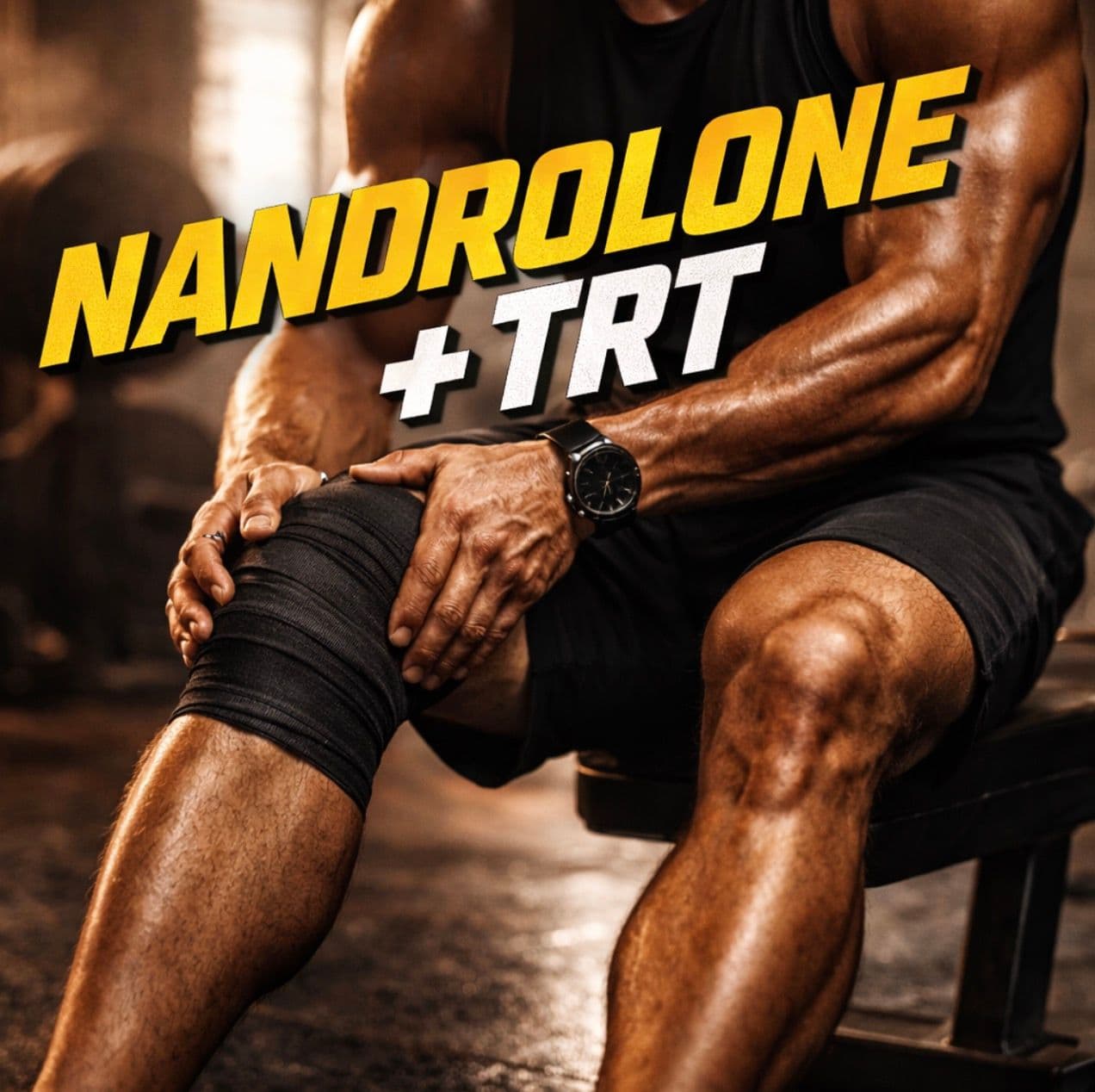
Your joints are grinding, your testosterone is low, and standard advice has not fixed either problem. For a growing number of men working with forward-thinking clinicians, a carefully supervised combination of nandrolone and testosterone replacement therapy has been part of the conversation for decades, and it deserves a clear-eyed look.
What Testosterone Replacement Therapy Actually Does
Testosterone replacement therapy, commonly called TRT, is exactly what it sounds like: restoring testosterone to a physiologically normal range in men whose bodies no longer produce enough on their own. Low testosterone, or hypogonadism, is not a fringe condition. It affects millions of men and can contribute to fatigue, reduced muscle mass, increased body fat, low libido, cognitive fog, and mood changes.
Men pursue TRT because the symptoms of low testosterone are real and measurable, and because restoring hormone levels through medical supervision can meaningfully improve quality of life. It is not a shortcut or a performance trick for healthy men, it is a clinical intervention for a documented hormonal deficiency. TRT requires a diagnosis, ongoing lab monitoring, and a prescribing clinician who tracks both benefits and risks over time.
Nandrolone: A Decades-Long Clinical History Worth Understanding
Nandrolone is an anabolic-androgenic steroid that has been in clinical use since the 1960s. That context matters. This is not a gray-market compound. Pharmaceutical versions, most commonly nandrolone decanoate, have been prescribed by physicians for conditions including anemia, muscle-wasting diseases, osteoporosis, and certain breast cancers. The World Health Organization once listed nandrolone among its essential medicines for specific indications.
Chemically, nandrolone is similar to testosterone but with a meaningful difference: it has a much lower androgenic-to-anabolic ratio. In practical terms, that means it tends to produce more tissue-building effects relative to the androgenic effects (things like prostate stimulation and scalp-related concerns) that come with testosterone itself. It also converts to estrogen at a significantly lower rate than testosterone does.
It is a controlled substance, it requires a prescription, and its use should always be supervised. But its clinical track record is long and documented, which distinguishes it from many compounds that float around in performance circles.
Why Joints Come Up in the Nandrolone Conversation
The association between nandrolone and joint comfort is one of the most persistent observations in both clinical literature and anecdotal reporting from patients who have used it medically. Understanding why requires looking at several plausible mechanisms, while being honest about where the evidence is strong and where it is still incomplete.
One of the most discussed mechanisms involves collagen synthesis. Nandrolone appears to stimulate the production of collagen, the structural protein that makes up tendons, ligaments, and cartilage. Connective tissue health depends heavily on collagen turnover, and if nandrolone genuinely accelerates that process, the downstream effects on joint integrity could be real.
There is also evidence suggesting nandrolone may influence synovial fluid, the lubricating fluid inside joint capsules. Some researchers have noted changes in the viscosity or volume of this fluid in patients using nandrolone, which could reduce the friction and discomfort associated with joints that are running dry.
Beyond the structural angle, nandrolone may have modest anti-inflammatory properties. Chronic joint pain in active or aging men often has an inflammatory component, and even modest reductions in local inflammation can translate to noticeable improvements in day-to-day comfort and training tolerance.
Finally, men who feel less joint pain simply train better, move more freely, and load their musculoskeletal system more consistently. That improved movement pattern, over time, is itself therapeutic. It is difficult to separate the direct pharmacological effects from the cascade of benefits that come from being able to move without chronic discomfort.
Symptom Relief vs. Actual Tissue Repair: A Distinction That Matters
This is where intellectual honesty becomes essential. Feeling better in your joints is not the same as rebuilding damaged cartilage. These are different things, and conflating them leads to unrealistic expectations and potentially harmful decisions.
Nandrolone may reduce pain perception, reduce inflammation, improve synovial fluid dynamics, and promote some degree of connective tissue strengthening. These are meaningful clinical effects. Whether it reliably regenerates significantly degraded cartilage in conditions like advanced osteoarthritis is a different claim, and the evidence for that stronger assertion is far less settled.
Think of the distinction this way: a well-lubricated, less inflamed joint with stronger surrounding connective tissue is genuinely healthier and more functional, even if the cartilage surface itself has not been rebuilt. That is real value. It is just not magic, and clinicians who are honest with their patients say so upfront.
Who Might Be a Reasonable Candidate, and Who Should Pause
A clinician might consider nandrolone as an adjunct to TRT for a man who is already confirmed hypogonadal, has documented connective tissue or joint discomfort that is interfering with his function or training, has no significant contraindications, and is committed to ongoing monitoring. Men who have responded well to TRT but continue to struggle with joint issues, tendons that feel fragile, or connective tissue injuries that are slow to heal represent one population where this conversation can be reasonable.
The picture changes considerably in other scenarios. Men with a history of prostate cancer, significant cardiovascular disease, uncontrolled blood pressure, severe sleep apnea, or elevated hematocrit are generally not good candidates for additional anabolic therapy without careful evaluation. Men who are hoping to become fathers in the near term should understand that adding exogenous anabolic steroids can suppress the hormonal signals that drive sperm production.
Age, baseline health, existing medications, and individual hormonal response all factor into whether this approach is sensible for a given person. There is no universal protocol that fits every man.
Pairing Nandrolone with Testosterone: Why the Combination Has Its Own Logic
Nandrolone alone, without testosterone, creates a hormonal problem. When the body detects exogenous anabolic steroids, it suppresses its own natural testosterone production. Without concurrent testosterone supplementation, a man can find himself with adequate nandrolone levels but insufficient testosterone, which can cause low libido, fatigue, erectile dysfunction, and mood disruption.
Pairing nandrolone with TRT addresses this directly. The testosterone maintains normal androgenic function and supports libido, energy, and mood, while the nandrolone contributes its anabolic and joint-supportive properties. The combination is more physiologically complete than either compound would be in isolation.
This is one reason why clinicians who use this approach typically insist that it be an adjunct to an established TRT protocol, not a replacement for one. The hormonal interplay matters, and managing it requires ongoing lab work and clinical attention to how each patient responds.
Safety Monitoring: What Responsible Use Actually Requires
Neither TRT nor nandrolone is a set-it-and-forget-it therapy. Responsible use requires regular blood work and clinical check-ins to track several parameters.
Hematocrit and hemoglobin levels can rise with anabolic therapy, thickening the blood and increasing cardiovascular risk if left unchecked. Lipid panels matter because anabolic steroids can shift cholesterol profiles in unfavorable directions. Blood pressure warrants monitoring, particularly in men with any baseline tendency toward hypertension.
Prostate health is relevant, especially in older men, and should be evaluated before and during therapy. Sleep apnea can be worsened by testosterone therapy and should be assessed, particularly in men who are overweight or have symptoms. Mood changes, though often positive at appropriate hormone levels, can become problematic if levels climb too high, and nandrolone specifically has been associated with mood effects in some users. Acne and hair changes are common concerns in the androgenic category, though nandrolone's lower androgenic profile tends to make these milder than with testosterone alone.
Fertility deserves its own mention. Men who want biological children should have a frank conversation with their clinician before starting or expanding anabolic therapy, as exogenous hormones suppress the pituitary signals that drive sperm production.
Non-Prescription Approaches That Belong in Every Joint Health Plan
Medication is one tool. It is rarely the whole toolbox.
Training modifications matter enormously. High-impact loading on damaged joints without a thoughtful programming approach accelerates wear rather than supporting recovery. Working with a coach or physical therapist to identify movement patterns that reduce joint stress while maintaining load can achieve results that no compound can replicate.
Sleep is where tissue repair actually happens. Chronic poor sleep undermines every anabolic process in the body, hormonal or otherwise. Men who sleep poorly are fighting biology when they try to recover from joint stress.
Body composition is directly relevant. Excess body fat increases mechanical load on weight-bearing joints and also sustains a low-grade inflammatory state throughout the body. Modest improvements in body composition, even without reaching any particular aesthetic goal, can meaningfully reduce joint symptoms.
Nutritional foundations, adequate protein for tissue repair, sufficient micronutrients like vitamin D and magnesium, and appropriate caloric intake, support everything else. Some clinicians also incorporate supplements like collagen peptides or omega-3 fatty acids as adjuncts, though the evidence base varies.
Physical therapy, properly prescribed and consistently followed, addresses joint mechanics, muscle imbalances, and movement patterns in ways that are durable and safe. It deserves more credit than it typically receives.
Common Misconceptions That Deserve Correction
The word "steroids" carries enormous cultural baggage, and most of that baggage does not accurately describe how nandrolone is used in a supervised clinical context. Confusing physician-managed anabolic therapy with the high-dose, unsupervised use seen in competitive bodybuilding is a category error. The doses, the monitoring, the goals, and the risks are fundamentally different.
Another persistent misconception is that nandrolone will repair any joint problem regardless of its severity or cause. It will not. Advanced structural damage, autoimmune joint conditions, and mechanical issues caused by poor movement patterns all require interventions beyond hormone optimization.
Some men also assume that because nandrolone has a gentler androgenic profile than testosterone, it carries no meaningful risks. That is not accurate. All exogenous anabolic hormones alter physiology, affect the cardiovascular system, and suppress the body's natural hormone production. Supervision and monitoring are not optional.
Finally, the idea that TRT alone should have resolved joint pain and that adding nandrolone is an unnecessary escalation misunderstands what each compound does. Testosterone and nandrolone act through overlapping but distinct pathways, and for some men, the combination addresses symptoms that neither compound resolves alone.
Making This Decision the Right Way
The most important thing a man can do when exploring this territory is work with a clinician who takes his symptoms seriously, orders the appropriate baseline labs, and approaches hormone optimization as an ongoing relationship rather than a one-time prescription.
This means being honest about symptoms, history, and goals. It means showing up for follow-up appointments and blood draws. It means understanding that the goal is physiological optimization within a safe range, not maximum hormone levels.
For men who are genuinely hypogonadal, dealing with joint discomfort that limits their quality of life, and looking for a medically grounded approach that goes beyond what basic TRT has offered, this conversation is worth having with the right clinician. Teams like those at AlphaMD specialize in exactly this kind of individualized, evidence-informed men's health and hormone optimization, offering the kind of ongoing clinical partnership that this type of therapy requires. Decisions this nuanced deserve that level of attention.
Have a question? Ask us.
At AlphaMD, we're here to help. Feel free to ask us any question you would like about TRT, medical weightloss, ED, or other topics related to men's health. Or take a moment to browse through our past questions.
People are asking...
Do you prescribe nandrolone as a trt add on for joint pain?...
Nandrolone is a legal medication, and assuming appropriate representation for treatment (like joint recovery concerns due to injury or intense physical work), it can be a major benefit to patients to ... See Full Answer
For someone interested in both TRT and Nandrolone, would you start them at the same time? Or get the TRT dialed in first? For proof of joint pain, wou...
Each medical provider has a slightly different approach to treatment...and this can be a good thing. As there are no hard fixed guidelines to treatment initiation, experienced providers are aware that... See Full Answer
I have read that some patients are using a Deca+Test protocol and some have a deca solo protocol. Have you seen this? Benefits? I have read it helps w...
We typically do use Nandrolone for those who are having joint issues or very physically demanding lifestyles that are hard on them. It is rare to have someone on this but we have more folks in this ca... See Full Answer
Get $30 off your first month’s order
Enter your email address now to receive $30 off your first month’s cost, other discounts, and additional information about TRT.
Legal Disclaimer
This website is a repository of publicly available information and is not intended to form a physician-patient relationship with any individual. The content of this website is for informational purposes only. The information presented on this website is not intended to take the place of your personal physician's advice and is not intended to diagnose, treat, cure, or prevent any disease. Discuss this information with your own physician or healthcare provider to determine what is right for you. All information is intended for your general knowledge only and is not a substitute for medical advice or treatment for specific medical conditions. The information contained herein is presented in summary form only and intended to provide broad consumer understanding and knowledge. The information should not be considered complete and should not be used in place of a visit, phone or telemedicine call, consultation or advice of your physician or other healthcare provider. Only a qualified physician in your state can determine if you qualify for and should undertake treatment.