
Low SHBG, High Free T, Feel Like Garbage: The Metabolic Trap No One Warns You About
Published on:
Updated on:
People are asking...
Any advice for guys with low E2, average testosterone, but high SHBG?...
Great question — this profile comes up fairly often. When SHBG is elevated, it can bind up more testosterone, meaning your free (bioavailable) T may be low even if total T looks "normal." That can lea... See Full Answer
Could you give me some advice? im 23, 5'10, 62kg (136.687Lbs) high protein high fat diet, very active sleep 9-10 hours a night, total testosterone 600...
It sounds like a lot of your symptoms could be addressed by TRT, though given your history of Gyno, you'd want to be careful and mention that to your provider so that they can have your doses spread o... See Full Answer
I've been having low T symptoms so I had my level checked. Came back 542 ng/dL. I then learned about Free T and bioavailability so I had my level chec...
Free T is the only “active” T. That means it is the only T available to attach to androgen receptors. Bioavailable T is a combination of free T and T attached to albumin (albumin easily releases T to ... See Full Answer
Have a question? Ask us.
At AlphaMD, we're here to help. Feel free to ask us any question you would like about TRT, medical weightloss, ED, or other topics related to men's health. Or take a moment to browse through our past questions.
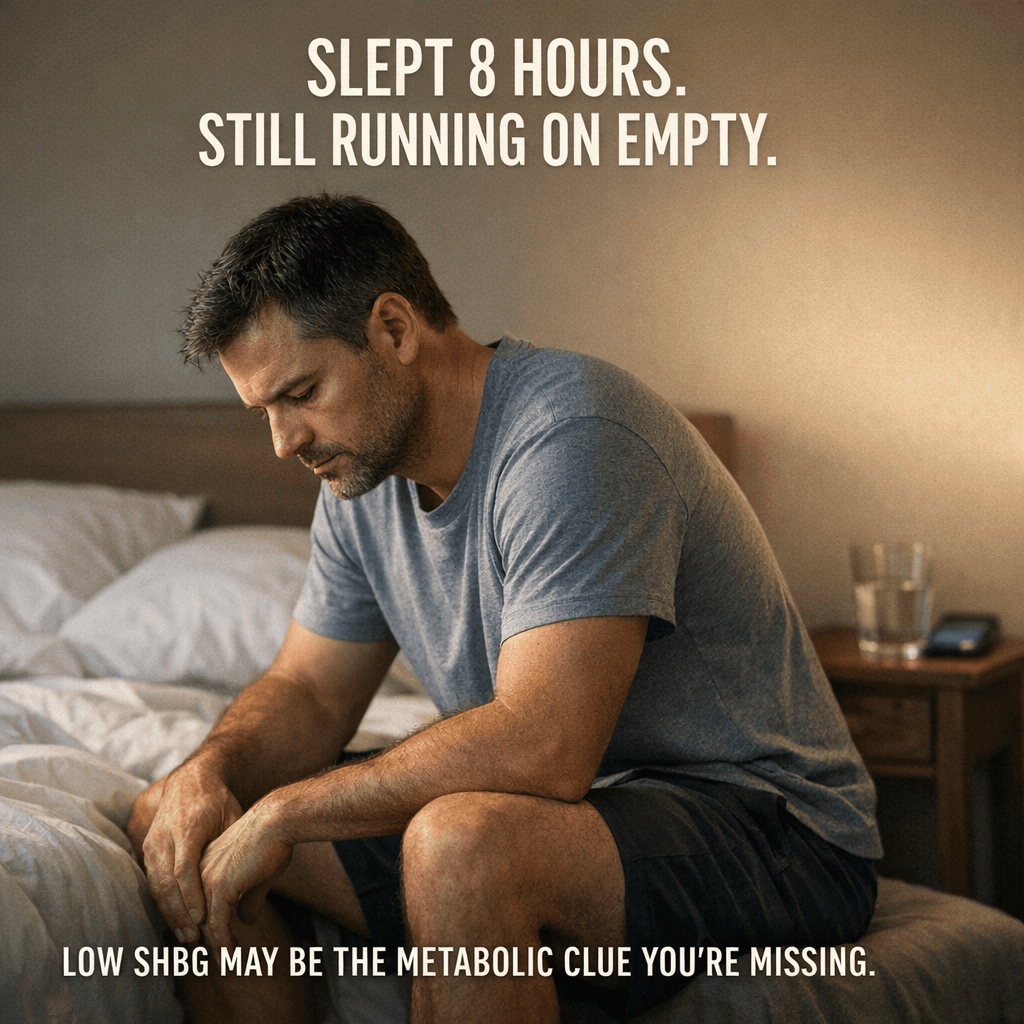
Your testosterone numbers look great on paper, yet you feel exhausted, foggy, irritable, and flat in ways you cannot quite explain. This disconnect is more common than most men realize, and it points to a metabolic story that a single lab value will never tell.
What SHBG Actually Does (And Why It Is Not the Enemy)
Sex hormone-binding globulin, or SHBG, is a protein produced primarily in the liver. Its job is to bind to sex hormones, including testosterone, and transport them through the bloodstream. When testosterone is bound to SHBG, it is essentially inactive, unable to enter cells and produce effects. The testosterone that is not bound, referred to as free testosterone, is the fraction most readily available for biological action.
For years, the conversation in men's health spaces has gone something like this: low SHBG equals high free testosterone, and high free testosterone equals feeling great. It sounds logical. But that framing skips over something critical.
SHBG does not exist in a vacuum. Its levels are tightly regulated by the liver and are influenced by insulin signaling, inflammation, thyroid function, and overall metabolic health. When SHBG drops, it is often the body signaling that something upstream is off, not that you have stumbled into some hormonal advantage.
The Metabolic Fingerprint of Low SHBG
Low SHBG is consistently associated with a cluster of metabolic problems: insulin resistance, elevated triglycerides, non-alcoholic fatty liver disease, excess visceral fat, chronic low-grade inflammation, and poor sleep quality. These are not coincidences. The liver produces less SHBG when it is dealing with high insulin levels, fatty infiltration, or systemic inflammation.
Think about what that means for a man with low SHBG and high free testosterone. The elevated free T is not happening in a clean, optimized metabolic environment. It is happening inside a body that may be struggling to regulate blood sugar, process dietary fat, sleep deeply, or manage inflammatory signaling. The high free T number is almost a side effect of metabolic dysfunction, not evidence of peak hormonal health.
This is the trap. Men see the free testosterone number, feel validated, and then wonder why they still feel terrible.
Why You Can Have High Free T and Still Feel Like Garbage
Testosterone is one signal among dozens that regulate energy, mood, libido, motivation, and cognitive clarity. When the metabolic environment is compromised, those other signals are often broken in ways that testosterone cannot fix.
Insulin resistance, for example, impairs cellular energy metabolism at the mitochondrial level. You can have plenty of androgens circulating, but if your cells are struggling to use glucose efficiently, fatigue is going to persist regardless of what your free T reads. The same applies to poor sleep. Sleep deprivation tanks growth hormone release, disrupts cortisol rhythms, blunts dopamine sensitivity, and wrecks recovery. No amount of free testosterone compensates for chronic sleep debt.
Then there is the liver connection. When the liver is dealing with fatty infiltration or high metabolic load, it is less efficient at clearing estrogens and stress hormones. Estradiol balance matters for men, and when estrogen metabolism is sluggish, symptoms like water retention, mood instability, and reduced libido can persist even when testosterone levels appear favorable.
Cortisol is another layer. Chronic stress keeps cortisol elevated, which directly suppresses testosterone receptor sensitivity, impairs sleep architecture, drives visceral fat accumulation, and feeds the insulin resistance cycle. You can have excellent lab numbers and still feel crushed if the stress physiology is running unchecked.
The Symptom Profile That Should Raise a Red Flag
The men who land in this metabolic trap often describe a recognizable pattern. Energy crashes mid-morning or mid-afternoon. Irritability that seems disproportionate to circumstances. Brain fog that makes focus feel like pushing through wet cement. Libido that shows up inconsistently, present one week, absent the next, with no clear trigger. Mood swings that feel hormonal but do not resolve with hormonal adjustments alone.
Physically, they may notice water retention, increased acne or oiliness, disrupted sleep despite feeling exhausted, and a body composition that is not improving despite effort. These symptoms overlap significantly with estrogen imbalance, subclinical thyroid dysfunction, elevated cortisol, and medication side effects, which is exactly why chasing a single lab value leads nowhere useful.
A man on testosterone replacement therapy with low SHBG may be converting testosterone to estradiol at a higher rate due to increased aromatase activity in excess body fat. He may have undiagnosed sleep apnea that is shredding his sleep quality and driving inflammatory stress hormones. He may be consuming a diet heavy in ultra-processed foods and refined carbohydrates that keeps insulin elevated around the clock. All of these factors can produce the symptom profile above, and none of them are fixed by adjusting testosterone dose.
Chasing Numbers Is a Losing Game
The "more testosterone is better" mindset has become genuinely problematic in some corners of men's health culture. It treats free testosterone as the primary outcome variable and everything else as secondary. In practice, this leads men to optimize for a lab result while the underlying metabolic dysfunction compounds quietly in the background.
Supraphysiologic androgen levels in a low-SHBG, insulin-resistant state can accelerate certain risks. Hematocrit can climb. Blood pressure can rise. Lipid patterns can shift unfavorably. Liver enzymes deserve monitoring. These are not theoretical concerns. They are clinically relevant considerations that require ongoing evaluation, not a set-it-and-forget-it approach.
The more productive framing is not "how do I raise my free testosterone" but rather "what is my body actually signaling, and what does the full picture look like." That requires looking at trends over time, not snapshots. It requires understanding how sleep, nutrition, body composition, stress, and physical activity interact with hormonal physiology.
What a Comprehensive Evaluation Actually Looks Like
Clinicians who approach men's health thoughtfully are looking at far more than total and free testosterone. A comprehensive assessment typically includes fasting insulin and blood glucose markers to evaluate insulin sensitivity, a lipid panel with attention to triglycerides, liver enzyme levels, thyroid markers including TSH and free thyroid hormones, a complete blood count to track hematocrit and red blood cell changes, estradiol levels, and when indicated, cortisol assessment.
Beyond labs, physical measurements matter. Waist circumference is a meaningful proxy for visceral adiposity and metabolic risk. Blood pressure tells a story that labs sometimes miss. Sleep quality, assessed through patient history or formal sleep study screening, is essential in any man presenting with fatigue, mood disruption, or low motivation, because undiagnosed obstructive sleep apnea is startlingly common in this population and is both a driver and consequence of the metabolic issues described here.
Symptom context matters as much as numbers. A lab result without a clinical story attached to it is just data. Experienced clinicians weigh how a man feels, how his symptoms have changed over time, and how lifestyle variables interact with what the labs show.
Practical Paths Forward That Do Not Start With a Syringe
Addressing the root drivers of low SHBG and metabolic dysfunction is not glamorous work, but it is the work that actually moves the needle on how men feel.
Resistance training is one of the most evidence-supported interventions for improving insulin sensitivity, supporting favorable body composition, and influencing both SHBG and testosterone metabolism favorably over time. Daily movement, even outside of structured exercise, matters significantly for glucose regulation and inflammatory control.
Nutrition quality has an outsized impact on this picture. A dietary pattern that reduces ultra-processed foods, refined carbohydrates, and excess alcohol while emphasizing whole protein sources, vegetables, and healthy fats tends to improve fasting insulin, triglycerides, and liver health over weeks to months. Alcohol deserves particular attention here. Even moderate alcohol consumption suppresses SHBG, stresses liver function, disrupts sleep architecture, and blunts testosterone production. Many men are surprised by how much this single variable affects how they feel.
Sleep hygiene is non-negotiable. Consistent sleep timing, a cool and dark sleep environment, reducing blue light exposure before bed, and limiting alcohol close to bedtime can meaningfully improve sleep quality. For men with symptoms suggestive of sleep apnea, including loud snoring, daytime sleepiness, or waking unrefreshed, formal screening with a sleep study is worth pursuing. Treating sleep apnea often produces dramatic improvements in energy, mood, libido, and body composition that no hormonal intervention matches.
Stress management is not a soft topic. Chronic psychological and physiological stress dysregulates the entire hormonal axis, and addressing it through structured practices, whether that means therapy, breathwork, physical outlets, or community connection, is a legitimate clinical priority.
Optimization Means More Than a Number on a Lab Report
The men who actually feel well long-term are rarely the ones who found the perfect testosterone dose. They are the ones who addressed sleep, cleaned up nutrition, started lifting weights, reduced alcohol, got their metabolic markers moving in the right direction, and worked with clinicians who evaluated the full picture rather than reacting to individual data points.
True optimization is a conversation between how a man feels, what his labs show, and what his lifestyle context reveals. Providers on the AlphaMD platform understand this. Rather than treating a number on a page, they assess symptoms, metabolic health, and individual history together, supporting men in building a foundation that makes hormonal care actually work the way it is supposed to.
Low SHBG with high free testosterone and persistent symptoms is not a paradox. It is a signal worth listening to carefully, and the answer almost never lives in a single lab value.
Have a question? Ask us.
At AlphaMD, we're here to help. Feel free to ask us any question you would like about TRT, medical weightloss, ED, or other topics related to men's health. Or take a moment to browse through our past questions.
People are asking...
Any advice for guys with low E2, average testosterone, but high SHBG?...
Great question — this profile comes up fairly often. When SHBG is elevated, it can bind up more testosterone, meaning your free (bioavailable) T may be low even if total T looks "normal." That can lea... See Full Answer
Could you give me some advice? im 23, 5'10, 62kg (136.687Lbs) high protein high fat diet, very active sleep 9-10 hours a night, total testosterone 600...
It sounds like a lot of your symptoms could be addressed by TRT, though given your history of Gyno, you'd want to be careful and mention that to your provider so that they can have your doses spread o... See Full Answer
I've been having low T symptoms so I had my level checked. Came back 542 ng/dL. I then learned about Free T and bioavailability so I had my level chec...
Free T is the only “active” T. That means it is the only T available to attach to androgen receptors. Bioavailable T is a combination of free T and T attached to albumin (albumin easily releases T to ... See Full Answer
Get $30 off your first month’s order
Enter your email address now to receive $30 off your first month’s cost, other discounts, and additional information about TRT.
Legal Disclaimer
This website is a repository of publicly available information and is not intended to form a physician-patient relationship with any individual. The content of this website is for informational purposes only. The information presented on this website is not intended to take the place of your personal physician's advice and is not intended to diagnose, treat, cure, or prevent any disease. Discuss this information with your own physician or healthcare provider to determine what is right for you. All information is intended for your general knowledge only and is not a substitute for medical advice or treatment for specific medical conditions. The information contained herein is presented in summary form only and intended to provide broad consumer understanding and knowledge. The information should not be considered complete and should not be used in place of a visit, phone or telemedicine call, consultation or advice of your physician or other healthcare provider. Only a qualified physician in your state can determine if you qualify for and should undertake treatment.