
Kisspeptin Suppression: The Upstream Hormone That Explains Your Dead Libido on TRT
Published on:
Updated on:
People are asking...
No libido increase after starting TRT, probably even slight drop due to balls shrinking and no longer needing regular emptying. Of course I'm going to...
Most instances of low libido are not hormonal. Most low libido is emotional/paychological, stress induced, due to sleep apnea, or relationship Issues. If TRT never improved your libido at all, then th... See Full Answer
What’s your opinion or experience with Kisspeptin 10? My NP wants to run a 5 week cycle to see if it will kickstart or promote Testosterone production...
Before saying anything, it’s important to note that kisspeptin-10 is still not FDA approved, so no medical recommendation can be made here regarding its use. We can only report on what studies have ... See Full Answer
I’ve been on trt for 8 weeks now. My libido is no existent and I feel no different then before. I take 150mg weekly split into a eod dose. What would ...
Problems with libido are always difficult to nail down, as most of the time it is actually not a hormonal issue. Basically, if you had no libido prior to starting TRT, and TRT is not improving it at... See Full Answer
Have a question? Ask us.
At AlphaMD, we're here to help. Feel free to ask us any question you would like about TRT, medical weightloss, ED, or other topics related to men's health. Or take a moment to browse through our past questions.
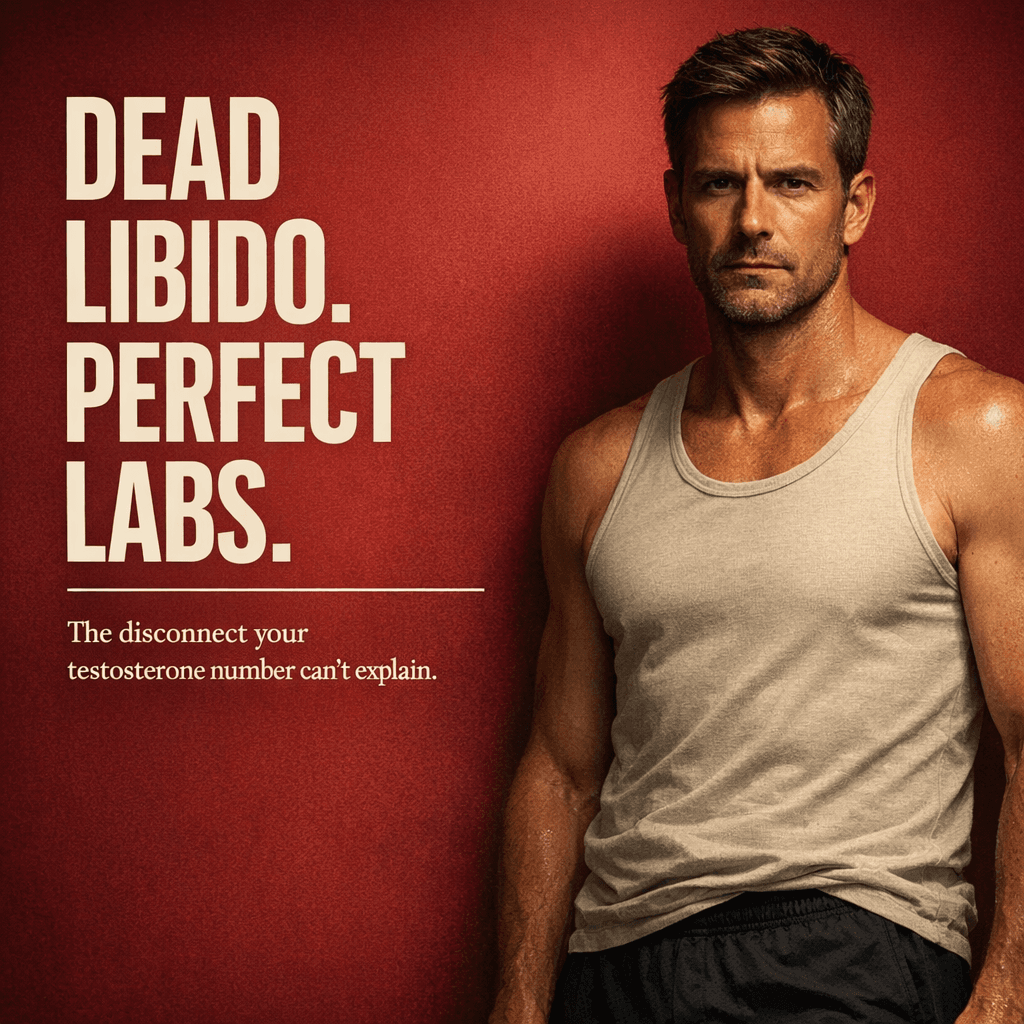
You started testosterone replacement therapy expecting a surge in drive, energy, and desire. Instead, your libido is flat, your partner is confused, and your lab results look perfectly normal on paper.
This disconnect is more common than most TRT patients are told, and the explanation lives further upstream in your brain than a simple testosterone number can capture. At the center of this story is a neuropeptide called kisspeptin, and understanding how it works changes the entire conversation about why desire goes quiet even when therapy appears to be going well.
What Kisspeptin Actually Is and Why It Matters
Kisspeptin is a signaling molecule produced by specialized neurons in the hypothalamus, a small but extraordinarily powerful region of the brain that acts as the master regulator of your hormonal environment. These kisspeptin neurons function as gatekeepers. They receive information from the body about energy status, stress, reproductive readiness, and circulating hormone levels, then translate that information into a signal that either activates or quiets the system downstream.
The primary downstream target of kisspeptin is gonadotropin-releasing hormone, or GnRH. When kisspeptin neurons fire, they trigger the pulsatile release of GnRH into a tiny vascular network that connects the hypothalamus to the pituitary gland. That pulse of GnRH tells the pituitary to release luteinizing hormone (LH) and follicle-stimulating hormone (FSH), which then travel through the bloodstream to the testes, where LH stimulates testosterone production and FSH supports sperm development.
This chain of events is called the hypothalamic-pituitary-gonadal axis, or HPG axis. Kisspeptin sits at the very top of that chain. It is not just a reproductive coordinator; research suggests it also plays a direct role in sexual motivation and arousal at the level of the brain itself, independent of testosterone.
How TRT Quietly Rewires the Feedback Loop
When you introduce exogenous testosterone into the body through TRT, the body detects elevated androgen levels and responds predictably: it interprets the external hormone as a signal that the testes are already producing enough, or more than enough. The HPG axis responds by turning down upstream signaling.
Kisspeptin neuron activity decreases. GnRH pulses become less frequent or weaker. LH and FSH drop, sometimes to very low levels. The testes, no longer receiving the LH signal they depend on, reduce their own natural testosterone output and can decrease in size over time. This is the well-documented gonadal suppression associated with TRT, and it is why fertility considerations become important for men on long-term therapy who may want to father children.
The part that surprises most people is the kisspeptin piece. You can have serum testosterone levels in a range that looks adequate on a lab report, and still have profoundly suppressed upstream signaling in the brain. That suppressed signaling does not just mean your testes are offline. It may mean the very neural circuits that generate sexual desire are receiving a muted or altered signal.
In other words, the brain's motivational drive toward sex is not simply switched on by testosterone in the bloodstream. Kisspeptin-mediated signaling in the hypothalamus appears to have its own role in generating that central desire, and TRT does not replicate or restore that upstream activity. It bypasses it entirely.
Why Your Testosterone Number Is Not the Full Answer
One of the most persistent misconceptions in men's hormone health is the idea that higher testosterone automatically equals higher libido. It does not, and the kisspeptin framework helps explain why.
Libido is a centrally generated experience. It originates in the brain, shaped by neurotransmitter tone, emotional context, relationship quality, circadian signals, and neuroendocrine inputs, of which testosterone is only one. A man with suppressed kisspeptin and LH signaling may have adequate testosterone circulating in his blood while still experiencing the equivalent of a dimmer switch turned low on central desire circuitry.
There is also the question of what happens to testosterone once it is in the body. Testosterone can convert to estradiol through a process called aromatization. Both low and elevated estradiol states can affect libido in different ways for different men. Some men are sensitive to estrogen shifts in ways that affect mood, arousal, and desire. Others are not. Dihydrotestosterone, or DHT, which is a potent metabolite of testosterone, influences androgen receptor signaling throughout the body and brain, and individual variation in receptor sensitivity means two men at the same testosterone level can have dramatically different experiences.
Prolactin is another variable worth understanding. Elevated prolactin, whether from a small benign pituitary growth, chronic stress, certain medications, or other causes, is a known libido suppressor that operates partly by dampening dopamine tone. Dopamine is centrally involved in anticipatory desire and the motivational drive toward pleasurable experience. When dopamine signaling is reduced, the wanting aspect of sexuality fades even when the physical capacity to function remains intact.
The Brain Versus Body Problem in Sexual Function
Clinicians who work with men's sexual health often describe a useful distinction: central desire versus peripheral function. These two systems can operate semi-independently, and they can fail independently too.
Peripheral erectile physiology depends on vascular health, nitric oxide signaling, pelvic nerve function, and tissue sensitivity. Central desire depends on limbic and hypothalamic circuits, neurotransmitter balance, and the motivational architecture of the brain. A man might have adequate vascular function for erections but experience no spontaneous desire to initiate or engage. Conversely, a man might have strong psychological desire but encounter physical obstacles. TRT can influence both systems, but it does not guarantee results in either.
This distinction matters because men who report good energy, body composition improvements, and mood benefits on TRT while still experiencing flat libido are not imagining things, and they are not failures. Their peripheral and metabolic responses to testosterone may be excellent. Their central desire circuitry is simply governed by a more complex set of inputs.
The Many Other Upstream Contributors
Kisspeptin suppression is a compelling framework, but it is one variable in a genuinely multi-factorial picture. Sleep is a significant one. Testosterone itself follows a circadian rhythm, and poor sleep quality, sleep apnea, or disrupted sleep architecture suppresses testosterone, growth hormone, and the neural recovery that healthy sexual function depends on. Cortisol, the primary stress hormone, has a documented suppressive effect on kisspeptin neurons and GnRH activity. Chronic psychological stress is not just an emotional experience; it is a hormonal event that signals to the reproductive axis that this is not the right time.
Depression and anxiety are often underestimated contributors. Both conditions directly reduce libido through neurobiological mechanisms, and both are also common downstream effects of hormonal disruption, creating feedback loops that can be difficult to untangle. Medications matter too. Selective serotonin reuptake inhibitors, or SSRIs, are among the most commonly used medications in adults and are well-documented to reduce sexual desire, arousal, and orgasmic function in a significant percentage of users.
Alcohol, cannabis, and other substances interact with the same dopaminergic and hormonal pathways that govern desire. Metabolic health, including insulin resistance, thyroid function, and cardiovascular fitness, shapes the hormonal environment in ways that affect libido. Relationship context, emotional safety, communication, and partner dynamics are not secondary variables that can be separated from the biology. They are part of the same integrated system.
How a Clinician Thinks Through This
A thoughtful clinician approaching a man on TRT with persistent low libido does not simply check a testosterone level and move on. The evaluation typically begins with a detailed history: when libido declined, what changed around that time, sleep patterns, stress levels, relationship context, and what the patient actually means when he says his libido is low.
Medication review is essential. A complete picture of prescriptions, supplements, recreational substances, and alcohol use often reveals overlooked contributors. Mental health history, current mood, and screening for depression or anxiety provide critical context that lab results cannot.
Laboratory evaluation in this setting tends to be broader than a single testosterone panel. A clinician may look at estradiol, DHT, prolactin, LH, FSH, SHBG, thyroid function, cortisol patterns, and metabolic markers, not to chase a single number, but to identify patterns that suggest where the system may be dysregulated. The goal is to form a clinical picture rather than a numerical checklist.
The Emerging Science of Kisspeptin as a Therapeutic Signal
Researchers have been exploring kisspeptin as a potential therapeutic target for several years, and the findings are genuinely interesting. Studies have examined kisspeptin administration in humans and observed effects on both hormonal output and self-reported sexual cognition and desire. The signals suggest that restoring or augmenting kisspeptin activity may have effects on central sexual motivation that go beyond what testosterone alone can achieve.
This is early-stage science. The research is promising but not yet translated into a simple clinical application or widely available treatment. The biology is complex, the individual variability is high, and the mechanisms are still being worked out in academic and clinical research settings. Anyone who encounters a product marketed as a kisspeptin solution for low libido should approach that claim with careful skepticism, because the science does not yet support a straightforward fix.
What the research does do is reinforce a broader point: the HPG axis is not a simple pipe, and libido is not a faucet. Restoring upstream signaling is a fundamentally different intervention than replacing a downstream hormone, and for some men, the distinction is clinically important.
Putting It Together
The man who starts TRT and finds his libido remains flat is not broken, and the therapy is not necessarily failing. What is happening, in many cases, is that a single intervention is being asked to solve a problem that lives at multiple levels simultaneously.
Kisspeptin suppression offers a real and underappreciated explanation for why upstream signaling matters independent of serum testosterone. But it sits alongside estrogen balance, dopamine tone, prolactin, sleep architecture, stress load, mental health, relationship context, and medication effects, all of which shape the experience of desire in real men living real lives.
Getting to the root of this requires individualized evaluation and a clinician willing to look beyond the testosterone number. Practices like AlphaMD focus on exactly this kind of comprehensive, clinician-guided approach to men's hormonal health, taking the time to understand the full picture rather than optimizing a single lab value in isolation.
Libido is upstream, it is multi-layered, and kisspeptin is a compelling reminder that the most important parts of human hormone physiology happen long before a number appears on a lab report.
Have a question? Ask us.
At AlphaMD, we're here to help. Feel free to ask us any question you would like about TRT, medical weightloss, ED, or other topics related to men's health. Or take a moment to browse through our past questions.
People are asking...
No libido increase after starting TRT, probably even slight drop due to balls shrinking and no longer needing regular emptying. Of course I'm going to...
Most instances of low libido are not hormonal. Most low libido is emotional/paychological, stress induced, due to sleep apnea, or relationship Issues. If TRT never improved your libido at all, then th... See Full Answer
What’s your opinion or experience with Kisspeptin 10? My NP wants to run a 5 week cycle to see if it will kickstart or promote Testosterone production...
Before saying anything, it’s important to note that kisspeptin-10 is still not FDA approved, so no medical recommendation can be made here regarding its use. We can only report on what studies have ... See Full Answer
I’ve been on trt for 8 weeks now. My libido is no existent and I feel no different then before. I take 150mg weekly split into a eod dose. What would ...
Problems with libido are always difficult to nail down, as most of the time it is actually not a hormonal issue. Basically, if you had no libido prior to starting TRT, and TRT is not improving it at... See Full Answer
Get $30 off your first month’s order
Enter your email address now to receive $30 off your first month’s cost, other discounts, and additional information about TRT.
Legal Disclaimer
This website is a repository of publicly available information and is not intended to form a physician-patient relationship with any individual. The content of this website is for informational purposes only. The information presented on this website is not intended to take the place of your personal physician's advice and is not intended to diagnose, treat, cure, or prevent any disease. Discuss this information with your own physician or healthcare provider to determine what is right for you. All information is intended for your general knowledge only and is not a substitute for medical advice or treatment for specific medical conditions. The information contained herein is presented in summary form only and intended to provide broad consumer understanding and knowledge. The information should not be considered complete and should not be used in place of a visit, phone or telemedicine call, consultation or advice of your physician or other healthcare provider. Only a qualified physician in your state can determine if you qualify for and should undertake treatment.