
Hematocrit 54: The 'Thick Blood' Panic Explained (Should You Actually Worry?)
Published on:
Updated on:
People are asking...
Do you feel it’s necessary to donate blood on TRT? I’ve seen some dialogue saying that high rbc from TRT isn’t dangerous and is misunderstood...
This subject is a nuanced discussion, but I will try to simplify it for the purpose of this AMA. High hematocrit means thicker blood. Thicker blood means there is a higher potential for decreased flow... See Full Answer
Follow-up to the question about hematocrit: in the setting of completely normal RBC and platelets (middle of reference range), along with no discernib...
In many providers' experience, not necessarily, as some people have been happy & fine there. From a medical standpoint, the provider overseeing your care would say make sure it is monitored & advise o... See Full Answer
What is your opinion about high hematocrit, including high RBC and high hemoglobin? There seems to be some debate about whether high values on TRT a...
There certainly is debate regarding how relevant high hematocrit from TRT is as a risk factor. So far, there is no evidence to suggest it is as concerning as high hematocrit from other causes (ie COPD... See Full Answer
Have a question? Ask us.
At AlphaMD, we're here to help. Feel free to ask us any question you would like about TRT, medical weightloss, ED, or other topics related to men's health. Or take a moment to browse through our past questions.
You check your lab results online, see the hematocrit number sitting at 54, and suddenly you're Googling "thick blood" and "stroke risk" at two in the morning. Your doctor mentioned it might be something to watch, a buddy on a forum said you need to donate blood yesterday, and you're wondering if testosterone therapy is quietly turning your bloodstream into sludge.
Let's pump the brakes on the panic spiral.
Elevated hematocrit is a real thing that deserves attention, especially if you're on testosterone replacement therapy. But a single number doesn't tell your whole story, and understanding what hematocrit actually measures, why it rises, and what risks actually matter can help you move from fear to informed action.
What Hematocrit Actually Measures (And Why It Matters)
Hematocrit is the percentage of your blood volume made up of red blood cells. If your hematocrit is 54, that means 54 percent of your blood is packed with red blood cells, while the rest is plasma, the liquid component that carries those cells along with nutrients, hormones, and waste products.
Red blood cells are the oxygen delivery trucks of your body. They carry oxygen from your lungs to your tissues and haul carbon dioxide back for disposal. More red blood cells generally means better oxygen carrying capacity, which sounds like a good thing. Athletes training at high altitude naturally develop higher hematocrit as their bodies adapt to thinner air by cranking out more red blood cells.
But there's a trade-off. As the percentage of red blood cells increases, blood viscosity goes up. Think of it like the difference between water and honey. Honey flows more slowly, requires more pressure to move through a tube, and puts more strain on the pump pushing it. Your heart is that pump, and your arteries are those tubes.
Lab reference ranges exist as general population guides, not as rigid danger lines. The typical reference range for adult men sits somewhere in the mid-forties to low fifties, but that range is derived from population averages. It doesn't mean crossing above the upper end automatically triggers a medical emergency. It does mean you're outside the zone where most healthy men typically sit, and that warrants a closer look.
Why Testosterone Raises Hematocrit
Testosterone is a powerful signal to your bone marrow, the spongy tissue inside your bones where blood cells are born. One of testosterone's jobs is to stimulate the production of erythropoietin, a hormone that tells your bone marrow to ramp up red blood cell production. This is a normal physiological response, not a malfunction.
For men on testosterone replacement therapy, especially those whose levels were quite low before treatment, the jump in testosterone can significantly increase red blood cell production. This is one reason why responsible TRT protocols include regular blood work. The increase itself isn't inherently dangerous, but it shifts you into a zone that requires monitoring.
Not every man on TRT will see hematocrit climb into the higher ranges, and the degree of increase varies widely based on genetics, baseline levels, treatment approach, and individual physiology. Some men cruise along with hematocrit in the upper normal range without issue. Others see steady climbs that need active management.
The key takeaway: an increase in hematocrit on TRT is common and expected in many cases. It's a predictable biological response, not proof that the treatment is harming you. But it does mean you and your clinician need to stay aware and thoughtful about your individual situation.
The "Thick Blood" Panic: What's Real and What's Overblown
The language around elevated hematocrit can sound terrifying. "Thick blood." "Increased clot risk." "Heart attack waiting to happen." These phrases get thrown around in online forums, sometimes by people who mean well and sometimes by those who don't understand the nuance.
The concern isn't entirely unfounded. Significantly elevated hematocrit can increase blood viscosity to the point where it strains the cardiovascular system. Thicker blood requires more effort from the heart to circulate, and in theory, it could increase the likelihood of clot formation in certain contexts. Conditions like polycythemia vera, a bone marrow disorder that causes uncontrolled red blood cell production, are associated with increased thrombotic risk.
But comparing TRT-related hematocrit elevation to polycythemia vera is like comparing a summer rainstorm to a hurricane. The mechanisms, the severity, and the overall risk profiles are different.
What actually concerns clinicians about elevated hematocrit in the context of TRT is the combination of factors. A man in his twenties with no other health issues, good cardiovascular fitness, proper hydration, and a hematocrit that trends slightly above range is a very different case from a man in his fifties with a history of smoking, sleep apnea, elevated blood pressure, and poor hydration pushing similar numbers.
Age matters. Cardiovascular health matters. Other clotting risk factors matter. Lifestyle matters. A single lab value exists within a web of context, and that context shapes risk.
One Lab Number Is Not Your Whole Story
If you walked into a doctor's office and the only thing they looked at was your hematocrit, you'd rightfully question their competence. Good medicine doesn't work that way, and good TRT management certainly doesn't.
A hematocrit reading is a snapshot, not a movie. What matters just as much as the number itself is the trend. Has your hematocrit been climbing steadily over months, or has it been stable in a higher range? Did it jump suddenly after a change in treatment, or has it always sat where it is? Are you experiencing any symptoms like headaches, dizziness, visual changes, or unusual fatigue, or do you feel completely normal?
Clinicians also look at related markers. Hemoglobin, the protein inside red blood cells that actually binds oxygen, often tracks with hematocrit. Red blood cell count provides additional detail. Blood pressure readings, lipid panels, and other cardiovascular markers help paint a fuller picture of your overall health and risk.
Symptoms matter enormously. A man with a hematocrit in the mid-fifties who feels great, exercises regularly, sleeps well, and has no concerning symptoms is in a very different situation than someone with the same number experiencing frequent headaches, shortness of breath, or chest discomfort. Labs inform clinical decisions, but they don't replace the patient's lived experience.
Another layer of context: hydration status. Hematocrit can be falsely elevated if you're dehydrated at the time of the blood draw. If you fasted for hours, skipped water, or drew labs after a hard workout in the heat, your plasma volume might be temporarily reduced, making the red blood cell percentage appear higher. This is why some clinicians recommend repeat testing before making major decisions based on a single elevated reading.
What Thoughtful Monitoring and Management Look Like
Responsible testosterone therapy isn't a set-it-and-forget-it prescription. It requires regular follow-up and lab monitoring, typically every few months initially and then less frequently once things stabilize. Hematocrit is one of the key markers that gets checked consistently.
If hematocrit starts climbing or sits persistently high, a thoughtful clinician will investigate contributing factors before jumping straight to intervention. Are you getting quality sleep? Undiagnosed or poorly managed sleep apnea is a common driver of elevated hematocrit, independent of testosterone. Do you smoke? Smoking reduces oxygen delivery to tissues, which can signal the body to produce more red blood cells as compensation. Are you drinking enough water? Chronic dehydration can skew numbers.
Sometimes the conversation turns to adjusting the treatment approach itself. Different methods of testosterone delivery can influence how much hematocrit rises. The goal is to find a balance where you're getting the benefits of optimized testosterone without pushing other markers into problematic territory.
When hematocrit remains elevated despite addressing lifestyle factors, some men and their clinicians discuss therapeutic phlebotomy or blood donation. Removing a unit of blood periodically can bring hematocrit down, similar to how regular blood donors maintain lower levels. This isn't a first-line fix, and it's not appropriate for everyone, but it's a tool in the toolkit when needed.
The thread running through all of this: individualization. Cookie-cutter protocols don't work well for something as variable as how different men respond to testosterone therapy. What's appropriate for one person might not be for another, and good clinical care involves tailoring decisions to the individual in front of the clinician.
Take Ownership of Your Labs and Your Conversations
You are not a passive recipient of medical care. You're a partner in the process, and that means learning enough to ask smart questions and advocate for yourself when something doesn't sit right.
If your hematocrit comes back elevated, don't just nod and leave the appointment. Ask what the trend looks like. Ask what other factors your clinician is considering. Ask whether repeat testing makes sense before changing anything. Ask what symptoms you should watch for and what would prompt more immediate concern.
Bring up lifestyle factors. If you suspect sleep apnea, mention it. If you've been dehydrated or fasting oddly before labs, say so. These details help your clinician give you better guidance.
Be wary of extreme reactions in either direction. Panicking and abruptly stopping testosterone without medical guidance can cause its own problems, including a crash in how you feel and potential hormonal chaos as your body tries to recalibrate. On the flip side, ignoring persistently elevated hematocrit because you feel fine or don't want to deal with it is equally unwise. The goal is informed, measured action.
If you're not getting satisfactory answers or feel like your concerns are being dismissed, it's worth seeking a second opinion. TRT is increasingly common, but not all providers are equally experienced or thoughtful in managing it. Finding someone who treats the whole person, not just the lab sheet, makes a significant difference.
Putting It All Together Without Losing Your Mind
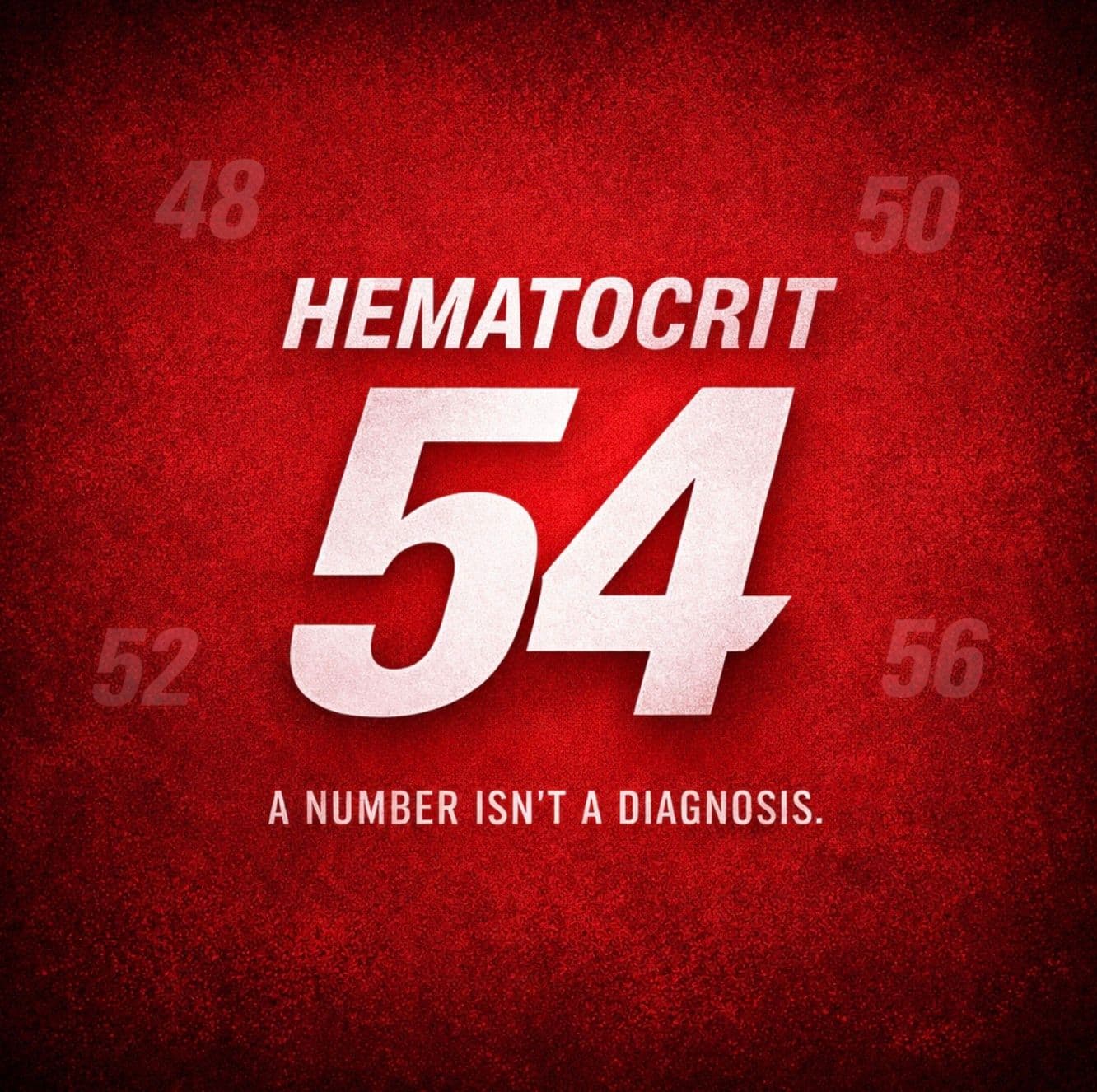
A hematocrit of 54 is not a reason to assume your testosterone therapy is slowly killing you. It's a signal to pause, gather context, and have an informed conversation with someone who understands both the science and your individual situation.
Elevated hematocrit in the context of TRT is common. It's a known effect of testosterone's influence on red blood cell production, and it's manageable with proper attention. The real risk comes not from the number itself, but from ignoring it, failing to monitor trends, or neglecting other health factors that compound cardiovascular strain.
Your labs are data points, not verdicts. They're most useful when viewed over time, combined with how you actually feel, and interpreted in light of your overall health, age, lifestyle, and goals. A single elevated reading might mean nothing more than you were dehydrated that day. A sustained upward trend despite good health habits might mean it's time to adjust something.
This is where working with a provider who prioritizes education and individualized care makes all the difference. AlphaMD is an online men's health platform that makes testosterone therapy accessible, built around the idea that TRT should be done thoughtfully, with regular monitoring and ongoing support. The approach combines access to experienced clinicians with the kind of educational resources that help you understand what's happening in your body and why it matters. The goal isn't just a testosterone prescription and hoping for the best. It's to help you optimize your health safely and sustainably, with eyes wide open on the markers that matter.
Elevated hematocrit deserves your attention. It doesn't deserve your panic. Get informed, stay engaged, and work with people who take your health as seriously as you do.
Have a question? Ask us.
At AlphaMD, we're here to help. Feel free to ask us any question you would like about TRT, medical weightloss, ED, or other topics related to men's health. Or take a moment to browse through our past questions.
People are asking...
Do you feel it’s necessary to donate blood on TRT? I’ve seen some dialogue saying that high rbc from TRT isn’t dangerous and is misunderstood...
This subject is a nuanced discussion, but I will try to simplify it for the purpose of this AMA. High hematocrit means thicker blood. Thicker blood means there is a higher potential for decreased flow... See Full Answer
Follow-up to the question about hematocrit: in the setting of completely normal RBC and platelets (middle of reference range), along with no discernib...
In many providers' experience, not necessarily, as some people have been happy & fine there. From a medical standpoint, the provider overseeing your care would say make sure it is monitored & advise o... See Full Answer
What is your opinion about high hematocrit, including high RBC and high hemoglobin? There seems to be some debate about whether high values on TRT a...
There certainly is debate regarding how relevant high hematocrit from TRT is as a risk factor. So far, there is no evidence to suggest it is as concerning as high hematocrit from other causes (ie COPD... See Full Answer
Get $30 off your first month’s order
Enter your email address now to receive $30 off your first month’s cost, other discounts, and additional information about TRT.
Legal Disclaimer
This website is a repository of publicly available information and is not intended to form a physician-patient relationship with any individual. The content of this website is for informational purposes only. The information presented on this website is not intended to take the place of your personal physician's advice and is not intended to diagnose, treat, cure, or prevent any disease. Discuss this information with your own physician or healthcare provider to determine what is right for you. All information is intended for your general knowledge only and is not a substitute for medical advice or treatment for specific medical conditions. The information contained herein is presented in summary form only and intended to provide broad consumer understanding and knowledge. The information should not be considered complete and should not be used in place of a visit, phone or telemedicine call, consultation or advice of your physician or other healthcare provider. Only a qualified physician in your state can determine if you qualify for and should undertake treatment.