
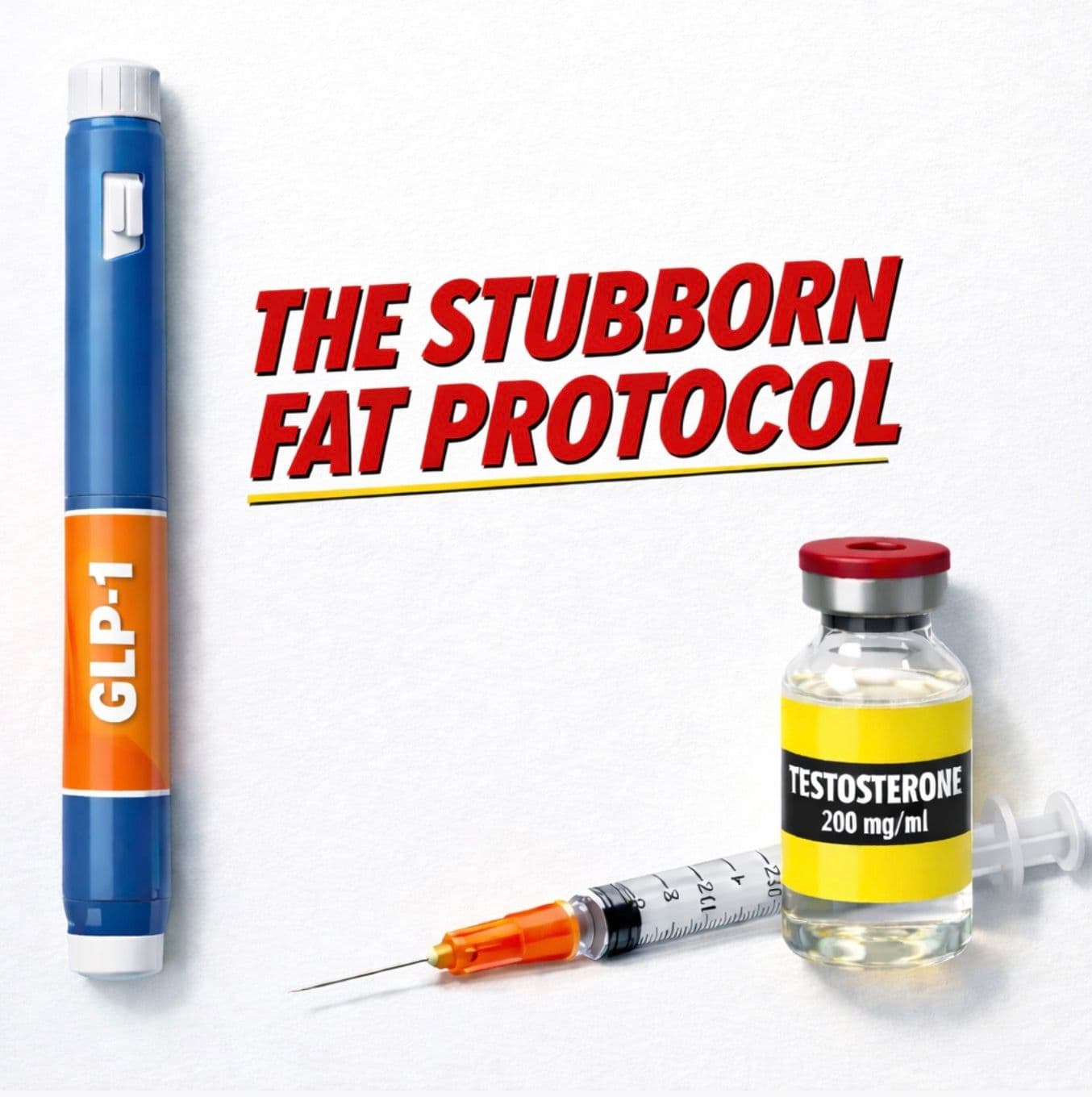
GLP-1 + TRT: The Fat Loss Stack for Men Who Can't Lose the Gut
Published on:
Updated on:
People are asking...
Any thoughts on being on GlP-1 agonists in conjunction w/ trt?...
Perfectly fine, and honestly encouraged if you have a lot of weight to lose. Many men put on fat to begin with due to having low Testosterone. GLP-1s are a great way to drop that fat, but without prop... See Full Answer
Would your fat loss drugs help a guy at 20% BF get down to 12-15% significantly faster?...
That's probably not the intended demographic, but it would certainly help you. GLP-1s are not at the same level of controlled substances as TRT Testosterone is, so a goal like "I want to lose 10ib" is... See Full Answer
Can guys at 18% bodyfat benefit from adding the anorectic peptides like semaglutide, trizep, etc for a weight loss phase? Or is it only feasible for ...
Anyone will lose weight by adding a GLP-1RA like semaglutide or tirzepatide. They are the most popular drugs on the market and work well, regardless of the amount of weight someone needs to lose. The ... See Full Answer
Have a question? Ask us.
At AlphaMD, we're here to help. Feel free to ask us any question you would like about TRT, medical weightloss, ED, or other topics related to men's health. Or take a moment to browse through our past questions.
You've cut carbs, upped your protein, hit the gym five days a week, and still, that stubborn belly fat refuses to budge. If you're a man over 35 staring down a gut that won't quit no matter what you throw at it, the problem might not be your willpower or your workout plan—it might be your hormones.
For millions of men, the frustration is real. You do everything the fitness gurus tell you to do, track your calories, lift heavy, sleep when you can, and yet the midsection stays soft. The mirror doesn't reflect the effort you're putting in, and the scale barely moves. What many men don't realize is that age, hormonal shifts, insulin resistance, and metabolic slowdown can create a perfect storm that makes losing belly fat feel nearly impossible.
But there's a new conversation happening in men's health circles, one that's bringing together two powerful tools: GLP-1 medications and testosterone replacement therapy (TRT). When used together under medical guidance, this combination is helping men finally break through stubborn fat loss plateaus and reclaim their bodies.
Why Belly Fat Becomes So Stubborn in Men
Belly fat isn't just about eating too much or moving too little. In men, visceral fat—the kind that sits deep around your organs—tends to accumulate for a mix of metabolic, hormonal, and lifestyle reasons that compound as you age.
Testosterone levels naturally decline after your late twenties and early thirties. This drop, often gradual and subtle, affects far more than your sex drive. Low testosterone makes it harder to build and maintain muscle mass, saps your energy and motivation, slows your metabolic rate, and shifts fat distribution toward your midsection. When testosterone is suboptimal, your body becomes less efficient at burning fat and more prone to storing it, especially around the abdomen.
At the same time, insulin resistance often creeps in. Years of dietary patterns, stress, poor sleep, and sedentary habits can desensitize your cells to insulin, the hormone that regulates blood sugar. When insulin isn't working efficiently, your body struggles to manage energy properly, leading to fat storage and making it incredibly difficult to tap into stored fat for fuel. This creates a metabolic environment where fat loss stalls, no matter how clean your diet is.
Add in chronic stress, which floods your system with cortisol, disrupted sleep patterns, and the natural metabolic slowdown that comes with aging, and you've got a body that's essentially programmed to hold onto belly fat. Willpower alone can't override biology.
What GLP-1 Medications Bring to the Table
GLP-1 medications have taken the weight loss world by storm over the past few years, and for good reason. Originally developed to help manage type 2 diabetes, these medications mimic a natural hormone called glucagon-like peptide-1, which plays a key role in regulating appetite, blood sugar, and how your body processes food.
When you take a GLP-1 medication, it works on several fronts. It slows down how quickly your stomach empties, which keeps you feeling fuller for longer after meals. It acts on receptors in your brain that control hunger and satiety, effectively turning down the volume on constant food cravings and the urge to snack. It also helps regulate blood sugar levels by enhancing insulin secretion when needed and reducing the release of glucagon, a hormone that raises blood sugar.
For men who have struggled with overeating, constant hunger, or poor blood sugar control, GLP-1 therapy can be a game changer. It doesn't eliminate the need for good nutrition, but it makes sticking to a calorie deficit dramatically easier. Instead of white-knuckling your way through hunger and cravings, you feel satisfied on less food, and the mental battle with appetite quiets down.
The weight loss results from GLP-1 medications can be significant, especially when combined with a solid nutrition and exercise plan. But there's a catch that many men run into: losing weight rapidly without the right hormonal support and training stimulus can lead to muscle loss alongside fat loss, and that's where testosterone comes into play.
The Role of Testosterone in Fat Loss and Body Composition
Testosterone is the cornerstone of male physiology. It drives muscle protein synthesis, influences where your body stores fat, regulates energy levels, sharpens focus and motivation, and even affects mood and sexual function. When testosterone levels are low, the cascade of effects can sabotage your fat loss efforts in ways that aren't immediately obvious.
Low testosterone makes it harder to build or even maintain muscle mass, which is critical because muscle is metabolically active tissue. The more muscle you have, the more calories you burn at rest. Losing muscle means your metabolism slows, making it even harder to lose fat and easier to regain weight once you slip up on your diet.
Beyond muscle, low testosterone saps your energy and motivation. You might drag yourself through workouts, skip sessions more often, or lack the drive to push hard when you do train. This directly impacts the quality and consistency of your training, which is essential for body composition changes.
Testosterone also influences fat distribution. Low levels are associated with increased abdominal fat and reduced lean mass. For men trying to lose belly fat, correcting low testosterone can shift the metabolic environment in a favorable direction, making it easier for the body to shed fat and preserve or build muscle.
Testosterone replacement therapy, when appropriately prescribed and monitored, restores levels to a healthy physiological range. Men often report feeling more energized, mentally sharper, more motivated to train, and better able to recover from workouts. Libido and sexual function typically improve as well. These changes don't just feel good—they create the conditions for better adherence to training and nutrition plans, which are the real drivers of fat loss.
Why Combining GLP-1 and TRT Can Be Powerful
When you look at what GLP-1 medications and TRT each bring to the table, it's easy to see why combining them can be so effective for the right candidate.
GLP-1 therapy tackles one of the hardest parts of fat loss: controlling appetite and managing hunger. It helps you create and maintain a calorie deficit without the constant mental strain of fighting cravings. It also improves metabolic health markers like blood sugar control, which can be especially valuable for men dealing with insulin resistance or prediabetes.
TRT, on the other hand, addresses the hormonal deficiencies that make fat loss feel like pushing a boulder uphill. It supports muscle maintenance and growth, boosts energy and motivation, improves recovery, and shifts body composition in a favorable direction. When testosterone is optimized, you have the drive to train hard, the ability to build or preserve muscle, and a metabolic environment that supports fat burning.
Together, these therapies create a synergistic effect. GLP-1 helps you control what you eat and how much, while TRT helps you maximize what you do in the gym and how your body responds to training. You're managing appetite and energy intake on one side, and supporting muscle, energy, and metabolism on the other. For men who have low testosterone and struggle with hunger, cravings, and stubborn belly fat, this combination can finally move the needle.
It's important to understand that neither GLP-1 nor TRT is a magic bullet. You can't out-medicate a terrible diet, inconsistent training, chronic sleep deprivation, or unmanaged stress. These therapies are tools—powerful ones, but tools nonetheless—that work best when integrated into a comprehensive plan that includes resistance training, adequate protein intake, quality sleep, and stress management.
What to Expect and What to Watch For
If you're considering this approach, it's critical to work with a knowledgeable healthcare provider who can evaluate whether you're a good candidate for GLP-1 therapy, TRT, or both.
Not every man needs TRT. Testosterone levels should be assessed through proper lab work, and symptoms should align with low testosterone before starting therapy. TRT is a long-term commitment that requires ongoing monitoring to ensure safety and effectiveness. Potential side effects can include changes in red blood cell counts, impacts on fertility, mood changes, and others, which is why medical supervision is essential.
GLP-1 medications are generally well-tolerated, but they're not without side effects. Nausea, digestive discomfort, and changes in bowel habits are common, especially when starting or adjusting doses. Most side effects improve over time, but they can be uncomfortable initially. There are also considerations around muscle loss during rapid weight loss, which is why combining GLP-1 with resistance training and adequate protein is crucial.
The combination of GLP-1 and TRT should be personalized. Dosing, timing, monitoring, and supportive lifestyle interventions need to be tailored to your individual health status, goals, and response to treatment. This isn't something to DIY or approach casually.
Making It Work in the Real World
Success with this fat loss stack isn't just about getting the prescriptions—it's about building the habits and systems that make the medications work for you.
Resistance training becomes non-negotiable. Lifting weights or doing other forms of strength training at least a few times per week helps preserve and build muscle, especially when testosterone is optimized. This not only improves body composition but also keeps your metabolism humming.
Protein intake matters more than ever. Aim for adequate protein at every meal to support muscle protein synthesis and recovery. This becomes especially important when you're in a calorie deficit and using GLP-1 therapy, as appetite suppression can sometimes make it harder to eat enough protein.
Sleep and stress management can't be ignored. Chronic sleep deprivation and high stress undermine both testosterone levels and metabolic health. Prioritizing seven to eight hours of quality sleep and finding ways to manage stress—whether through exercise, mindfulness, hobbies, or social connection—will amplify the benefits of both therapies.
Consistency beats perfection. You don't need to be perfect with your diet or never miss a workout. You just need to be consistent enough, over a long enough period, for the changes to compound. The medications help make consistency easier, but they don't eliminate the need for effort.
Finding the Right Medical Support
Navigating GLP-1 therapy and TRT requires a provider who understands men's health, hormone optimization, and metabolic medicine. Not every doctor is well-versed in these areas, and finding someone who can take a comprehensive, individualized approach makes all the difference.
AlphaMD is a men's health telehealth platform focused on hormone optimization and metabolic health. Through AlphaMD, a licensed provider can evaluate whether GLP-1 therapy, TRT, or both might be appropriate for you as part of a structured, medically supervised plan. You get a personalized approach, with lab work, symptom assessment, and ongoing monitoring to help you achieve your fat loss and health goals safely and effectively.
Whether you're dealing with low testosterone, stubborn belly fat, poor metabolic health, or all of the above, having the right medical guidance can make the process smoother and more successful.
Getting Unstuck and Moving Forward
If you've been spinning your wheels for months or years, doing all the right things but not seeing results, it's worth asking whether hormones and metabolism are working against you. For many men, the combination of declining testosterone and metabolic dysfunction creates a barrier that willpower and discipline alone can't break through.
GLP-1 medications and TRT, when used appropriately and in combination with smart training and nutrition, offer a way to finally get unstuck. This isn't about taking shortcuts or avoiding hard work. It's about recognizing that sometimes, biology needs a nudge in the right direction, and that modern medicine can provide tools that make meaningful fat loss and better health achievable.
For the right man—someone with low testosterone, stubborn belly fat, poor appetite control, or metabolic issues—this stack can be transformative. It won't do the work for you, but it can create the conditions where your effort finally pays off, where the gut starts to shrink, energy returns, and you feel like yourself again. That's the power of pairing the right therapies with the right plan, and it's a conversation worth having with a qualified provider.
Have a question? Ask us.
At AlphaMD, we're here to help. Feel free to ask us any question you would like about TRT, medical weightloss, ED, or other topics related to men's health. Or take a moment to browse through our past questions.
People are asking...
Any thoughts on being on GlP-1 agonists in conjunction w/ trt?...
Perfectly fine, and honestly encouraged if you have a lot of weight to lose. Many men put on fat to begin with due to having low Testosterone. GLP-1s are a great way to drop that fat, but without prop... See Full Answer
Would your fat loss drugs help a guy at 20% BF get down to 12-15% significantly faster?...
That's probably not the intended demographic, but it would certainly help you. GLP-1s are not at the same level of controlled substances as TRT Testosterone is, so a goal like "I want to lose 10ib" is... See Full Answer
Can guys at 18% bodyfat benefit from adding the anorectic peptides like semaglutide, trizep, etc for a weight loss phase? Or is it only feasible for ...
Anyone will lose weight by adding a GLP-1RA like semaglutide or tirzepatide. They are the most popular drugs on the market and work well, regardless of the amount of weight someone needs to lose. The ... See Full Answer
Get $30 off your first month’s order
Enter your email address now to receive $30 off your first month’s cost, other discounts, and additional information about TRT.
Legal Disclaimer
This website is a repository of publicly available information and is not intended to form a physician-patient relationship with any individual. The content of this website is for informational purposes only. The information presented on this website is not intended to take the place of your personal physician's advice and is not intended to diagnose, treat, cure, or prevent any disease. Discuss this information with your own physician or healthcare provider to determine what is right for you. All information is intended for your general knowledge only and is not a substitute for medical advice or treatment for specific medical conditions. The information contained herein is presented in summary form only and intended to provide broad consumer understanding and knowledge. The information should not be considered complete and should not be used in place of a visit, phone or telemedicine call, consultation or advice of your physician or other healthcare provider. Only a qualified physician in your state can determine if you qualify for and should undertake treatment.