
Don't Panic: 5 TRT 'Side Effects' That Aren't Actually Problems
Published on:
Updated on:
People are asking...
What are the most common side effects and symptoms you see in patients, that may eventually lead them to stop?...
The primary reasons men stop TRT, which providers on the platform rarely see (less than 5%), are desire to maximize chances of fertility, weight gain (TRT increases hunger because of anabolism), and w... See Full Answer
If I get on TRT, besides energy and mood, are there other effects I will see? I am naturally not a hairy person, I don’t have an overly deep voice….et...
You should expect increased libido, better erection quality, improved sleep, reduced anxiety/depression, better confidence. TRT does speed hair loss in those who are already predisposed to hair loss (... See Full Answer
I’m age 56 and relatively fit with total T around 625, SHBG at 84 and Free T of 8. No known thyroid or other health issues. Ferritin high as well, all...
If you're not feeling any negative side effects in those ranges & are happy with your benefits from TRT once starting, there's typically no need to worry about the number itself too much.... See Full Answer
Have a question? Ask us.
At AlphaMD, we're here to help. Feel free to ask us any question you would like about TRT, medical weightloss, ED, or other topics related to men's health. Or take a moment to browse through our past questions.
You've done your research, watched your energy levels plummet for months or years, and finally decided to explore testosterone replacement therapy. Then you make the mistake of diving into online forums at 2 AM, and suddenly you're convinced TRT will turn you into a walking science experiment with uncontrollable rage, permanent infertility, and a heart attack waiting to happen.
Take a breath. The internet has a nasty habit of amplifying worst-case scenarios while burying the nuanced reality that most men experience.
Testosterone replacement therapy is exactly what it sounds like: a medical treatment that brings testosterone levels back into a healthy range when your body isn't producing enough on its own. This decline can happen for various reasons, from aging to underlying health conditions, and the symptoms can be life-altering. We're talking chronic fatigue, brain fog, diminished sex drive, loss of muscle mass, and mood changes that make you feel like a shadow of your former self.
When prescribed and monitored properly, TRT helps restore what's been lost. But like any medical treatment, your body needs time to adjust, and that adjustment period comes with changes that people often mistake for dangerous side effects. The difference between a normal response and a genuine problem often comes down to understanding what's happening in your body and having proper medical oversight.
Let's walk through five commonly feared "side effects" that usually aren't the disasters men think they are.
When Your Energy Feels Like a Roller Coaster
One of the most frustrating experiences men report in the first weeks of TRT is unpredictable energy. You might feel fantastic for a few days, then inexplicably exhausted, then wired at bedtime. After hearing TRT would fix your fatigue, this can feel like the treatment is making things worse.
Your body is recalibrating. For months or years, your system has been operating with lower testosterone levels. Your brain, your cells, your metabolism have all adapted to that baseline. When testosterone levels start rising, your body doesn't instantly know what to do with this newfound hormone abundance. Energy regulation, sleep cycles, and even your stress response are all adjusting to the new normal.
Think of it like suddenly getting eight hours of quality sleep after years of insomnia. Your body would need time to adapt even to that positive change. The same principle applies when hormone levels shift, even in the right direction.
This roller coaster typically smooths out within the first few weeks to months as your body finds its new equilibrium. The key is tracking patterns with your healthcare provider. Are the good days becoming more frequent? Is the overall trend moving in the right direction, even if individual days vary? That's normal adaptation.
What's not normal is feeling progressively worse over time, developing new symptoms that weren't present before, or experiencing such severe fatigue that it interferes with daily functioning. Those scenarios warrant a conversation with your clinician about protocol adjustments, not a panicked decision to quit treatment altogether.
The Libido Paradox Nobody Warns You About
You started TRT partly because your sex drive had disappeared. Then, mysteriously, your libido doesn't come roaring back immediately, or it spikes uncomfortably high for a week before crashing, or it changes in ways you didn't expect. Cue the panic that something is terribly wrong.
Libido is not controlled by a simple on-off switch. It's influenced by testosterone, yes, but also by estrogen (which your body produces from testosterone), dopamine, stress hormones, sleep quality, relationship dynamics, and psychological factors. When you change one major variable in that equation, the others need time to recalibrate.
Some men experience a temporary surge in sex drive as testosterone levels rise, which then moderates as the body adjusts. Others find their libido takes weeks or months to respond because the underlying issues, like fatigue and mood problems, need to improve first before sexual desire follows. Both patterns are common and not cause for alarm.
The conversion of testosterone to estrogen plays a particularly important role that many men don't understand. Estrogen isn't the enemy. Men need it for bone health, brain function, and yes, sexual function. When testosterone levels change, estrogen levels change too, and that balance matters. Too little estrogen can actually cause low libido, just as too much can.
What matters is the trajectory over several weeks and months, along with how you feel overall. If your energy is improving, your mood is stabilizing, and you're starting to feel more like yourself, your libido will likely follow. If sexual function continues to decline or new problems emerge, that's worth discussing with your provider. Adjustments to your protocol or additional testing might reveal factors that need attention.
Looking a Little Puffy Around the Edges
You step on the scale a few weeks into TRT and you've gained several pounds. Your rings feel tighter, your face looks slightly fuller in the mirror, and you're convinced you're gaining fat despite no changes to your diet. This is one of the most common sources of anxiety for men starting treatment.
Water retention is a frequent early response to TRT, and it's usually temporary. Testosterone influences how your kidneys handle sodium and fluid balance. When levels change, your body may hold onto more water for a period of time while various systems adjust. This isn't fat gain, and it's not permanent swelling.
For many men, this mild puffiness resolves on its own within a few weeks as the body adapts. Staying well-hydrated, maintaining reasonable sodium intake, and continuing regular physical activity all support this natural adjustment process. The scale might show a temporary increase, but your body composition is likely improving underneath that water weight as testosterone helps preserve and build muscle mass.
That said, persistent or worsening swelling, particularly in the legs and ankles, deserves medical attention. Sudden significant weight gain or swelling in the face and extremities could indicate a need for protocol adjustment or evaluation of other health factors. The difference between normal adaptation and a problem requiring intervention is something your healthcare provider can help distinguish through examination and potentially additional testing.
Some men do benefit from small adjustments to their treatment protocol if water retention persists or becomes bothersome. This is exactly why ongoing monitoring matters. What works perfectly for one person might need tweaking for another, and that's completely normal in individualized medicine.
When Your Blood Work Shows Higher Numbers
Few things generate more anxiety than when a doctor mentions your red blood cell count or hematocrit has increased on TRT. Men immediately envision blood clots, strokes, and emergency room visits. The reality is far less dramatic for most people.
Testosterone stimulates the production of red blood cells. This is actually one of the benefits of treatment for men who were slightly anemic or on the lower end of normal before starting TRT. More red blood cells mean better oxygen delivery to your tissues, which can improve energy, endurance, and recovery.
The key word is monitoring. Elevated blood counts are not inherently dangerous when they're tracked and managed appropriately. Your healthcare provider will check these levels regularly and know when values are rising into a range that might require attention. For most men, levels increase modestly and stabilize within a healthy range.
If levels do climb higher than ideal, there are straightforward management strategies. Sometimes it's as simple as adjusting your treatment protocol. Other times, temporary measures like therapeutic phlebotomy, which is basically donating blood, can bring things back into optimal range. Many men on TRT become regular blood donors, which serves the dual purpose of managing their blood counts and helping others.
What turns this from a manageable monitoring issue into a real problem is skipping follow-up appointments or not getting regular lab work. Self-medicating or working with providers who don't conduct appropriate monitoring is where actual risk enters the picture. The "side effect" isn't the problem. The lack of proper medical oversight is.
Breaking Out Like a Teenager Again
You're well past your awkward adolescent years, and suddenly you're dealing with oily skin and breakouts. For some men, this feels embarrassing and frustrating enough to consider stopping treatment altogether.
Testosterone stimulates sebaceous glands in your skin, increasing oil production. When hormone levels change, especially if they rise relatively quickly, your skin reacts. It's essentially the same mechanism that causes teenage acne, just happening later in life when you thought you'd escaped that particular annoyance.
For most men, this is mild and manageable with basic skincare adjustments. A simple cleansing routine, non-comedogenic moisturizers, and occasionally over-the-counter treatments are enough to keep things under control. The good news is that, unlike actual adolescence, you now have the financial means and maturity to address the problem effectively.
Skin changes also tend to improve as your body adjusts to treatment. The initial spike in oil production often moderates after the first few months. If acne persists or becomes severe, that's a signal to talk with your healthcare provider, not a reason to panic. Sometimes protocol adjustments can help. Other times, a dermatologist can provide targeted treatments that work alongside your TRT.
Severe cystic acne or sudden dramatic skin changes would be worth investigating more thoroughly, as they might indicate levels are rising too quickly or other factors need attention. But typical mild to moderate skin oiliness and occasional breakouts? That's your sebaceous glands responding to normal hormonal changes, not a medical emergency.
Sorting Signal from Noise in the Age of Internet Panic
The online world has made it easier than ever to research medical treatments, which can be empowering. It's also created an environment where the most extreme experiences get amplified while typical, uneventful outcomes fade into the background.
When someone has a smooth, unremarkable experience on TRT with gradual improvements and minor temporary adjustments, they don't usually post daily updates in forums. When someone has a dramatic negative experience, especially if they were self-medicating or working with questionable providers, that story gets shared repeatedly and takes on a life of its own.
Evidence-based TRT under proper medical supervision looks nothing like the horror stories that dominate certain corners of the internet. Regular lab monitoring catches potential issues early. Individualized protocols account for your specific health history, current conditions, and how your body responds. Ongoing communication with qualified healthcare providers means adjustments can be made promptly when needed.
The difference between TRT as a beneficial medical treatment and TRT as a risky experiment comes down almost entirely to the quality of medical oversight. Working with clinicians who understand hormone optimization, conduct appropriate testing, and adjust protocols based on your individual response is not the same as following generic advice from online forums or using sources outside the medical system.
Fear-mongering often comes from misunderstanding what normal adaptation looks like or from experiences with substandard care. That doesn't mean TRT has no risks. It means the risks can be substantially minimized with proper medical management.
Temporary Adjustment versus Persistent Problems
Understanding the difference between your body adapting to treatment and a genuine issue that needs medical attention is crucial. The first weeks to months of TRT involve physiological changes. Your endocrine system is recalibrating, your cells are responding to different hormone levels, and various feedback loops in your body are finding new equilibrium.
Temporary adjustment effects are typically mild to moderate, show a pattern of gradual improvement even if day-to-day variation exists, and resolve or significantly improve within the first few months. They're changes you can function through, even if they're occasionally annoying.
Persistent problems that warrant immediate medical review are different. They get progressively worse over time rather than better. They significantly interfere with your daily life or ability to function. They include new symptoms that weren't present before starting treatment, especially concerning ones like chest pain, severe shortness of breath, sudden severe headaches, or vision changes.
This is why the relationship with your healthcare provider matters so much. You need someone who will listen to your experiences, help distinguish between normal and concerning, and make adjustments when needed. Cookie-cutter protocols that never get individualized based on your response are a red flag, not a feature.
TRT is not one-size-fits-all medicine. What works ideally for your friend or the guy in the online forum might not be right for you. Your body, your health history, your genetics, and your treatment goals are unique. Your protocol should reflect that.
Moving Forward with Confidence, Not Fear
The men who do best on TRT are those who approach it as a long-term health optimization strategy requiring ongoing attention, not a magic bullet that requires no monitoring or adjustment. They understand that temporary changes during the adjustment period don't mean the treatment is failing. They maintain regular communication with their healthcare team and get appropriate lab work done on schedule.
They also recognize that TRT isn't appropriate for everyone. Some men have contraindications that make treatment inadvisable. Others find the benefits don't outweigh the inconveniences or potential risks in their specific situation. These are deeply individual decisions that should be made with comprehensive medical evaluation, not based on fear of misunderstood side effects.
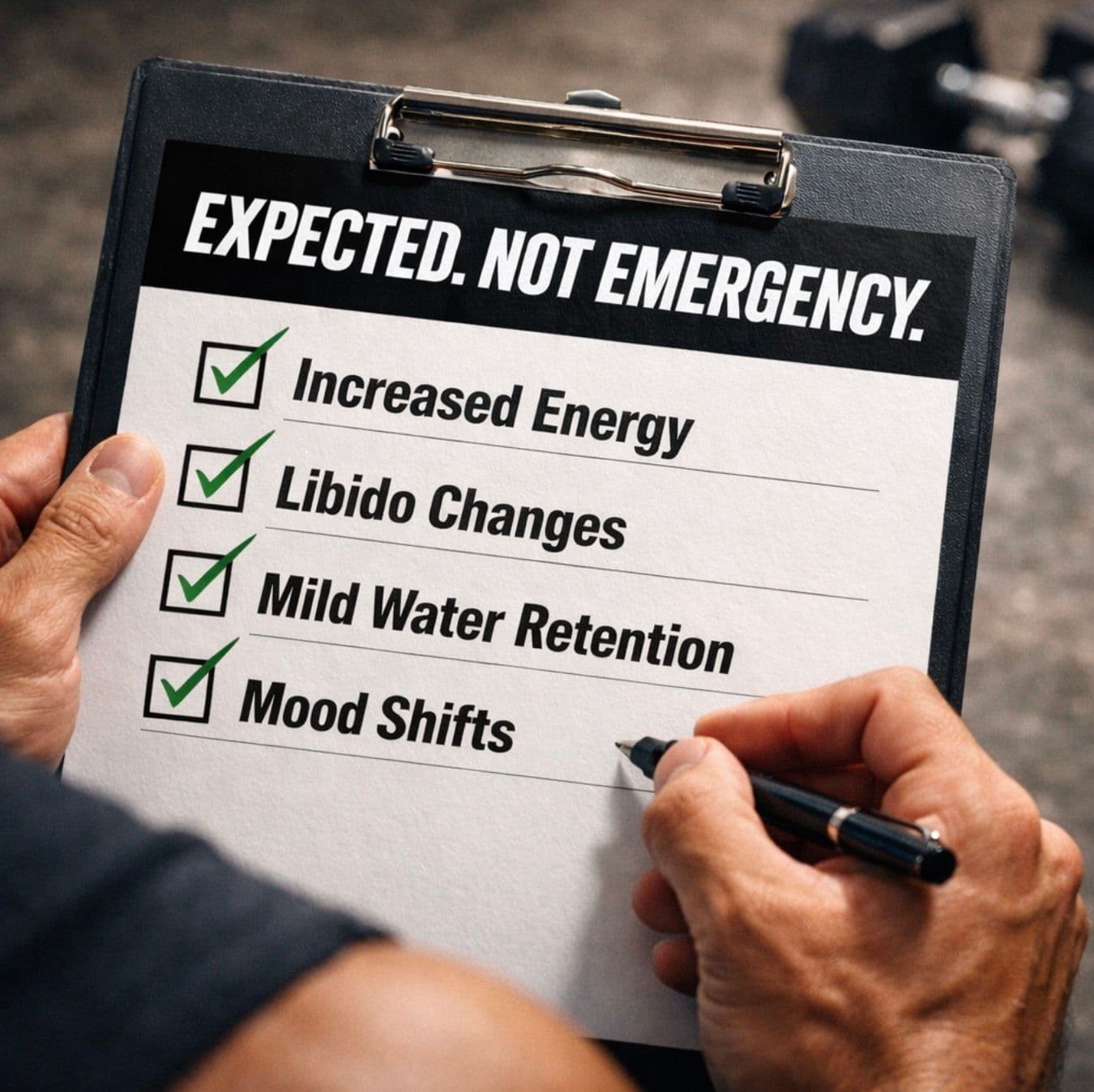
The five commonly feared effects we've discussed - energy fluctuations, libido changes, water retention, increased blood counts, and skin changes - are examples of how normal physiological responses get misinterpreted as dangerous problems. With context, monitoring, and sometimes minor adjustments, they're manageable aspects of treatment for most men, not reasons to avoid or abandon therapy.
Services like AlphaMD have emerged specifically to address the gap between one-size-fits-all approaches and the individualized, monitored care that TRT requires. On platforms like these, licensed providers conduct thorough evaluations, personalize protocols, and follow up regularly, aiming to maximize benefits while minimizing risks through proper medical oversight. The technology exists to make this kind of careful, ongoing care more accessible than it once was.
Your body adapting to healthier hormone levels will involve some changes. That's not failure. That's physiology. The question isn't whether you'll experience any effects during treatment, it's whether those effects are normal adaptations or signals that need medical attention, and whether you have qualified support to make that distinction.
Many of the things that look like red flags from a panicked internet search at 2 AM are actually green lights that your body is responding to treatment and finding its new balance. Understanding the difference, and having proper medical guidance to navigate it, transforms TRT from something to fear into something that can genuinely improve quality of life.
Have a question? Ask us.
At AlphaMD, we're here to help. Feel free to ask us any question you would like about TRT, medical weightloss, ED, or other topics related to men's health. Or take a moment to browse through our past questions.
People are asking...
What are the most common side effects and symptoms you see in patients, that may eventually lead them to stop?...
The primary reasons men stop TRT, which providers on the platform rarely see (less than 5%), are desire to maximize chances of fertility, weight gain (TRT increases hunger because of anabolism), and w... See Full Answer
If I get on TRT, besides energy and mood, are there other effects I will see? I am naturally not a hairy person, I don’t have an overly deep voice….et...
You should expect increased libido, better erection quality, improved sleep, reduced anxiety/depression, better confidence. TRT does speed hair loss in those who are already predisposed to hair loss (... See Full Answer
I’m age 56 and relatively fit with total T around 625, SHBG at 84 and Free T of 8. No known thyroid or other health issues. Ferritin high as well, all...
If you're not feeling any negative side effects in those ranges & are happy with your benefits from TRT once starting, there's typically no need to worry about the number itself too much.... See Full Answer
Get $30 off your first month’s order
Enter your email address now to receive $30 off your first month’s cost, other discounts, and additional information about TRT.
Legal Disclaimer
This website is a repository of publicly available information and is not intended to form a physician-patient relationship with any individual. The content of this website is for informational purposes only. The information presented on this website is not intended to take the place of your personal physician's advice and is not intended to diagnose, treat, cure, or prevent any disease. Discuss this information with your own physician or healthcare provider to determine what is right for you. All information is intended for your general knowledge only and is not a substitute for medical advice or treatment for specific medical conditions. The information contained herein is presented in summary form only and intended to provide broad consumer understanding and knowledge. The information should not be considered complete and should not be used in place of a visit, phone or telemedicine call, consultation or advice of your physician or other healthcare provider. Only a qualified physician in your state can determine if you qualify for and should undertake treatment.