
DHEA at Bedtime: The $12 Sleep Stack That TRT Patients Wish They Knew Earlier
Published on:
Updated on:
People are asking...
I (45yo, BMI 32 but dropping) recently started enclomiphene 12.5mg/daily, after multiple tests over 6 months had my testosterone steady at ~350. Estra...
It’s hard to say without labs, but high estradiol is a very common cause for insomnia. Enclomiphene raises estradiol to a greater degree than TRT (it blocks the estrogen receptors in the hypothalamus ... See Full Answer
Can you speak to pinning frequency/time of day and what bearing it has on sleep, if any. Thank you!...
Most men notice increased quality of sleep on TRT. Some however do note having a harder time sleeping, which can sometimes be the case if they're less exhausted. In even more rare cases their dose nee... See Full Answer
Is there a benefit to adding DHEA to TRT?...
A provider would first consider your current DHEA levels. There can be benefit as it can support test production/levels and in a different pathway. This can improve energy and libido. However, DEAH wi... See Full Answer
Have a question? Ask us.
At AlphaMD, we're here to help. Feel free to ask us any question you would like about TRT, medical weightloss, ED, or other topics related to men's health. Or take a moment to browse through our past questions.
Most men on testosterone replacement therapy expect to feel like a new person, and many do, until they notice that sleep is still broken, mornings still feel heavy, and something they can't quite name is still missing. That gap is where DHEA enters the conversation.
The Hormone You Forgot Was in the Stack
DHEA, or dehydroepiandrosterone, is produced primarily by the adrenal glands and holds a unique position in your body's hormonal hierarchy. It sits upstream from both testosterone and estrogen, serving as a raw material that your tissues can convert into sex steroids depending on what the local environment demands. It is one of the most abundant circulating steroids in the human body during your twenties, and one of the most steadily declining ones after that.
Unlike testosterone, which is the main target of TRT, DHEA does not get replaced by default. Most TRT protocols focus narrowly on testosterone levels, which makes sense clinically, but it leaves the adrenal side of the hormone picture largely untouched. For some men, this is not an issue. For others, it may explain why optimization on paper does not always feel like optimization in real life.
That is an important distinction. DHEA is a hormone, not a supplement in the conventional sense, and its effects vary considerably from person to person. It is not appropriate for everyone, and it should not be treated casually just because it is available over the counter in the United States.
Why TRT Patients Start Asking About It
When a man starts TRT and his testosterone reaches a healthy range, the expectation is that energy, mood, libido, and drive will all follow. Often, much of that does improve. But a meaningful subset of men report a persistent flatness: sleep that is still light or interrupted, motivation that never quite ignites, a sense of well-being that feels just out of reach.
Clinicians who work in hormone optimization have noted that some of these residual symptoms may relate to DHEA and its metabolites, including compounds that the brain and nervous system use for functions beyond reproduction. DHEA and its sulfated form, DHEA-S, appear to influence mood regulation, stress resilience, and neurological signaling in ways that testosterone alone does not fully address.
This is not a claim that DHEA treats or cures anything. It is an observation that the hormonal system is interconnected, and optimizing one input does not automatically optimize the whole network.
Sleep as the Multiplier
Among the lingering complaints men on TRT describe, poor sleep is one of the most common and the most consequential. Sleep is not just rest. It is when growth hormone pulses, when the brain clears metabolic waste, when testosterone itself is largely synthesized, and when cortisol prepares for its early-morning rise. If sleep is broken, every other hormonal intervention works at a disadvantage.
This is why some men, and some clinicians, refer to sleep as the multiplier. Getting testosterone into range while sleeping five fragmented hours is like tuning an engine and then running it on low-grade fuel.
The question of DHEA at bedtime connects directly to this idea. Some research suggests that DHEA may influence the body's stress response and cortisol rhythm, particularly the late-evening and early-morning cortisol patterns that can cause nighttime awakenings or early-morning jolting. DHEA also appears to interact with GABA receptors in the brain, the same receptors targeted by many anti-anxiety and sleep-aid medications, through its conversion to neurosteroids like allopregnanolone. This GABAergic activity may contribute to a calming or anxiolytic effect in some individuals, which could support the transition into sleep.
The key phrase there is "in some individuals." DHEA can feel mildly stimulating to others, particularly if it converts aggressively toward androgens or if it is taken in the morning versus at night. Timing is not irrelevant, but it is also not universal. This is one of many reasons why self-experimenting with DHEA without clinical guidance is a gamble.
What People Mean by a Cheap Sleep Stack
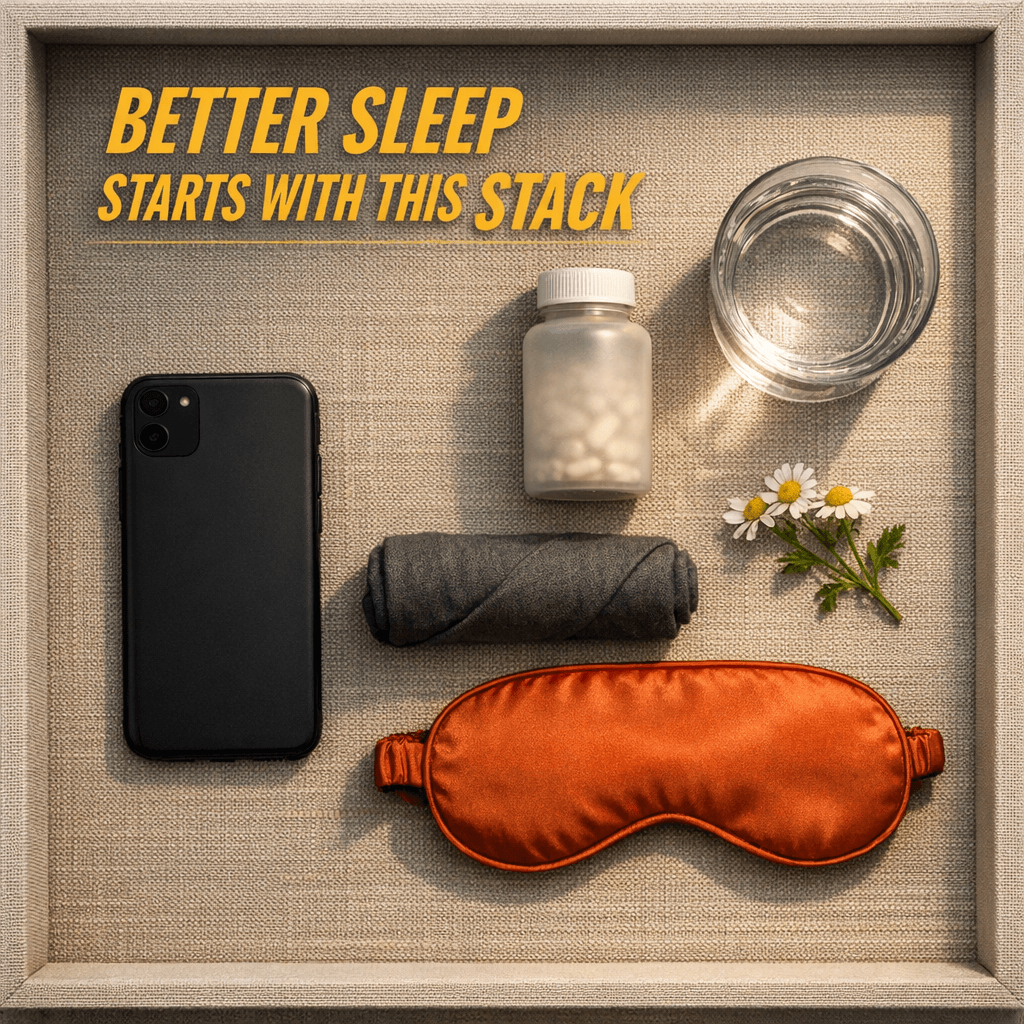
The phrase "cheap sleep stack" circulates in men's health communities online, and it usually refers to a small collection of affordable, widely available supplements taken together at bedtime to improve sleep quality without relying on pharmaceuticals. When DHEA appears in this conversation, it is typically alongside a short list of other compounds that have legitimate, if modest, research behind them.
Magnesium is the most commonly mentioned companion. Different forms absorb differently and have different effects, and many men find that a well-absorbed magnesium form taken at night supports muscle relaxation and reduces the kind of middle-of-the-night tension that breaks sleep cycles. Glycine, an amino acid, has been studied for its ability to lower core body temperature and improve sleep quality and next-day alertness without sedation. Neither of these replaces sleep hygiene, but they can support it.
Beyond supplements, the men who report the best results from any bedtime stack tend to combine it with habits that are honestly more powerful than any pill: consistent light exposure in the morning to anchor the circadian clock, a defined caffeine cutoff in the early afternoon, elimination or significant reduction of alcohol (which fragments sleep architecture even when it helps you fall asleep faster), and a genuine wind-down window before bed that signals the nervous system to downshift.
None of this is exotic. Most of it is free. The stack is cheap because the most effective parts cost nothing.
The Side Effects Men Do Not Expect
Because DHEA is upstream of both testosterone and estrogen, adding it can shift hormonal balance in directions that are not always predictable. Men on TRT are already managing an active hormonal environment, and introducing another precursor hormone adds variables that need monitoring.
Acne and oily skin are among the most commonly reported side effects, driven by increased androgen activity at the skin level. Hair changes, including accelerated thinning in men predisposed to androgenic alopecia, can occur for the same reason. Mood effects are worth watching closely. Some men report increased confidence and reduced anxiety. Others report irritability, edginess, or an intensity that their partners notice before they do.
Vivid dreams are frequently reported, which some men welcome as a sign of deeper REM sleep and others find disruptive. Changes in libido can go in either direction. Estradiol can rise as DHEA converts through the aromatase pathway, which on TRT is already a variable being managed. This means that adding DHEA without adjusting monitoring frequency can allow estrogen-related symptoms to creep in unnoticed.
For men with a history of prostate concerns, hormone-sensitive conditions, mood disorders, or sleep apnea, the risk-benefit calculation shifts considerably. These are not populations where DHEA should be added casually or without a clinician's involvement.
What to Track Before You Assume It Is Working
One of the practical failures in self-managed supplementation is the absence of a baseline. Men add something new, feel subjectively better for two weeks, and attribute the improvement to the new variable, when sleep, stress, alcohol intake, and half a dozen other things changed simultaneously.
If you are going to evaluate whether DHEA at bedtime is doing anything useful, you need to track a few specific things before and after. Sleep latency, meaning how long it takes you to fall asleep, is one signal. The number of awakenings per night is another. Next-day energy, specifically how you feel one to two hours after waking rather than immediately upon waking, often reflects sleep quality more accurately than morning grogginess. Mood stability across the day, libido direction, and skin changes are all worth noting.
On the lab side, DHEA-S levels can be checked before starting to establish whether you are actually low, since adding DHEA when levels are already adequate may not produce the effects some people expect and may increase side effect risk. Estradiol and a full testosterone panel are reasonable to check after a few weeks of consistent use, especially on TRT. Your clinician can guide what specific markers make sense given your existing protocol and health history.
If any of the following appear, they warrant prompt conversation with your provider: significant mood changes, worsening sleep, new or worsening acne, unexpected changes in libido, or any symptoms that feel out of character for you.
The Conversation Worth Having With Your Provider
The access to information that men have today is genuinely valuable. Reading about DHEA, learning how it fits into the hormonal cascade, and asking intelligent questions is a reasonable starting point. But the conversation should go further than the internet.
When you bring DHEA up with a clinician, come prepared. Describe your specific symptoms: what is and is not working on your current TRT protocol, what your sleep looks like in detail, and what you have already tried. Ask whether your DHEA-S has been checked recently. Ask whether bedtime timing makes sense given your cortisol pattern or any testing that has been done. Ask what side effects to watch for given your personal history.
A clinician who works in hormone optimization will not be surprised by this question. It is a reasonable one, and the answer should be individualized, not generic.
Services like AlphaMD are built for exactly this kind of conversation. Through AlphaMD's telehealth platform, licensed providers work with patients on TRT and related protocols to address the symptom gaps that standard care often misses, including sleep, mood, and the adjunct hormonal inputs that may be contributing to them. That kind of ongoing, symptom-based oversight is what separates thoughtful hormone management from guesswork.
When the Stack Is Not the Answer
It is worth saying plainly: DHEA is not a magic fix for broken sleep, and the men who frame it that way are going to be disappointed. Sleep disorders, including undiagnosed sleep apnea, are common in men on TRT and require their own evaluation. Chronic stress and elevated cortisol patterns, poor sleep hygiene habits, alcohol dependence, and underlying mood disorders all require direct attention that no supplement stack can substitute for.
What DHEA at bedtime may offer, for the right person, at the right time, with the right oversight, is a modest but meaningful nudge toward better hormonal balance and improved sleep architecture. That nudge, combined with the free habits that most men underestimate, and supported by regular monitoring from a clinician who knows your full picture, is where the real value lies.
TRT optimizes one input. Sleep, recovery, and well-being depend on the whole system working together. DHEA, used thoughtfully, is one piece of that system, and for some men on TRT, it may be the piece they genuinely wish they had known about earlier.
Have a question? Ask us.
At AlphaMD, we're here to help. Feel free to ask us any question you would like about TRT, medical weightloss, ED, or other topics related to men's health. Or take a moment to browse through our past questions.
People are asking...
I (45yo, BMI 32 but dropping) recently started enclomiphene 12.5mg/daily, after multiple tests over 6 months had my testosterone steady at ~350. Estra...
It’s hard to say without labs, but high estradiol is a very common cause for insomnia. Enclomiphene raises estradiol to a greater degree than TRT (it blocks the estrogen receptors in the hypothalamus ... See Full Answer
Can you speak to pinning frequency/time of day and what bearing it has on sleep, if any. Thank you!...
Most men notice increased quality of sleep on TRT. Some however do note having a harder time sleeping, which can sometimes be the case if they're less exhausted. In even more rare cases their dose nee... See Full Answer
Is there a benefit to adding DHEA to TRT?...
A provider would first consider your current DHEA levels. There can be benefit as it can support test production/levels and in a different pathway. This can improve energy and libido. However, DEAH wi... See Full Answer
Get $30 off your first month’s order
Enter your email address now to receive $30 off your first month’s cost, other discounts, and additional information about TRT.
Legal Disclaimer
This website is a repository of publicly available information and is not intended to form a physician-patient relationship with any individual. The content of this website is for informational purposes only. The information presented on this website is not intended to take the place of your personal physician's advice and is not intended to diagnose, treat, cure, or prevent any disease. Discuss this information with your own physician or healthcare provider to determine what is right for you. All information is intended for your general knowledge only and is not a substitute for medical advice or treatment for specific medical conditions. The information contained herein is presented in summary form only and intended to provide broad consumer understanding and knowledge. The information should not be considered complete and should not be used in place of a visit, phone or telemedicine call, consultation or advice of your physician or other healthcare provider. Only a qualified physician in your state can determine if you qualify for and should undertake treatment.